The carencia de antecedentes penales (criminal background certificate) is available through the administrative services of the Organismo Judicial electronic portal. Whether you are applying for a job, bidding on a government contract, processing a driver’s license, or handling immigration paperwork, chances are you will need this certificate. It is issued by the Organismo Judicial (Guatemala’s judicial branch) and confirms whether or not you have pending criminal cases in the court system.
Until a few years ago, getting this document meant standing in long lines at the Organismo Judicial offices in zone 1 of Guatemala City. Today, the process has been fully digitized through the CAPE platform (Carencia de Antecedentes Penales en Electronico) at cape.oj.gob.gt. You can complete the entire process from your phone or computer and receive a digitally signed PDF in less than 24 hours.
The legal foundation for this document comes from Decreto 51-92 (Codigo Procesal Penal) which governs the criminal records system. The certificate is valid for 6 months from issue. The requirement to present a valid DPI (Documento Personal de Identificacion) comes from Decreto 90-2005 (Ley del RENAP).
Quick summary: Q30 bank payment (last published fee; no gratuity law found in force), requested online through the OJ portal (cape.oj.gob.gt), delivered as a digital PDF in under 24 hours. Valid for 6 months. Available from anywhere in the world.
Correction (24 September 2026): the fee is Q30 per the last published figure (La Hora, 17 January 2026). This page previously said a 2026 “Ley de Gratuidad” made the record free; the gratuity bills (iniciativas 6696 and 6409) were still in congressional committee on 28 April 2026 and we found no law in force. Check our exchange rate page for today’s USD/GTQ rate if you need an apostille.
When You Need This Document
The antecedentes penales certificate is required for a wide range of legal, professional, and administrative procedures in Guatemala. Before you spend time requesting it, confirm that the institution actually requires this specific document (penales) rather than antecedentes policiacos or both.
| Purpose | Required By | Also Need Policiacos? |
|---|---|---|
| Formal employment | Employers (Codigo de Trabajo) | Usually yes |
| Government contracts | Ley de Contrataciones del Estado | Yes |
| Professional licenses | Colegio profesional | Yes |
| Driver’s license | DVAT — licencia de conducir | Yes |
| Immigration procedures | Destination country consulate | Usually yes |
| Adoption proceedings | Ley de Adopciones | Yes |
| Firearm permits | DIGECAM (Decreto 15-2009) | Yes |
| Notarial certification | Ley del Notariado | Sometimes |
| University enrollment | Some universities | No |
| Real estate transactions | Notaries, for some property transfers | Sometimes |
Cost
| Item | Cost |
|---|---|
| Criminal background certificate | Q30 (last published fee, January 2026) |
| Where to pay | Banco Industrial, Banrural or Bantrab |
Q30, paid at Banco Industrial, Banrural or Bantrab (last published figure: La Hora, 17 January 2026). A bill to make the record free (iniciativa 6696) was still in congressional committee in April 2026, and we found no law in force; the OJ portal blocks automated checks, so confirm the fee on the portal before paying.
Requirements
- DPI vigente (valid national ID) — you need the CUI number
- Email address — the certificate is delivered electronically
- Bank payment of Q30 — you enter the receipt number, verification number and date in the OJ portal
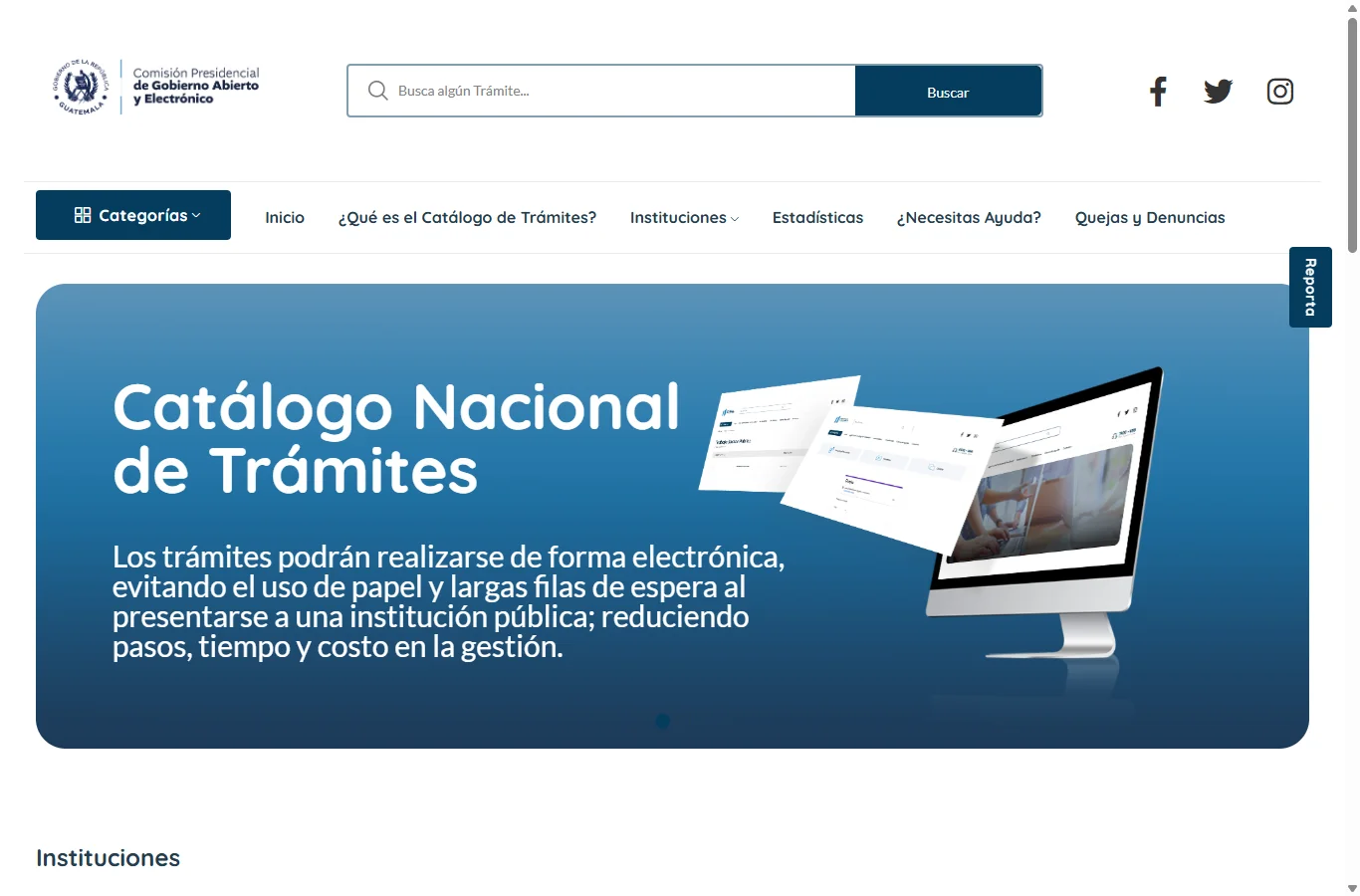
tramites.gob.gt is the Guatemalan government’s open catalog. If you do not know which institution handles a trámite, search here first.
Step-by-Step Process
- Pay Q30 at Banco Industrial, Banrural or Bantrab, then go to cape.oj.gob.gt with the receipt number, verification number and date
- Create an account if you do not have one (email + password); the OJ portal also shows a Solicitud sin registro (request without registration) option, and the login page accepts an existing CAPE username and password.
- Log in and fill in the request form with your DPI data
- Submit the request
- Receive an email with a download link
- Download and print your PDF certificate
- Go to the Organismo Judicial offices at the Centro de Servicios Auxiliares (Torre de Tribunales, 21 Calle 7-70, Zone 1, Guatemala City) with the Q30 bank receipt
- Present your DPI (original)
- Fill out the request form at the service window
- Receive the certificate the same day or next business day
Alternative in-person locations:
| Location | Address | Notes |
|---|---|---|
| Torre de Tribunales | 21 Calle 7-70, Zone 1, Guatemala City | Primary office, same-day |
| Quetzaltenango Judicial Center | 11 Av. y 5a Calle, Zone 1 | May take 1 day |
| Departmental courts | Various — check portal.oj.gob.gt | Not all issue certificates directly |
- Verify your DPI is current — if expired, you must renew at a Guatemalan consulate first. See our DPI guide
- Go to cape.oj.gob.gt with the Q30 bank payment data (someone in Guatemala can pay at the bank for you)
- Create an account and submit your request using your DPI CUI number
- Download the PDF certificate — it is digitally signed and legally valid as-is
- If you need an apostille — a representative in Guatemala must take the certificate to the Ministerio de Relaciones Exteriores for apostille processing (Q75 plus Q10 in fiscal stamps, Acuerdo Gubernativo 35-2024; MINEX also runs an online apostille service). It is needed for many legal uses abroad. It is not the document for a US immigrant visa: the US Embassy accepts only the Ministerio Publico’s Antecedentes
Getting the document from the US:
| Method | Details |
|---|---|
| Direct download (recommended) | Request online with the Q30 bank payment data; PDF delivered by email |
| Gestor (professional agent) | For apostille handling — Q100-Q300 for full service including MINEX apostille |
Processing Time
- Online (CAPE): Less than 24 hours — often within 2-4 hours
- In person: Same day or next business day
- Validity: 6 months from the date of issue
Details
Having a record on your antecedentes penales does not automatically disqualify you from all procedures. Here is what you should know:
- Pending cases vs. convictions — the certificate distinguishes between active cases (proceso pendiente) and final convictions (sentencia condenatoria). An active case means proceedings are ongoing, not that you are guilty.
- Cleared cases — if charges were dropped (sobreseimiento), you were acquitted (sentencia absolutoria), or the case was archived (archivo), you can petition the court to update your record. Bring court documentation to the Centro de Servicios Auxiliares at Torre de Tribunales.
- Completed sentences — under the Codigo Penal (Decreto 17-73), after completing your sentence and a rehabilitation period, you may petition for cancellation of the record. Consult a criminal defense lawyer for eligibility.
- Errors on the record — if your antecedentes show a case that is not yours (name confusion, clerical error), file a formal correction request at the OJ. Bring your DPI and any supporting court documentation.
- Employment implications — Guatemalan labor law does not permit blanket rejections based on criminal records. Employers evaluate case-by-case. A minor offense is treated differently from a serious crime.
Details
| Rejection Reason | How to Fix |
|---|---|
| Expired DPI | Renew at RENAP — DPI guide |
| Wrong CUI number entered | Double-check every digit of your DPI number |
| CAPE platform maintenance | Try again during business hours or the next day |
| Email not received | Check spam/junk folders; verify email address in your CAPE profile |
| DPI not found in system | Go in person to Torre de Tribunales with your physical DPI |
Details
Institutions and employers can verify the authenticity of your certificate:
- QR code — the PDF certificate includes a QR code that links to the OJ verification system
- Digital signature — the document carries a digital signature from the Organismo Judicial, making it legally equivalent to a physical certificate
- Verification URL — employers can verify at cape.oj.gob.gt using the certificate number
- Digital vs. printed — both are equally valid. The digital PDF is the official document
- Fraud warning — presenting falsified antecedentes is a criminal offense under Decreto 17-73 (Codigo Penal), Art. 321 (falsedad material) and Art. 322 (falsedad ideologica). Penalties include 2-6 years imprisonment
Details
If you need your antecedentes penales for use outside Guatemala (immigration, international employment, foreign university enrollment), you will likely need an apostille:
- What is an apostille? — An apostille is an international certification that validates the authenticity of a public document for use in countries that are part of the Hague Apostille Convention
- Where to get it — the Ministerio de Relaciones Exteriores (MINEX) handles apostilles in Guatemala
- Cost — Q75 per document plus Q10 in fiscal stamps (Acuerdo Gubernativo 35-2024)
- Processing time — 3-5 business days
- Who needs it — anyone using the document for visa applications or legal proceedings abroad. For a US immigrant visa, the US Embassy accepts only the Ministerio Publico’s Antecedentes, not this OJ certificate
- From the US — MINEX runs an online apostille service (see our apostille guide); otherwise a representative in Guatemala can take the document to MINEX
Tips & Common Mistakes
Pay first, then request. The fee is Q30 (last published figure, January 2026; no gratuity law found in force). The OJ portal asks for the bank receipt number, verification number and date.
Double-check your DPI number. Double-check the CUI number you enter. Verify every digit before submitting.
Do not confuse it with antecedentes policiacos. Many employers and government offices require BOTH documents — the penales (from the OJ) and the policiacos (from the PNC). Read the requirements carefully before you spend time on only one.
Check the validity period. The certificate expires after 6 months. If your employer or immigration office has a processing backlog, time your request so it does not expire before your paperwork is reviewed.
Save the PDF securely. The digital certificate is legally valid as-is, but some institutions still ask for a printed copy. Print at least two copies and keep the digital file backed up.
Get both documents at once. If you know you need both antecedentes penales and policiacos, process them on the same day — each costs Q30 (last published fee).
Foreigners use their passport. If you are a foreign national without a DPI, you can request antecedentes penales using your passport number. The in-person process at Torre de Tribunales is recommended for foreigners.
Common Errors and Solutions
These are the most frequent issues people hit when requesting antecedentes penales:
- “DPI not found” or “CUI not located”. The OJ system pulls from RENAP. If the problem persists, go in person to Torre de Tribunales with your physical DPI.
- Wrong CUI digit entered. The single most common cause of “no match” errors. Verify every digit of your 13-character CUI before submitting — one wrong number and the system returns no record.
- PDF won’t open or shows “signature invalid”. The certificate is signed electronically. To validate the digital signature properly, open the PDF in Adobe Reader updated to the latest version. Browser PDF viewers and Mac Preview often show false “signature invalid” warnings even when the document is genuine.
- Email with download link never arrives. Check spam/junk folders first. If still missing, log back into your CAPE account at cape.oj.gob.gt — the certificate is also available for download directly in your account dashboard.
- Certificate expires before HR or USCIS reviews it. Antecedentes penales are valid for only 6 months from issuance. Many trámites require a certificate issued less than 6 months ago. Time your request close to when the document will actually be reviewed — don’t request months ahead.
- Confused with antecedentes policiacos. These are two different documents from two different institutions. Penales (OJ) covers court criminal cases; policiacos (PNC) covers police records. Check whether your employer or consulate asks for both.
Related Tramites
- Antecedentes Policiacos (PNC) — the other background check, issued by police
- DPI (National ID) — required for this process
- Driver’s License — requires both antecedentes
- Apostille — needed for international use
- Business Registration — some business licenses require antecedentes
Common Questions
How much does the criminal background check cost in Guatemala?
Q30, paid at Banco Industrial, Banrural or Bantrab (last published figure: La Hora, 17 January 2026). A bill to make the record free (iniciativa 6696) was still in congressional committee in April 2026, and we found no law in force; the OJ portal blocks automated checks, so confirm the fee on the portal before paying. The request itself is online through the OJ portal (cape.oj.gob.gt); the only other costs are notarized or apostilled copies if needed abroad.
How long is the antecedentes penales certificate valid?
Check how recent a certificate the receiving office accepts, and plan your timing accordingly.
Can I get my antecedentes penales from outside Guatemala?
Yes. The request is made online through the OJ portal (cape.oj.gob.gt). You need a valid DPI number, an email address and the Q30 bank payment (receipt number, verification number and date). Note: for a US immigrant visa the US Embassy accepts only the Ministerio Publico’s Antecedentes, not this certificate.
What is the difference between antecedentes penales and antecedentes policiacos?
Antecedentes penales are issued by the Organismo Judicial and confirm whether you have criminal court cases. Antecedentes policiacos are issued by the PNC (police) and confirm whether you have police records. Some procedures ask for both documents; check what yours requires.
What happens if my antecedentes penales show a record?
Having a record does not automatically disqualify you from employment or procedures. If charges were dropped, you were acquitted, or you completed your sentence, you can petition the court to clear or update your record. Bring court documentation such as a sentencia absolutoria or sobreseimiento to the Organismo Judicial.
Do I need to pay the boleto de ornato for antecedentes penales?
No. The boleto de ornato is required for antecedentes policiacos (PNC) but not for antecedentes penales (OJ). These are separate documents issued by different institutions.
Official portal — checked 23 October 2026
| Official page | What it provides |
|---|---|
| OJ electronic portal | Administrative services include generation of antecedentes penales. |
| OJ electronic portal | The Carencia de Antecedentes Penales menu displays Ingresar, Validar, Seguimiento and Solicitud sin registro, in that order. |
| OJ login page | Existing CAPE credentials can also be used to enter this portal. |
Another certificate for work with minors
If the job involves children or adolescents, you may also be asked for the Ministerio Público’s RENAS certificate, in addition to criminal background checks. Article 6 of Decreto 22-2017 makes certification of not appearing in the register an indispensable requirement for working with minors, referring to work involving permanent or personal activities with children or adolescents. See the RENAS certificate guide in Spanish.