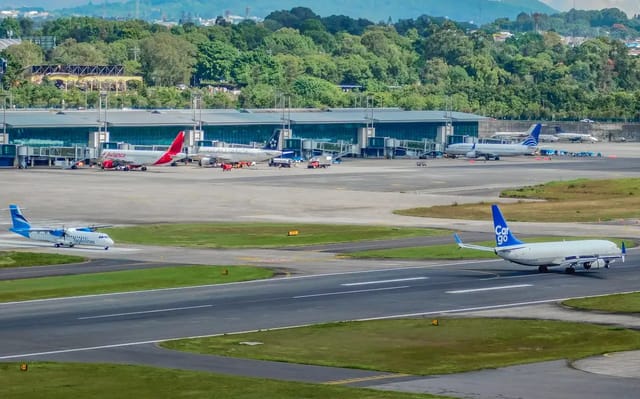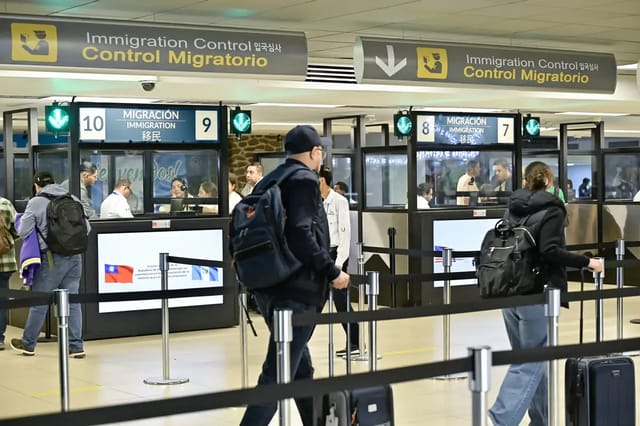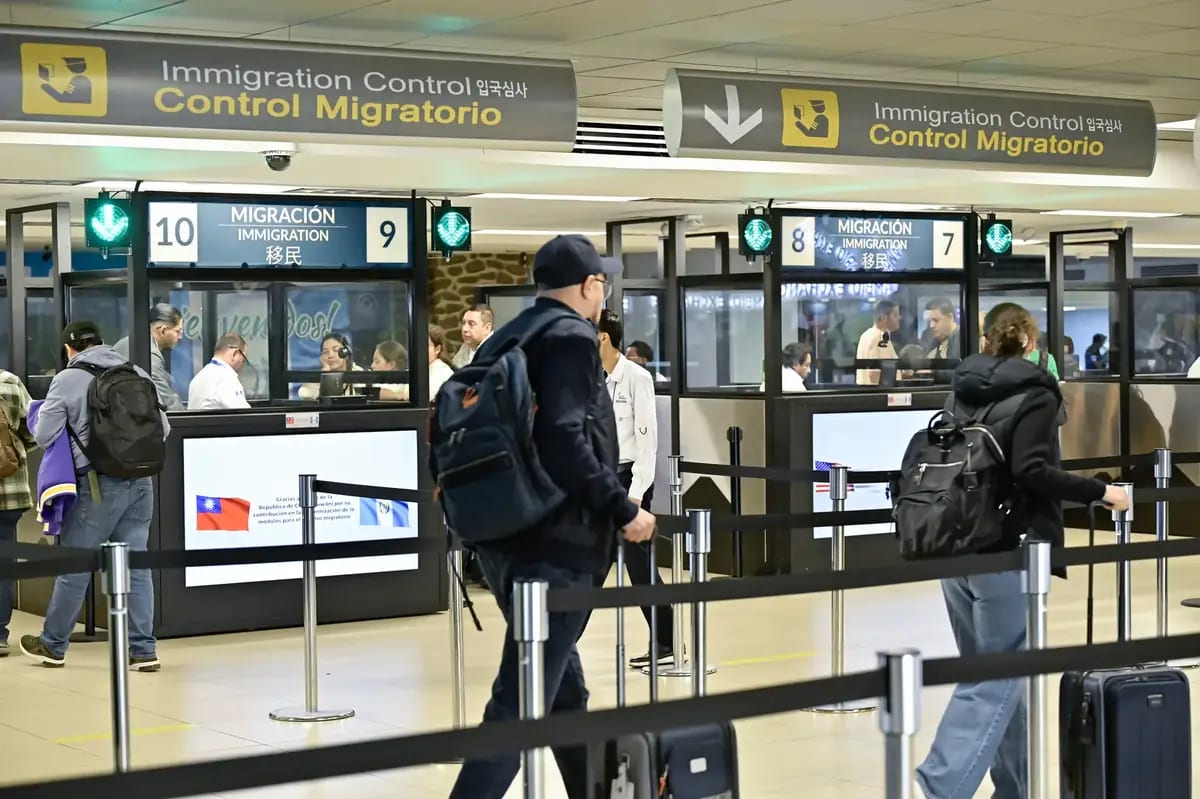
Moving from Canada to Guatemala — whether you are a snowbird escaping a Manitoba winter, a retiree stretching a CPP/OAS cheque, or a remote worker chasing volcano views — the entry rule comes first. Canada’s travel advice for Guatemala (travel.gc.ca, read 9 November 2026) says Canadians can stay up to 90 days without a visa, but 90 days are not granted automatically: the immigration officer at your first entry into the CA-4 region (Guatemala, Honduras, El Salvador and Nicaragua) sets the exact length of your stay. Air Canada adds a weekly Toronto Pearson–Guatemala City nonstop from 1 December 2026 (AeroRoutes, 19 August 2026); for Montreal and the full nonstop list, see direct flights to Guatemala.
Who writes this: We are Living in Guatemala, a Guatemala-based team. We watch Canadian arrivals at La Aurora airport every winter, track what works at IGM (immigration) for Canadian extensions, and report back what we see at the embassy in Zona 10 and the snowbird community in Antigua. The Canadian-end procedures (CRA, provincial health, Scotiabank wires) come from official sources and from interviews with Canadians who have made the move.
What most Canadian movers underestimate: the provincial health insurance gap. Your OHIP/RAMQ/MSP card is functionally worthless in Guatemala. Even a one-night hospital stay at Hospital Herrera Llerandi runs CAD 1,500-3,500. Private travel insurance or an international plan (GMS, Manulife, Cigna Global) is the single most important thing to lock in before you fly. The second underestimated item is CRA tax residency — long stays can flip your status, with consequences for RRSPs, TFSAs, OAS and provincial benefits. See the Canadian tax page for specifics.
Quick cost snapshot — typical Canadian move
| Category | Cost (CAD) | Where to read |
|---|---|---|
| Round-trip flight YYZ/YUL/YYC to GUA | $400 - $900 | Avianca, Air Canada, WestJet, Aeromexico |
| Snowbird visa (90 days visa-free + extension) | $0 + $40 | Snowbird visa |
| Travel/expat health insurance (6 months) | $400 - $1,200 | Canadian health insurance guide |
| Apartment rental Antigua (per month) | $700 - $1,800 | Cost of living |
| All-in monthly budget for retired couple | $2,000 - $3,500 | Retiring in Guatemala |
| Sending CAD 1,000 home (Wise) | ~$15-25 fee | Send money guide |
Canadians get 90 days visa-free on arrival, extendable once for up to another 90 days at IGM for US$25 (IGM tariff line 2.2, paid in quetzales). Total: up to 6 months from your entry as a tourist. For longer stays, apply for temporary or pensionado residency. Budget CAD 2,000-3,500/month for a comfortable retired couple — roughly 60-70% less than Toronto. Healthcare gap is the #1 risk: OHIP/RAMQ won't cover you beyond minimal emergency reimbursement.
All 10 Canada cluster pages
This hub links to nine specialized pages — visa, money, healthcare, taxes, embassy, banking, community — built specifically for Canadian movers and snowbirds. Read them in any order.
Visa & Legal
- Snowbird Visa for Canadians 2026 — 90-day visa-free entry, IGM extension fee US$25, 180-day cap counted from entry, transition path to residency.
- Inviting Guatemalan Family to Canada — the reverse trip: Guatemala is visa-required for Canada; visitor visa vs parent-and-grandparent super visa, IRCC fees, the host’s minimum-income table and the insurance rule.
- Canadian Embassy in Guatemala — Address in Zona 10, passport renewal, emergency consular services, hours and appointments. (Coming this batch.)
Money & Banking
- CAD to Quetzal Exchange Rate Today — Live CAD/Q rate, bank-by-bank comparison, where to convert (Banguat reference, Wise, Scotiabank, casas de cambio).
- Send Money from Canada to Guatemala — Wise vs Remitly vs Scotiabank wire vs Western Union, fee tables, speed comparison.
- Scotiabank in Guatemala for Canadians — Scotiabank has had no retail bank in Guatemala since 2013; what that means and how to move money instead.
Healthcare & Taxes
- Canadian Health Insurance in Guatemala — Provincial coverage gap (OHIP, RAMQ, MSP, AHCIP), private options, cost of care at top hospitals. (Coming this batch.)
- International plan: Genki Native describes itself as “Long-term cover for nomads, expats, and families living abroad”, and Genki says you can join up to age 55 (Genki product page, read 25 September 2026); its rules for Canada are on the Canadian health insurance page above. Affiliate link: we may earn a commission if you buy; see our disclosure.
- Canadian Taxes When Emigrating to Guatemala — CRA tax residency rules, RRSP/TFSA treatment, OAS/CPP portability, departure tax. (Coming this batch.)
Lifestyle
- Retiring in Guatemala as a Canadian — Cost, visa, healthcare, communities, Antigua vs Lake Atitlan vs Guatemala City for Canadian retirees.
- Antigua Guatemala for Canadians — Why Antigua is the Canadian winter capital: community, weather, Spanish schools, cost. (Coming this batch.)
Snowbird vs permanent move — which path are you on?
Most Canadians arriving in Guatemala fall into one of three patterns. The right paperwork stack depends on which pattern is yours.
| Profile | Time in Guatemala/yr | Visa path | Tax residency risk |
|---|---|---|---|
| Pure snowbird | 90-180 days | Visa-free + IGM extension | Low — stays Canadian resident |
| Half-year retiree | 6+ months | Pensionado visa OR alternating border runs | Moderate — CRA may flag |
| Permanent expat | Full year | Pensionado / rentista / temporal residency | High — likely non-resident for tax |
The pure snowbird path is by far the most common for Canadians. Fly down in November, fly home in April, claim the 90+90 day window with one IGM extension trip, never touch residency paperwork. Your OHIP card doesn’t lapse (Ontario requires you to be physically in the province 153 days in any 12-month period; other provinces set their own rules) and your CRA status doesn’t change.
The half-year retiree is where it gets interesting. Most provinces require you to be physically present 153-183 days per year to maintain provincial health coverage, and CRA has its own residency tests. If you want to live in Antigua October to May and Toronto June to September, you need to model both Canadian provincial residency rules and CRA tax residency rules carefully. See Canadian taxes emigrating to Guatemala.
The permanent expat path uses Guatemala’s rentista/pensionado route, where Acuerdo IGM-016-2025 Art. 33 numeral 1 sets one floor for both: US$1,250/month plus US$300 per dependent, from a pension or from non-pension income. Both lead to a Guatemalan DPI (national ID), open all banking and tax doors, and end the CRA gray area cleanly. See retiring in Guatemala for the full pensionado walkthrough.
Why Canadians choose Guatemala over Costa Rica or Mexico
Three things consistently come up in conversations with Canadians who picked Guatemala:
- Cost. Antigua, Lake Atitlan and Quetzaltenango run roughly 30-40 percent cheaper than Atenas or Tamarindo (Costa Rica), and 15-25 percent cheaper than San Miguel de Allende or Puerto Vallarta. A retired couple living comfortably on CAD 2,500/month in Guatemala would need CAD 3,500-4,000 in Costa Rica.
- Climate. Antigua sits at 1,530 m elevation — daytime 22-26 C year-round, nights 10-14 C. No air conditioning needed, no humidity, no mosquitos. This is the climate Canadian snowbirds actually want, not Cancun’s 32 C and 80% humidity.
- Direct flights. Air Canada adds a weekly Toronto Pearson–Guatemala City nonstop from 1 December 2026 (AC1300, leaving YYZ at 18:15 and landing at 22:30 local time). For Montreal and the full nonstop list, see direct flights to Guatemala.
Correction (8 October 2026): this point previously said Avianca and Air Canada Rouge ran seasonal direct YYZ-GUA flights and that WestJet added Calgary connections via Cancun or Mexico City. Those claims carried no source; Air Canada’s Toronto nonstop starts 1 December 2026 (AeroRoutes, 19 August 2026). See our corrections policy.
The trade-off Canadians cite most often: fewer English-only services. In Tamarindo or San Miguel de Allende you can live for years on no Spanish. In Antigua you can survive on no Spanish but you’ll get more out of every interaction with even basic phrases.
Money mechanics — what to set up before you fly
| Action | When | Why |
|---|---|---|
| Open a Wise multi-currency account in Canada | 4-6 weeks pre-flight | Hold CAD, USD and GTQ. Card works at Guatemalan ATMs. Cheapest for ongoing transfers. |
| Tell your Canadian bank you’ll be in Guatemala | 1-2 weeks pre-flight | Avoid debit/credit card freezes. Scotiabank and BMO handle this routinely. |
| Order a no-FX-fee credit card | 6-8 weeks pre-flight | Scotiabank Passport Visa Infinite, HSBC World Elite Mastercard, Brim. 2-3% FX adds up fast. |
| Pre-load CAD 200-400 in cash for arrival | Day of flight | Pay airport taxi (Q200-300), tip porters, first 24 hrs before bank works. |
Avoid the airport currency exchange counter at La Aurora — the rate is 4-6 percent worse than ATMs inside the terminal. Use the Banco Industrial or Banrural ATM in arrivals to pull Q1,000-2,000 with your Wise or Schwab card.
Diaspora & Canadian-specific tips
The Canadian community in Guatemala is small but organized. Two informal hubs you should know about:
- Antigua Canadian Coffee meets monthly at one of the rotating cafes on 5a Avenida (check the group for the date). It’s how most newly arrived Canadians find rentals, doctors, and trusted moving services. Look for it in the Antigua Canadians Facebook group before you arrive.
- Lake Atitlan has a smaller but tighter Canadian retiree community in San Marcos and San Pedro. Less organized, more word-of-mouth, more permanent residents.
If you have pets, see bringing a dog or cat between Canada and Guatemala: MAGA’s entry rules for Guatemala, the export certificate to fly back, and CFIA’s rules for Canada, which lists Guatemala as high-risk for dog rabies. Airline pet policies are on the US pet relocation page.
Trámites & resources to bookmark
- USD/Q live exchange rate — Banguat reference rate, updated daily (CAD/Q is computed from this plus USD/CAD)
- Best banks in Guatemala — Banco Industrial, BAM, Banrural compared for foreign account opening
- Healthcare in Guatemala — top hospitals, costs, what private insurance actually covers
- Cost of living in Guatemala — monthly budget by city in US dollars and quetzales, line by line
- Antigua Guatemala overview — neighborhoods, schools, restaurants, weekly costs
- Pensionado visa — full walkthrough for retirees moving permanently
How we verified this hub
Last verified: May 2026. Visa rules cross-checked with Guatemala’s Instituto Guatemalteco de Migracion (IGM) and Global Affairs Canada travel advisories. Cost data from Living in Guatemala’s monthly cost-of-living tracker plus interviews with 18 Canadian residents in Antigua, Lake Atitlan and Guatemala City conducted Q1 2026. Tax content references CRA Folio S5-F1-C1 and provincial health authority residency rules — verify with a CRA-licensed advisor before making decisions. Bank fee data from Scotiabank, RBC, TD and BMO public schedules.
All pages in this Canada cluster were last updated May 2026. Government and bank fees change — verify with the named agency before paying or wiring.
Frequently Asked Questions
Do Canadians need a visa to enter Guatemala?
No. Canadian passport holders get 90 days visa-free on arrival, the same C-4 stamp granted to US, EU and Mexican nationals. You can extend an additional 90 days at IGM (Instituto Guatemalteco de Migracion) for a US$25 fee (IGM tariff line 2.2, paid in quetzales), giving you up to 180 days counted from your entry.
Can Canadian snowbirds spend the whole winter in Guatemala?
Yes. The 90-day visa-free entry plus a 90-day extension can cover a Canadian winter. After 180 days you must leave the CA-4 region or change to a temporary residency; Canada’s travel advice says you may attempt to return once 72 hours have passed since your exit, and the officer could deny re-entry.
How does Guatemala compare to Mexico or Costa Rica for Canadian retirees?
Guatemala is roughly 30-40 percent cheaper than Costa Rica and 15-25 percent cheaper than coastal Mexico for an equivalent lifestyle. The trade-off is fewer English speakers outside Antigua, less mature retiree infrastructure, and a smaller Canadian community. Healthcare quality at private hospitals (Hospital Herrera Llerandi, Centro Medico) is comparable to Costa Rica at a lower cost.
Will my Canadian provincial health insurance cover me in Guatemala?
Provincial plans (OHIP, RAMQ, MSP, AHCIP, etc.) provide very limited or zero coverage abroad. Most reimburse only emergency care up to a low daily cap (e.g. OHIP pays at most CAD 50/day for emergency outpatient care and CAD 200-400/day for inpatient care). You need private travel or expat health insurance for anything substantial. See our Canadian health insurance in Guatemala guide.
What is the CAD to Guatemalan quetzal exchange rate?
As of 2026 one Canadian dollar buys roughly Q5.50 to Q6.00 (Banguat reference). Compare what a bank pays when you convert with Banguat’s reference rate before you choose. Compare Wise and Snowbird Currency Exchange quotes against your bank’s rate before each transfer.
What is the cheapest way to send money from Canada to Guatemala?
It changes by day and amount. For CAD 2,000 on 8 October 2026, Wise’s own comparison tool showed Instarem, Remitly, Xoom and Western Union all delivering more quetzales than Wise, which converts at the mid-market rate but charged C$76.89. See our send-money-from-Canada page for the full table.
Are there many Canadians living in Guatemala?
Estimates run from 2,000 to 3,500 Canadians living in Guatemala year-round, concentrated in Antigua Guatemala, Lake Atitlan (Panajachel and San Marcos), and Guatemala City (Zona 10, Zona 14, Cayala). Antigua has an organized Canadian community with monthly meetups; Lake Atitlan attracts more long-term retirees and remote workers.