$250–500 USD/mo
50–300 Mbps fiber
7.5/10 (Quetzaltenango)
2,330 m (7,640 ft)
5–12°C morning / 18–22°C midday
4 hours
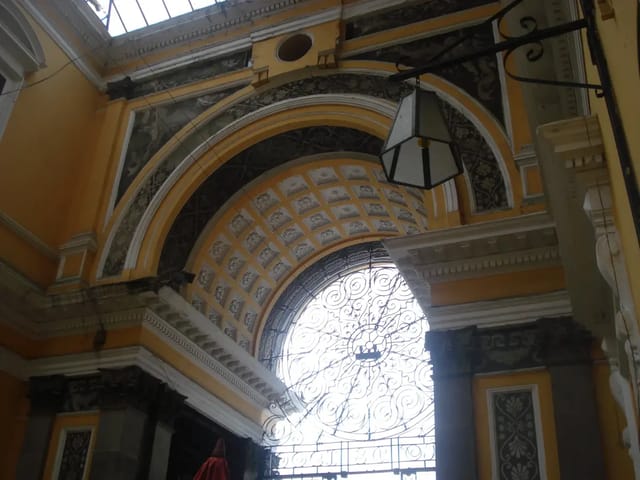
Xela — officially Quetzaltenango — is Guatemala’s second-largest city and the cultural capital of the western highlands. About 180,000 people live in the city proper, mostly K’iche’ Maya, with an undercurrent of Spanish-school students, NGO workers, and a small but rooted expat community. There are no Starbucks, no chains, no Cayala-style master-planned districts. The historic Parque Centro America still functions as the social heart of the city the way it has for 200 years.
I spent a lot of time in Xela during university — friends from Guatemala City often came up here for the cheaper rent, the cooler climate, the rougher edge that makes Antigua feel sanitized in comparison. Xela does not perform for tourists. If you stay long enough to learn its rhythms, that becomes its main feature.
This hub brings together everything about living in Xela — real rents by zone, the cold reality, internet, restaurants, and what makes this city different from anywhere else in Guatemala.
Why Xela?
Quetzaltenango was an independent K’iche’ Maya capital before the Spanish arrival, and it briefly tried to secede from Guatemala in 1838 to form its own state (Los Altos). That independent streak still defines the city. Xela has its own identity, its own intellectual scene, its own university culture (Universidad Rafael Landivar, Universidad Mariano Galvez, USAC western campus), and a long tradition of left-leaning politics and indigenous activism.
For the practical considerations:
- Cheapest of Guatemala’s major cities. Rents 30–50% below Antigua, food and services cheaper still. A 1BR with parking can run $300/month long-term.
- Spanish-school capital. Xela has more Spanish schools per capita than anywhere else in Guatemala except Antigua, and its programs are cheaper, smaller, and more politically engaged. Students often stay months instead of weeks.
- Authentic Guatemalan. K’iche’ Maya majority, indigenous markets, no expat bubble. You will use Spanish daily.
- University city. Three universities mean bookstores, lectures, music venues, and cafes catering to students rather than tourists.
- Cool climate. At 2,330 meters, Xela is genuinely cold in the mornings (5–12°C / 41–54°F) — bring sweaters. Midday is mild (18–22°C / 64–72°F). No mosquitoes.
- Hot springs and volcanoes. Fuentes Georginas, Volcan Santa Maria, Volcan Chicabal — all within 1–2 hours of the city.
The downsides are real. Cold. Houses do not have heating, so winter mornings inside can be 8–12°C. The infrastructure is older than Antigua’s — sidewalks crumble, power flickers, internet is fast but cables run aboveground. The food scene is weaker than Antigua or Guatemala City. And while safety is fine, the city is not built for tourists, so signage and English are minimal.
Explore the Xela cluster
Also useful for the Xela cluster: Quetzaltenango department · Cost of Living Guatemala · Spanish Schools Guatemala
The Xela reality (what nobody tells you)
How cold a given night will actually be is worth checking before you decide whether to buy the space heater in November or in January: frost alerts carries tonight’s forecast low for Xela alongside 22 other highland municipios, against the 5°C line MAGA uses to put a municipio on its agricultural frost watch.
Expat density is low. Maybe 200–500 long-term foreign residents in a city of 180,000. You will not have a Sunday brunch crowd of expats; you will have Guatemalan friends or you will be alone.
The food scene is thinner than Antigua. A handful of solid restaurants exist, but Xela does not have Antigua’s farm-to-table density. Cooking at home is normal here, and the central market (Mercado Democracia) is excellent and cheap for produce.
Spanish school students cycle through. Xela has a constant churn of 2–8 week Spanish students, mostly in their 20s, mostly socially active. If you live in Zona 1 you will meet them; if you live in Zona 9 you mostly will not.
Power outages are more frequent than Antigua or Guatemala City. Plan for 3–8 outages per year of 1–4 hours each. UPS for laptop, candles, and a gas stove (vs electric) are smart.
Cost of living overview
Xela is the cheapest of Guatemala’s major cities — substantially below Antigua and Guatemala City for both rent and food. Spanish students often live on $600–800/month total. All figures in USD at the current exchange rate.
| Expense | Budget | Comfortable | Luxury |
|---|---|---|---|
| Rent (1BR furnished) | $200–300 | $300–500 | $600–1,000 |
| Groceries | $80–120 | $150–250 | $250–400 |
| Eating out | $40–80 | $100–200 | $250–400 |
| Transport | $10–20 | $20–40 | $50–100 |
| Utilities (electric, water, gas) | $25–45 | $50–80 | $90–140 |
| Internet | $30 | $30–50 | $50–80 |
| Healthcare | $15–25 | $40–80 | $100–200 |
| Monthly Total | $400–620 | $690–1,150 | $1,390–2,320 |
Rent tip: The cheapest 1BRs are in Zona 1 (historic center) and Zona 3 (working-class). Zona 9 is the upscale “modern” zone where rent can run $800–1,200 for a quality 2BR. Long-term contracts (6+ months) negotiate down 15–25%. Walk and look for “Se Alquila” signs — many landlords do not list online.
For the full Guatemala-wide cost breakdown, see our cost of living page.
Neighborhoods at a glance
Xela is divided into zones (zonas) like Guatemala City. The five most relevant for foreigners are:
Zona 1 (historic center): Parque Centro America, the cathedral, most Spanish schools, cheapest 1BRs ($200–400/mo), most walkable, most authentic. Cold and dense.
Zona 3 (working-class): Just north of Zona 1, Guatemalan families, very cheap ($150–300/mo), no tourist services, real local neighborhood feel.
Zona 6 (mid-range residential): Quieter than Zona 1, mid-priced ($300–500/mo), mix of Guatemalan families and longer-term expats.
Zona 7 (lower-middle, southern outskirts): Affordable, more spread out, requires transport to reach the center.
Zona 9 (upscale “modern”): Newer construction, gated communities, supermarkets, the only zone with anything resembling a North American suburb. Premium rents ($600–1,200/mo for 2BR), requires a car.
The full sector breakdown with parking, heating, and Spanish school proximity: Xela where to live.
Internet and coworking
Xela has surprisingly good internet for a Guatemalan highland city. Both Tigo and Claro have full fiber across all major zones.
- Tigo Fiber: Q235–350/month (~$30–45). Up to 300 Mbps. Strongest in Zona 1, 6, 9.
- Claro Fiber: Q229–350/month (~$30–45). Up to 200 Mbps. Comparable coverage.
- Starlink: Q345–510/month (~$45–66). Useful for outlying zones or as backup.
Reality check: Internet is not the limiting factor in Xela. Heating, ergonomics, and finding a heated workspace matter more for productivity. Most cafes are unheated (you wear your jacket inside in winter mornings).
Coworking options: Xelacoworking (Zona 1, central, day passes available), Cafe Red (Zona 1, laptop-friendly, decent WiFi), El Cuartito (Zona 1, food + WiFi). The university libraries (USAC, Landivar) have public study areas with WiFi.
Getting around
Xela is more spread out than Antigua but smaller than Guatemala City. Most foreigners walk within Zona 1 and use tuk-tuks or buses to reach other zones.
- Walking: Zona 1 is fully walkable end to end (15 minutes across).
- Tuk-tuks: Q5–15 within town. They cluster around Parque Centro America and the Minerva terminal.
- Chicken buses (urban): Q1.50–3 anywhere within the city. Crowded, frequent, the cheapest option.
- First-class long-distance buses: Cristobal Colon runs Quetzaltenango to Guatemala City from its own terminal at 5ta. Calle 12-44, Zona 3 (+502 7767 5198), and Fuente del Norte from 5 Calle 12-05, Zona 3. Minerva terminal also serves Huehuetenango, Solola and the Mexico border. No Linea Dorada or Transportes Galgos fare could be verified in 2026.
- Shuttles: Q150–250 to Antigua, Q200–280 to Lake Atitlan, Q250–350 to Guatemala City. Book at agencies near Parque Centro America.
- Renting a car: Useful for exploring Quetzaltenango department (Fuentes Georginas, Chicabal, Almolonga). Q200–400/day.
Full transport guide: Xela transportation.
Safety
Xela is genuinely safer than its size would suggest. Quetzaltenango department’s homicide rate is well below the national average, and the city’s historic center has visible police presence around Parque Centro America day and night.
Common sense rules:
- Avoid walking alone in Zona 1 outskirts after 10 PM — use a tuk-tuk.
- Petty theft on chicken buses (especially the urban ones) is the most common issue.
- Mercado Democracia is safe during the day but quiet/risky after closing hours.
- The road to Guatemala City via the Pan-American highway is generally safe in daylight; avoid driving the route at night due to occasional highway robberies.
Violent crime against foreigners is rare. If you blend in (don’t flash phones, dress modestly, learn basic Spanish), you will have far fewer issues than in many US cities.
Healthcare
Xela has the best healthcare in western Guatemala — for anything serious you would otherwise have to drive 4 hours to Guatemala City.
- Hospital Privado Quetzaltenango: Major private hospital, 24-hour emergency, surgical capability
- Hospital La Democracia: Private mid-tier, common choice for routine surgery
- Hospital Regional de Occidente: Public, free for citizens, longer wait times
- Private doctor visit: Q120–300 ($15.50–39)
- Dental cleaning: Q150–300 ($19.50–39)
- Pharmacies: Multiple Galeno, Cruz Verde, and Meykos in central Xela
For complex specialty care (oncology, neurosurgery, advanced cardiology), expect a 4-hour drive to Guatemala City’s top private hospitals.
Who Xela is for
Xela works well for:
- Serious Spanish-language students who plan to stay 2+ months
- Long-term expats who want lower costs than Antigua
- People who genuinely want to live in a Guatemalan city, not an expat enclave
- Anyone who likes cold mountain mornings, sweater weather, and clear thin air
- Researchers, NGO workers, and university-affiliated visitors
- Outdoor enthusiasts (volcanoes, hot springs, hiking) who want a city base
Xela may not be for you if:
- You want a curated expat experience (Antigua is the move)
- You hate cold mornings or do not want to wear a sweater indoors in winter
- You want world-class restaurant variety (Guatemala City has more)
- You want quick access to international flights (4 hours from airport)
- You want beach, lake, or tropical heat — Xela is firmly highland
Frequently asked questions
Is Xela safe for expats?
Yes. Xela is among the safer mid-size cities in Guatemala, with Quetzaltenango department’s homicide rate well below the national average. The historic center has visible police presence, and violent crime against foreigners is rare. Petty theft on chicken buses and in the central market is the main risk — keep phones in front pockets, avoid showing cash, and stay aware in crowds. If you handle yourself reasonably, you will likely have fewer safety issues than in many US cities.
How much does it cost to live in Xela?
A comfortable single person spends $690–1,150 per month in Xela: 1BR rent ($300–500), groceries ($150–250), eating out ($100–200), utilities ($50–80), internet ($30–50), and transport ($20–40). Budget living from $500/month if you live in Zona 1 or 3 and cook at home. Luxury (2BR in Zona 9, eating out daily, gym) runs $1,400–2,300. Substantially cheaper than Antigua or Guatemala City for the same standard of living.
Can I work remotely from Xela?
Yes. Xela has solid Tigo and Claro fiber across all five zones with speeds up to 300 Mbps. Several coworking spaces (Xelacoworking, Cafe Red) and laptop-friendly cafes have reliable WiFi. The main challenge is the cold — most cafes are unheated, so winter mornings inside a cafe can be uncomfortable. CST timezone aligns with US business hours.
How do I get to Xela from Guatemala City airport?
About 4 hours by road. Shared shuttle ($25–40) is the cheapest reliable option, private transfer ($130–200) is faster and door-to-door. On first-class buses the fares we can source are Cristobal Colon at Q65 direct (guatemala.com, 6 March 2026) and Fuente del Norte at Q78.75 on its 6:30 a.m. (live quote, 12 September 2026); no Linea Dorada or Transportes Galgos fare was verifiable in 2026. From Antigua it is 3.5–4 hours via the Pan-American highway.
How does Xela compare to Antigua?
Xela is bigger (180,000 vs 35,000), colder (2,330m elevation vs 1,530m), cheaper (rents 30–50% lower), and more authentically Guatemalan (K’iche’ Maya majority, far fewer foreign residents). Antigua has stronger expat infrastructure, better restaurant scene, and easier airport access (45 min vs 4 hours). Xela is the better choice for serious Spanish students, longer-term residents who want lower costs, and people who actively want a less-curated experience. Antigua is easier; Xela is more interesting.
Why is Xela called both Xela and Quetzaltenango?
Quetzaltenango is the colonial Spanish name. Xelaju (or Xela for short) is the original K’iche’ Maya name, meaning “under the ten” — referring to the ten mountain peaks surrounding the valley. Locals call it Xela, government documents and addresses use Quetzaltenango. Both are correct. Calling it “Xela” signals that you have spent time here and know the local convention.