$900–1,400 USD/mo
50–300 Mbps fiber
8.2/10 (Sacatepequez)
1,530 m (5,020 ft)
22–25°C day / 12–15°C night
45–75 min
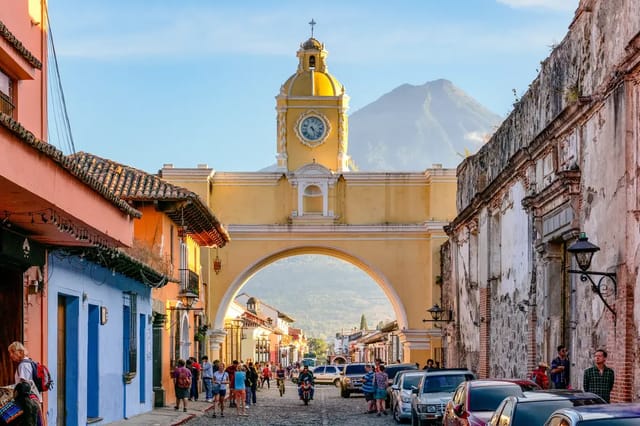
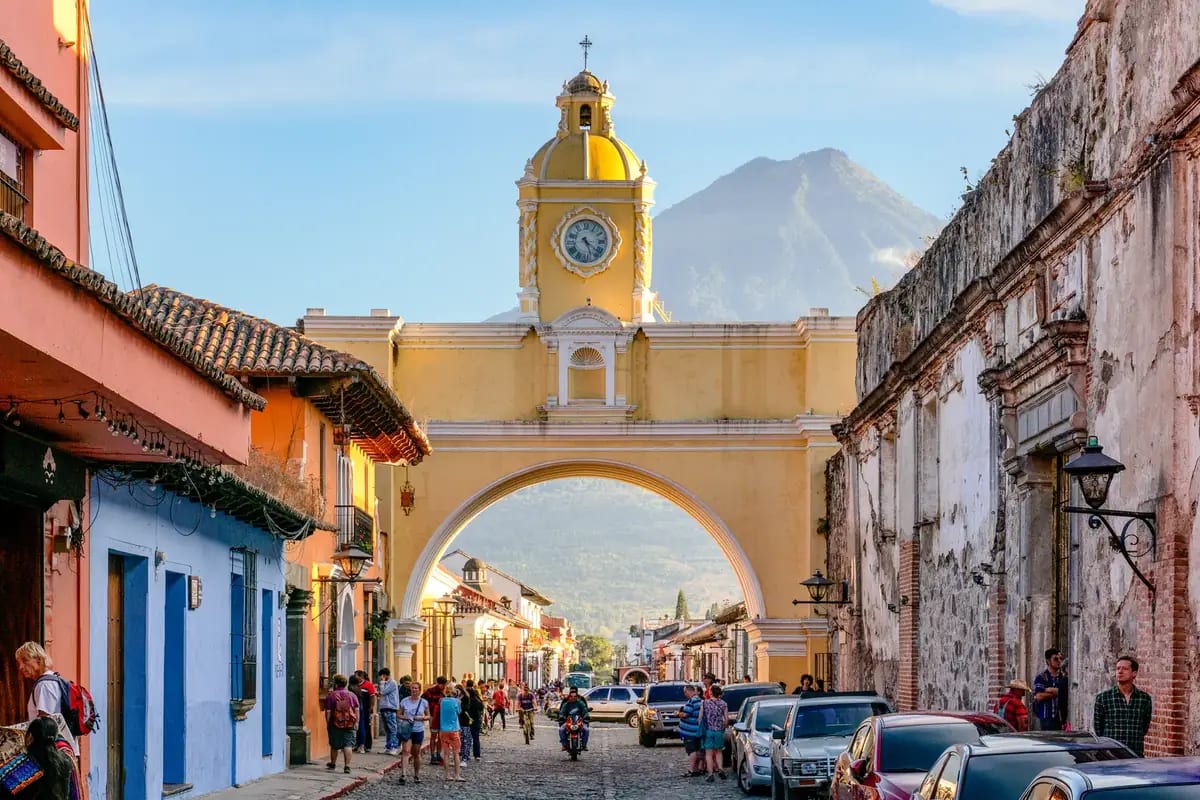
Antigua Guatemala is the place most foreigners picture when they think of moving to Guatemala. The cobblestone streets, the three volcanoes framing the skyline, the colonial architecture painted in faded yellows and terracottas — it looks like a postcard, and it mostly lives up to the image.
I grew up an hour away in Guatemala City, and Antigua was always the weekend escape. When I came back from the US, I spent my first three months here before settling into a routine that splits time between the capital and this colonial town. Antigua is easy to love. It is also easy to misjudge if you only see the tourist surface.
This hub brings together everything about living in Antigua — real costs, block-by-block safety, where to work, where to eat, and what the brochures leave out.
Why Antigua?
Antigua was the colonial capital of Central America until earthquakes destroyed it in 1773. That destruction preserved it — the city never industrialized, never got high-rises, never lost its 16th-century street grid. UNESCO made it a World Heritage Site in 1979, and strict building codes keep it that way. No building over two stories. No neon signs. No chain restaurants on the main streets.
For the practical considerations:
- 45 minutes from the international airport in Guatemala City. No other expat destination in Guatemala is this close to flights home.
- Walkable. The entire central area is about 12 blocks by 12 blocks. You can walk from one end to the other in 20 minutes.
- Established expat infrastructure. English-speaking doctors, international restaurants, coworking spaces, Spanish schools, and a social scene that makes it easy to meet people your first week.
- Safe by Guatemalan standards. Tourist police patrol the center. Violent crime rates in Sacatepequez are among the lowest in the country. See our safety guide for block-by-block data.
- Beautiful climate. At 1,530 meters (5,020 feet) elevation, it is warm during the day (22–25°C / 72–77°F) and cool at night (12–15°C / 54–59°F) year-round.
- Semana Santa epicenter. Antigua hosts the largest Holy Week celebration in the Americas, with UNESCO-recognized processions and elaborate sawdust carpets drawing over 300,000 visitors each April. See our Semana Santa guide for the week’s schedule and alfombra viewing times, and the festivals calendar for dates and crowd-level planning.
- UNESCO World Heritage Site. Strict building codes prevent overdevelopment — the city will look like this for decades.
The downsides are real too. Tourist prices on the main streets. Cobblestones that destroy shoes and make rolling luggage a nightmare. Limited nightlife compared to Guatemala City. A certain expat bubble where you can spend months without learning Spanish if you are not intentional about it.
Explore the Antigua cluster
Also part of the Antigua cluster: Coworking · Cost of Living · Buying Real Estate
The Antigua reality (what nobody tells you)
Cost of living overview
Antigua is more expensive than most of Guatemala but still a fraction of US or European costs. The tourist center inflates prices, but walk five blocks in any direction and costs drop. All figures below are in USD at the current exchange rate.
| Expense | Budget | Comfortable | Luxury |
|---|---|---|---|
| Rent (1BR furnished) | $500–800 | $900–1,400 | $1,500–3,000 |
| Groceries | $100–150 | $200–300 | $350–500 |
| Eating out | $60–100 | $150–250 | $300–500 |
| Transport | $15–30 | $40–80 | $100–200 |
| Utilities (electric, water, gas) | $30–50 | $60–90 | $100–150 |
| Internet | $30 | $30–50 | $40–66 |
| Healthcare | $15–25 | $40–80 | $100–200 |
| Monthly Total | $640–958 | $1,213–1,910 | $2,410–4,046 |
Rent tip: Rent drops 20–30% if you sign a 6-month or 12-month lease instead of month-to-month. Ask for “precio de planta” (long-term price) and negotiate in person. The best deals are never listed online — walk the streets looking for “Se Alquila” (For Rent) signs.
For the full breakdown with grocery prices and city-by-city comparisons, see our cost of living page.
Neighborhoods at a glance
Antigua is small enough that “neighborhoods” really means a few distinct areas within walking distance. Here is the quick version — the where to live guide has the full sector-by-sector breakdown.
Central Antigua (dentro del damero): The 12×12 block colonial core. Highest rent ($600–2,000/mo furnished), most tourists, best walkability. Street parking is a constant headache.
San Pedro Las Huertas: 2 km south. Quieter, more Guatemalan, cheaper ($300–600/mo). Tuk-tuk to the center for Q10. Good for long-termers who want lower costs.
San Juan del Obispo: Hillside village with panoramic valley views, very limited services. Ideal for writers and remote workers who want solitude ($250–500/mo).
Ciudad Vieja: 5 km southwest, a working Guatemalan town with its own market. Very few tourists, significantly cheaper ($200–400/mo), chicken bus connection every 10 minutes.
Jocotenango: Just north, walking distance (15 minutes). Budget-friendly with easy Antigua access, good for families ($250–500/mo). More commercial and noisier near the main road.
All 20 Antigua-area neighborhoods (by median home price)
Hand-tracked weekly. Each neighborhood links to a full guide with active listings, climate data, schools, demographics, and what locals and expats say.
Internet and coworking
Antigua’s internet has improved dramatically. The central area now has fiber options from Tigo and Claro with speeds up to 300 Mbps on premium plans.
- Tigo Fiber: Q235–350/month (~$30–45). Up to 300 Mbps. Available in the central grid and expanding.
- Claro Fiber: Q229–350/month (~$30–45). Up to 200 Mbps. Slightly smaller coverage area.
- Starlink: Q345–510/month (~$45–66). Works anywhere, no installation wait. Good backup for areas without fiber.
Reality check: Fiber is available in the center, but if you live in San Pedro Las Huertas or San Juan del Obispo, you may be limited to cable (30–50 Mbps) or need Starlink. Always verify availability at the specific address before signing a lease.
Coworking spaces: Impact Hub Antigua (3a Calle Poniente 4; Mon–Fri 8am–6pm, Sat 9am–1pm; three coworking plans, 50+ Mbps), Socialtel Antigua (6a Avenida Norte 43A — the hotel-coworking hybrid that traded as Selina until that chain wound down), plus a dozen cafes with laptop-friendly WiFi. Neither operator publishes a day-pass rate on its own site, so confirm pricing before you arrive. See our coworking guide for tested speeds.
Getting around
Antigua is fundamentally walkable within the central grid. Beyond the center:
- Tuk-tuks: Q5–20 within Antigua, Q10–25 to surrounding villages. Agree on price before getting in — no meters.
- Chicken buses: Q3–5 to Ciudad Vieja, Jocotenango, or San Pedro Las Huertas. Frequent, cheap, crowded.
- Uber: Works in Antigua, fewer drivers than the capital. Fares are app-quoted (no fixed price); the run to Guatemala City or the airport was about Q320 (~$42) one-way on a May 2026 fare check.
- Shuttle services: Q80–120 to Guatemala City, Q150–250 to Lake Atitlan. Book at agencies on 5a Avenida.
- Renting a car: Not necessary for Antigua itself, useful for day trips. Q200–400/day.
Full transport comparison with prices and timing: Transportation guide.
Safety
Antigua is one of the safest places in Guatemala. Sacatepequez department has a homicide rate well below the national average, and POLITUR (tourist police) patrol the central streets day and night.
Common sense rules:
- Avoid walking alone outside the central grid after 10 PM — use a tuk-tuk or Uber.
- Petty theft (phone snatching, pickpockets) is the main risk, not violent crime.
- The road to Guatemala City (RN-14) occasionally has highway robberies at night — travel during daytime or use shuttle services.
For block-by-block detail and current crime data, see Safety in Antigua.
Healthcare
Antigua has several private clinics for routine care. For anything serious, Guatemala City’s world-class private hospitals (Hospital Herrera Llerandi, Centro Medico) are 45 minutes away.
- Private doctor visit: Q150–400 ($19.50–52)
- Dental cleaning: Q200–400 ($26–52)
- Pharmacy: Well-stocked Farmacias Galeno and Cruz Verde in the center
- Emergency: Hospital Nacional Pedro de Betancourt (public) or private ambulance to Guatemala City
For English-speaking specialists, dental pricing, and the best clinics by neighborhood: Healthcare guide.
Who Antigua is for
Antigua works well for:
- First-time movers to Guatemala who want an easy landing with expat infrastructure
- Spanish students — the entire town is built around language schools
- Remote workers who need reliable internet and cafe culture
- Couples and retirees who value walkability and a beautiful environment
- Anyone who wants Guatemala access without Guatemala City’s chaos
Antigua may not be for you if:
- You want big-city nightlife (Guatemala City is better)
- You need the absolute lowest cost (Xela or Lake Atitlan are cheaper)
- You want to fully immerse away from other foreigners (the expat bubble is real)
- You need a car-friendly town (cobblestones are brutal, parking is limited)
Frequently asked questions
Is Antigua Guatemala safe for expats?
Yes. Antigua is one of the safest cities in Central America. The Sacatepequez department has a homicide rate well below the national average, and POLITUR (tourist police) patrol the central streets around the clock. Petty theft — phone snatching, pickpockets — is the main concern. Violent crime is rare. See our block-by-block safety guide for specific street data.
How much does it cost to live in Antigua Guatemala?
A comfortable single person spends $1,200–1,700 per month: furnished 1BR rent ($500–800), groceries ($200–300), eating out ($200–350), utilities ($40–80), internet ($35–50), transport ($30–50). Budget living from $800 if you rent outside the center and cook at home. Luxury colonial houses with courtyards run $2,500–3,500. Full breakdown: cost of living page.
Can I work remotely from Antigua?
Yes. Antigua has 50–300 Mbps fiber internet from Tigo and Claro in the historic center, multiple coworking spaces (Impact Hub Antigua, plus Socialtel Antigua — the hotel-coworking hybrid that traded as Selina until that chain wound down), and dozens of cafes with reliable WiFi. The CST timezone (UTC-6) aligns with US business hours. See the coworking guide for tested speeds.
How do I get from Guatemala City airport to Antigua?
The drive takes 45–75 minutes depending on traffic. Shuttle service ($10–15, book through agencies on 5a Avenida), Uber (app-quoted with no fixed fare — about Q320 / ~$42 one-way on a May 2026 fare check), private transfer ($30–50), or chicken bus via Zona 1 GC ($1.30, not recommended with luggage). Avoid driving RN-14 at night. Full options: Getting here guide.
Do I need to speak Spanish to live in Antigua?
You can get by with English in the tourist core — menus, tours, and many real estate agents operate in English. Beyond the center, Spanish is essential. Antigua has the densest concentration of Spanish schools in Central America, with 1-on-1 instruction starting at $130/week. See the Spanish schools guide for school-by-school comparison.
What’s the best time of year to visit Antigua?
October–November and February–May are ideal: dry season, mild temperatures, manageable tourist crowds. Semana Santa (Holy Week, usually April) draws 300,000+ visitors — avoid it if you want quiet, visit if you want the world’s largest Holy Week processions. Rainy season (May–October) brings afternoon storms for 1–2 hours but cool, clean evenings and lush scenery. See the festivals calendar for crowd-level data by month.
What a night on Airbnb costs here
Short-stay asking rates by size of place, captured once a month from live Airbnb search results for a weekday stay about a month out and priced for a 2-adult booking. Read the segments, not one headline number; the full breakdown with typical ranges and localities is on the market’s listings page. See the full breakdown.
Data collected 2026-09-04 for a 2026-10-06 to 2026-10-08 stay. Airbnb prices change daily and by date: check live before booking.
| Type of stay | Median per night | Typical range (p25–p75) | Listings |
|---|---|---|---|
| Entire place, 2 guests | $92 | $68–$142 | 49 |
| Private room in a home, 2 guests | $35 | $30–$56 | 41 |
| Hotel room listed on Airbnb, 2 guests | $256 | $116–$266 | 40 |
| Entire place, 3–4 guests | $145 | $91–$215 | 40 |
| Entire place, 5–8 guests | $306 | $279–$434 | 74 |
| Entire place, 9+ guests | $423 | $316–$591 | 134 |
Nightly rate as Airbnb showed it for a 2-adult booking on those dates, before any extra-guest fee; where a promotion was displayed it is usually already inside the rate. The capture does not return cleaning or service fees, so there is no "all-in" figure. Sample: 400 listings (399 priced); 75% entire places, 11% hotel rooms, 60% superhosts; 39% displayed a promotion (median 13% off the crossed-out price); median rating 4.91 on a median 47 reviews. Typical place: 3 bedroom(s), 3 bath(s). Among listed amenities: Wi-Fi 99%, kitchen 81%, air conditioning 13%, pool 16%, free parking 62% (what the listing lists; absence is not proof it is missing). * = small sample (10–19 listings); — = fewer than 10 listings, no median.
| Locality (as Airbnb labels it) | Median per night, all sizes | Listings |
|---|---|---|
| Antigua Guatemala | $282 | 328 |
| Ciudad Vieja | $336* | 14 |
Localities with at least 12 priced listings and no single host above 40% of them; all sizes mixed, so a locality of large homes reads expensive. Villages and municipios appear exactly as Airbnb labels them.
Captured 2026-09-04 · 2026-10-06→2026-10-08 · USD (capture date · stay queried · currency), 2 adults, 2-night weekday stay. Captured once a month: a capped sample of Airbnb search results for one fixed 2-night weekday stay about a month ahead, priced for a 2-adult booking. Not every listing, only those still open for those dates; the nightly rate Airbnb showed for that stay (a displayed promotion is usually already inside it), not booked rates. Large homes are over-represented in the sample, so compare the guest-count segments, not the overall median. Source: Airbnb search results via Apify.
Check today's prices on other platforms (each button opens that platform's own search for the place named; we do not compare their prices here)
Affiliate links: if you book, we earn a small commission at no extra cost to you. The buttons do not compare prices with the table above; they open each platform's own search. Airbnb has no affiliate program, which is why there is no Airbnb button.