
Foreigners can own real estate in Guatemala. The rules are simpler than most foreign buyers expect, with one major exception: the 200-meter coastal and lake shoreline restriction in Article 122 of the Constitution. This page covers exactly what foreign buyers can and cannot do, the sociedad anónima structure when it’s required, and the practical steps to navigate the process.
The simple rule
For property outside the 200-meter coastal and lakeshore zones, and outside the 15-kilometer border zones, foreigners can buy and own property in their own name with the same rights as Guatemalan citizens. No corporation required. No special permits. Standard purchase process.
This covers the vast majority of attractive Guatemalan real estate:
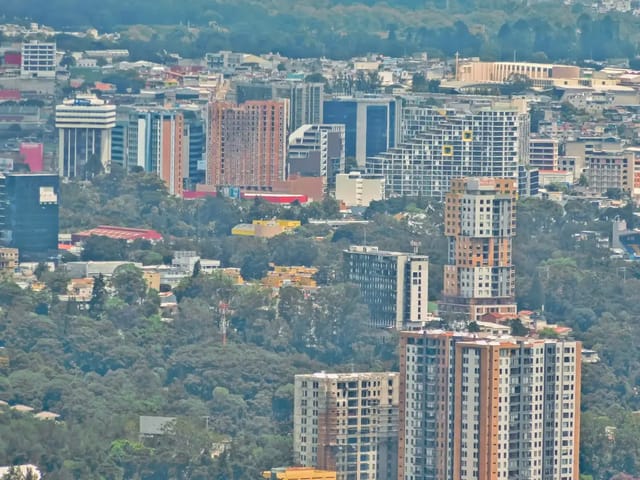
- All of Guatemala City, including the premium expat zones (10, 14, 15, 16)
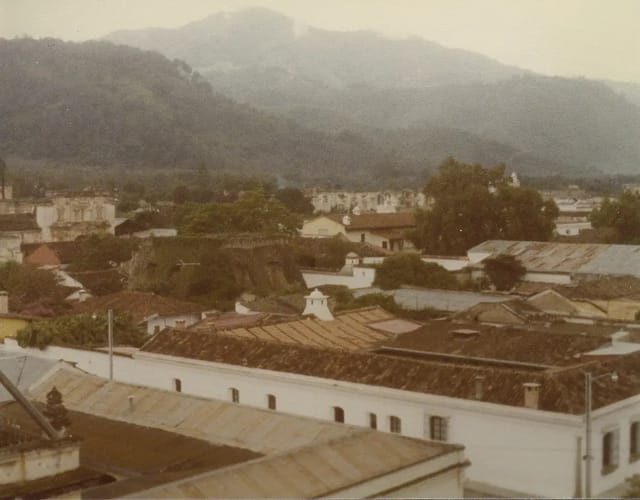
- Most of Antigua Guatemala (excluding very specific lakefront-adjacent properties)
- Inland Mixco, Santa Catarina Pinula, and the Antigua-area villages
- Quetzaltenango, Cobán, Huehuetenango, Petén-area inland properties
- Inland Monterrico (more than 200m from beach)
- Inland Lake Atitlán (more than 200m from shore)
For these properties, foreign ownership is direct, simple, and identical to Guatemalan-citizen ownership.
The exception: Article 122
The Guatemalan Constitution, Article 122, restricts direct foreign ownership in three specific zone types:
| Zone | Width | Examples |
|---|---|---|
| Coastline | 200 meters from high-tide line | Pacific (Monterrico, Iztapa, Champerico) and Atlantic (Livingston, Puerto Barrios) |
| Lake shores | 200 meters from lake’s high-water line | Lake Atitlán, Lake Izabal, Lake Petén Itzá |
| International borders | 15 kilometers | Border with Mexico, Belize, Honduras, El Salvador |
The full Spanish text is in the Constitución Política de la República de Guatemala, Artículo 122, available on the official government website.
The restriction applies to direct ownership by foreign natural persons. It does not apply to Guatemalan corporations — even if those corporations are 100% foreign-owned. That’s the legal mechanism Article 122 leaves open.
The sociedad anónima (S.A.) solution
To own property within an Article 122 zone, foreigners form a Guatemalan sociedad anónima (anonymous society — equivalent to a US corporation) and the corporation buys the property. The corporation is a legal Guatemalan entity. The foreign buyer owns 100% of the corporation’s shares.
This is not a workaround or grey area — it’s the formal mechanism. Thousands of foreign-owned beachfront and lakeshore properties in Guatemala operate this way.
Setup process:
- Hire a Guatemalan attorney specializing in real estate (cost: typically $500-$1,000 for the corporation setup work alone)
- Choose corporation name (must be unique and registered)
- Draft and notarize the articles of incorporation (acta constitutiva)
- Register at the Registro Mercantil (Commercial Registry)
- Obtain the NIT (tax ID) at SAT
- Open a corporate bank account
- Now the corporation can purchase the property
Required Guatemalan participation:
- At least one officer or director must be Guatemalan or Guatemalan-resident
- Often, your real estate attorney serves in this role for a small annual fee
- The foreign owner retains 100% of shares and full economic ownership
Setup costs (typical 2026):
| Item | Cost |
|---|---|
| Attorney fees (corporation formation) | $500-$1,000 |
| Notary fees | $300-$500 |
| Registro Mercantil registration | $100-$200 |
| Stamp tax and miscellaneous | $100-$300 |
| Total setup | $1,000-$2,000 |
Annual maintenance costs:
| Item | Cost |
|---|---|
| Accountant (monthly bookkeeping + annual tax filing) | $300-$800/year |
| Local director fee (if your attorney serves) | $100-$500/year |
| Registry annual fee | $50-$100/year |
| Tax filings and IVA returns | $100-$300/year |
| Total annual | $500-$1,500/year |
These costs are the trade-off for accessing restricted-zone properties. For a $300,000 beachfront property, $750/year in corporation maintenance is roughly 0.25% of property value annually — meaningful but not prohibitive.
What “200 meters from the shore” actually means
The 200-meter measurement is from the high-tide line (for coast) or high-water line (for lakes). This is critical because:
- High-tide is not the same as where the water sits at low tide
- Storm surge during hurricanes can extend the effective high-water line
- For lakes, water levels fluctuate with rainfall and historical droughts
In practice, the measurement is documented in the property’s title study (estudio registral). The agent should be able to provide written documentation of the property’s position relative to the 200-meter line. If they cannot or will not, walk away. This is a basic due-diligence requirement that any legitimate seller can answer.
For agents who say “approximately 200 meters” without documentation: insist on a formal survey if it matters to your structure decision. A surveyor (perito agrimensor) costs $200-$500 and provides definitive documentation.
Which government body authorizes foreign property purchases?
A common confusion among foreign buyers: the Ministerio de Relaciones Exteriores (MINEX — Guatemala’s Ministry of Foreign Affairs) does not authorize property purchases by foreigners. This is one of the most-asked questions in foreign-buyer research, and the answer surprises people.
Here is which body actually does what:
| Body | Role in foreign property purchase |
|---|---|
| MINEX (Ministry of Foreign Affairs) | Apostille of foreign documents (passport, power of attorney, marriage certificate) so they’re valid for use in Guatemala. No approval role for the purchase itself. |
| Registro General de la Propiedad (RGP) | The land registry. Records the property title and transfer. Verifies the property’s legal status, including whether it falls within an Article 122 restricted zone. |
| Registro Mercantil | If you use the sociedad anónima route, the corporation is formed and registered here. |
| SAT (tax authority) | Issues the NIT (tax ID) you need to buy property, and processes the IUSI property tax. |
| Notario público (notary-lawyer) | Drafts the escritura pública (deed) that transfers ownership. Verifies the seller’s title is clean. |
| Municipality | Issues IUSI assessment and the boleto de ornato. Records the property change at the municipal level. |
In short: no central ministry “approves” a foreign buyer. Article 122 is enforced by the registry refusing to record a direct foreign purchase in a restricted zone — not by any ministry granting or denying permission. The sociedad anónima route bypasses this by making the buyer a Guatemalan legal entity. There is no MINEX permit, no “foreign investment authorization,” no special government clearance for normal property purchases.
If a real estate agent or attorney tells you “we need to file with MINEX” or “there’s a special foreign-buyer approval process at the Ministry of Foreign Affairs,” that’s a red flag — either a scam or a misunderstanding of Guatemalan property law. The only legitimate paperwork at MINEX is the apostille on your foreign-issued documents (passport, etc.), which is a routine document-authentication step, not an approval.
The 15-kilometer border zone
Properties within 15 kilometers of an international border face the same Article 122 restriction with an added wrinkle: even the corporation route can be more restricted. Direct foreign ownership is not allowed; corporation ownership requires special procedures and may face administrative hurdles.
Border-zone affected areas include:
- Petén near the Belize border
- Northern Huehuetenango near Mexico
- Southeastern Jutiapa near El Salvador
- San Marcos department near Mexico
For most foreign buyers, border-zone properties are not the primary target. If a property you’re considering falls in this zone, work with a real estate attorney with specific border-zone experience. Generic real estate attorneys often miss the additional restrictions.
Choosing the right structure for you
Most foreign buyers fall into one of three patterns:
Pattern 1: Direct ownership outside restricted zones. You buy property in Antigua proper, Guatemala City zones 10/14/15/16, inland Monterrico, etc. No corporation, no annual maintenance burden. Same as buying in your home country.
Pattern 2: Sociedad anónima for restricted-zone property. You want the lakefront or beachfront. Form the S.A., the S.A. buys the property, you own the S.A. Annual cost ~$500-$1,500.
Pattern 3: Hybrid — direct + S.A. You own a Centro Antigua house directly (outside restriction) and a Lake Atitlán house through an S.A. The two structures are completely separate. Many long-term Guatemalan-resident foreigners have this setup.
There’s no single right answer — match the structure to the specific property and your risk tolerance.
What to confirm before buying
Required confirmations before any deposit on any property:
- Distance to nearest restricted zone — written documentation, with measurement methodology
- RGP registration status — folio number provided
- Title chain integrity — no breaks, no informal transfers
- No tax liens or pending assessments — IUSI clearance certificate from municipality
- No pending legal disputes — court records check (your attorney handles this)
For restricted-zone properties additionally:
- Sociedad anónima decision — your attorney’s recommended structure
- Director arrangement — who serves as Guatemalan director, what’s the annual fee
- Corporation name reservation — done before contract signing
What this means for the 30-page real estate cluster
Across the buying guides for Antigua, Lake Atitlán, Monterrico, and other regions, this 200-meter rule is the most-asked question and the most-misunderstood point. Every regional guide on this site links back to this rules page so the legal context is consistent.
If you’re working through a specific region, see:
- Buying in Antigua Guatemala — sector-by-sector
- Buying at Lake Atitlán — town-by-town
- Buying in Monterrico — beach-property-specific
- Closing costs and process — what to budget
- Property taxes (IUSI) — annual obligations
Need help finding a Guatemalan real estate attorney experienced with foreign-buyer structures? Email stu@livinginguatemala.com.