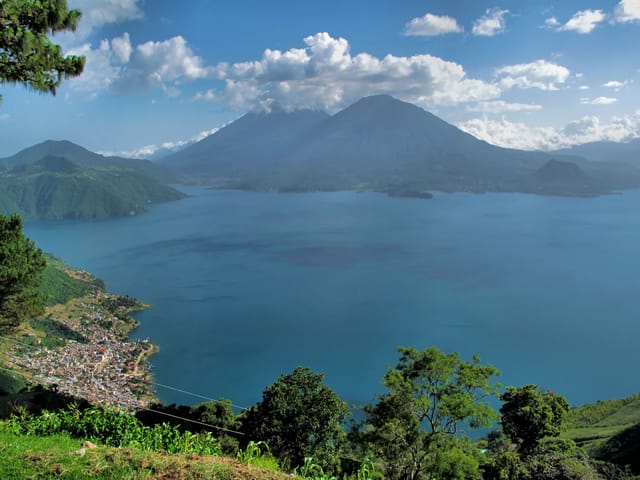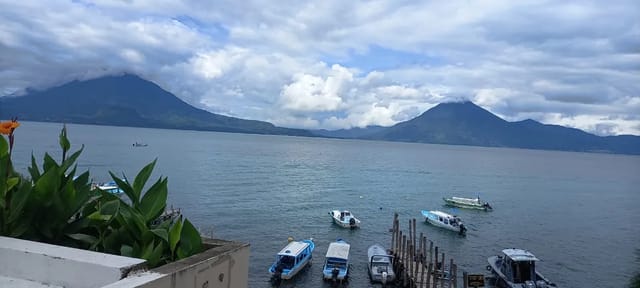
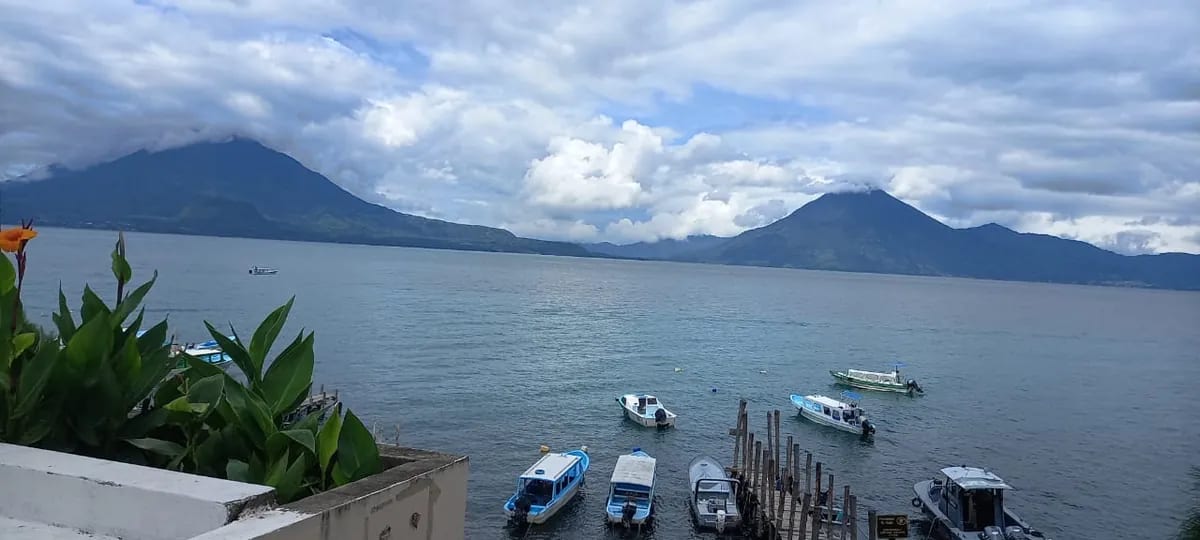
Lake Atitlán is the most coveted real estate market in Guatemala for foreign buyers — and the most legally complicated. Aldous Huxley called it “the most beautiful lake in the world” and most modern visitors agree. But the 200-meter shoreline restriction in the Guatemalan Constitution applies here in a way that catches many foreign buyers off guard, and the towns around the lake each have distinct infrastructure realities that listings often gloss over.
This guide covers what listings won’t tell you: the legal mechanics of foreign lakefront ownership, town-by-town water and access risks, why some towns are better for buying than renting, and the specific due diligence that separates a successful Atitlán purchase from a costly mistake.
For rental prices and the comprehensive town-by-town comparison, see our Lake Atitlán real estate hub page. This buying guide focuses on the legal and risk dimensions specific to purchase.
The 200-meter shoreline rule
Article 122 of the Guatemalan Constitution states (in relevant part): foreigners cannot directly own land within 200 meters of lakeshores, coastlines, or border zones. This applies absolutely to all lakefront property at Lake Atitlán.
What this means for a foreign buyer of a lakefront property:
Option 1: Buy a property beyond the 200-meter line. Some Atitlán towns have buildable land more than 200 meters from the lake (San Marcos La Laguna upper sectors, certain Panajachel hillside lots, San Juan La Laguna inland). These can be purchased directly by foreigners in their own name. Easier, cheaper, faster. The trade-off is the lake view and access often diminishes.
Option 2: Form a Guatemalan sociedad anónima (S.A.) corporation. The corporation, which is a Guatemalan legal entity, can own the lakefront property. The foreign buyer owns the corporation. This is legal, common, and not a workaround — it’s the formal mechanism.
Corporation costs:
- Setup: $1,500-$3,000 (lawyer + notary + registration)
- Annual: $500-$1,500 (accountant fees, tax filings, registry maintenance)
- Mandatory: at least one Guatemalan officer or director on the corporation (your lawyer typically arranges)
If a property is more than 200 meters from the shoreline (measured at high water), no corporation is needed. Always confirm the specific distance from the lake before assuming corporation costs will or won’t apply. Some agents will say “outside the restriction” without measurement; insist on documentation.
Town-by-town buying analysis
Panajachel — the only true full-service town
The single town with paved road access, ATMs, supermarket, hospital nearby (Hospital Nacional in Sololá, 15 min away), and full commercial infrastructure.
Buying profile:
- Mid-to-high prices ($200,000-$600,000 typical for 2-3 bed homes)
- Active buyer market — easier to resell
- Lakefront properties almost all within 200m → require S.A.
- Inland Panajachel and hillside sectors often outside 200m → direct ownership possible
- Best resale potential of any Atitlán town
Best for: First-time Atitlán buyers, retirees who want infrastructure, anyone uncertain about lifestyle commitment (easier to resell if Atitlán doesn’t work out).
Watch for: Weekend tourist traffic from Guatemala City inflates prices in central Panajachel. The “Calle Santander” and main beach area is the most touristy. Quieter sectors (Jucanya across the bridge, upper Panajachel toward Sololá) offer better value.
San Marcos La Laguna — wellness/yoga community
Small town on the western shore. Strong yoga, meditation, vegan/raw food, and wellness culture. International expat community concentrated in wellness retreats and small restaurants.
Buying profile:
- Mid prices ($150,000-$500,000)
- Limited road access — main approach is by boat or via narrow road from San Pablo
- Some hillside lots beyond 200m offer direct foreign ownership
- Strong rental market for short-term retreats
Best for: Buyers aligned with wellness/yoga community lifestyle. Retirees seeking peace. Investors interested in retreat-rental income.
Watch for: Some San Marcos lots have unclear title chains — properties have changed hands informally for decades. Title study is non-negotiable here.
Santa Cruz La Laguna — small expat community, boat-access
Boat-access town just north of Panajachel. Small permanent expat community, several long-running hotels and restaurants.
Buying profile:
- Mid-to-premium prices ($200,000-$800,000+)
- Most properties are accessible only by boat — major lifestyle implication
- Very quiet, beautiful, isolated feel
- Limited buyer pool when reselling
Best for: Buyers who actively want isolation and don’t mind boat-only logistics. Long-term retirees.
Watch for: Boat service suspends during severe weather (rare but happens; some storms have stranded properties for 2-3 days). Property maintenance is harder when contractors must boat in materials.
San Pedro La Laguna — budget, party scene
The backpacker and budget-traveler town. Spanish schools, lively bar scene, lowest prices on the lake.
Buying profile:
- Lowest prices ($80,000-$300,000 typical)
- Active rental market, but mostly budget/backpacker → low rental yields per night
- Resale is harder — buyer pool is small (most San Pedro visitors rent or stay short-term)
- Water quality issues documented (sewage runoff into lake near town)
Best for: Budget-focused buyers, Spanish-school operators, hostel investors.
Watch for: Sewage and lake-water quality issues are real near the San Pedro shoreline. If buying lakefront here, do not assume swimmable water year-round — check current contamination data from AMSCLAE (Autoridad para el Manejo Sustentable del Lago de Atitlán).
San Juan La Laguna — artisan village, undervalued
Adjacent to San Pedro but with a completely different character — quieter, artisan-focused (textile cooperatives, painting), Maya cultural emphasis.
Buying profile:
- Lower-mid prices ($100,000-$300,000)
- Less expat saturation than San Marcos or Panajachel
- Stronger community ties (Maya cooperatives are land-rights-active)
- Some upper-village lots have lake views without 200m restriction
Best for: Buyers wanting authenticity, lower prices, and less expat density.
Watch for: Indigenous community land claims can complicate certain sectors. Title study by a lawyer with regional experience (not Guatemala City generalist) is essential.
Jaibalito — true isolation, boat-only
Smallest town on the lake. Boat-only access. No road. Population mostly Maya families plus a handful of expat households.
Buying profile:
- Limited inventory ($150,000-$500,000+ for what exists)
- Maximum isolation
- Severe boat-service constraints during weather
Best for: Buyers with extreme isolation preference and willingness to absorb boat-logistics complexity.
Watch for: Limited resale market. If you buy and need to sell, expect 12-24+ months on market.
Santiago Atitlán — the largest town, Maya cultural center
Largest population, southwest shore, primarily Maya population, strong cultural identity (Tz’utujil community).
Buying profile:
- Mostly local market — limited foreign-buyer activity
- Lowest “international” expat density of any major lake town
- Lower prices but smaller foreign-buyer pool
Best for: Buyers with deep Spanish/Tz’utujil language skills and desire to integrate into Maya cultural life. Not a typical foreign-buyer destination.
Water quality and infrastructure realities
Lake Atitlán has documented water quality issues that affect different towns differently:
Cyanobacteria blooms: AMSCLAE has reported recurring cyanobacteria blooms in the lake, particularly in shallow embayments near towns with sewage runoff. Direct lake water consumption is unsafe without treatment.
Sewage management: Most Atitlán towns lack proper sewage treatment. Many homes use septic systems that are sometimes poorly maintained. New construction must include modern septic; older properties may need septic upgrades.
Drinking water: No town has safe lake water for drinking. Most homes use either: municipal piped water (Panajachel, Sololá-administered areas) with filtration, or bottled/delivered water, or roof-catchment with treatment systems. Always confirm a property’s water source and treatment before buying.
Internet: Variable. Panajachel has fiber from multiple ISPs. Starlink works lake-wide but is expensive. Boat-access towns sometimes have only mobile-data or Starlink.
Electricity: Generally reliable in road-access towns. Boat-only towns occasionally experience longer outages. Solar/battery backup is common in expat homes.
Title and registration
Lake Atitlán has a higher rate of title complications than Antigua or Guatemala City for several reasons:
- Informal market history: Properties around the lake changed hands informally for decades, with verbal agreements and incomplete RGP registrations
- Indigenous community lands: Some sectors have communal-land overlays that conflict with individual title claims
- Boundary shifts: Lake levels have changed historically, complicating “lakefront” boundary definitions
The estudio registral (title study) is mandatory before any deposit. Cost: $400-$1,000 (more than Guatemala City because of complexity). Use an attorney with specific Atitlán experience — Guatemala City generalists miss things.
What to ask the agent
Required questions before any offer:
- Distance to the 200-meter shoreline restriction zone — written documentation, not verbal estimate
- RGP folio number — title is registered, not “in posesión”
- Water source — municipal, well, lake-catchment, or roof-catchment? Treatment system?
- Internet provider and current service quality
- Sewage system (septic or municipal) and last service/inspection date
- Boat access (if applicable) — which boats serve, schedule, weather-suspension history
- Most recent IUSI assessment, paid current?
- If on Maya communal land or near indigenous boundaries — any documented disputes?
- If sociedad anónima is required — does the seller have a recommended attorney for setup, or do you bring your own?
- Past lake-level documentation — for lakefront properties, any history of high-water flooding?
Working with us
We rank Lake Atitlán listings using the methodology in our Real Estate Methodology page. Every listing — across every Atitlán town and every agency — is scored identically.
If you’re considering an Atitlán purchase, we recommend:
- Read our methodology page
- Read our Lake Atitlán real estate hub page for rental and town-by-town context
- Spend at least 2 weeks in your target town before deciding (rent first, ideally during rainy season May-October)
- Hire an Atitlán-experienced real estate attorney
- Commission the estudio registral before any deposit
- Confirm water source and treatment in writing
Need help finding a property at Lake Atitlán? Email stu@livinginguatemala.com.
Sale listings: Lake Atitlán sale listings — every agency in one grid