$400–700 USD/mo
50–200 Mbps fiber + Starlink
7.0/10 (Solola)
22–25°C day / 12–15°C night
3 hours
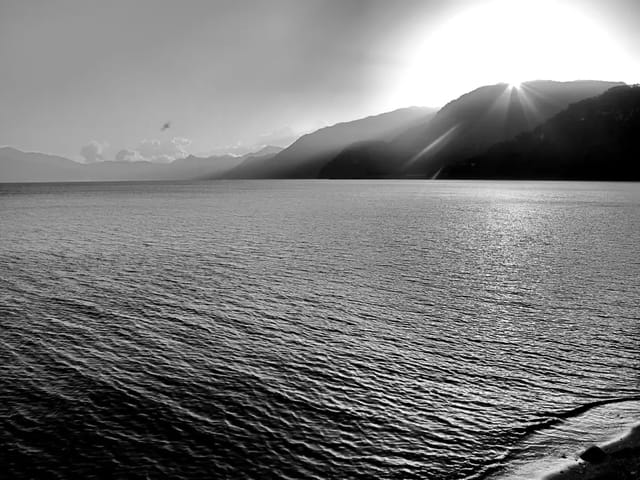
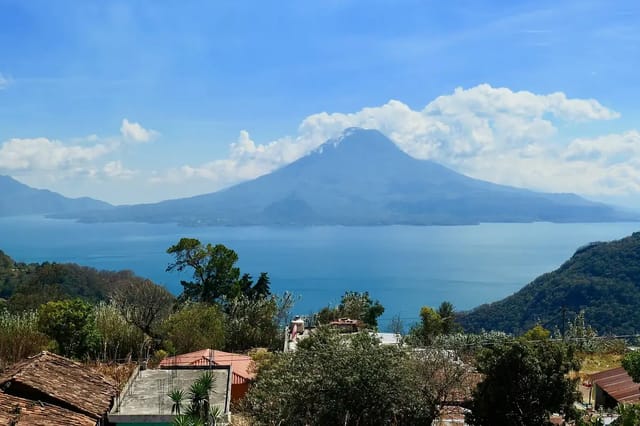
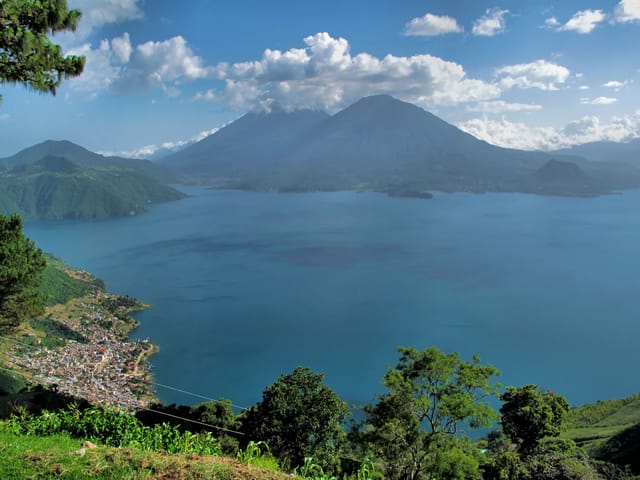
Panajachel — “Pana” to anyone who has lived here more than a week — is the gateway town to Lake Atitlan, the lake Aldous Huxley called “the most beautiful in the world.” It sits on the northern shore at the mouth of the Panajachel River, with three volcanoes (Toliman, Atitlan, San Pedro) rising directly across the water.
Pana is not the prettiest village on the lake. San Marcos is more spiritual, San Pedro is younger and louder, Santa Cruz is more dramatic. But Pana is the practical hub: paved roads, ATMs, supermarkets, a hospital, a real bus terminal, and the only town on the lake where you can buy almost anything you need without taking a boat. If you are moving to Lake Atitlan and you do not already know which village suits you, start in Pana.
I have been coming to Pana since I was a kid — first family weekends, then weekend trips with friends from Guatemala City. This hub brings together everything about living here: real rents by sector, the Calle Santander reality, internet options, restaurants, things to do, and how to use the lanchas without getting overcharged.
Why Panajachel?
Panajachel grew from a Kaqchikel farming village into a hippie destination in the 1960s and 70s, then into Guatemala’s most accessible Lake Atitlan town. It is the only village with vehicle access to the lakeshore — every other village requires a boat or a long descent from a hilltop highway.
For the practical considerations:
- 3 hours from Guatemala City airport. Easy shuttle access compared to the more remote lake villages.
- Service hub. Banks, supermarkets (Despensa Familiar, Sololex), pharmacies, a private hospital (Hospital Sociedad Protectora del Niño), and the only ATMs you can rely on at the lake.
- Lancha access to all 14 villages. Pana’s two public docks (Calle del Embarcadero and Calle del Lago) connect to San Marcos, San Pedro, San Juan, Santiago, Santa Cruz, and beyond.
- Established expat infrastructure. A 50-year history of foreign residents means English-speaking doctors, real estate brokers, and a small but real coworking scene.
- Beautiful climate. At 1,560 meters elevation, days are warm (22–25°C / 72–77°F) and nights cool (12–15°C / 54–59°F) year-round. No heating, no AC needed.
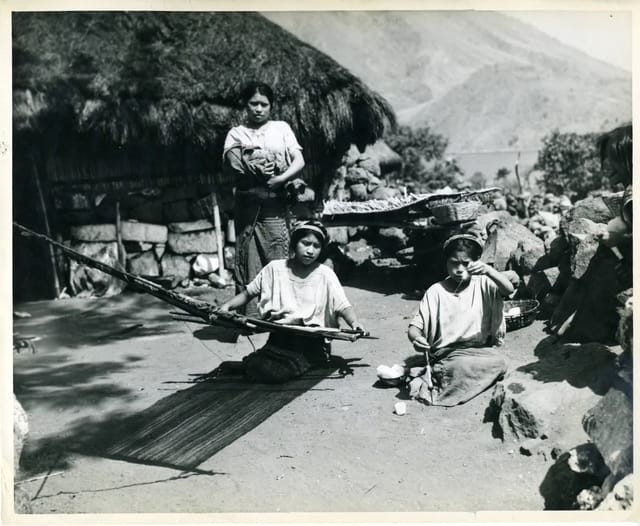
- Indigenous market culture. Calle Santander hosts one of Guatemala’s busiest textile markets, run by Kaqchikel and Tz’utujil women from across the lake.
The downsides are real. Calle Santander is a 1-km tourist gauntlet that locals avoid. Foreign tax — the unspoken markup on rent, taxis, and souvenirs — is larger here than in Guatemala City. Lake water levels rise each rainy season and have flooded lakefront properties multiple times since 2010. And if you wanted yoga retreats and ayahuasca, you came to the wrong village (try San Marcos).
Explore the Panajachel cluster
Also useful for the Panajachel cluster: Lake Atitlan overview · Solola department · Cost of Living Guatemala
The Panajachel reality (what nobody tells you)
Calle Santander is a tourist street, not a place to live. The 1-km strip from the highway down to the lake is where you eat, shop, and arrange tours. Locals and longer-term expats live in Jucanya (across the river), San Jorge la Laguna (uphill), or in the quieter side streets behind Avenida los Arboles.
The afternoon wind (“Xocomil”) is real. From roughly 1 PM onward in the dry season, a strong north-south wind blows across the lake, kicking up whitecaps. Schedule lake crossings for the morning. Lanchas still run in the afternoon but the ride is wet and rough.
Power outages happen. Not as bad as smaller villages, but expect 2–6 hour outages a few times per year, especially during heavy rains. A small UPS for laptop/router is worth it.
Tigo Fiber is mostly central-Pana only. If you live in Jucanya, San Jorge, or up the hillside, you may be limited to 4G hotspots, slow cable, or Starlink (which is what most digital nomads use here as a primary, not a backup).
Cost of living overview
Panajachel sits between rural Guatemala (Solola department averages $700/month for a comfortable single) and Antigua. Lakefront and Calle Santander rents are inflated; walk five minutes inland and prices drop 30%. All figures in USD at the current exchange rate.
| Expense | Budget | Comfortable | Luxury |
|---|---|---|---|
| Rent (1BR furnished) | $250–400 | $400–700 | $900–1,800 |
| Groceries | $90–140 | $180–280 | $300–450 |
| Eating out | $50–100 | $150–250 | $250–400 |
| Transport | $10–25 | $30–60 | $80–150 |
| Utilities (electric, water, gas) | $25–45 | $50–80 | $90–140 |
| Internet | $30 | $30–50 | $50–80 |
| Healthcare | $15–25 | $40–80 | $100–200 |
| Monthly Total | $470–765 | $880–1,500 | $1,770–3,220 |
Rent tip: “Furnished, lakefront, all-inclusive” listings on AirBnB are 2–3x what a 6-month lease costs in person. Walk Jucanya and the streets behind 14 Calle and look for “Se Alquila” signs. Negotiate face-to-face. The best long-term deals never appear online. For the wider lake – rent bands and purchase prices in every town, plus the 200-metre shore restriction on foreign ownership – see Lake Atitlan real estate.
For the full Guatemala-wide cost breakdown, see our cost of living page.
Neighborhoods at a glance
Panajachel is small — about 2 km of walkable town from the highway down to the lake. Sectors here are short walks apart, not separate worlds. The where to live guide has the full sector-by-sector breakdown.
Calle Santander corridor (central tourist zone): The 1-km strip from the highway to the public dock. Most expensive ($600–1,200/mo for 1BR), highest tourist density, most restaurants. Convenient for first-timers but loud.
Avenida los Arboles area: One block east of Santander, calmer, mix of Guatemalan and expat residents. Better value ($400–700/mo) with full walkability.
Lakefront (south of 14 Calle): Direct lake views, premium prices ($700–1,800/mo), some flood risk. Beautiful but check elevation history before signing.
Jucanya (across the river): A 5-minute walk over the bridge. Quieter, more Guatemalan, significantly cheaper ($300–500/mo). Where many longer-term expats end up.
San Jorge la Laguna (uphill): 10-minute drive above town. Panoramic lake views, cooler temps, very limited services. For people who want isolation with a car.
Internet and coworking
Panajachel’s internet has improved significantly since 2020 but remains location-sensitive. The center has solid fiber; everything outside the center varies.
- Tigo Fiber: Q235–350/month (~$30–45). Up to 200 Mbps. Coverage is best on Santander, Avenida los Arboles, and the main grid. Spotty in Jucanya, hit-or-miss above the highway.
- Claro Fiber: Q229–350/month (~$30–45). Up to 100 Mbps in central Pana. Smaller footprint than Tigo here.
- Starlink: Q345–510/month (~$45–66). The de facto choice for hillside and lakefront houses outside fiber range. No installation wait.
- 4G/5G mobile: Tigo and Claro both work; Tigo has better coverage on the lake itself.
Reality check: Always test internet at the specific address before signing a lease. A house 100 meters off Santander can be on fiber while the next house up the hill is on 4G hotspots only.
Coworking is light compared to Antigua, but functional: The Eagle’s Nest (above the lake, day passes), Atitlan Coworking (small, central), and a half-dozen cafes on Santander with reliable WiFi (Crossroads Cafe, Cafe Loco, Pana Rock).
Getting around
Panajachel itself is fundamentally walkable end-to-end in 25 minutes. Beyond town, you have the lake.
- Tuk-tuks: Q5–15 anywhere within Pana, Q15–25 to Jucanya or San Jorge la Laguna. Agree on price before getting in.
- Lanchas (public boats): Q25–30 to San Pedro/San Marcos/Santa Cruz, Q15 to closer villages. Departures every 15–30 minutes from the public dock during the day, check the last boat time at the dock (around 5–6 PM).
- Chicken buses: Q3–5 to Solola (departmental capital, 20 min), Q15–25 to Xela or Antigua via Solola.
- Shuttles: Q80–150 to Antigua (2.5 hr), Q150–200 to Guatemala City (3 hr), Q200–280 to Xela. Book at agencies on Santander.
- Renting a car: Generally not necessary in Pana itself, useful for exploring Solola department. Q200–400/day.
Full transport guide with timetables and lancha tips: Panajachel transportation.
Safety
Panajachel is among the safer Lake Atitlan towns, but it is not Antigua. Solola department’s safety score sits around 7/10 in our index — better than most of Guatemala, lower than Sacatepequez (Antigua) at 8.2.
Common sense rules:
- Tourist police patrol Calle Santander and the dock area; presence drops at night.
- Avoid walking the lakeshore alone after dark, especially near the river mouth.
- Keep an eye on bags in the textile market — pickpockets work the busy stalls.
- The road between Pana and Solola has occasional nighttime highway robberies; travel during daytime or use shuttles.
- San Pedro La Laguna has had occasional issues with foreigners and substances.
Petty theft is the main concern. Violent crime against tourists is rare.
Healthcare
Panajachel has the best healthcare on Lake Atitlan, though anything serious will route you to Guatemala City or Xela.
- Hospitalito Atitlan: Private hospital, 24-hour emergency, basic surgical capability
- Sociedad Protectora del Nino: Outpatient clinic and pharmacy
- Private doctor visit: Q150–350 ($19.50–46)
- Dental cleaning: from Q350 (USD 45 on its site) at Clínicas La Guardia in Panajachel, the clinic’s own published price read on 24 September 2026 (dentist prices in Guatemala)
- Pharmacies: Multiple Farmacia Galeno and Cruz Verde locations on Santander
For specialist care (cardiology, complex surgery, MRI), expect to travel 3 hours to Guatemala City or 2 hours to Xela. For anything urgent and life-threatening, helicopter evacuation is sometimes used.
Who Panajachel is for
Pana works well for:
- First-timers at Lake Atitlan who want services and easy access
- Families who need a hospital, supermarkets, and reliable transport
- Remote workers who want lake views without sacrificing fiber internet
- Retirees who want walkable shopping plus a real expat community
- Anyone who wants Lake Atitlan access but is not ready for a boat-only village
Pana may not be for you if:
- You want yoga, ayahuasca, or wellness retreats (try San Marcos)
- You want absolute peace and quiet (try Santa Cruz or Tzununa)
- You want a young party crowd (try San Pedro)
- You want pristine lake views without tourist infrastructure (try Jaibalito)
- You are sensitive to noise — the central streets get loud
For a side-by-side village comparison, see our Lake Atitlan guide.
Frequently asked questions
Is Panajachel safe for expats and tourists?
Yes. Pana is among the safer Lake Atitlan towns, with regular tourist police presence on Calle Santander and around the public dock. Solola department’s homicide rate sits below the national average. Petty theft (pickpockets in the textile market, occasional bag-snatching) is the main risk; violent crime against tourists is rare. Avoid walking the lakeshore alone after dark, and travel the Pana–Solola highway during daylight hours.
How much does it cost to live in Panajachel?
A comfortable single person spends $880–1,500 per month: 1BR rent ($400–700), groceries ($180–280), eating out ($150–250), utilities ($50–80), internet ($30–50), and transport ($30–60). Budget living from $700 if you live in Jucanya and cook at home. Lakefront luxury rentals reach $1,800–3,200/month. Full breakdown: Panajachel where to live and cost of living Guatemala.
Can I work remotely from Panajachel?
Yes. Tigo Fiber covers most of central Panajachel with 50–200 Mbps. Coverage thins fast outside the center — Jucanya, hillside houses, and lakefront properties often need Starlink ($45–66/month) as a primary connection. Several cafes (Crossroads, Cafe Loco) have reliable WiFi. Coworking is limited but exists. CST timezone aligns with US business hours.
How do I get to Panajachel from Guatemala City airport?
About 3 hours by road. Shared shuttle ($25–35) is the cheapest reliable option; private transfer ($90–150) is faster and door-to-door. Rental car works if you are comfortable with mountain roads. From Antigua it is 2–2.5 hours via the same route. Once in Pana, lanchas (public boats, Q25–30) connect you to all 14 lake villages.
How does Panajachel compare to San Pedro and San Marcos at Lake Atitlan?
Pana is the practical hub: paved roads, banks, supermarkets, hospital, ATMs, vehicle access. San Pedro La Laguna is younger and party-leaning, with cheaper rent but more substance-related issues. San Marcos La Laguna is yoga, meditation, and wellness retreats — beautiful but tiny and boat-only. Pana is easiest for first-timers, families, and anyone who values services and reliable transport.
What is the best time of year to visit or move to Panajachel?
November to April is dry season — clear lake views, less rain, comfortable temperatures, but more tourists. May to October brings afternoon storms (1–2 hours, then clear evenings) and lush green hillsides, with the lake often glassy in the morning. December and Semana Santa (Easter week) are peak crowds; January and September are quieter sweet spots. The afternoon Xocomil wind is strongest in dry season — schedule lake crossings before noon if possible.
What a night on Airbnb costs here
Short-stay asking rates by size of place, captured once a month from live Airbnb search results for a weekday stay about a month out and priced for a 2-adult booking. Read the segments, not one headline number; the full breakdown with typical ranges and localities is on the market’s listings page. See the full breakdown.
Data collected 2026-09-04 for a 2026-10-06 to 2026-10-08 stay. Airbnb prices change daily and by date: check live before booking.
| Type of stay | Median per night | Typical range (p25–p75) | Listings |
|---|---|---|---|
| Entire place, 2 guests | $87 | $57–$152 | 58 |
| Private room in a home, 2 guests | $43 | $21–$78 | 31 |
| Hotel room listed on Airbnb, 2 guests | — | — | 7 |
| Entire place, 3–4 guests | $175 | $105–$242 | 41 |
| Entire place, 5–8 guests | $325 | $284–$427 | 51 |
| Entire place, 9+ guests | $438 | $324–$525 | 93 |
Nightly rate as Airbnb showed it for a 2-adult booking on those dates, before any extra-guest fee; where a promotion was displayed it is usually already inside the rate. The capture does not return cleaning or service fees, so there is no "all-in" figure. Sample: 300 listings (300 priced); 81% entire places, 5% hotel rooms, 65% superhosts; 48% displayed a promotion (median 13% off the crossed-out price); median rating 4.9 on a median 71 reviews. Typical place: 2 bedroom(s), 2 bath(s). Among listed amenities: Wi-Fi 97%, kitchen 85%, air conditioning 6%, pool 18%, free parking 47% (what the listing lists; absence is not proof it is missing). * = small sample (10–19 listings); — = fewer than 10 listings, no median.
| Locality (as Airbnb labels it) | Median per night, all sizes | Listings |
|---|---|---|
| San Marcos La Laguna | $243 | 52 |
| Panajachel | $275 | 45 |
| San Pedro La Laguna | $67 | 40 |
| Santa Catarina Palopó | $301 | 27 |
| Santa Cruz la Laguna | $181* | 19 |
| Cerro de Oro | $410* | 19 |
| San Juan La Laguna | $41* | 15 |
| San Pablo La Laguna | $156* | 14 |
| Santiago Atitlan | $305* | 14 |
| San Lucas Toliman | $388* | 14 |
| San Antonio Palopó | $392* | 13 |
Localities with at least 12 priced listings and no single host above 40% of them; all sizes mixed, so a locality of large homes reads expensive. Villages and municipios appear exactly as Airbnb labels them.
Captured 2026-09-04 · 2026-10-06→2026-10-08 · USD (capture date · stay queried · currency), 2 adults, 2-night weekday stay. Captured once a month: a capped sample of Airbnb search results for one fixed 2-night weekday stay about a month ahead, priced for a 2-adult booking. Not every listing, only those still open for those dates; the nightly rate Airbnb showed for that stay (a displayed promotion is usually already inside it), not booked rates. Large homes are over-represented in the sample, so compare the guest-count segments, not the overall median. Source: Airbnb search results via Apify.
Check today's prices on other platforms (each button opens that platform's own search for the place named; we do not compare their prices here)
Affiliate links: if you book, we earn a small commission at no extra cost to you. The buttons do not compare prices with the table above; they open each platform's own search. Airbnb has no affiliate program, which is why there is no Airbnb button.