Guatemala has been one of the top Spanish-learning destinations in the world for decades, and for good reason: one-on-one instruction is the standard (not group classes), the accent is clear and neutral, prices are the lowest in Latin America, and homestay immersion with local families is built into the experience.
I speak Spanish natively – I grew up here – so I have not personally attended these schools as a student. But I have visited many of them, talked to dozens of alumni, and seen firsthand how quickly people progress with 4 hours of daily 1-on-1 instruction combined with living in a Spanish-speaking household.
TL;DR: One-on-one Spanish lessons in Guatemala cost $130-200/week – 30-50% cheaper than Mexico or Colombia. Antigua is best for comfort, Xela for serious immersion. Homestay with meals adds $75-120/week.
Antigua vs Xela: Head-to-Head Comparison
| Factor | Antigua | Quetzaltenango (Xela) |
|---|---|---|
| Weekly cost (lessons only) | Q1,150-1,540 ($150-200) | Q1,000-1,310 ($130-170) |
| Homestay (with meals) | Q690-920/wk ($90-120) | Q575-770/wk ($75-100) |
| English speakers around | Many (tourist town) | Few (more immersive) |
| Accent | Clear, neutral | Clear, slightly different vocabulary |
| Social scene | Active, many foreigners | Smaller, more local |
| Infrastructure | Excellent (ATMs, restaurants, cafes) | Good but less touristy |
| Number of schools | 40+ | 15-20 |
| Best for | Comfort seekers, social butterflies | Serious students, immersion focus |
| WiFi in schools | Standard | Usually available |
| Volunteering options | Many | Many (some schools integrate this) |
Prices verified February 2026. See our exchange rates page for today’s USD/GTQ rate.
Antigua Schools
Antigua is the most popular base for Spanish study in Guatemala. Its colonial beauty, tourist infrastructure, and proximity to Guatemala City airport (1 hour) make it convenient. If you are also working remotely, check our best neighborhoods for remote workers to find areas with reliable WiFi near your school. The downside is that English is widely spoken, which can reduce immersion outside the classroom. For a school-by-school price comparison in Antigua alone – hourly rates, weekly programs and homestay costs – see our Spanish schools in Antigua guide.
Top Schools
| School | Weekly Rate (GTQ) | Weekly (USD) | Hours/Day | 1-on-1? | Homestay? | Specialty |
|---|---|---|---|---|---|---|
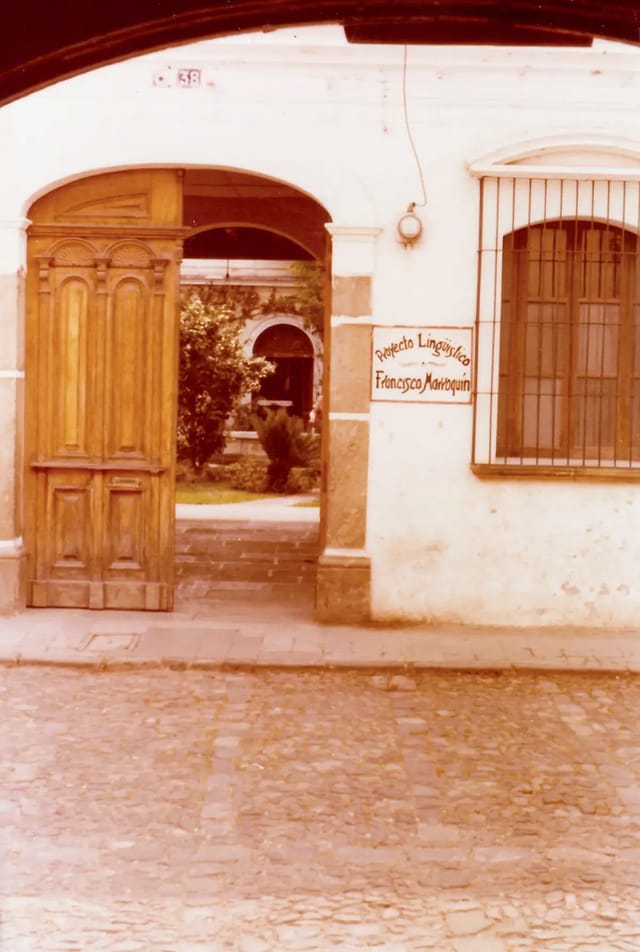
| PLFM | Q1,200-1,500 | $156-195 | 4-5 | Yes | Yes | Established, professional |
| CSA (Christian Spanish Academy) | Q1,150-1,400 | $150-182 | 4-5 | Yes | Yes | Faith-based, community service |
| Sevilla | Q1,200-1,400 | $156-182 | 4-5 | Yes | Yes | Small classes, personal attention |
| Cambio Spanish School | Q1,000-1,300 | $130-169 | 4-5 | Yes | Yes | Budget-friendly, good reviews |
| Ixchel | Q1,100-1,400 | $143-182 | 4-5 | Yes | Yes | Cultural activities included |
What a Typical Week Looks Like
- Monday-Friday, 8 AM - 12 PM: One-on-one lessons with your assigned teacher. Curriculum adapted to your level.
- Afternoons: Free time for homework, exploring Antigua, or optional organized activities (cooking classes, salsa dancing, volcano hikes, movie nights).
- Evenings: Dinner with your homestay family – this is where real immersion happens.
- Weekends: Optional excursions to Lake Atitlan, Pacaya volcano, Chichicastenango market.
Explore Sacatepequez on the map.
Quetzaltenango (Xela) Schools
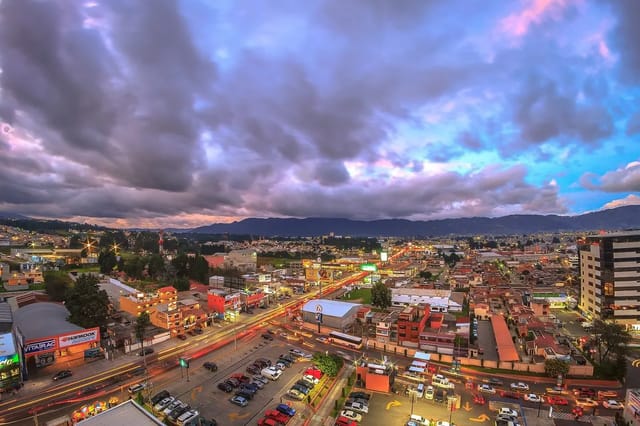
Xela is the serious student’s choice. At 2,330 meters in the western highlands, it is a working Guatemalan city without the tourist veneer of Antigua. Your homestay family probably speaks limited English. The streets are not lined with souvenir shops. This means more Spanish, faster progress, and a deeper understanding of actual Guatemalan life.
Top Schools
| School | Weekly Rate (GTQ) | Weekly (USD) | Hours/Day | 1-on-1? | Homestay? | Specialty |
|---|---|---|---|---|---|---|
| Celas Maya | Q1,000-1,300 | $130-169 | 4-5 | Yes | Yes | Best reputation in Xela |
| ICA (Instituto Central America) | Q1,000-1,200 | $130-156 | 4-5 | Yes | Yes | Solid, established |
| Pop Wuj | Q1,100-1,400 | $143-182 | 4 | Yes | Yes | Social justice program integrated |
| Escuela de Espanol Miguel de Cervantes | Q950-1,200 | $123-156 | 4-5 | Yes | Yes | Budget option, good quality |
Pop Wuj: Study + Social Impact
Pop Wuj deserves special mention. This school integrates Spanish study with volunteer work in health clinics, construction projects, and schools in rural K’iche communities around Xela. Students alternate between classroom instruction and fieldwork. If you want your language learning to serve a purpose beyond personal development, Pop Wuj is the place.
Explore Quetzaltenango on the map.
Lake Atitlan: The Relaxed Alternative
San Pedro La Laguna has a handful of community-based Spanish schools that offer 1-on-1 instruction at the lowest prices in the country.
| School | Weekly Rate (GTQ) | Weekly (USD) | Notes |
|---|---|---|---|
| Cooperativa Spanish School | Q770-1,000 | $100-130 | Community-run |
| Corazon Maya | Q850-1,100 | $110-143 | Small, personal |
| San Pedro Spanish School | Q770-1,000 | $100-130 | On the lake |
The trade-off: San Pedro has a large backpacker community, so you may end up speaking English socially. The setting is beautiful but potentially distracting if you are trying to maximize study time.
See our Lake Atitlan Towns guide for choosing the right base.
Why Guatemala Over Mexico or Colombia
Prospective Spanish students often compare Guatemala to other popular destinations. Here is an honest comparison.
| Factor | Guatemala | Mexico (Oaxaca) | Colombia (Medellin) |
|---|---|---|---|
| 1-on-1 standard? | Yes | Usually group | Usually group |
| Weekly cost (lessons) | $130-200 | $200-350 | $180-300 |
| Homestay cost (with meals) | $75-120/wk | $120-200/wk | $100-180/wk |
| Accent clarity | Excellent (neutral, slow) | Good (regional variations) | Good (Paisa accent) |
| Immersion potential | High (especially Xela) | Moderate | Moderate |
| Safety | Good in student areas | Good | Good in student areas |
| Cultural richness | Exceptional (Maya culture) | Exceptional | Very good |
| Total monthly cost | $600-900 | $1,000-1,500 | $800-1,200 |
Guatemala wins on: price (30-50% cheaper), 1-on-1 instruction as default, accent clarity, and depth of homestay immersion. Mexico and Colombia win on: nightlife, city amenities, and ease of long-term visa. For a deeper cost comparison, see our Guatemala vs Costa Rica and Mexico breakdown.
The Accent Advantage
Guatemalan Spanish is widely considered one of the clearest and most neutral accents in Latin America. Guatemalans tend to speak relatively slowly with distinct pronunciation of all consonants. This makes it ideal for beginners who need to hear every syllable clearly.
By comparison, Caribbean Spanish drops consonants (“pescado” becomes “pecao”), Argentine Spanish has a distinctive “sh” sound for “ll” and “y”, and Chilean Spanish is notoriously fast. Guatemalan Spanish is a clean foundation that transfers well to any other Spanish-speaking country.
How Long Should You Study?
| Starting Level | Goal | Recommended Duration | Hours Needed |
|---|---|---|---|
| Complete beginner | Basic conversation | 2-3 weeks | 40-60 hrs |
| Some basics | Comfortable in daily life | 4-6 weeks | 80-120 hrs |
| Intermediate | Fluent conversation | 6-8 weeks | 120-160 hrs |
| Advanced | Professional/academic level | 2-4 weeks | 40-80 hrs |
These estimates assume 4 hours/day of 1-on-1 instruction plus homestay immersion. Progress is significantly faster than group class environments because every minute of class time is spent actively speaking. If you are planning a longer stay, our visa and residency guide covers the options for extending beyond 90 days.
Tips for Getting the Most Out of Your Experience
Choose homestay over a hostel. The dinner table conversations with your host family are where real learning happens. It forces you to speak Spanish when you are tired and would rather switch to English. You will also learn about Guatemalan food culture firsthand.
Xela over Antigua if you are serious. The temptation to speak English in Antigua is real. In Xela, the default language around you is Spanish.
Ask your school to match your teacher. If your teacher’s style does not work for you, ask to switch. Good schools accommodate this without fuss.
Bring a notebook, not a laptop. Writing by hand activates different memory pathways. Use your laptop for homework at night but handwrite during class.
Watch Guatemalan TV and listen to local radio. Noti7, Guatevision, and local radio stations are free immersion tools. You will need a decent internet connection and phone plan for streaming and staying connected.
Do not skip homework. Four hours of class plus 1-2 hours of homework is the sweet spot.
Combine with volunteering. Many schools arrange volunteer placements that give you real-world language practice. Pop Wuj in Xela builds this into their program. Before you commit to a long placement, check which migratory status it actually falls under — is it legal to volunteer in Guatemala on a tourist stamp? traces what the Código de Migración and the Reglamento de Residencias do and do not say, and why the student residency category (US$100/year) matters if the combined stay runs past 180 days.
Related Guides
- Lake Atitlan Towns – lakeside schools in San Pedro
- Cost of Living in Guatemala – budget your study stay
- Is Guatemala Safe? – safety in Antigua and Xela
- Internet & ISP Guide – connectivity for remote workers combining study with work
Frequently Asked Questions
How much do Spanish lessons cost in Guatemala?
One-on-one Spanish lessons in Guatemala typically cost $130-200 per week for 4 hours per day (20 hours/week). Antigua schools charge $150-200/week, Xela schools charge $130-170/week, and San Pedro La Laguna schools charge $100-150/week. Homestay with a local family adds $75-120/week including meals.
Is Antigua or Quetzaltenango better for learning Spanish?
Xela (Quetzaltenango) is better for serious Spanish study. Fewer English speakers means more immersion, prices are 10-20% lower, and the city has a more authentic Guatemalan feel. Antigua is better if you want more social life, tourist infrastructure, and comfort alongside your studies.
Why learn Spanish in Guatemala instead of Mexico or Colombia?
Guatemala offers 1-on-1 instruction as the standard (not group classes), some of the clearest Spanish pronunciation in Latin America, the lowest prices (30-50% cheaper than Mexico City or Bogota), and homestay immersion with local families. The accent is neutral and slow, ideal for beginners.
How long does it take to learn Spanish in Guatemala?
With 4 hours of daily 1-on-1 instruction plus homestay immersion, complete beginners typically reach basic conversational Spanish in 2-3 weeks. To reach intermediate fluency (comfortable in most situations), plan for 6-8 weeks. Advanced students polishing skills may need 2-4 weeks.
![Learn Spanish in Guatemala: Best Schools & Prices [2026]](/cdn-cgi/image/width=640,format=auto,quality=80/images/photos/antigua-volcan-fuego-street.webp)