In short: Spanish is Guatemala’s official language (Decreto 19-2003, Art. 1), and 69.9% of people aged 4+ learned it first in the 2018 census. 29.6% grew up speaking one of 22 Mayan languages; the census counts the most first-language speakers for Q’eqchi’, K’iche’, Mam and Kaqchikel. Counting second languages, about 88% of people aged 7+ speak Spanish. The gap is the other side of that number: 38.6% of Mayan-first speakers (about 1.43 million people aged 7+) speak no second language. English is a minority skill: 373,126 people reported it as a second language, about 3% of people aged 7+.
Every number on this page comes from the INE’s 2018 census report. The maps of where each language is spoken come from the Academia de las Lenguas Mayas de Guatemala (ALMG), the state body for Mayan languages. The legal status comes from the Ley de Idiomas Nacionales. All three were read on 24 September 2026.
What the law says
The Ley de Idiomas Nacionales (Decreto 19-2003) opens with a single sentence on status: “El idioma oficial de Guatemala es el español.” The same article says the State recognises, promotes and respects the languages of the Maya, Garífuna and Xinka peoples.
Two more articles matter to a newcomer:
- Article 8 allows those languages to be used in their linguistic communities “sin restricciones en el ámbito público y privado” — in schools, business, politics and culture.
- Article 14 asks the State to make sure public services communicate in the community’s own language.
So you can run your life in Spanish anywhere in the country. In a Mayan-speaking municipality, the person across the counter may also be entitled to use their own language.
The census numbers: who speaks what
The 2018 census asked everyone aged 4 and over which language they learned to speak. It asked people aged 7 and over which other languages they speak.
| Language learned first (age 4+, 2018) | People | Share |
|---|---|---|
| Spanish | 9,488,838 | 69.9% |
| All 22 Mayan languages | 4,021,870 | 29.6% |
| Garífuna | 2,856 | 0.0% |
| Xinka | 2,755 | 0.0% |
| English | 7,824 | 0.1% |
| Sign language | 2,216 | 0.0% |
| Other | 26,542 | 0.2% |
| Does not speak | 13,996 | 0.1% |
| Total | 13,566,897 | 100% |
Source: INE, Resultados del XII Censo Nacional de Población y VII de Vivienda, Cuadro 12.
Spanish’s share moved from 68.9% in 2002 to 69.9% in 2018. The Mayan share moved from 30.8% to 29.6%.
The 22 Mayan languages, largest first
| Mayan language | Learned first (2018) | Share of all people 4+ |
|---|---|---|
| Q’eqchi' | 1,127,387 | 8.3% |
| K’iche' | 1,054,818 | 7.8% |
| Mam | 590,641 | 4.4% |
| Kaqchikel | 411,089 | 3.0% |
| Q’anjob’al | 166,261 | 1.2% |
| Poqomchi' | 133,074 | 1.0% |
| Achi | 124,338 | 0.9% |
| Ixil | 114,997 | 0.9% |
| Tz’utujil | 72,436 | 0.5% |
| Chuj | 58,592 | 0.4% |
| Akateko | 55,290 | 0.4% |
| Jakalteko/Popti' | 32,568 | 0.2% |
| Chalchiteko | 21,550 | 0.2% |
| Ch’orti' | 16,663 | 0.1% |
| Poqomam | 10,787 | 0.1% |
| Awakateko | 10,145 | 0.1% |
| Sakapulteko | 6,528 | 0.1% |
| Uspanteko | 5,125 | 0.0% |
| Sipakapense | 4,155 | 0.0% |
| Tektiteko | 3,009 | 0.0% |
| Mopan | 2,011 | 0.0% |
| Itza' | 406 | 0.0% |
Source: INE census 2018, Cuadro 12. Chalchiteko was approved as a Mayan language after the 2002 census.
Is Spanish enough? What the bilingualism numbers say
The census gives a direct answer to how far Spanish reaches:
- One in five people counted speaks Spanish as a second language. That is the INE’s own wording: “Para una de cada 5 personas censadas, el español es un idioma secundario”. In numbers, 2,232,202 people aged 7+ speak Spanish as their second language.
- 38.6% of people whose first language is Mayan speak only that language. That is 1,432,247 people aged 7 and over. They are the people Spanish does not reach.
- Only 7.5% of Spanish-first speakers speak a second language, the INE reports.
Put together: 11,026,830 of the 12,528,937 people aged 7+ in the census table speak Spanish as a first, second, third or fourth language. That is 88.0% (our sum of Cuadro 14). The other 12% is about 1.50 million people, and 1.43 million of them are Mayan-only speakers. The census does not publish monolingualism town by town. The ALMG map further down shows where each Mayan language is spoken.
English: a minority skill
- 7,824 people learned English as their first language.
- 373,126 people aged 7+ reported English as a second language. That is 12.5% of all second-language speakers, against 74.5% for Spanish.
- 12,578 reported it as a third language.
Against the 12,528,937 people aged 7+ in that table, second-language English speakers are about 3%. Plan on Spanish, even for short trips.
Which language you’ll hear where
The Academia de las Lenguas Mayas de Guatemala publishes, for each language, the municipalities where it is spoken. These are its lists for the places visitors and expats go.
| Where | Mayan language(s) the ALMG lists | Notes |
|---|---|---|
| Antigua Guatemala and the rest of Sacatepéquez | Kaqchikel | ALMG lists Kaqchikel in “la totalidad de los municipios del Departamento de Sacatepéquez” |
| Chimaltenango (Tecpán, Comalapa, Patzicía…) | Kaqchikel | Every municipality |
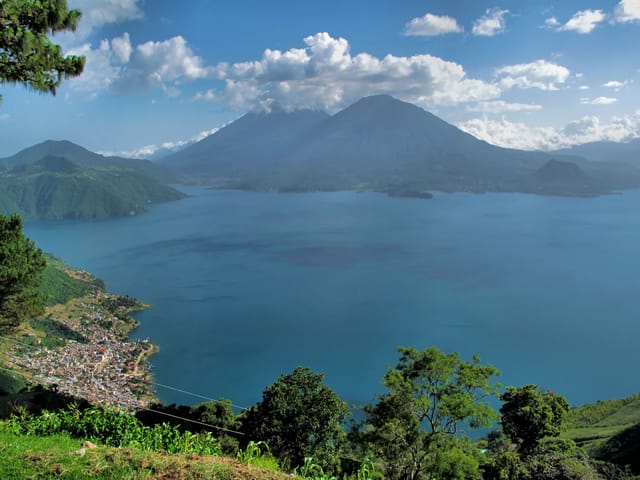
| Lake Atitlán — Panajachel, San Marcos, Santa Cruz, Santa Catarina Palopó, San Antonio Palopó, San Lucas Tolimán, Sololá | Kaqchikel | |
| Lake Atitlán — San Pedro, San Juan, San Pablo, Santiago Atitlán, Santa María Visitación | Tz’utujil | |
| Lake Atitlán (upper towns) — Santa Clara la Laguna, Santa Lucía Utatlán, Santa Catarina Ixtahuacán, Nahualá | K’iche’ | |
| Chichicastenango, Santa Cruz del Quiché, all of Totonicapán | K’iche’ | |
| Around Xela: Zunil, Almolonga, Cantel, Salcajá, Olintepeque, La Esperanza | K’iche’ | Quetzaltenango municipality itself is not on the ALMG list |
| Around Xela: San Juan Ostuncalco, Concepción Chiquirichapa, San Martín Sacatepéquez, Cabricán | Mam | ALMG also lists Mam in 16 Huehuetenango municipalities (and areas of five more), including Todos Santos Cuchumatán, and in every San Marcos municipality except Sipacapa |
| Cobán, San Pedro Carchá, San Juan Chamelco, Lanquín (Semuc Champey), Cahabón | Q’eqchi’ | |
| Petén: San Benito, Sayaxché, Poptún; “algunas áreas” of Flores | Q’eqchi’ | |
| Livingston and Puerto Barrios (Izabal) | Q’eqchi’ and Garífuna | ALMG lists Garífuna in areas of both municipalities |
Source: ALMG language pages (almg.org.gt/idioma_kaqchikel, idioma_tzutujil, idioma_kiche, idioma_mam, idioma_qeqchi, idioma_garifuna), read 2026-09-24.
A note on numbers: ALMG’s pages also print speaker counts, and they are larger than the census’s “learned first” counts. For K’iche’, ALMG prints 1,680,551 against 1,054,818 in Cuadro 12. The ALMG pages don’t say how their figure was built, so this page uses the census table for every count.
What this means if you are moving here
- Learn Spanish first. It is the official language and reaches about 88% of people aged 7+. Our guides to Spanish schools in Antigua and across Guatemala list what the schools charge.
- In a Mayan-speaking town, some neighbours may have no Spanish. The census puts monolingualism among Mayan-first speakers at 38.6%. The ALMG list above tells you which language is spoken where.
Related
- Spanish schools in Antigua
- Spanish schools across Guatemala
- Private tutor prices in Guatemala
- Is Lake Atitlán safe?
Sources
- Congreso de la República — Decreto 19-2003, Ley de Idiomas Nacionales: https://www.congreso.gob.gt/assets/uploads/info_legislativo/decretos/19-03.pdf — read 2026-09-24.
- Instituto Nacional de Estadística (INE) — Resultados del XII Censo Nacional de Población y VII de Vivienda (2018), Cuadros 12, 14 and 15 and sections 3.6–3.8: https://www.ine.gob.gt/sistema/uploads/2021/11/19/202111192139096rGNQ5SfAlepmPGfYTovW9MF6X2turyT.pdf — read 2026-09-24. The tables were read from the page images because the PDF’s text layer drops accented language names.
- Academia de las Lenguas Mayas de Guatemala (ALMG) — language pages for Kaqchikel, K’iche’, Mam, Q’eqchi’, Tz’utujil and Garífuna: https://almg.org.gt/ — read 2026-09-24.
Census figures are from 2018, the most recent census. Information current as of 24 September 2026.
Frequently Asked Questions
What language is spoken in Guatemala?
Spanish is the official language. Article 1 of the Ley de Idiomas Nacionales (Decreto 19-2003) says so, and adds that the State recognises, promotes and respects the languages of the Maya, Garífuna and Xinka peoples. In the 2018 census, 69.9% of people aged 4 and over learned to speak in Spanish and 29.6% in one of 22 Mayan languages.
Is Spanish enough to travel in Guatemala?
Spanish reaches about 88% of people aged 7 and over. That is our sum of the 2018 census table: 8,766,476 speak it as their first language and 2,260,354 as a second, third or fourth language, out of 12,528,937. Where it runs out is shown by the same census: of the 3.7 million people aged 7+ whose first language is Mayan, 38.6% speak only that language, about 1.43 million people. English is thin: 373,126 people reported it as a second language, about 3% of people aged 7+.
How many languages are spoken in Guatemala?
The 2018 census tables list 22 Mayan languages plus Xinka, Garífuna and Spanish, and they also counted English, sign language and ‘other’. The four largest Mayan languages by people who learned them first are Q’eqchi’ (1,127,387), K’iche’ (1,054,818), Mam (590,641) and Kaqchikel (411,089).
What language do they speak in Antigua Guatemala?
Spanish is spoken everywhere. The Academia de las Lenguas Mayas de Guatemala (ALMG) also lists Kaqchikel in every municipality of Sacatepéquez, Antigua included.
What language is spoken around Lake Atitlán?
Three, by ALMG’s maps. Tz’utujil in San Pedro, San Juan, San Pablo and Santiago Atitlán; Kaqchikel in Panajachel, San Marcos, Santa Cruz, Santa Catarina Palopó, San Antonio Palopó and San Lucas Tolimán; and K’iche’ in Santa Clara la Laguna, Santa Lucía Utatlán, Santa Catarina Ixtahuacán and Nahualá.
Do people speak English in Guatemala?
Few do, by the census. In 2018, 7,824 people aged 4 and over had learned English as their first language, and 373,126 people aged 7 and over reported it as a second language. That is 12.5% of all second-language speakers, against 74.5% for Spanish.