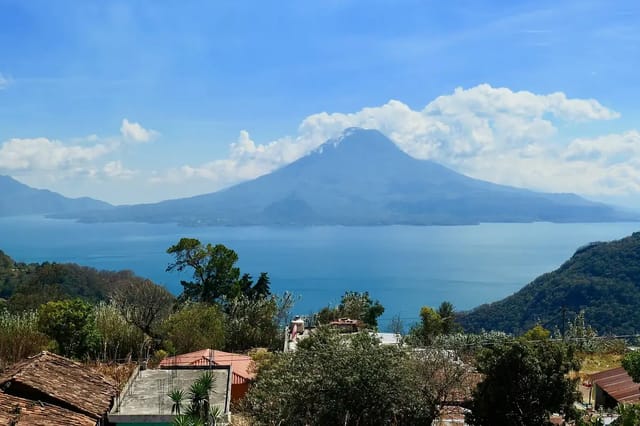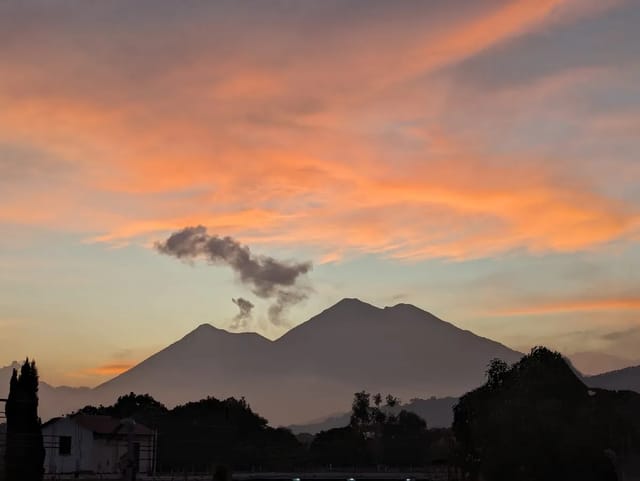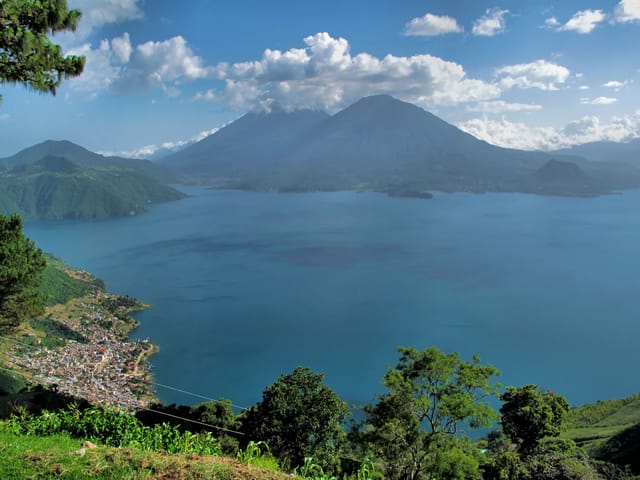
Maximón, whose Tz’utujil name is Rilaj Mam, is the figure the Cofradía de la Santa Cruz keeps in Santiago Atitlán, on the south-west shore of Lake Atitlán. He has no fixed address: the cofradía moves him to a new house every year, per Diario de Centro América. INGUAT’s guide and its tourism plan for the town list no entry fee; the cofradía receives visitors and asks for offerings and a payment for photos. Go with a local guide or ask a tuk-tuk driver, as INGUAT’s guide advises.
INGUAT’s own tourism plan for Santiago Atitlán lists the Cofradía de la Santa Cruz and Rilaj Mam as a religious and cultural attraction with a rating of 4 on its scale — the same as the parish church and the Atitlán and Tolimán volcanoes, one step below Lake Atitlán’s 5. It is a place of worship first: Diario de Centro América, the state newspaper, describes Rilaj Mam as the protective guardian of the Tz’utujil people, visited by people with petitions for health, money and prosperity.
Quick summary
| Item | Value |
|---|---|
| Where | Santiago Atitlán, Sololá — in the house of the Cofradía de la Santa Cruz, which changes every year |
| Who keeps him | Cofradía de la Santa Cruz (Diario de Centro América) |
| Other names | Rilaj Mam (Tz’utujil), Maximón |
| How to find him | Ask locally, or go with a guide or tuk-tuk driver (INGUAT guide) |
| Official fee | None — the cofradía receives visitors |
| Photo payment (reported) | About Q5 posted; up to Q100 reported (AtitlanVida, 2026) |
| Offerings | Aguardiente and cigarettes (Diario de Centro América); rum, candles, flowers or cash (AtitlanVida) |
| Peak time | Holy Week; Good Friday procession with the Señor Sepultado |
| Getting there | Boat across the lake; San Pedro-Santiago 15 minutes, hourly (INGUAT guide) |
| Where to sleep | Panajachel |
Sources: Diario de Centro América, Sincretismo religioso y diversidad cultural (31 March 2025); INGUAT’s visitor guide to Santiago Atitlán and INGUAT’s Plan de Desarrollo Turístico del Municipio de Santiago Atitlán 2022-2026; AtitlanVida and Atitlan Living for visitor practice. All read 24 September 2026 (the INGUAT plan from an archived copy dated May 2024).
Who Maximón is
- A guardian, not a museum piece. Diario de Centro América calls Rilaj Mam one of the Maya deities still present in Guatemala and the protective guardian of the Tz’utujil people. INGUAT’s guide places him in the Tz’utujil worldview of Santiago Atitlán and calls him one of the most complex spiritual figures in Guatemala.
- The name. Diario de Centro América says he is also known as El Gran Abuelo, the great grandfather; AtitlanVida translates the Tz’utujil title Rilaj Mam as great elder or great grandfather.
- The cofradía. The Cofradía de la Santa Cruz keeps the tradition, cares for the figure and moves it to a new home each year (Diario de Centro América). AtitlanVida describes it as one of 13 cofradías in Santiago Atitlán.
- Two traditions together. INGUAT’s guide says Maya and Catholic practice in Santiago are not treated as separate worlds; the parish church of Santiago Apóstol mixes Catholic images with local elements.
How to find him
Because the house changes, there is no address to give. INGUAT’s guide says visitors ask locally or go with a guide or a local tuk-tuk driver who knows where he is this year. A Santiago-based guide writing for Atitlan Living gives the same advice: take a tuk-tuk, say “Maximon” and the driver will take you there.
A guide is worth it. INGUAT’s plan for the town counted 27 INGUAT-certified guides in Santiago Atitlán as of August 2021, 21 of them community guides. The Atitlan Living guide adds that many people in the ceremonial houses speak Tz’utujil first, so an intermediary helps you understand what you are seeing.
What you pay and what you offer
There is no ticket. The cofradía asks visitors for offerings and charges for photos, and the amounts below are reports, not a published tariff:
| Item | Reported amount | Source and date |
|---|---|---|
| Photo payment to the cofradía | About Q5 posted; up to Q100 in some reports | AtitlanVida (fee last checked 2025-2026) |
| Cash offering | Q5-10 minimum | AtitlanVida, 2026 |
| Offering at the cofradía for a fuller visit (guide fee separate) | Q50-100 minimum | Atitlan Living (undated article, read 24 Sep 2026) |
| A bottle of Quetzalteca to offer | Q10 | Atitlan Living (undated article, read 24 Sep 2026) |
What people bring. Diario de Centro América says Rilaj Mam receives aguardiente and cigarettes. AtitlanVida lists a bottle of Quetzalteca or Venado rum, a pack of cigarettes, pillar candles (veladoras), flowers or a small cash donation. The Atitlan Living guide explains that the money given pays for the cofradía’s candles, marimbas, food and fiestas.
Etiquette
AtitlanVida’s rules for the visit:
- Photos of Maximón: AtitlanVida says they are generally permitted after paying the cofradía’s fee; ask separately before photographing cofradía members or anyone praying, and never photograph without explicit permission.
- Dress conservatively, remove your hat when you enter, and speak quietly.
- Keep your distance from anyone in prayer or in a cleansing ceremony, and do not interrupt.
The Atitlan Living guide adds that a visit is not quick: plan on at least a couple of hours in the cofradía for a full experience.
Holy Week
AtitlanVida calls Holy Week the peak time for Maximón veneration and the most intense time to visit. Diario de Centro América reports that in Santiago Atitlán the Maya and the Christian meet on Good Friday, when Maximón and the Señor Sepultado go out together in procession, with cofrades waiting around Rilaj Mam for the moment to join the procession. See our Semana Santa guide for the national calendar.
Getting to Santiago Atitlán
INGUAT’s guide says many tourists reach Panajachel first and cross the lake by boat; from San Pedro the boat takes 15 minutes, with departures every hour; and wind can make the lake rough, so ask when the last boat leaves before you go. It suggests arriving in daylight.
For the Panajachel crossing — fares, the dock and the last boats — see Panajachel to Santiago Atitlán and our lake boat routes.
Where to sleep: Panajachel
- It is the gateway. INGUAT’s guide calls Panajachel the usual entry point to the lake, with boats across to Santiago.
- Maximón is a day visit. INGUAT’s guide says in a single day you can see the church, Maximón, the market, a textile workshop and the waterfront — and it recommends Friday or Sunday for the market.
- Or stay in Santiago. INGUAT’s guide calls Santiago a good base for the southern side of the lake; INGUAT’s plan counted 11 registered lodging establishments in the town in 2021.
Live availability in Panajachel:
Where to stay in Panajachel
Compare Booking.com, Airbnb and hotels on one map. Drag the map and set your dates to see live availability and real prices.
Affiliate links — if you book, we earn a small commission at no extra cost to you.
A workable day in Santiago
| Step | Time | Based on |
|---|---|---|
| Boat from Panajachel | Morning, in daylight | INGUAT guide |
| Find Maximón | With a guide or tuk-tuk from the dock | INGUAT guide |
| At the cofradía | A couple of hours for a full visit | Atitlan Living |
| Church, market, waterfront | Same day; market busiest Friday and Sunday | INGUAT guide |
| Boat back | Ask when the last boat leaves | INGUAT guide |
More around Lake Atitlán
- Lake Atitlán towns compared · Santiago Atitlán · Things to do in Panajachel.
- Lake Atitlán paragliding · Cerro Tzankujil, San Marcos · Indian Nose sunrise hike.
- Sololá department · all activities.
Affiliate links — if you book, we earn a commission at no extra cost to you.
Frequently Asked Questions
Where is Maximón in Santiago Atitlán?
In the house of the Cofradía de la Santa Cruz, the religious brotherhood that looks after him, and that house changes every year, per Diario de Centro América (March 2025). INGUAT’s guide says he is not in a museum or a permanent attraction and that visitors ask locally or go with a guide or a tuk-tuk driver to find where he is.
How much does it cost to visit Maximón?
Neither INGUAT’s visitor guide nor its tourism plan for the town lists a fee: the cofradía, not a public body, receives visitors. AtitlanVida, a Lake Atitlán guide last updated in August 2026, reports a posted photo rate of around Q5 and says some sources report up to Q100, and it suggests a cash offering of at least Q5 to Q10. A Santiago-based guide writing for Atitlan Living says tourists are charged per photo, and puts the minimum offering at the cofradía for a fuller visit at Q50 to Q100; guides price separately. Carry small notes.
What should I bring as an offering to Maximón?
Diario de Centro América says Rilaj Mam receives offerings of aguardiente and cigarettes. AtitlanVida lists a bottle of Quetzalteca or Venado rum, cigarettes, pillar candles (veladoras), flowers or a small cash donation.
Can I take photos of Maximón?
AtitlanVida says photos of Maximón are generally permitted after paying a fee to the cofradía, and that you should ask before photographing cofradía members or anyone praying and never photograph without explicit permission.
When is the best time to see Maximón?
AtitlanVida calls Holy Week the peak time for Maximón veneration and the most intense time to visit. On Good Friday Maximón and the Señor Sepultado go out together in procession, per Diario de Centro América. Outside Holy Week, find the cofradía’s house with a guide or a tuk-tuk driver.
How do I get to Santiago Atitlán?
By boat. INGUAT’s guide says visitors reach Panajachel first and cross the lake by boat, and that the San Pedro-Santiago boat takes 15 minutes with hourly departures. Our Panajachel to Santiago Atitlán route page has the fares and times.
Where should I stay to visit Maximón?
Panajachel. INGUAT’s guide calls it the usual gateway to the lake and says Santiago’s church, Maximón, market and waterfront fit in a single day. INGUAT also says Santiago itself is a good base for the lake’s southern side.