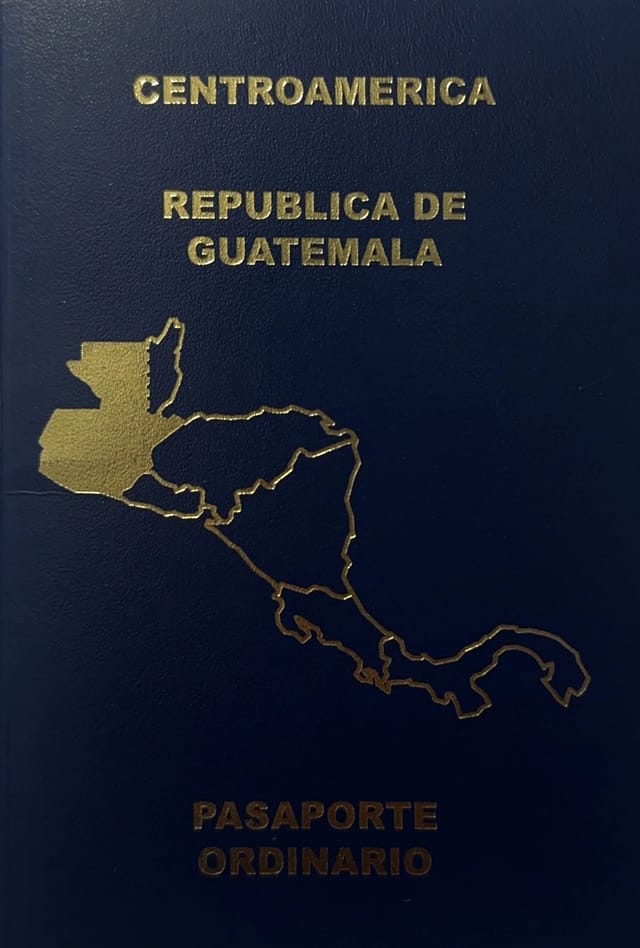
You are Guatemalan, you hold a US green card, and you are thinking about citizenship. This page covers the Guatemala-specific side of Form N-400, the Application for Naturalization. It explains which route fits your situation, what the fee is, how to get your RENAP certificates into a form USCIS will accept, and how long trips back home affect your eligibility. It also covers the age-and-residence exception set in the USCIS N-400 instructions, under which you can take the civics test in a language of your choice, such as Spanish. For the Guatemala-USA dual-nationality framework, see our dual citizenship Guatemala + USA guide.
Quick summary: Under the general rule, green-card holders can file after 5 years as a permanent resident, with 30 months physically present in the US. Spouses of US citizens can file after 3 years, with 18 months (548 days) present. You can file up to 90 calendar days early. The fee is $710 online or $760 on paper. The reduced $380 fee and the fee waiver are paper-only. Guatemalan civil certificates should come from RENAP, front and back, with a certified English translation. The civics test for filings since Oct. 20, 2025 is 20 oral questions from a list of 128, and you need 12 correct to pass; the N-400 instructions also describe testing exceptions. We found no Guatemala-specific exception in the USCIS form page, instructions or Policy Manual chapters we cited. Sources fetched 15 October 2026.
Which route are you on?
The USCIS Policy Manual sets two common routes. The table compares them side by side.
| Requirement | 5-year route (general) | 3-year route (spouse of a US citizen) |
|---|---|---|
| Age at filing | 18 or older | 18 or older |
| Permanent-resident status | LPR for at least 5 years | LPR at the time of filing |
| Continuous residence as LPR | At least 5 years immediately before filing, up to admission to citizenship | At least 3 years immediately before filing, up to naturalization |
| Physical presence in the US | At least 30 months of the 5 years before filing | At least 18 months (548 days) of the 3 years before filing |
| Marriage | Not required | Living in marital union with the citizen spouse for at least 3 years before filing. The spouse must have been a US citizen for those 3 years, and you must stay married until the Oath |
| Local residence | At least 3 months in your state or USCIS district before filing | At least 3 months in your state or USCIS district before filing |
| Good moral character | 5 years before filing, through the Oath | At least 3 years before filing, through naturalization |
| English and civics | Required | Required |
Both routes also require attachment to the principles of the US Constitution. We found no exception for Guatemalan nationals in the form page, the instructions or these Policy Manual chapters.
The 90-day early-filing window
You may file Form N-400 90 calendar days before you complete your continuous residence requirement. This works on both the 5-year route and the 3-year spouse route. Everything else must already be true on the day you file. For example, a spouse filing under INA 319(a) must already have been married to a US citizen for at least 3 years. USCIS says it will reject an application submitted too early. Use the official Early Filing Calculator before you send anything.
Fees and how to file
The fee depends on how you file. These are the N-400 rows of the USCIS fee schedule, Form G-1055 (edition 10/07/26).
| Situation | Filing method | Fee |
|---|---|---|
| General filing | Online | $710 |
| General filing | Paper | $760 |
| Documented household income not more than 400 percent of the Federal Poverty Guidelines | Paper only | $380 |
| Military service meeting INA sections 328 or 329 | Per G-1055 | $0 |
| Fee waiver (see Form I-912 instructions) | Paper only | $0 |
- Biometrics are included. The USCIS FAQ on its fee rule says the rule incorporates biometric services costs into the main benefit fee and eliminates the separate biometric services fee. The exceptions it names are Temporary Protected Status and filings accepted on behalf of the Executive Office for Immigration Review. The N-400 rows in G-1055 list no separate biometrics fee.
- The fee schedule is changing. On Sept. 30, 2026, USCIS announced inflation adjustments to certain H.R.-1 immigration fees, effective Oct. 16, 2026. Requests postmarked on or after that date without the proper fee will be rejected. Our sources did not establish whether the N-400 is one of the affected fees, so re-check G-1055 on the day you file.
- Online or paper. You can file online or by mail. If you want the reduced fee or a fee waiver, you cannot file online. You must file a paper N-400 with the waiver request and its evidence.
- Mailing address. Paper filers must use the address on the USCIS Direct Filing Addresses for Form N-400 page, linked from the N-400 page. Sending it elsewhere can slow your case.
- Form edition. The current form edition is 01/20/25.
Guatemalan documents: getting them right
USCIS does not ask every applicant for the same civil documents. The N-400 page lists a copy of your green card, both sides. Two more items depend on your situation:
- if any trip outside the US lasted more than 6 months but less than 1 year, evidence that you maintained your continuous residence (see the next section);
- if applicable, your current marriage certificate, plus any divorce decree, annulment decree or death certificate showing that each earlier marriage ended.
| Document | Where to get it | Guatemala-specific note |
|---|---|---|
| Green card copy | Your own card | Both sides |
| Guatemalan marriage certificate | RENAP, not the municipality | Front and back pages required. See RENAP marriage certificate |
| Death certificate of a former spouse | RENAP, not the municipality | Front and back pages required. See RENAP death certificate |
| Proof a Guatemalan marriage ended in divorce | The N-400 page asks for the divorce decree | RENAP’s portal also issues divorce certifications |
| Birth certificate (if your case calls for it) | RENAP, not your city or town | See RENAP birth certificate |
The RENAP and front-and-back rules come from the State Department’s reciprocity and civil-documents page for Guatemala. That page is written for visa cases, but it is a US government description of how Guatemalan civil documents should be requested.
Ordering from the USA. RENAP’s portal at eportal.renap.gob.gt handles 19 services, including birth, death, marriage and divorce certifications. You open an account there or through the RENAP SE app on Android. Guatemalan consulates can also issue birth certifications.
Translations are mandatory. Federal rule 8 CFR 103.2(b)(3) covers any foreign-language document you send to USCIS. It must come with a full English translation. The translator must certify that the translation is complete and accurate, and that they are competent to translate from Spanish into English. We publish a RENAP certificate translation template for USCIS.
Apostille. The N-400 instructions we reviewed set no blanket apostille requirement. MINEX offers apostille services, but that alone is not a reason to add one. Follow any specific request USCIS makes in your case.
Trips back to Guatemala
Time outside the United States matters for the physical-presence minimum: at least 30 months of the 5 years before filing on the general route, or at least 18 months (548 days) of the 3 years before filing on the spouse route. Our sources do not cover how USCIS counts the day you leave and the day you return, so check the USCIS Policy Manual before you count your days.
Longer stays raise a second issue. If any trip outside the US lasted more than 6 months but less than 1 year, USCIS asks for evidence that you kept your continuous residence. The N-400 page lists these examples:
- rent or mortgage statements, or pay statements;
- bank, credit card or loan statements showing regular transactions;
- car registration and insurance;
- your passport with entry and exit stamps;
- IRS tax transcripts;
- any other document showing you maintained your US residence.
If you are planning a long stay in Guatemala before you are eligible, read re-entry permits: keep your green card first.
Biometrics, interview and the civics test
Biometrics. USCIS may call you in for fingerprints, a photograph and/or a signature. These are used for background and security checks, including an FBI criminal-history check. If you are overseas when the notice arrives, it will tell you to contact a US Embassy, US Consulate or USCIS office abroad. That can matter if you are visiting family in Guatemala at the time. If you miss the appointment, USCIS may deny your application.
The 2025 civics test. USCIS gives the 2025 test to applicants who file on or after Oct. 20, 2025. Its interview-and-test page describes the test this way:
- it is oral, with 20 questions from a list of 128;
- you pass once you answer 12 correctly;
- you fail if you answer 9 incorrectly.
Testing exceptions. The N-400 instructions point to a Naturalization Testing and Exceptions section (Part 2, Item Number 11) for exceptions to the English testing requirements. The age-and-residence exception below is the one our sources capture. Read that section in full if you think an exception may apply to you.
Retesting. You get two attempts at the English and civics tests. If you fail one portion at your first interview, you are retested on that portion only. The retest happens between 60 and 90 days after the first interview.
Taking the civics test in Spanish
The N-400 instructions set an age-and-residence exception to the English test. You qualify if, at the time you file, you meet one of these:
- age 50 or older, with at least 20 years as a lawful permanent resident;
- age 55 or older, with at least 15 years as a lawful permanent resident.
If you qualify, you skip the English reading, writing, speaking and understanding test. You can also take the civics test in a language of your choice, such as Spanish. Two details matter:
- You must already qualify on the filing date. The 90-day early-filing window does not stretch this.
- If you need an interpreter, you must bring one to the interview yourself.
Your Guatemalan nationality
Among the eligibility points in the N-400 instructions is that you are willing to take the Oath of Allegiance to the United States. The USCIS sources behind this page do not address Guatemalan nationality law. Our dual citizenship Guatemala + USA guide covers the Guatemala-USA dual-nationality framework. Read it before you file if keeping your Guatemalan nationality matters to you.
In practice, keep your Guatemalan documents current. Guatemalan consulates can process a first DPI, a renewal or a replacement. They can also handle registry amendments and issue birth certifications. To find the consulate that serves you, use our consulate finder. The RENAP portal covers the certificates you can order online.
What we could not confirm
- Processing time. We have no reliable processing time to publish, and none is guaranteed.
- The Oct. 16, 2026 fee change. We could not confirm whether it applies to the N-400.
- How travel days are counted. We did not capture how USCIS counts departure and return days for physical presence.
- Every testing exception. We captured the age-and-residence exception only, not the full Naturalization Testing and Exceptions section.
- Apostille cost and turnaround. We could not confirm MINEX’s current apostille fee or turnaround.
Check the official N-400 page and G-1055 before you file.
Frequently Asked Questions
How long do I need my green card before I can file Form N-400?
Under the general rule you must have been a lawful permanent resident for at least five years, with continuous residence for those five years and physical presence in the United States for at least 30 months of them. If you are married to and living in marital union with a US citizen who has been a citizen for those 3 years, the route is 3 years of continuous residence with at least 18 months (548 days) of physical presence. Either way, you may file up to 90 calendar days before you complete the continuous residence requirement.
How much does Form N-400 cost?
The USCIS fee schedule (Form G-1055, edition 10/07/26) lists $710 for online filing and $760 for paper filing. A reduced fee of $380 applies, on paper only, if your documented annual household income is not more than 400 percent of the Federal Poverty Guidelines. Applicants who meet INA sections 328 or 329 for military service pay $0, and certain applicants may qualify for a fee waiver through Form I-912. USCIS announced inflation adjustments to certain H.R.-1 fees effective Oct. 16, 2026; our sources did not establish whether the N-400 is affected, so check G-1055 the day you file.
Can I take the citizenship test in Spanish?
The N-400 instructions say that if, at the time you file, you are age 50 or older with at least 20 years as a lawful permanent resident, or age 55 or older with at least 15 years as a lawful permanent resident, you do not have to take the English test and can take the civics test in a language of your choice. The instructions also have a Naturalization Testing and Exceptions section (Part 2, Item Number 11) on exceptions to the English testing requirements, which our sources did not capture in full, so read it before assuming no exception applies to you. If you need an interpreter and you qualify for an exception to the English part of the test, you must bring the interpreter to the interview yourself.
Where do I get my Guatemalan marriage, divorce or death certificates for the N-400?
The State Department’s Guatemala civil-documents guidance says marriage and death certificates should be requested from RENAP, not from the municipality, and that both the front and back pages are required. RENAP’s online portal (eportal.renap.gob.gt, or the RENAP SE app on Android) offers 19 services, including birth, death, marriage and divorce certifications. Any Spanish-language document must go to USCIS with a full English translation certified by the translator.
Do I need to apostille my Guatemalan documents for the N-400?
The N-400 form page and instructions we reviewed do not set a blanket apostille requirement, so we do not tell you to apostille everything. What the federal rule does require is a full, certified English translation of any foreign-language document. If USCIS asks for something specific in your case, follow that request.
Will becoming a US citizen make me lose my Guatemalan nationality?
The N-400 is a US process, and its instructions list being willing to take the Oath of Allegiance to the United States among the eligibility points. The USCIS sources behind this page do not address Guatemalan nationality law. Our dual-citizenship Guatemala + USA guide covers the Guatemala-USA dual-nationality framework; read it before you file.
How long does the N-400 take?
We did not obtain a reliable processing time to publish, and no source guarantees one. The fixed time windows in the process are the 90-day early-filing window and, if you fail part of the test, a retest between 60 and 90 days after your first interview.