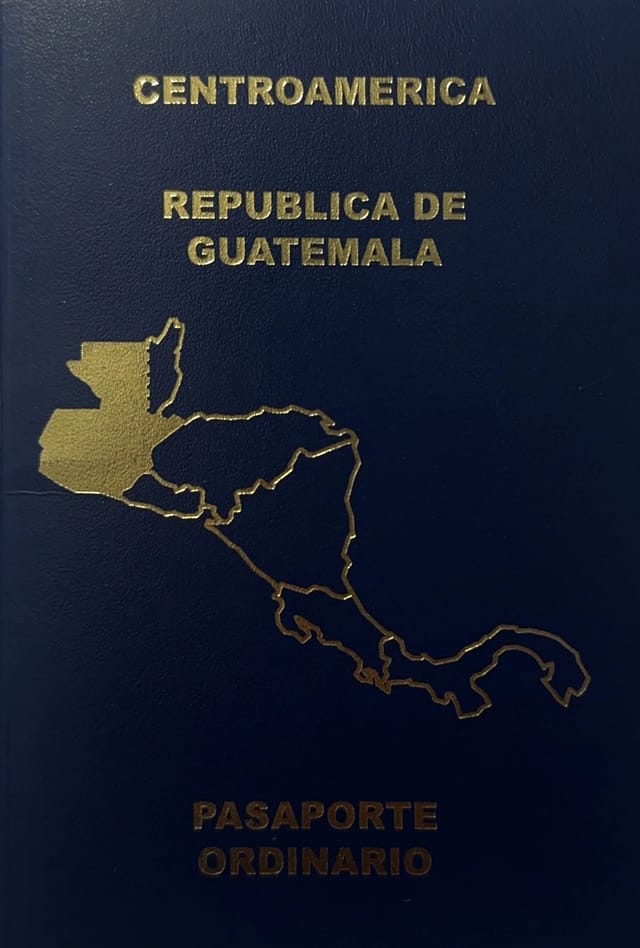
You are Guatemalan, you are applying for US citizenship, and a disability or impairment makes the English and civics tests impossible for you. This page covers Form N-648, Medical Certification for Disability Exceptions. It explains who qualifies, who can sign it, what it costs, when to file it, and what happens at the interview. It does not repeat the Guatemala-USA dual-nationality questions. For those, see our dual citizenship Guatemala + USA guide.
Quick summary: Form N-648 asks USCIS for an exception to the English and civics requirements because of a physical or developmental disability or mental impairment. Illiteracy and advanced age alone do not qualify. Only a medical doctor, doctor of osteopathy or clinical psychologist licensed in the United States may certify it. The professional must first do an in-person exam or, where state law permits, a real-time telehealth exam. The USCIS filing fee is $0, but the medical professional may charge. The professional must certify the form no more than 180 days before you file the N-400. You can file it with the N-400 or later. A first-time filing after the N-400 is a late submission that needs extenuating circumstances. We found no Guatemala-specific rule in the USCIS sources. Sources fetched 15 October 2026.
Who qualifies for the exception
The USCIS form page covers who should use Form N-648. It is for people applying for US citizenship who need an exception to the English and civics testing requirements. The reason must be a physical or developmental disability or a mental impairment.
The professional who evaluates you must diagnose you with a condition that prevents you from completing the educational requirements. The form instructions say illiteracy and advanced age alone are not valid reasons to seek an exception from the English and/or civics requirements.
Who can certify the form
USCIS limits who may sign:
- a medical doctor,
- a doctor of osteopathy, or
- a clinical psychologist,
licensed to practice in the United States. You may contact your state medical board to determine whether the professional has a valid license.
This matters if you have been treated in Guatemala. A doctor licensed only in Guatemala cannot certify the form. The authorized professional must evaluate you in person or, where state law permits, through a real-time telehealth examination. The USCIS sources we reviewed contain no Guatemala-specific exception and no consular N-648 certification service.
What the medical professional must do
According to the USCIS Policy Manual, the certifying professional must:
- Conduct an examination of you.
- Identify and describe on Form N-648 each disability or impairment that affects your ability to meet the English or civics requirements.
- Explain how each disability or impairment prevents you from learning or demonstrating knowledge of English, civics, or both.
- Attest that the disability or impairment has lasted or is expected to last at least 12 months.
- Attest that the cause of the disability or impairment is not related to the illegal use of drugs.
The instructions add that the professional must have examined you before certifying the form. The professional may attach supporting diagnostic reports or records. However, those attachments cannot take the place of written answers to each question or item on the N-648. If information the form asks for is missing, USCIS may decide the form is insufficient.
Who completes which part
| Part of Form N-648 | Who completes it |
|---|---|
| Parts 1 to 3 | Completed and certified by the licensed medical professional |
| Part 5, Interpreter Information and Certification | The certifying medical professional, if a telephonic or video-facilitated interpreter was used |
| Part 6, Applicant’s (Patient’s) Attestation/Release of Information | You, the applicant for naturalization |
Fee, edition and how to file
USCIS says: “There is no filing fee for Form N-648”. The USCIS fee schedule, Form G-1055 (edition 10/07/26), lists the N-648 at $0 for general filing. The medical professional may charge you for the examination and for filling out forms.
The N-648 page lists an edition date of 09/25/24 and was last reviewed or updated on 06/05/2026. Check the edition on uscis.gov/n-648 before your appointment.
You may submit the N-648 together with your completed Form N-400, Application for Naturalization, or separately at a later date. If you file the naturalization application electronically, the N-648 may be uploaded as additional evidence.
Timing rules
| Point in the process | What the USCIS sources say |
|---|---|
| Date of the medical certification | No more than 180 days before you file the naturalization application |
| How long it stays valid | The entire naturalization process connected to that particular N-400 |
| Filing with the N-400 | Allowed |
| First N-648 filed after the N-400 (including at the interview) | Late submission; USCIS may accept it if you demonstrate extenuating circumstances |
| Updated or extra N-648 sent because USCIS asked | Not a late submission |
| Re-examination | The officer should schedule it between 60 and 90 days after the initial examination |
For a late submission, you can explain the extenuating circumstances in writing, submitted before or during the interview, or verbally at the interview. You can also provide supporting evidence.
Plan the 180-day window around the date the medical professional certifies the form. You must file the N-400 no more than 180 days after that certification.
If USCIS proceeds without the N-648
The Policy Manual chapter describes what happens when USCIS proceeds with the interview and testing as if no Form N-648 was submitted. Our captured excerpt does not list every situation that leads to this, so we do not list them here. In that case:
- USCIS must give you the opportunity to complete all portions of the English and civics requirements.
- You have two opportunities to pass the English and civics tests before the application is decided: once at the initial examination, and again at a re-examination if you do not pass the first time.
- Refusing to attempt the tests is treated as a failed attempt. The officer must document the refusal and explain the consequences to you in your preferred language, using an interpreter if necessary.
- The application is denied in these cases:
- you fail to appear, without good cause, for re-examination or for a hearing on a denial;
- you fail to complete the English or civics requirements, for any reason.
The re-examination should be scheduled between 60 and 90 days after the initial examination. You may ask to move it to more than 90 days after the initial examination. If you do, you must first agree in writing to waive a requirement under INA 336. Under that requirement, USCIS must decide the application within 120 days from the initial interview before you may apply to a US district court for review of a pending application. With the waiver, you permit USCIS to decide within 120 days from the re-examination before you seek review.
Interpreters at the medical exam
If you are more comfortable in Spanish, the Policy Manual says the medical professional may use an interpreter during the examination. The interpreter must sign the interpreter section of the N-648. For telehealth examinations, the interpreter does not have to complete the interpreter certification. Instead, the medical professional is responsible for completing it on the form.
The oath waiver is a separate question
An exception to the English and civics tests is not the same as being excused from the Oath of Allegiance. The N-648 instructions cover the oath waiver because of a medical disability. To obtain it, the applicant must have a legal guardian, surrogate or designated representative to complete the naturalization process.
If there is no legal guardian or surrogate, a designated representative can be one of these US citizen relatives, provided they are the primary custodial caregiver and take responsibility for the applicant:
- spouse
- parent
- adult son or daughter
- adult brother or sister
Documents in Spanish
The N-648 sources we reviewed set no RENAP certificate requirement and no apostille requirement. That is why we do not tell you to obtain either for this form.
The translation rule applies if you or your doctor submit anything in Spanish, such as earlier medical records from Guatemala. Federal regulation (8 CFR 103.2) requires any foreign-language document submitted to USCIS to come with a full English translation. The translator must certify the translation as complete and accurate and certify that they are competent to translate into English. The N-648 instructions add that this certification must include the translator’s signature, printed name, the signature date and the translator’s contact information.
If your N-400 itself needs Guatemalan civil certificates, RENAP says its online portal handles 19 services, including birth, death, marriage and divorce certifications.
What our sources did not establish
- Biometrics: no N-648-specific biometrics appointment or biometric fee was found in the form page, instructions or fee row.
- Processing time: no standalone N-648 duration was found, and the USCIS processing-times page could not be retrieved when we checked.
- Guatemala-specific rules: none in the USCIS form, instructions, fee schedule or Policy Manual chapter.
- Apostille: no apostille requirement was identified for this form.
Sources
- USCIS, Form N-648 page: https://www.uscis.gov/n-648
- USCIS, Form N-648 instructions: https://www.uscis.gov/sites/default/files/document/forms/n-648instr.pdf
- USCIS Policy Manual, Volume 12, Part E, Chapter 3: https://www.uscis.gov/policy-manual/volume-12-part-e-chapter-3
- USCIS, Form G-1055 fee schedule: https://www.uscis.gov/sites/default/files/document/forms/g-1055.pdf
- 8 CFR 103.2: https://www.ecfr.gov/current/title-8/chapter-I/subchapter-B/part-103/subpart-A/section-103.2
- RENAP, online certificates notice: https://www.renap.gob.gt/sites/default/files/Comunicacion-Social/pdf/inforenap_242_-_0202022_-_certificados_en_linea_legitimos_para_cualquier_tramite.pdf
Sources fetched 15 October 2026. This page is general information, not legal advice. Check the current USCIS form page and fee schedule the day you file.
Frequently Asked Questions
Who can use Form N-648?
USCIS says Form N-648 is for people applying for US citizenship who need an exception to the English and civics testing requirements for naturalization because of a physical or developmental disability or a mental impairment. The form instructions say illiteracy and advanced age alone are not valid reasons to seek an exception from the English and/or civics requirements.
Can my doctor in Guatemala fill out the N-648?
Only a medical doctor, doctor of osteopathy or clinical psychologist licensed to practice in the United States may certify Form N-648. A professional licensed only in Guatemala does not meet that rule. The professional must evaluate you in person or, where state law permits, through a real-time telehealth examination. You can contact your state medical board to check whether the professional has a valid license. We found no Guatemala-specific rule and no consular N-648 certification service in the USCIS sources behind this page.
How much does Form N-648 cost?
USCIS says there is no filing fee for Form N-648, and the USCIS fee schedule (Form G-1055, edition 10/07/26) lists $0 for general filing. The medical professional may charge a fee for the medical examination and for filling out forms. Our sources did not establish any separate N-648 biometrics requirement or biometric fee.
How recent does the medical certification have to be?
The USCIS Policy Manual says the certifying medical professional must certify Form N-648 no more than 180 days before you file the naturalization application. Once that is satisfied, the N-648 remains valid for the entire naturalization process connected to that particular Form N-400.
Can I send the N-648 after I file my N-400?
USCIS says you may submit the N-648 with your completed N-400 or separately at a later date. The Policy Manual treats an N-648 submitted for the first time after the N-400 is filed, including at the interview, as a late submission. USCIS may accept a late submission if you demonstrate extenuating circumstances, which you can explain in writing (before or during the interview) or verbally at the interview. Updated or additional N-648 forms sent because USCIS asked for them are not considered late.
Does the N-648 also excuse me from the Oath of Allegiance?
The N-648 instructions describe a separate oath waiver because of a medical disability. To obtain it, the applicant must have a legal guardian, surrogate or designated representative to complete the naturalization process. Without a legal guardian or surrogate, a US citizen spouse, parent, adult son or daughter, or adult brother or sister who is the primary custodial caregiver and takes responsibility for the applicant can serve as the designated representative.
How long does USCIS take to decide an N-648?
We did not find a standalone N-648 processing time in the USCIS form page, instructions or Policy Manual chapter, and the USCIS processing-times page could not be retrieved when we checked. The fixed window we can confirm is the re-examination, which the officer should schedule between 60 and 90 days after the initial examination.