In short: a foreign yacht staying on the Río Dulce goes through three government steps: official reception and free pratique with the Capitanía de Puerto when you arrive, a temporary-import permit from customs (SAT) for a recreational boat, and the Capitanía’s temporary stay permit, which the government catalogue lists at Q0, answered in 48 hours, for three to twelve months. The customs permit runs, under RECAUCA Art. 442, for up to the stay immigration gives you as a tourist, unless customs sets another term. Marina slips published by the marinas themselves run from US$100 a month (M and M, monohull) to Q2,400 (Captain John’s, over 50 ft), plus electricity. Every figure here was read on 2 October 2026.
This page reports what Guatemala’s maritime authority, SAT and the marinas publish. It is general information, not legal or navigation advice. Rules change; confirm with the Capitanía and customs when you arrive.
Step 1: arriving and clearing in
Free pratique. Guatemala’s procedures catalogue (tramites.gob.gt) describes the Ministry of Defence’s official reception and free pratique (recepción oficial y libre plática). On entering Guatemala’s territorial sea, a vessel must fly the Guatemalan flag and the flag of the country it is registered in, plus the health flag. The documents are filed through the maritime single window, under the FAL 65 convention:
- clearance (zarpe) from your last port;
- general declaration, cargo declaration, ship’s stores declaration and crew’s effects declaration;
- crew and passenger list;
- maritime health declaration;
- payment receipt.
The catalogue lists the steps as authorisation of free pratique, then inspection by the maritime, health and immigration authorities. Its cost field reads Q0.
Immigration. The river meets the sea at Livingston. The Instituto Guatemalteco de Migración’s public-information directory (January 2023) lists a Delegación Migratoria de Livingston in Barrio El Centro, phone 2411-2411 (extensions 4001-4003, 4006, 4011, 4012), email livingston@igm.gob.gt. Your passport stamp sets your tourist stay, and that stay matters for the boat (step 2). How long tourists can stay and how to extend is in our Guatemala visa guide and CA-4 border run guide.
Step 2: the boat’s customs permit (SAT)
The Central American customs regulation, RECAUCA, published by SAT, lets tourists from third countries temporarily import one vehicle of each category, including a boat used for recreational navigation, as shown on its certificate of seaworthiness or registration (Art. 440-441). For the permit you present, under Art. 446:
- the title of ownership (or the owner’s authorisation, or a notarial sworn statement from the owner);
- your passport showing your immigration status;
- the boat’s certificate of seaworthiness and certificate of registration.
How long it lasts (Art. 442). Customs authorises the boat’s stay for up to the term immigration granted you as a tourist, unless customs sets a different term. Two things stop the clock:
- putting the boat into bonded storage under customs control, which for boats must be a company authorised to provide custody, for up to one year (after that it is treated as abandoned);
- taking the boat out of the country yourself, which suspends the term for up to three months.
Once the boat has left without either suspension, a new permit cannot be issued until three months have passed. If you sell the boat you must tell customs first (Art. 447), and if the boat is still in the country when the term runs out, the fine set by national law must be paid before it is re-exported or imported for good; if the tourist will do neither, the boat is treated as abandoned (Art. 448).
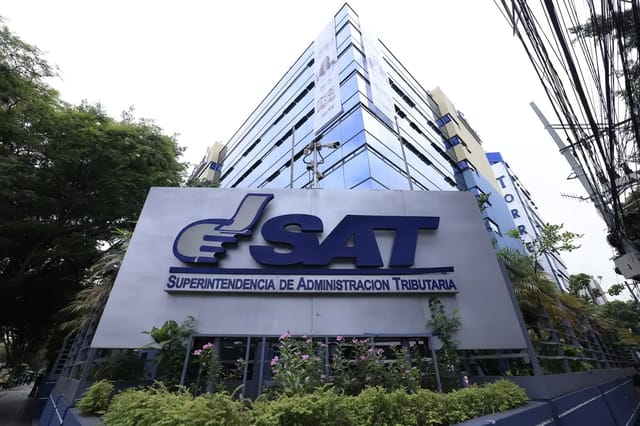
What it costs. SAT’s requirements page for tourist vehicles lists Q60, a single charge, for the form used for a temporary-import permit for non-commercial vehicles, and Q160 for the Declaraguate form. That page is written for vehicles and does not mention boats, so confirm the charge for a vessel with customs. Its list of customs offices includes Puerto Barrios and Santo Tomás de Castilla. SAT’s own customs FAQ refers to “Vehículos automotores y acuáticos con permiso de turista”, so watercraft do receive tourist permits.
Step 3: the Capitanía’s stay permit
The maritime authority issues a temporary stay permit for a foreign non-commercial vessel (permiso temporal por estadía). After official reception, every vessel arriving at a Guatemalan port must tell the Port Captain whether it will keep navigating in Guatemalan waters. The government catalogue entry, read on 2 October 2026:
| Item | What the catalogue says |
|---|---|
| Who issues it | Ministerio de la Defensa Nacional (Capitanía de Puerto; checked by RENABE) |
| Term | title: three, six or twelve months; body text: three, nine or twelve months |
| Cost | Q0 |
| Response time | 48 hours |
| Result | a stay-permit certificate (constancia de permiso temporal por estadía) |
Documents: the application form; clearance from your last port; the boat’s current registration; the crew and passenger list; the customs temporary-import permit (step 2); and a payment receipt. You apply online: create a user on the maritime authority’s site, choose the permit, upload the documents as one PDF, and RENABE either authorises it or, if a document is wrong or missing, refuses it with a notice giving the reason.
The title and the body of the same official entry give different middle terms (six or nine months); we print both rather than pick. The legal basis it cites includes Acuerdo Ministerial 39-90, the regulation on entry, stay and departure of tourist vessels.
Leaving. Departure clearances (zarpes, domestic and international) are also requested online from the maritime authority, with passports for everyone aboard, a tax-payment certificate and the fee for that clearance.
Help with the paperwork. Captain John’s Marina says it is an INGUAT-registered marina that can process boat-paper extensions, and Hacienda Tijax says it assists with customs and immigration formalities. Those are the marinas’ own statements.
Marinas: what they publish
| Marina | Monthly rate (as published) | Electricity | Notes from its own site |
|---|---|---|---|
| M and M Marina (Mango Bay) | US$100 monohull; US$250 catamaran | 0.50 per kWh (currency not stated), 110/220 V | US$40 a month extra for venting, bilge checks and battery checks; owners live on site |
| Hacienda Tijax | US$220 monohull med-moor; US$245 monohull side-tie; US$350 multihull; daily US$25 | not priced | up to 30 boats, 110/220 V; page footer dated 2017, so the rates may be old |
| Captain John’s Marina | Q1,600 monohulls up to 50 ft; Q2,400 multihulls and monohulls over 50 ft | Q3.50 per kWh | vessels up to 70 ft; metered 30 A 120 V, some 240 V; boats opened Monday-Friday for airing |
| RAM Marina & Yacht Club | not published (checked 2 Oct 2026) | metered, 110 V 30/50 A and 220 V 50 A | 25 slips up to 80 ft, many covered; minimum depth 6 ft; fuel dock; boatyard; free pump-out for any boat on the river |
| Tortugal | not published; slip request form | - | between the bridge and Castillo San Felipe, about a mile upriver from Fronteras; VHF 68 |
| Nanajuana | not published; slip request form | - | docking, fuel and a helipad at km 274 on the road to Petén |
The quetzal rates are Captain John’s; it says you can pay in quetzales or dollars at the exchange rate on the invoice date. Today’s rate is on our dollar to quetzal page.
The river and its bar
Tortugal’s marina page carries a cruiser’s account (photographer Steve Jost) of getting a deep-draught boat across the bar at the river mouth by tipping it: another boat attaches a long line to one of your halyards, motors off your beam and keeps the line under tension while you control the heel; he wrote that it took about 10 minutes. That is one sailor’s report, not an official depth. We did not find an official published depth for the bar or vertical clearance for the Río Dulce bridge (searched 2 October 2026), so check current local knowledge before you commit.
Day-to-day wind and storm conditions for the river are on our Río Dulce and Livingston weather page, which splits each forecast into morning and afternoon.
Hurricane season
Our hurricane guide gives the 2026 Atlantic season as 1 June to 30 November. RAM Marina describes boats staying on the river for hurricane season. Our hurricane season guide explains that the Caribbean coast of Izabal, including Río Dulce and Livingston, is, with northern Petén, the part of Guatemala most exposed to direct Atlantic hurricane tracks, and lists the storms that came closest. Check the live storm tracker before leaving the boat.
Getting to and from the boat
The bus and shuttle routes to Río Dulce town are in Guatemala City to Río Dulce and Antigua to Río Dulce; the public boat between Río Dulce and Livingston, with fares and times, is in our Río Dulce to Livingston boat guide. Nearby: Castillo de San Felipe, on the river at the entrance to Lake Izabal, and the Izabal department guide. If you fish from the boat, Guatemala’s sport-fishing licence is set per vessel; see Do you need a fishing licence in Guatemala?.
Government procedures were read on tramites.gob.gt (Ministerio de la Defensa Nacional entries 3323, 3324 and 3327), SAT’s portal and the RECAUCA text hosted by SAT, and IGM’s January 2023 directory, all on 2 October 2026; the Defence Ministry’s own procedure pages returned errors that day. Marina rates and facilities come from each marina’s website, read the same day.
Frequently Asked Questions
Do I need a cruising permit to keep my boat in Guatemala?
Two government steps cover a foreign recreational boat. Customs (SAT) grants temporary import of a recreational vessel under RECAUCA Art. 441 b), for up to the stay that immigration gave you as a tourist unless customs sets a different term (Art. 442). The Ministry of Defence’s maritime authority (the Capitanía de Puerto) issues a separate temporary stay permit for a foreign non-commercial vessel; the government’s procedures catalogue lists it at Q0 with a 48-hour response, and it requires a copy of the customs temporary-import permit among its documents.
How long can a foreign yacht stay in Guatemala?
The Capitanía’s stay permit is listed in the government catalogue as three, six or twelve months in its title, while the text of the same entry says three, nine or twelve months; we print both because the official page says both (read 2 October 2026). On the customs side, RECAUCA Art. 442 ties the boat’s permit to the immigration stay granted to you as a tourist, unless customs sets a different term, and lets the clock stop while the boat is in an authorised bonded storage (up to one year) or while you take it out of the country (up to three months).
How much does the Guatemala yacht permit cost?
The Capitanía’s temporary stay permit is listed at Q0 in the government catalogue (tramites.gob.gt, read 2 October 2026). SAT’s requirements page for tourist vehicles lists Q60, a single charge, for the form used for a temporary-import permit for non-commercial vehicles, and Q160 for the Declaraguate form; that page does not mention boats, so confirm the boat charge with customs when you clear in. We did not find a primary source for the US-dollar figures that circulate among cruisers.
Where do you clear in for the Río Dulce?
The river reaches the sea at Livingston. The Instituto Guatemalteco de Migración’s public-information directory (January 2023) lists a Delegación Migratoria in Livingston, Barrio El Centro, and the Capitanía’s reception procedure involves inspection by the maritime, health and immigration authorities. Customs (SAT) handles the boat’s temporary import; its tourist-vehicle page names the customs offices at Puerto Barrios and Santo Tomás de Castilla on the Caribbean coast. Two marinas on this page say they help with the paperwork.
How much is a marina on the Río Dulce?
Monthly rates published by the marinas themselves on 2 October 2026: M and M Marina US$100 for a monohull and US$250 for a catamaran; Hacienda Tijax US$220 (monohull, med-moor), US$245 (monohull, side-tie) and US$350 (multihull), on a page whose footer is dated 2017; Captain John’s Marina Q1,600 for monohulls up to 50 ft and Q2,400 for multihulls and monohulls over 50 ft. Electricity is extra at each. RAM Marina, Tortugal and Nanajuana publish facilities but no rates.
Is the Río Dulce safe from hurricanes?
Not guaranteed. RAM Marina describes boats staying for the hurricane season, but our hurricane-season guide notes that the Caribbean coast of Izabal, including Río Dulce and Livingston, is, with northern Petén, the part of Guatemala most exposed to direct Atlantic hurricane tracks. Check the live storm tracker before you leave the boat.
![Guatemala City to Livingston: Bus + Boat via Puerto Barrios or Río Dulce [2026]](/cdn-cgi/image/width=640,format=auto,quality=80/images/articles/og-default.webp)