Guatemala Hurricane & Tropical Storm Tracker — Live
Live position, forecast track and distance to Guatemala for every active tropical cyclone in the Eastern Pacific and Atlantic/Caribbean. NOAA National Hurricane Center data, live GOES satellite imagery and CONRED alert level.
Active Cyclones Right Now
Forecast Track Map
Current position (solid dot) and NHC forecast track up to 120 hours (points labeled in Guatemala local time). The track is the probable center — rain and wind effects extend hundreds of kilometers from the center.
CONRED Alert Status
Latest bulletin: La vuelta a Guatemala comienza, ¡Movilízate con prevención! (2026-10-23)
- Green Normal, no active threat
- Yellow Threat identified, dangerous event possible
- Orange Escalating trend, emergency likely
- Red Declared according to the magnitude of the event, its impact on the population and the CONRED System's response capacity; for sudden-onset events it is declared immediately
Official source: conred.gob.gt · INSIVUMEH bulletins: insivumeh.gob.gt
Live Satellite Image (GOES-19)

Central America sector, GeoColor — NOAA GOES-19 (GOES-East) satellite. Image refreshes roughly every 10 minutes; reload the page for the latest frame. Public domain, NOAA/NESDIS.
Update, 23 October 2026, 1:30 p.m. CST: Hurricane Vance is the only active system listed by NHC; there are no coastal watches or warnings in effect. NHC lists no tropical cyclones in the Atlantic. Guatemala’s rainfall forecast still calls for local precautions around rivers, unstable slopes and volcanic drainages.
- Hurricane Vance (advisory 9, 9 a.m. CST, 23 October): centre at 10.7°N 102.1°W, with maximum sustained winds of 90 mph (150 km/h), moving northwest at 5 mph (7 km/h). NHC expects steady to rapid strengthening through Saturday morning and forecasts a major hurricane, followed by slow weakening Saturday night and Sunday. Its centre is about 1,400 km from the tracker’s central-Guatemala reference point; that distance describes the centre, not the reach of rain or swell.
- Outlooks. The Atlantic outlook, issued at 2 p.m. EDT, says: “Tropical cyclone formation is not expected during the next 7 days.” The eastern and central Pacific outlook, issued at 11 a.m. PDT, gives a disturbance near the International Date Line, west of Johnston Atoll, formation chances of near 0 percent through 48 hours and 20 percent through 7 days. That disturbance is in the western central Pacific.
Rain in Guatemala: INSIVUMEH’s 23 October forecast says “Viento norte moderado en Altiplano Central, Valles de Oriente y algunas zonas de Occidente.” This means moderate northerly winds in those regions. It also forecasts afternoon/night rain and lightning in the Franja Transversal del Norte, Caribe, southern Petén, Bocacosta, parts of the Pacific coast and Occidente. CONRED’s bulletin 359-2026 and 358-2026, both dated 22 October, report shelter assistance and rain emergencies; neither announces an alert level. Details: weather alerts; emergencies: 119.
Trudy became a remnant low on 19 October, and Simon dissipated on 16 October; both received their final NHC advisories.
How to Read This Tracker
Guatemala is exposed to storms from two oceans — Eastern Pacific storms that form just offshore in May-June, and Caribbean systems that cross Honduras into the highlands in September-November. This page merges both basins into a single Guatemala-centered view, something NOAA’s own site doesn’t do.
The number that matters most is the distance to Guatemala, not the category. Guatemala’s deadliest storm events — Mitch 1998 (~268 dead), Stan 2005 (~670 dead), Agatha 2010 (152 dead), Eta/Iota 2020 (~100+ dead) — were all rain disasters on weakening systems, several of which never made landfall in Guatemala at all. Saturated volcanic soil plus 200-400 mm of rain in 48 hours means landslides in the highlands and flash floods on the coast, regardless of wind speed.
What each data point means
| Field | Why it matters |
|---|---|
| Distance to GT (km) | Great-circle distance from the storm center to Guatemala’s centroid. We treat under ~500 km as close enough for outer rain bands to matter. |
| Forecast closest approach | The minimum distance along the official NHC forecast track (next 120 h). Under 250 km = expect a national CONRED response. |
| Max winds / pressure | Intensity matters less than moisture for Guatemala — but stronger storms pull more Pacific moisture inland. |
| Movement | Slow-moving storms (under 10 mph) are the dangerous ones: they park rain over the same basins for days. |
Which CONRED alert level is actually declared right now — and the institutional-versus-public distinction that decides what it obliges — is on the CONRED alert level page. CONRED’s own recent bulletins, with a 30-day activity timeline, are on emergency alerts.
The two-basin pattern
- Eastern Pacific (May-June peak for Guatemala): storms form in the warm pool directly south of the Guatemala-El Salvador coast and can reach the country within 48-72 hours of forming. This is the season’s early threat window.
- Caribbean (September-November peak): systems like Mitch, Eta and Iota make landfall in Honduras or Nicaragua and arrive over Guatemala as weakening but moisture-loaded remnants. The highlands of Alta Verapaz, Huehuetenango and Quiché take the worst landslide damage in this window.
Rain that has already fallen shows up in the rivers before it shows up anywhere else, and INSIVUMEH publishes every gauge reading daily: river levels today puts all 45 stations against their published normal ranges, with the agency’s own Río Crecido flags.
For the full seasonal outlook, forecast context and month-by-month risk calendar, see the Hurricane Season Guatemala 2026 guide. For live rainfall accumulation by department — the best way to see a storm’s actual impact in real time — use the Weather Hub rainfall tracker.
History: Cyclones That Passed Within 200 km of Guatemala
From both of NOAA's HURDAT2 best-track databases — Atlantic/Caribbean (1851–2025) and Eastern Pacific (1949–2025). Guatemala has a coastline on each ocean, so a single-basin history would be a half-answer: Agatha (2010) was a Pacific storm.
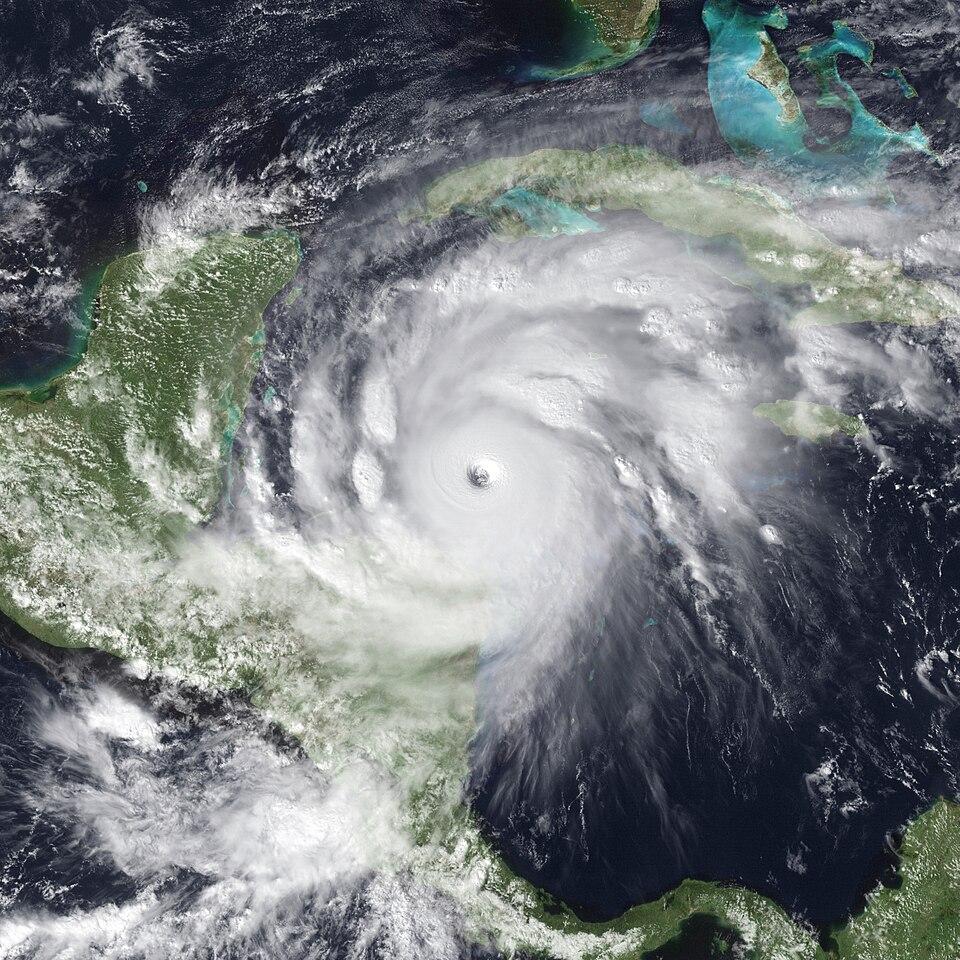
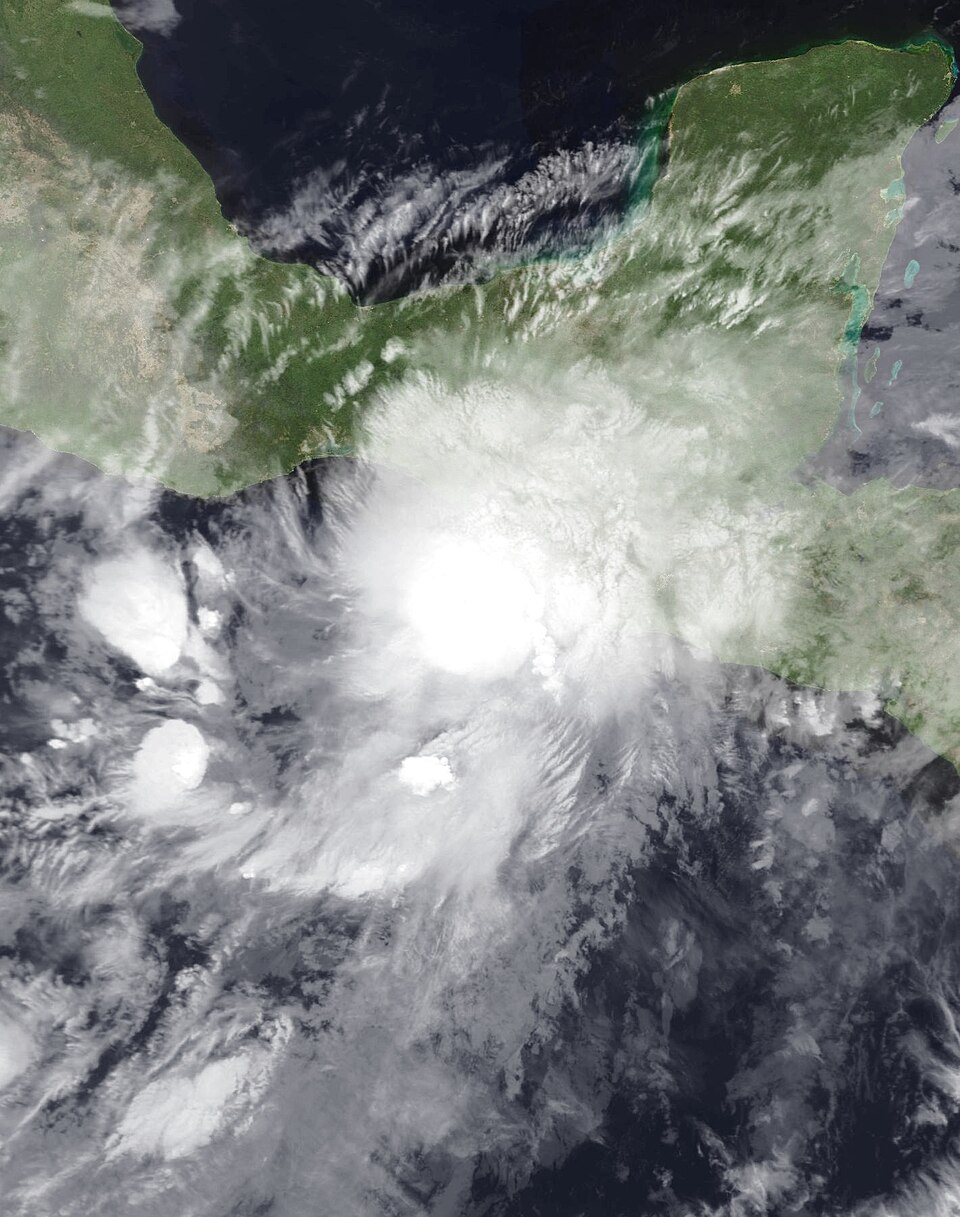
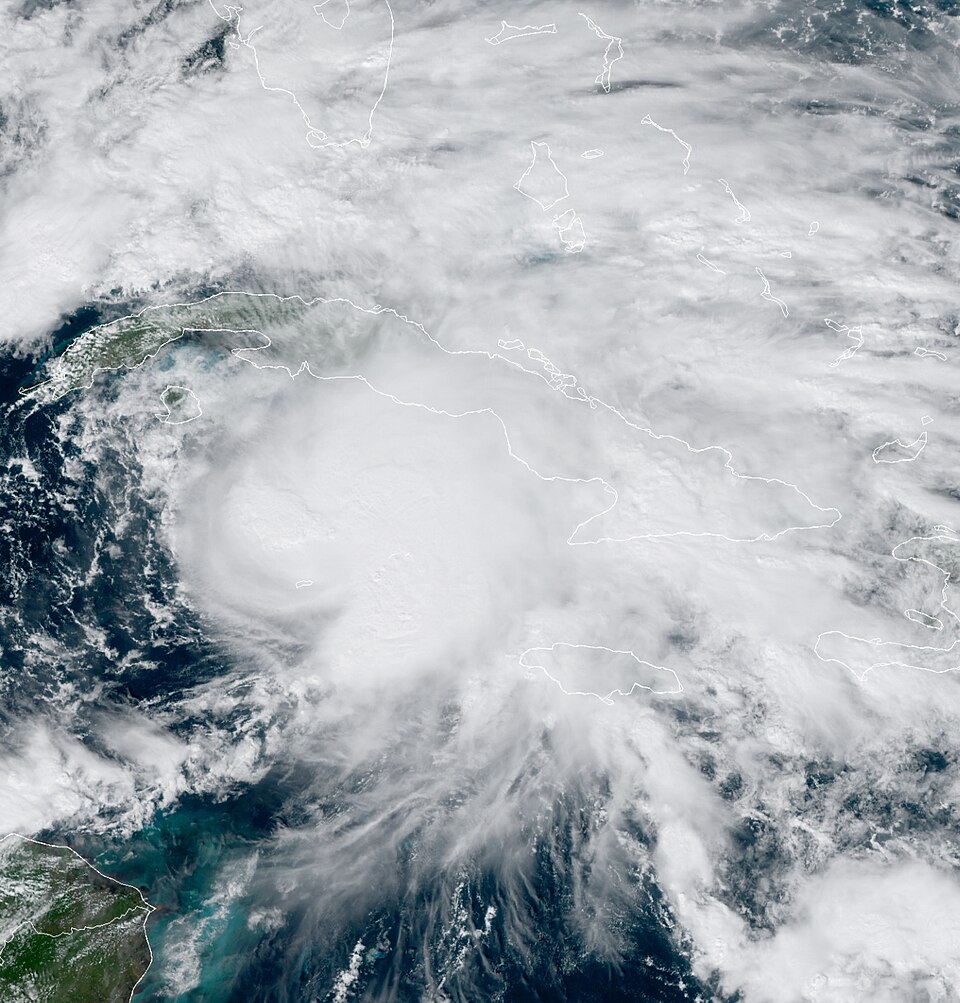
The key historical lesson: Guatemala's disasters (Mitch 1998, Stan 2005, Agatha 2010, Eta/Iota 2020) were rain events, not wind events. Two of them are not in the table at all, because they never came within 200 km: Stan's centre stayed 510.5 km away (Oct 2, 2005) and Eta's 263.9 km (Nov 6, 2020). Proximity is not the same as impact.
| Storm | Year | Basin | Peak | Peak winds (mph) | Closest pass (km) | Dates near GT |
|---|---|---|---|---|---|---|
| Nadine | 2024 | Atlantic | TS | 58 | 170.8 | 2024-10-20 |
| Nana | 2020 | Atlantic | Cat 1 | 75 | 45.8 | 2020-09-03, 2020-09-04 |
| Amanda | 2020 | Pacific | TS | 40 | 187 | 2020-05-31 |
| Hanna | 2014 | Atlantic | TS | 40 | 117 | 2014-10-29 |
| Barry | 2013 | Atlantic | TS | 46 | 168.1 | 2013-06-18 |
| Helene | 2012 | Atlantic | TS | 46 | 111.8 | 2012-08-15, 2012-08-16 |
| Harvey | 2011 | Atlantic | TS | 63 | 181.9 | 2011-08-21 |
| Agatha | 2010 | Pacific | TS | 46 | 125.5 | 2010-05-30 |
| Matthew | 2010 | Atlantic | TS | 58 | 135.3 | 2010-09-25, 2010-09-26 |
| Felix | 2007 | Atlantic | Cat 5 | 173 | 111.8 | 2007-09-06 |
| Iris | 2001 | Atlantic | Cat 4 | 144 | 58.5 | 2001-10-09 |
| Mitch | 1998 | Atlantic | Cat 5 | 178 | 133.5 | 1998-10-31, 1998-11-01 |
| Kyle | 1996 | Atlantic | TS | 52 | 196.1 | 1996-10-12 |
| Unnamed | 1994 | Atlantic | TD | 35 | 111.8 | 1994-09-26 |
| Paul | 1982 | Pacific | Cat 2 | 109 | 178.1 | 1982-09-20 |
| Greta | 1978 | Atlantic | Cat 4 | 132 | 113.9 | 1978-09-19 |
| Unnamed | 1975 | Atlantic | TD | 29 | 186.6 | 1975-10-29 |
| Fifi | 1974 | Atlantic | Cat 2 | 109 | 117 | 1974-09-20 |
| Laura | 1971 | Atlantic | TS | 69 | 58.8 | 1971-11-21, 1971-11-22 |
| Francelia | 1969 | Atlantic | Cat 2 | 98 | 65.5 | 1969-09-03, 1969-09-04 |
| Hattie | 1961 | Atlantic | Cat 5 | 167 | 69 | 1961-10-31, 1961-11-01 |
| Anna | 1961 | Atlantic | Cat 2 | 104 | 126.7 | 1961-07-24, 1961-07-25 |
| Abby | 1960 | Atlantic | Cat 1 | 81 | 120.1 | 1960-07-15, 1960-07-16 |
| Gilda | 1954 | Atlantic | TS | 69 | 166.1 | 1954-09-28 |
| Unnamed | 1949 | Atlantic | Cat 2 | 109 | 75.7 | 1949-09-28, 1949-09-29, 1949-09-30 |
| Unnamed | 1945 | Atlantic | Cat 1 | 92 | 34.7 | 1945-10-04, 1945-10-05 |
| Unnamed | 1945 | Atlantic | TS | 69 | 147.9 | 1945-09-01 |
| Unnamed | 1942 | Atlantic | TS | 52 | 113.5 | 1942-09-22, 1942-09-23 |
| Unnamed | 1941 | Atlantic | Cat 4 | 132 | 152 | 1941-09-29 |
| Unnamed | 1935 | Atlantic | Cat 1 | 86 | 157.6 | 1935-10-27 |
| Unnamed | 1934 | Atlantic | Cat 2 | 98 | 64.6 | 1934-06-06, 1934-06-07, 1934-06-08 |
| Unnamed | 1932 | Atlantic | Cat 4 | 144 | 64.6 | 1932-10-02 |
| Unnamed | 1926 | Atlantic | TS | 40 | 83.7 | 1926-10-05 |
| Unnamed | 1918 | Atlantic | Cat 2 | 104 | 119.5 | 1918-08-26 |
| Unnamed | 1916 | Atlantic | Cat 1 | 81 | 158.6 | 1916-09-02 |
All 35 cyclones on record within 200 km of Guatemala's centroid (15.78°N, 90.23°W), most recent first. Coverage: Atlantic/Caribbean 1851-2025 (32) · Eastern Pacific 1949-2025 (3). Source: NOAA NHC HURDAT2 best-track, both basins, retrieved 2026-08-06. Raw data: historical.json.
Frequently Asked Questions
Is there a tropical storm near Guatemala right now?
Check the live cards at the top of this page — they refresh from NOAA’s National Hurricane Center feed about four times a day (the ‘Updated’ stamp shows the time of the last refresh), with the distance from each storm’s center to Guatemala calculated in kilometers. When no cyclones are active, the tracker says so explicitly. As of 1:30 p.m. CST on 23 October 2026, the only active system NHC listed was Hurricane Vance, a Category 1 about 1,400 km away, south-south-west of Acapulco, Mexico (NHC 9 a.m. CST position), with no coastal watches or warnings in effect; NHC listed no tropical cyclones in the Atlantic. Trudy became a remnant low on 19 October and Simon dissipated on 16 October.
Do hurricanes hit Guatemala directly?
Direct hurricane-strength landfalls on Guatemala are rare — only a handful of systems since 1851 have passed within 200 km at hurricane intensity. The real danger is rain, not wind: Mitch (1998), Stan (2005), Agatha (2010) and Eta/Iota (2020) all caused catastrophic flooding and landslides in Guatemala while their centers were weak or even located in neighboring countries. A weakening tropical storm can be deadlier than a strong hurricane that stays offshore.
When is hurricane season in Guatemala?
Guatemala sits between two basins: the Eastern Pacific season runs May 15 to November 30, and the Atlantic/Caribbean season June 1 to November 30. Pacific storms tend to form close to the coast and affect Guatemala early in the season (May-June); Caribbean systems are more dangerous in September-November when they cross Central America from the east, wringing out rain over the highlands.
What do the CONRED alert colors mean?
CONRED (Guatemala’s disaster agency) uses four levels: Green (normal), Yellow (threat identified, dangerous event possible), Orange (escalating, emergency likely — institutional response activates) and Red (declared according to the event’s magnitude, its impact on the population and the CONRED System’s response capacity; in sudden-onset events it is declared immediately). During tropical cyclone threats, alerts often escalate department-by-department rather than nationwide. Official source: conred.gob.gt.
How accurate is the forecast track?
The NHC track is a forecast: treat the dashed line on the map as the center of a cone of possibilities, not a precise path — and remember rain bands extend hundreds of kilometers from the center, so ’the track misses Guatemala’ does not mean ’no impact'.
What should I do to prepare for a tropical storm in Guatemala?
The practical basics: store 3 days of drinking water, charge phones and power banks before the rain starts (outages follow saturated ground), avoid river crossings and steep road cuts (CA-9, RN-7E and the Cito Zarco stretch close frequently), know whether your area is landslide-prone, and follow CONRED’s official accounts. If you live near the Pacific coast lowlands (Escuintla, Retalhuleu, Suchitepéquez), watch for evacuation notices for river flooding.
Sources: NOAA National Hurricane Center (CurrentStorms + forecast track KMZ, updated every 6 hours during active storms), NOAA NESDIS GOES-19, NOAA HURDAT2 (best-track: Atlantic 1851–2025 + Eastern Pacific 1949–2025), CONRED, INSIVUMEH. This page is informational — in an emergency follow official CONRED instructions.
🌋 When Something Happens in Guatemala, Know What It Means
The weekly data brief — and when something big happens (a major quake, an eruption, road closures), an extra issue explaining what it actually means. That's how we covered the M7.3 earthquake and Fuego's eruption. No spam.
No spam. Unsubscribe anytime. We respect your privacy.