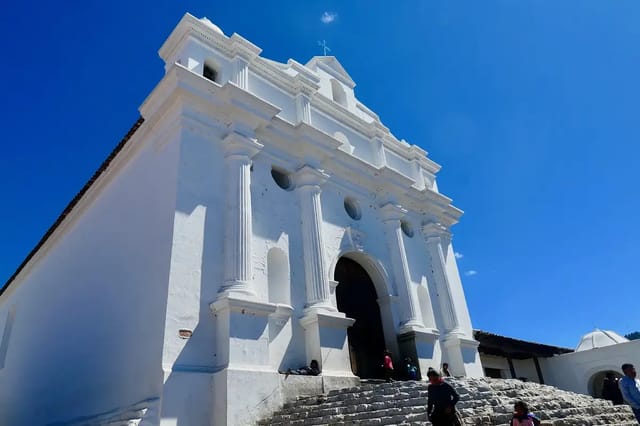
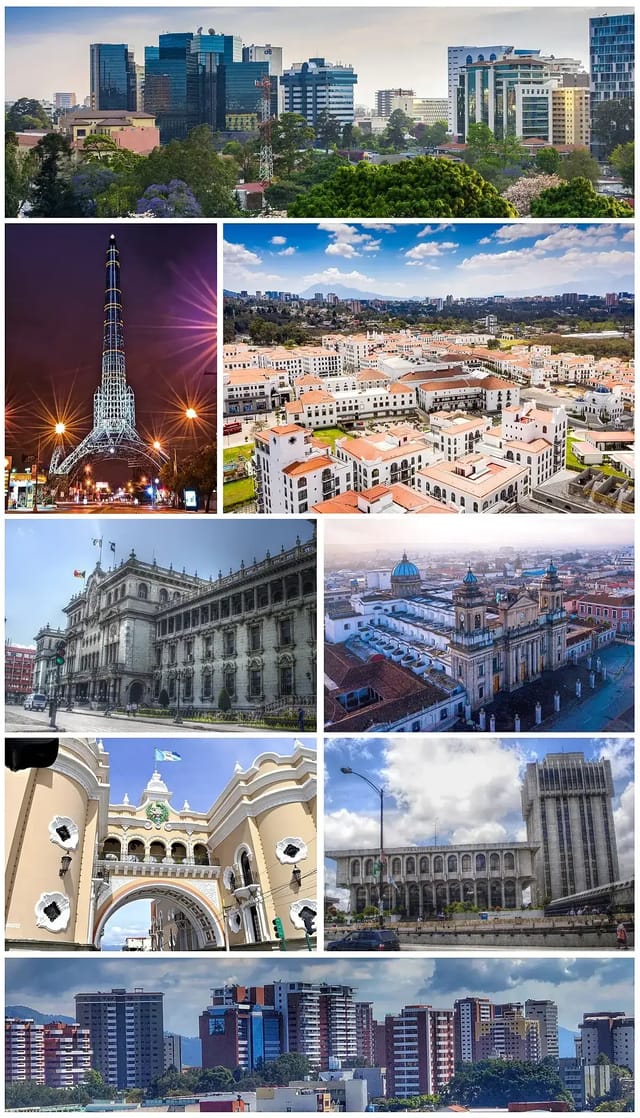
Guatemala’s capital is Guatemala City, officially Nueva Guatemala de la Asunción, and it has been the seat of government since 2 January 1776, when the city council held its first session in the Valle de la Ermita. That date comes from the Ministry of Culture’s Lecturas Bicentenarias. Guatemala City is the fourth capital: Prensa Libre counts the settlement in the Ermita valley as the fourth and last, after a first city near Iximché (1524), a second in the Almolonga valley (1527) and a third in the Panchoy valley, today’s Antigua Guatemala (1543). Two of the moves followed disasters, in 1541 and 1773.
In short: 1524, founded near Iximché, Tecpán (first capital 1524-1526, per the Ministry of Culture). 1527, re-established in the Almolonga valley, near today’s Ciudad Vieja. 1541, that city destroyed. March 1543, the third city inaugurated in the Panchoy valley (Antigua), where it stayed 230 years. 29 July 1773, the Santa Marta earthquakes. 2 January 1776, the capital officially moves to the Valle de la Ermita: Guatemala City.
The four seats of the capital
| Seat | Dates | Where | Why it ended | Source |
|---|---|---|---|---|
| 1. Iximché | Founded 25 July 1524; first capital 1524-1526 | Near Iximché, Tecpán, Chimaltenango | The alliance with the Kaqchikel broke down; UNESCO says the city was destroyed by fire in an Indigenous uprising | Ministry of Culture (SIC); Prensa Libre; UNESCO |
| 2. Almolonga valley | 22 November 1527 to 1541 | Today’s San Miguel Escobar, near Ciudad Vieja, Sacatepéquez | Destroyed in 1541: UNESCO says by earthquakes and an avalanche; Prensa Libre dates a flood to 11 September 1541 | UNESCO; Prensa Libre; Ministry of Culture (SIC) |
| 3. Panchoy valley | Inaugurated March 1543 to 1776 | Antigua Guatemala, at the foot of the Volcán de Agua | Santa Marta earthquakes, 29 July 1773 | UNESCO; Ministry of Culture (Lecturas Bicentenarias) |
| 4. Valle de la Ermita | 2 January 1776 to today | Guatemala City | Still the capital | Ministry of Culture (Lecturas Bicentenarias); UNESCO |
UNESCO’s account of the early years does not name Iximché or Almolonga; it says Santiago de Guatemala was founded in 1524, destroyed by fire, re-established in 1527, buried in 1541, and moved to its third location in 1543. The place names come from the Ministry of Culture and Prensa Libre.
1524: the first capital, beside Iximché
Iximché, in Tecpán, Chimaltenango, was already a capital: the Ministry of Culture’s cultural information system (SIC) says it was founded around 1470 as the capital of the Kaqchikel kingdom. In 1524 its rulers, Belehe Qat and Cahi Imox, received Pedro de Alvarado and his troops there, and the temporary alliance let the Spanish subdue several rival peoples. The ministry says Iximché was the first capital of the Kingdom of Guatemala from 1524 to 1526. Spanish demands for tribute and abuses broke the alliance, the Kaqchikel left the city and resisted colonial rule, and after conflicts and fires in the first years of the conquest the city was abandoned. Part of its building material was later reused to build the nearby town of Tecpán Guatemala.
Prensa Libre, in a 2014 history article, dates the founding of Santiago de los Caballeros de Guatemala near Iximché to 25 July 1524, the feast of the apostle Santiago, a date it says was chosen on purpose. Citing the chronicler Fray Antonio de Remesal, it says the founding was followed by the first cabildo (city council). The paper describes this first city as a military camp with a legal purpose rather than a built town.
Visiting the site today: the ministry puts Iximché 56 km from Antigua and 91 km from Guatemala City, turning off the CA-1 at kilometre 88. Fees and hours are on our Iximché ruins page.
1527-1541: the Almolonga valley and Ciudad Vieja
UNESCO says the city was re-established in 1527. Prensa Libre gives the date as 22 November 1527: Jorge de Alvarado, Pedro’s brother, laid out the first permanent settlement with streets and squares, at the place now occupied by San Miguel Escobar, near Ciudad Vieja, Sacatepéquez, in the Almolonga valley. About 150 Spaniards settled there, according to the book Santiago de Guatemala en Almolonga as quoted by the paper.
The paper also corrects a common assumption: drawing on the Guía de Antigua Guatemala, it says the centre of the second Santiago was never at Ciudad Vieja, which was instead the quarter of the Tlaxcalan, Mexica and Cholula Indigenous people who came with Alvarado. Ciudad Vieja does keep the memory of the city: the Ministry of Culture’s SIC lists a stone monument in its central plaza, facing the municipal building, commemorating the founding of the second city of the Kingdom of Guatemala in the Almolonga valley.
The second city ended in 1541. UNESCO says it was entirely buried as a result of earthquakes and an avalanche; Prensa Libre describes a flood on 11 September 1541 that destroyed a city still closer to a small village, divided only by cane fences. More on the town today is on our Ciudad Vieja page.
1543-1776: Antigua, in the Panchoy valley
The third location, in the Valley of Panchoy or Pacán, was inaugurated in March 1543 and served for 230 years, according to UNESCO. Prensa Libre dates the decision to move to 10 March 1543. The Ministry of Culture’s Lecturas Bicentenarias says the city stood on the slopes of the Volcán de Agua, with the official name Santiago de los Caballeros de Guatemala.
UNESCO describes the site as built 1,530.17 m above sea level in an earthquake-prone region. The city survived floods, volcanic eruptions and other serious tremors until 1773, when the Santa Marta earthquakes destroyed much of the town. The Lecturas Bicentenarias date those earthquakes to 29 July 1773. How the town has been hit by earthquakes since is covered in earthquakes in Antigua Guatemala.
1776: the move to the Valle de la Ermita
After the earthquakes, the authorities ordered the capital moved to a safer location, which became Guatemala City, the country’s modern capital (UNESCO). The Lecturas Bicentenarias give the legal date: the Captaincy General of Guatemala was considered officially moved to the Valle de la Ermita on 2 January 1776, when the Ayuntamiento (city council) held its first session there. On moving, the city took the name Nueva Guatemala de la Asunción.
Prensa Libre, quoting the Antigua chronicler Enrique Berdúo, says the name Santiago was deliberately not carried over because it had become associated with calamities, and the Virgin of the Assumption was chosen as patron.
Little of the first Guatemala City survives. The Lecturas Bicentenarias note that, two hundred years after independence, only the Cathedral and part of the Portal del Comercio remain on the central plaza; the rest was destroyed by earthquakes. The old Ayuntamiento stood where the Palacio Nacional de la Cultura is today.
Why Antigua stayed as it is
Not everyone left. UNESCO’s World Heritage entry for Antigua says some residents stayed behind in the original town, which came to be called La Antigua Guatemala. Because of the partial abandonment of the city in 1776, and regulations prohibiting the repair and construction of new buildings, its 16th-century Renaissance grid, Baroque monuments and ruins survived, along with cobblestone streets, plazas with fountains and domestic architecture. Guatemala’s other World Heritage sites are on our UNESCO World Heritage sites page.
For the wider sequence of dates around these moves, from the conquest to independence in 1821, see the Guatemala history timeline. If you are choosing between the two cities as a base, our Antigua or Guatemala City guide compares them.
Where to stay in Antigua Guatemala
Compare Booking.com, Airbnb and hotels on one map. Drag the map and set your dates to see live availability and real prices.
Affiliate links — if you book, we earn a small commission at no extra cost to you.
Sources
- Ministerio de Cultura y Deportes, Enrique Noriega, La independencia, su bicentenario 1821-2021 (Lecturas Bicentenarias), PDF p. 163: https://mcd.gob.gt/wp-content/uploads/2022/05/21-Enrique-Noriega-La-independencia-su-bicentenario-1821-2021-Lecturas-Bicentenarias.pdf (read 13 November 2026)
- UNESCO World Heritage Centre, Antigua Guatemala (list no. 65): https://whc.unesco.org/en/list/65/ (read 13 November 2026)
- Ministerio de Cultura y Deportes, Sistema de Información Cultural, Iximché: https://www.sicultura.gob.gt/directory-directorio_c/listing/iximche/ and Sitio arqueológico Iximché: https://www.sicultura.gob.gt/directory-directorio_c/listing/sitio-arqueologico-iximche/ (read 13 November 2026)
- Ministerio de Cultura y Deportes, Sistema de Información Cultural, Monumento en Conmemoración de la Fundación de la Segunda Ciudad del Reino de Guatemala: https://www.sicultura.gob.gt/directory-directorio_c/listing/monumento-en-conmemoracion-de-la-fundacion-de-la-segunda-ciudad-del-reino-de-guatemala/ (read 13 November 2026)
- Prensa Libre, Brenda Martínez, La primera ciudad formal de Santiago surgió en el Valle de Almolonga, 25 July 2014: https://www.prensalibre.com/vida/escenario/primera-ciudad-de-santiago-valle-de-almolonga-capital-de-guatemala-0-1180682117/ (read 13 November 2026)
Frequently Asked Questions
What is Guatemala's capital, and why did the capital move so many times?
Guatemala City. The capital was considered officially moved to the Valle de la Ermita on 2 January 1776, when the city council held its first session there, according to a Ministry of Culture publication. It was the fourth seat: the first, founded in 1524 near Iximché, was abandoned after the Kaqchikel uprising; the second, in the Almolonga valley from 1527, was destroyed in 1541; the third, in the Panchoy valley (today’s Antigua), was left after the Santa Marta earthquakes of 1773.
What is the official name of Guatemala City?
When the capital moved to its new site, the city took the name Nueva Guatemala de la Asunción, per the Ministry of Culture’s Lecturas Bicentenarias. Prensa Libre (2014) adds that the name Santiago was not carried over because it had become associated with calamities.
Was Antigua Guatemala the capital?
Yes, for about 230 years. UNESCO says the third site, in the Valley of Panchoy, was inaugurated in March 1543 and served for 230 years, until the Santa Marta earthquakes of 1773 led the authorities to order the capital’s relocation. Its official name then was Santiago de los Caballeros de Guatemala.
What was the first capital of Guatemala?
Guatemala’s Ministry of Culture says Iximché was the first capital of the Kingdom of Guatemala from 1524 to 1526. Prensa Libre dates the founding of Santiago de los Caballeros de Guatemala near Iximché to 25 July 1524.
Was Ciudad Vieja the second capital?
Ciudad Vieja has a monument, listed by the Ministry of Culture, commemorating the founding of the second city of the Kingdom of Guatemala in the Almolonga valley. Prensa Libre (2014) places that city’s centre at today’s San Miguel Escobar, near Ciudad Vieja, and says Ciudad Vieja itself was the quarter of the Indigenous allies who came with Alvarado.
Why did the capital leave Antigua?
The Santa Marta earthquakes. A Ministry of Culture publication dates them to 29 July 1773 and says they caused damage of great consideration; UNESCO says they destroyed much of the town and the authorities ordered the relocation of the capital to a safer place.