Quick summary: Guatemala has 4 UNESCO World Heritage properties: Antigua Guatemala (1979), Tikal National Park (1979, mixed), Quiriguá (1981) and Tak’alik Ab’aj (2023). Another 22 places are on its Tentative List, among them El Mirador, Chichicastenango and Lake Atitlán, which are not inscribed. On UNESCO’s intangible lists Guatemala has 5 elements, from the Rabinal Achí dance drama (2008) to the giant kites of Sumpango and Santiago Sacatepéquez (2024).
Every year, criterion and area on this page comes from UNESCO’s World Heritage Centre and its Intangible Cultural Heritage site, both read on 8 October 2026. Guatemala ratified the World Heritage Convention on 16 January 1979 and the intangible heritage convention on 25 October 2006.
The 4 inscribed World Heritage properties
| Property | Type | Inscribed | Criteria | Area (UNESCO) | Where |
|---|---|---|---|---|---|
| Antigua Guatemala | Cultural | 1979 | (ii)(iii)(iv) | not given on the page | Antigua Guatemala |
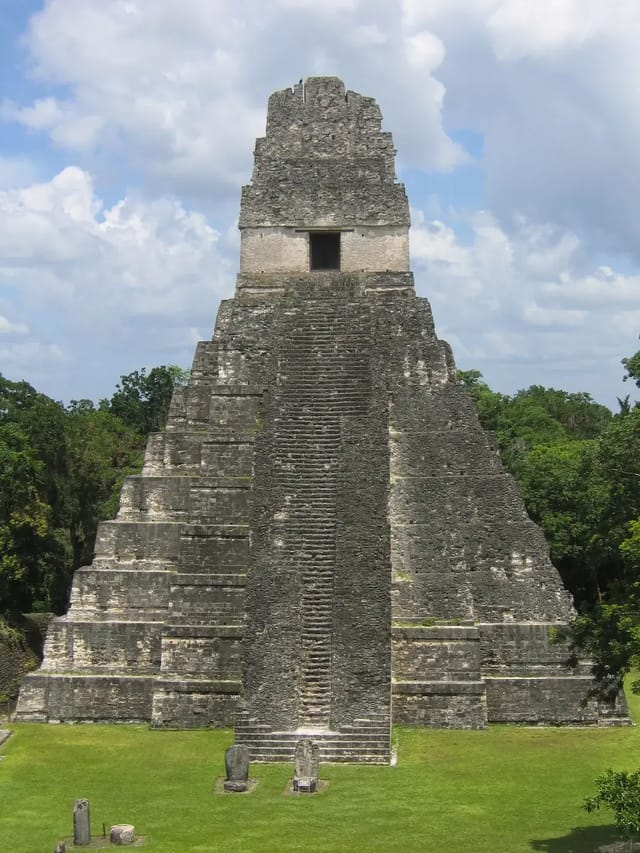
| Tikal National Park | Mixed | 1979 | (i)(iii)(iv)(ix)(x) | 57,600 ha | Petén |
| Archaeological Park and Ruins of Quirigua | Cultural | 1981 | (i)(ii)(iv) | 34 ha | Izabal |
| National Archaeological Park Tak’alik Ab’aj | Cultural | 2023 | (ii)(iii) | 15.38 ha, plus a 1.28 ha buffer zone | Pacific Coast |
What UNESCO’s description says about each:
- Antigua Guatemala. The capital of the Captaincy-General of Guatemala, founded in the early 16th century and built 1,500 m above sea level in an earthquake-prone region. An earthquake in 1773 largely destroyed it, but its principal monuments are preserved as ruins. The city was built on a grid pattern inspired by the Italian Renaissance.
- Tikal National Park. One of the major sites of Maya civilisation, inhabited from the 6th century BC to the 10th century AD, with temples, palaces and public squares reached by ramps. It is Guatemala’s only mixed property; UNESCO’s page ties criteria (ix) and (x) to the Maya Forest’s landscape and biodiversity. UNESCO notes Tikal was declared a national monument in 1931 and a national park in 1955.
- Quiriguá. Inhabited since the 2nd century AD, it became the capital of an autonomous and prosperous state under Cauac Sky (723-84). UNESCO points to its 8th-century monuments and its carved stelae and sculpted calendars. UNESCO calls flooding, as in 1998 and 2010, the biggest challenge in protecting the site, which lies close to the Motagua River.
- Tak’alik Ab’aj. On the Pacific Coast, with a 1,700-year history spanning the transition from the Olmec civilisation to early Maya culture, on a long-distance trade route from the Isthmus of Tehuantepec to present-day El Salvador. UNESCO adds that Indigenous groups still visit it as a sacred place to perform rituals.
For entry fees and how to get to each site, see our Mayan ruins guide, the Tikal vs. Chichén Itzá comparison and the Tikal sunrise tour page.
The Tentative List: 22 places, none inscribed yet
A Tentative List is, in UNESCO’s words, an inventory of the properties a State Party intends to consider for nomination. Being on it is not inscription. Guatemala’s list, with the year each entry was submitted, as UNESCO prints the names:
| # | Entry (UNESCO’s English name) | Year |
|---|---|---|
| 1 | The Cultural Triangle | 2002 |
| 2 | The Cuenca Mirador | 2002 |
| 3 | The Core of the Mayan Area | 2002 |
| 4 | The Route of The Rivers | 2002 |
| 5 | Naj Tunich Cave | 2002 |
| 6 | The Mayan-Olmecan Encounter | 2002 |
| 7 | Route of the Franciscan Evangelisation | 2002 |
| 8 | Route of the to Dominique Evangelisation | 2002 |
| 9 | Route of the Peace and National Identity | 2002 |
| 10 | Castle of San Felipe de Lara | 2002 |
| 11 | Route of the Agroindustry and the Architecture Victoriana | 2002 |
| 12 | Town of Chichicastenango | 2002 |
| 13 | The Green Route of Verapaz, Guatemala | 2002 |
| 14 | Sierra De Las Minas Biosphere Reservation | 2002 |
| 15 | National Park Sierra del Lacandón | 2002 |
| 16 | The Manglares Route of Pacific Coast of Guatemala | 2002 |
| 17 | Protected area of Lake Atitlán: multiple use | 2002 |
| 18 | Visis Cabá National park and Triangulo Ixil Vernacular Architecture | 2002 |
| 19 | The Painted Murals of San Bartolo | 2012 |
| 20 | The Caves of Naj Tunich | 2012 |
| 21 | Archeological Site Naranjo Sa’aal | 2022 |
| 22 | National Theater of Guatemala | 2022 |
Eighteen of the 22 entries date from 2002. The two most recent, added in 2022, are the Naranjo Sa’aal archaeological site and the National Theater in Guatemala City.
The 5 intangible heritage elements
UNESCO’s Intangible Cultural Heritage lists are separate from the World Heritage List: they cover practices, not places.
| Year | Element | List | What UNESCO’s page says |
|---|---|---|---|
| 2008 | Rabinal Achí dance drama tradition | Representative List (proclaimed 2005) | A dynastic Maya drama from the 15th century, expressed through masked dance, theatre and music, about the inhabitants of the Rabinal region |
| 2008 | Language, dance and music of the Garifuna | Representative List (proclaimed 2001) | Shared by Belize, Guatemala, Honduras and Nicaragua; the Garifuna language belongs to the Arawakan group |
| 2013 | Nan Pa’ch ceremony | Urgent Safeguarding List | A corn-veneration ritual in San Pedro Sacatepéquez, with prayers in the Mam language |
| 2022 | Holy Week in Guatemala | Representative List | Processions, vigils, funeral marches, seasonal food, and carpets, orchards and altars |
| 2024 | Technique of making the giant kites of Santiago Sacatepéquez and Sumpango | Representative List | Kites made over several months and shown at the fairs of the Day of the Saints and the Dead, to communicate with the ancestors |
UNESCO’s Guatemala page also lists two on-going nominations for 2026: the pilgrimage to the Black Christ of Esquipulas (a joint file with Panama’s festivity of the Holy Christ of Esquipulas), and knowledge and practices in the preparation of traditional sauces from the Mayan cultures in Guatemala. Neither was inscribed when we checked on 8 October 2026.
Related
- Mayan ruins in Guatemala: fees and how to visit
- Quiriguá ruins
- Tak’alik Ab’aj
- Rabinal Achí dance drama
- Guatemalan traditional clothing: huipil and corte
- All guides
Sources
- UNESCO World Heritage Centre, Guatemala state party page: https://whc.unesco.org/en/statesparties/gt (read 8 October 2026).
- UNESCO World Heritage Centre, property pages: Antigua Guatemala https://whc.unesco.org/en/list/65/ ; Tikal National Park https://whc.unesco.org/en/list/64/ ; Quirigua https://whc.unesco.org/en/list/149/ ; Tak’alik Ab’aj https://whc.unesco.org/en/list/1663/ (read 8 October 2026).
- UNESCO Intangible Cultural Heritage, Guatemala page and element pages: https://ich.unesco.org/en/state/guatemala-GT (read 8 October 2026).
Information current as of 8 October 2026.
Frequently Asked Questions
Does Guatemala have UNESCO World Heritage Sites?
Yes, four. UNESCO’s page for Guatemala, read on 8 October 2026, lists three cultural properties, Antigua Guatemala (1979), the Archaeological Park and Ruins of Quirigua (1981) and the National Archaeological Park Tak’alik Ab’aj (2023), and one mixed property, Tikal National Park (1979). Guatemala ratified the World Heritage Convention on 16 January 1979.
Is Antigua Guatemala a UNESCO World Heritage Site?
Yes. UNESCO inscribed Antigua Guatemala in 1979 under criteria (ii), (iii) and (iv). Its description says the former capital of the Captaincy-General of Guatemala was founded in the early 16th century, built 1,500 m above sea level, largely destroyed by an earthquake in 1773, and laid out on a grid pattern inspired by the Italian Renaissance.
Is Tikal a UNESCO site?
Yes. Tikal National Park was inscribed in 1979 as a mixed property under criteria (i), (iii), (iv), (ix) and (x). UNESCO lists the property at 57,600 ha and says Tikal was declared a national monument in 1931 and a national park in 1955.
Is El Mirador or Chichicastenango a UNESCO World Heritage Site?
Not inscribed. Both are on Guatemala’s Tentative List, the inventory of places a country intends to consider for nomination: The Cuenca Mirador and Town of Chichicastenango, both listed in 2002. Lake Atitlán is also on that list, as Protected area of Lake Atitlán: multiple use (2002).
What intangible cultural heritage does Guatemala have on UNESCO's lists?
Five elements: the Rabinal Achí dance drama tradition (2008), the language, dance and music of the Garifuna (2008, shared with Belize, Honduras and Nicaragua), the Nan Pa’ch ceremony (2013, Urgent Safeguarding List), Holy Week in Guatemala (2022) and the technique of making the giant kites of Santiago Sacatepéquez and Sumpango (2024). Two more nominations are listed as on-going for 2026.