Yes, you can witness a Maya ceremony in Guatemala, but on the spiritual guides’ terms. Ceremonies are religious acts led by an Ajq’ij (plural Ajq’ijab’), and at state-run archaeological sites they follow the Ministry of Culture and Sports’ Acuerdo Ministerial 981-2011: ceremonies at the designated altars only, no loudspeakers or fireworks, and nobody enters under the influence of alcohol or drugs (AGN, 9 October 2025). The public places where ceremonies are documented include Iximché, Q’umarkaj and the hill of Pascual Abaj near Chichicastenango. For a ceremony you book in advance, Kawoq Forest in San Marcos La Laguna sells places at a Maya fire and cacao ceremony.
This page brings together the site rules, the places and the behaviour that the official sources describe. Facts were read on 4 November 2026 unless a different date is given.
Quick summary
| Question | Answer | Source |
|---|---|---|
| Can visitors watch? | Ceremonies happen at sites open to the public, such as Iximché and Q’umarkaj | CONAP; Ministry of Culture (SIC) |
| Rule set at state sites | Acuerdo Ministerial 981-2011: altars only; no speakers, fireworks or disruptions; no entry under alcohol or drugs | AGN, 9 October 2025 |
| Do guides pay entry? | Free for Maya spiritual groups with written Ministry of Culture permission; national parks and protected areas charge fees | US State Department, 2023 report |
| Photos | Ask permission first; you may be asked for a small payment | UK FCDO; Canada |
| A ceremony you can book | Kawoq Forest, San Marcos La Laguna: Maya fire and cacao ceremony, Wednesday 11 November 2026, 12:00 PM, $50 per person | Kawoq Forest |
| Maya New Year date | See our Waqxaqib’ B’atz’ (Maya New Year) guide | — |
The rules at archaeological sites: Acuerdo Ministerial 981-2011
The Agencia Guatemalteca de Noticias (AGN) summarised the Ministry of Culture and Sports (MCD) agreement on 9 October 2025. In its description, the agreement recognises the right of the Ajq’ijab’ to hold their ceremonies at sacred sites and sets these conditions:
- Altars only. AGN reports that the agreement says “las ceremonias deben hacerse únicamente en los altares ubicados dentro de los sitios arqueológicos reconocidos” (ceremonies must be held only at the altars inside recognised archaeological sites).
- No noise or fireworks. The agreement includes the “prohibición del uso de bocinas, pirotecnia o cualquier elemento que altere la serenidad del lugar”, which covers loudspeakers, pyrotechnics and anything else that breaks the calm of the place.
- Sober attendance. AGN says the agreement stresses participants’ conduct, “prohibiendo el ingreso bajo efectos de alcohol o drogas” (barring entry under the influence of alcohol or drugs).
The US State Department’s 2023 International Religious Freedom Report on Guatemala adds the access side. It says Maya spiritual groups may hold ceremonies without charge at historic Maya sites on state land once the Ministry of Culture gives written permission, while sites inside national parks and other protected areas charge entrance or processing fees. The same report records that some Maya leaders said the government limited their access and did not issue credentials to all practitioners in a timely manner; the government denied any access limitations.
For you as a visitor, the practical reading is simple: you enter on a normal ticket, ceremonies take place at the altars, and the same calm the agreement asks of participants applies to the people watching.
Where ceremonies are documented
| Place | What the official source says | Visiting details |
|---|---|---|
| Iximché (Tecpán, Chimaltenango) | CONAP’s protected-areas tourism page calls it a site of importance for the Maya worldview, where numerous ceremonies led by priests of different ethnic groups are held throughout the year (page read 24 September 2026) | Ministry of Culture listing: 8:00 to 16:00, Monday to Sunday. Fees, directions and the site layout: Iximché ruins guide |
| Q’umarkaj (Santa Cruz del Quiché) | The Ministry of Culture’s SIC listing says a circular burning place in front of the Tojil temple is used in ceremonies, that contemporary Maya still make ceremonial offerings at an opening in the Tohil temple’s remains, and that two of the site’s caves are used by the Ajq’ijab’ for ceremonies | Hours, fees and the caves: Q’umarkaj ruins guide |
| Pascual Abaj (Chichicastenango) | The Central America tourism portal (visitcentroamerica.com) places the hill 20 minutes from Chichicastenango, considered sacred by the K’iche’, with ancestral customs practised before a stone figure and ceremonies with offerings from candles to burning incense | Plan it with a market day: Chichicastenango market guide |
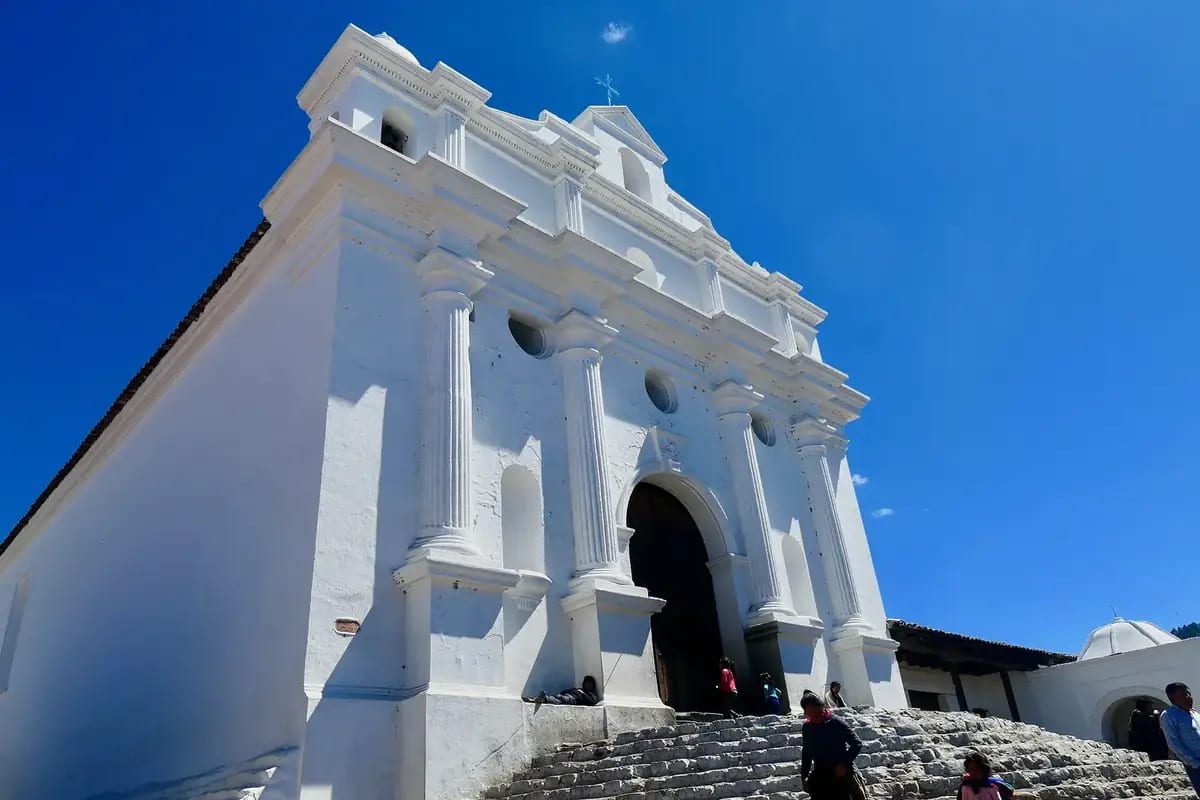
| Santo Tomás church (Chichicastenango) | The same portal says that inside the church, ancestral ceremonies and Catholic worship are combined | Entry and photo etiquette: Chichicastenango market guide; December feast: Santo Tomás festival |
The State Department report also notes that in Chichicastenango, people from both the Maya and the Catholic communities left Maya-style offerings at sacred places in nature and also went to Mass. Santiago Atitlán’s Maximón (Rilaj Mam) is a related but different tradition, with its own offerings and photo fees; see visiting Maximón in Santiago Atitlán.
Sacred places are not all on public land. The 2023 report says owners of private land were still refusing entry to places Maya people hold sacred, among them caves, lagoons, mountains and forests. Do not go looking for an altar on private land without the owner’s and the community’s agreement.
Ceremonies you can book at Lake Atitlán
Two San Marcos La Laguna centres publish Maya fire ceremonies on their own websites:
- Kawoq Forest titles its ceremonies page as ceremonies facilitated by indigenous facilitators, held at a stone it calls Nimalaj Abaj (the Great Stone, a Kaqchikel name) in what it calls the sacred cave area of its land. The next listed ceremony is the Maya Fire & Cacao Ceremony on the day 7 Aj, Wednesday 11 November 2026 at 12:00 PM, with a contribution of $50 per person (about Q382, CAD 70 or £39). The same page gives current ceremony prices of $40 to $47 per person, so check the price on the booking page. The centre is a 15-minute walk from the centre of San Marcos and reached on foot only.
- Eagle’s Nest lists a weekly Mayan Fire Ceremony on Tuesdays in its week of events. Its events page does not say whether non-guests can join that ceremony, so ask before you go.
Both centres also run cacao ceremonies, which are a separate practice; see cacao ceremonies at Lake Atitlán.
Conversions use Banguat’s rates for 3 November 2026 (USD 1 = Q7.63621; CAD 1 = Q5.46087; GBP 1 = Q9.8002).
How to behave at a ceremony
- Treat it as worship. AGN’s summary of the agreement calls ceremonies acts of respect and devotion to the ancestors and says each guide and attendee is responsible for acting with reverence for the sacred meaning of the place. You are a guest at someone else’s ceremony.
- Arrive sober. Entry under the influence of alcohol or drugs is barred by Acuerdo 981-2011 (AGN).
- No loudspeakers, fireworks or disruptive noise. The same agreement bans loudspeakers, pyrotechnics and anything that breaks the calm of the place.
- Ask before every photo. INGUAT’s Santiago Atitlán guide asks visitors to ask before photographing people or rituals. The UK FCDO says never to photograph anyone, and children above all, without permission, and warns that a small fee may be asked. Canada’s advice says not to photograph women and children, above all where Indigenous communities live. The wider rules are on our Guatemala etiquette for visitors page.
- Use the right words. The State Department’s 2023 report records that Maya spiritual guides still faced discrimination and harassment from parts of society, and were even accused of witchcraft. AGN speaks of ceremonies and describes the ajq’ijab’ as spiritual guides of the original peoples; use the same words.
Sources
- Agencia Guatemalteca de Noticias (AGN), Conoce sobre la protección de los sitios arqueológicos ceremoniales en Guatemala, 9 October 2025: agn.gt, read 4 November 2026
- US Department of State, 2023 Report on International Religious Freedom: Guatemala: state.gov, read 4 November 2026
- CONAP, Parque Nacional Iximché tourism page: turismo-sigap.conap.gob.gt, read 24 September 2026
- Ministerio de Cultura y Deportes, SIC listing, Sitio Arqueológico Iximché: sicultura.gob.gt, read 4 November 2026
- Ministerio de Cultura y Deportes, SIC listing, Sitio Arqueológico Q’umarkaaj: sicultura.gob.gt, read 4 November 2026
- Visit Centroamérica, Santo Tomás Church, Pascual Abaj Shrine and Chichicastenango Market: visitcentroamerica.com, read 4 November 2026
- INGUAT, Visit Guatemala, What to see and do in Santiago Atitlán: visitguatemala.gt, read 4 November 2026
- UK FCDO, Guatemala travel advice, Safety and security: gov.uk, read 4 November 2026
- Government of Canada, Travel advice for Guatemala: travel.gc.ca, read 4 November 2026
- Kawoq Forest, Ceremonies: kawoqforest.com, read 4 November 2026
- Eagle’s Nest Atitlán, Events: eaglesnestatitlan.com, read 4 November 2026
Frequently Asked Questions
Can tourists attend a Maya ceremony in Guatemala?
Ceremonies are held at archaeological sites that are open to the public. CONAP’s Iximché page says numerous ceremonies led by priests of different ethnic groups are held there throughout the year, and the Ministry of Culture’s Q’umarkaj listing describes a circular burning place in front of the Tojil temple used in ceremonies. A ceremony is a religious act led by an Ajq’ij (spiritual guide): AGN’s summary of the Ministry of Culture’s rules says every guide and attendee is responsible for acting with reverence, and INGUAT’s visitor guide to Santiago Atitlán asks you to request permission before photographing people or rituals. At Lake Atitlán, Kawoq Forest in San Marcos La Laguna sells places at a Maya fire and cacao ceremony ($50 per person for 11 November 2026; the same page gives current ceremony prices of $40 to $47).
What are the rules for Maya ceremonies at archaeological sites?
The Ministry of Culture and Sports’ Acuerdo Ministerial 981-2011, as described by the Agencia Guatemalteca de Noticias (AGN) on 9 October 2025, says ceremonies must be held only at the altars inside recognised archaeological sites, bans loudspeakers, fireworks and anything that disturbs the calm of the place, and bars entry under the influence of alcohol or drugs.
Do Maya spiritual guides pay to enter archaeological sites?
The US State Department’s 2023 religious freedom report says Maya spiritual groups may hold ceremonies without charge at historic Maya sites on state land, provided the Ministry of Culture gives written permission, while sites inside national parks and other protected areas charge entrance or processing fees. As a visitor you pay the normal site entrance fee.
Can I take photos of a Maya ceremony?
Ask first. The UK Foreign Office says never to photograph anyone, and children above all, without their permission, and warns that people may ask a small fee to be photographed. Canada’s travel advice says not to photograph women and children, above all where Indigenous communities live. If the Ajq’ij or the family says no, put the camera away.
Where is Pascual Abaj and what happens there?
The Central America tourism portal Visit Centroamérica puts Cerro Pascual Abaj 20 minutes from the town of Chichicastenango and says it is considered sacred by the K’iche’. On the hilltop, ancestral rites take place before a carved stone figure known as Pascual Abaj, and Maya ceremonies are held there with offerings ranging from candles to burning incense.
Is there a law protecting Maya sacred places in Guatemala?
There is a ministerial agreement (Acuerdo Ministerial 981-2011) for ceremonies at state-run archaeological sites. A broader sacred-sites bill, submitted to Congress in 2008, was still pending at the end of 2023 according to the US State Department’s 2023 religious freedom report. The same report says landowners continued to deny access to sacred places on private land such as caves, lagoons, mountains and forests.