
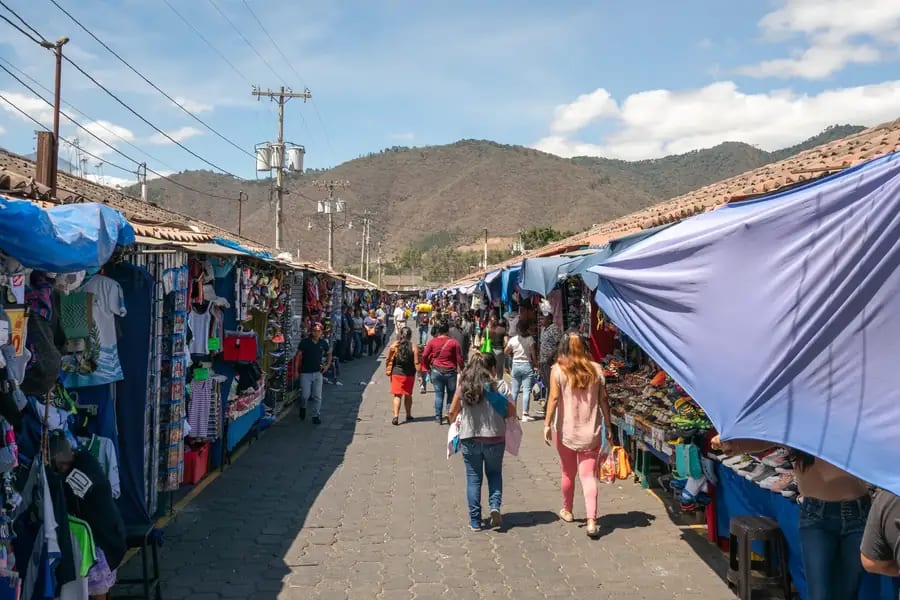
Choose Guatemalan souvenirs by their maker, materials and journey home: textiles for a useful keepsake, roasted coffee or chocolate for a consumable gift, and jade, rum, leather or ceramics only after checking the details that affect your purchase. Keep the receipt and packaging, and separate the question of import permission from the question of duty-free value.
TL;DR: Compare textiles at Chichicastenango, look at Antigua’s craft markets and consider a weaving visit in San Juan La Laguna. Before buying food, rum, animal materials or anything described as archaeological, check the official rules for the country where you will arrive.
Eight purchases to consider
| Purchase | What to ask or inspect | Before packing |
|---|---|---|
| Huipiles | Ask who made the piece, where it was made and whether it is new or previously worn. Check the fit and condition. | Request care instructions and keep the seller’s description. |
| Cortes | Check the dimensions, finishing and intended way of wearing the textile before paying. | Ask how to wash and store it. |
| Roasted coffee | Choose whole beans or ground coffee for the recipient’s equipment; check the label and roast information. | Retain the original packaging and declare it where required. |
| Chocolate | Read the ingredients and choose a product the recipient can use. | Check food rules for the destination and protect the package during travel. |
| Jade jewelry | Ask what the material is and what treatments have been applied. | Keep the written description and receipt. |
| Rum | Read the bottle’s volume, alcohol strength and country of production. | Compare those details with the allowance for your destination and age. |
| Leather goods | Ask which animal the material comes from and inspect stitching and fittings. | Check animal-product and protected-species rules before buying unfamiliar hides. |
| Ceramics | Inspect for damage and ask whether the piece is intended for food use or decoration. | Plan protective packing; do not assume an unverified glaze is food-safe. |
These are buying questions, not guarantees of authenticity or border admission. For coffee-focused shopping, our Guatemala coffee-tour guide helps you connect the purchase with a producer visit.
Where to shop
Chichicastenango: make the market the purpose of the trip
Atitrans advertises its Chichicastenango market trip for Thursdays and Sundays. Use our Chichicastenango market guide to plan the visit, and compare pieces before deciding what deserves space in your luggage. Ask permission before photographing people or their work.
Antigua: compare materials across the craft markets
SEGEPLAN’s municipal development plan identifies Antigua’s craft market and describes textiles, jade, leather and natural-fiber goods; it also documents the city’s ceramics. Treat that as background on the craft offering, and confirm current access with your accommodation before heading out. Our Antigua walking-tour guide covers itineraries that may include the central and craft markets.
San Juan La Laguna: see the process before choosing a textile
MayAchik’s own weaving page describes learning weaving and natural dyeing using techniques practiced by the women of San Juan La Laguna. A demonstration gives you a chance to ask about materials and the maker before choosing a piece. Use our San Juan textile-tour and cooperative guide for the detailed visit options.
How to approach a jade purchase
GIA says jade can be dyed, bleached, heated, waxed and impregnated. That is why a useful purchase conversation includes both the identity of the material and any treatment, rather than just its color. Ask for those details in writing and make independent verification a condition of an expensive purchase if you need certainty.
Do not rely on a scratch, sound or temperature trick as proof of authenticity. Our Guatemalan jade-buying guide explains the gemological distinctions and the questions to ask; this shopping checklist does not certify an individual stone.
Bringing purchases home: destination rules
The official guidance below was read on 3 November 2026. Allowances concern accompanied personal purchases under the relevant conditions; they do not make prohibited food, plant or animal products admissible.
United States: declare food and check the alcohol exception
CBP generally lists coffee among admissible foods and requires plant products, including plant-based handicrafts, to be declared and presented for inspection. USDA APHIS specifically allows roasted coffee in travelers’ luggage through any US port of entry, with declaration; green coffee and coffee cherries have different restrictions. Keep ingredient labels on chocolate and other food, and check unfamiliar plant or animal materials before buying.
CBP’s exemption page lists an $800 accompanied-goods exemption and includes Guatemala among the Caribbean Basin countries. It also allows two liters of alcohol under that exemption when at least one liter was produced in a listed country; its general duty guidance says the traveler must be 21 and state restrictions still apply. Check the exemption’s trip-duration and repeat-use conditions before relying on it; the general one-liter rule does not describe every eligible Guatemala purchase.
Read the US return-customs guide for the detailed food and souvenir decisions. CBP also cautions that imported ceramic tableware can contain lead in its glaze: choose decorative use unless food-use safety is established.
Canada: exemption value and product permission are separate
For returning residents, CBSA’s guide gives CAN$800 under its 48-hour exemption; goods claimed under that exemption must accompany you. After 48 hours or more, its alcohol options include Up to 1.14 litres of alcoholic beverages as one alternative, not an amount to add to the wine and beer alternatives. You must meet the minimum age of the province or territory where you enter Canada.
CBSA requires declaration of all food, plants, animals and related products, and says some are prohibited or regulated. Check the linked Canadian Food Inspection Agency requirements for the actual product before purchasing food, seeds, wood or animal materials; the personal exemption is not permission to import them.
Great Britain: check the spirits allowance and food ingredients
GOV.UK permits other goods worth up to £390, or £270 when arriving by private plane or boat. The spirits allowance is 4 litres of drinks over 22% ABV, shared with an alternative of 9 litres of drinks up to 22% such as fortified wine (GOV.UK lets you split it, for example 2 litres of spirits and 4.5 litres of fortified wine), and there is no alcohol allowance for travelers under 17. For alcohol and tobacco, going over the personal allowance means tax and duty on all the goods in that category; for other goods over the £390 limit, GOV.UK says you pay on the total value, not just the value above the allowance.
For food from Guatemala, GOV.UK’s rules prohibit meat and meat products and milk or milk-based products, with specified exceptions. Its overview allows chocolate and confectionery except products made with a lot of unprocessed dairy ingredients. These are Great Britain rules: travelers arriving in Northern Ireland should use GOV.UK’s separate Northern Ireland guidance.
Leave archaeological objects out of the shopping bag
Article 11 of Guatemala’s cultural-heritage law prohibits permanent export of cultural property and provides a limited authorization process for temporary export. That is not an ordinary tourist souvenir allowance. If a seller describes an object as archaeological or antique cultural property, resolve its status with the heritage authority before purchasing; do not assume the sales receipt authorizes export.
A practical packing check
Keep receipts, product labels and written descriptions together, and ask for packaging that protects fragile purchases. Read both customs and carrier requirements before deciding which bag will hold food, liquids or breakable items. For your broader luggage plan, use our Guatemala packing guide.
Sources
- Atitrans, Chichicastenango market trip, read 3 November 2026.
- SEGEPLAN, La Antigua Guatemala municipal development plan, read 3 November 2026.
- MayAchik, Weaving tour, read 3 November 2026.
- GIA, Jade buyer’s guide, read 3 November 2026.
- US CBP, Prohibited and restricted items, read 3 November 2026.
- US CBP, Types of exemptions, read 3 November 2026.
- US CBP, Customs duty information, read 3 November 2026.
- USDA APHIS, Coffee, teas, honey, nuts and spices, read 3 November 2026.
- CBSA, Guide for residents returning to Canada, read 3 November 2026.
- GOV.UK, Arriving in Great Britain, read 3 November 2026.
- GOV.UK, Bringing food into Great Britain, read 3 November 2026.
- GOV.UK, Meat, dairy, fish and animal products, read 3 November 2026.
- Guatemala Ministry of Culture and Sports, Cultural-heritage law, Article 11, read 3 November 2026.
Frequently Asked Questions
What should I buy in Guatemala?
Consider huipiles, cortes, roasted coffee, chocolate, jade jewelry, rum, leather goods and ceramics. Compare the maker, materials and transport requirements before deciding, and check your destination’s customs rules.
Can I bring Guatemalan coffee into the United States?
USDA APHIS permits roasted coffee in travelers’ luggage through any US port of entry, but requires declaration. Green beans and coffee cherries have different rules.
How can I check whether jade has been treated?
GIA says jade can be dyed, bleached, heated, waxed and impregnated. Ask for material and treatment information in writing; do not treat a seller’s color description as identification.
Can I bring rum home duty-free?
The allowance depends on your destination, age, trip and the product. Check the US, Canadian or Great Britain rules below before buying.
Can I take archaeological objects out of Guatemala?
Article 11 of Guatemala’s cultural-heritage law prohibits permanent export of cultural property. Do not treat an archaeological object as an ordinary souvenir.


