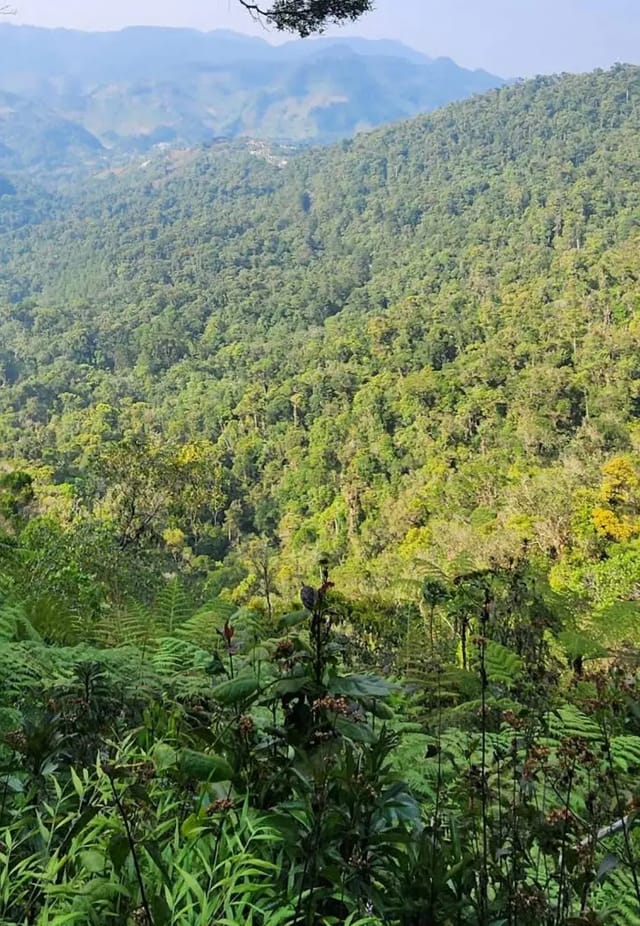
The quetzal is the resplendent quetzal (Pharomachrus mocinno), Guatemala’s national bird since 1871 (AGN). The University of Michigan’s Animal Diversity Web gives it as about 35 cm from bill to base of tail, with the male’s tail plumes up to about 90 cm more; it lives in cloud and montane forest from southern Mexico to Panama, and the IUCN Red List classes it as Near Threatened, as the same account’s conservation box prints.
In short: Size: about 35 cm to the base of the tail, male tail up to about 90 cm (Animal Diversity Web); about 30 to 38 cm (AGN). Range: southern Mexico to Panama, cloud and montane forest. In Guatemala: nests in cloud forests such as the Verapaces (AGN). Status: Near Threatened, IUCN Red List (as shown by Animal Diversity Web). National symbol since 1871 (AGN).
Size figures from two sources
| Measurement | Figure | Source |
|---|---|---|
| Bill to base of tail | 14 in (35 cm) | Animal Diversity Web |
| Male’s tail | Up to about 3 ft (90 cm) long | Animal Diversity Web |
| Size (AGN does not say how it is measured) | Approximately 30 to 38 centimetres | AGN |
Animal Diversity Web measures the body to the base of the tail and gives the male’s tail separately; AGN gives a single size range without saying how it is measured, so the two figures should not be added together.
What it looks like
Animal Diversity Web describes the male’s head, neck, chest, back and wings as metallic green, with a bright crimson breast and belly and a tuft of bristly golden-green feathers on the head; its iridescent tail plumes can add up to 3 ft to its length. The female is similar in colour but far less conspicuous, with a smoky-grey to bronze head, a grey or muted red breast and browns and buff tones in place of the male’s green. The male’s beak is yellow and the female’s black. Like other trogons, it has four toes on each foot, two pointing forward and two back.
Where it lives and what it eats
Animal Diversity Web places the quetzal in the cloud forest and montane forests of Central America, from southern Mexico to Panama, in cool high mountain ranges, living in the canopy and favouring decaying trees, stumps and sometimes old woodpecker hollows. AGN says that in Guatemala it nests in cloud forests such as the Verapaces. For where to look for one, see the Biotopo del Quetzal and birdwatching in Guatemala.
The account calls it mainly a fruit eater: its favourite fruits come from the laurel family, which resemble miniature avocados, such as the aguacatillo, and the laurels depend on the bird to spread their seeds. When fruit runs short it eats insects, small frogs and lizards, catching food in flight.
The account places its nests 15 to 45 ft above the ground and gives a typical clutch of two light-blue eggs; both parents share the incubation, and the eggs hatch after about 17 to 18 days. Among its calls, the male’s song is written as keow-kowee-keow-k’loo-keow-keloo.
Is it endangered?
Animal Diversity Web’s conservation box lists the quetzal as Near Threatened on the IUCN Red List, with no year printed. Its text says the bird is legally protected in Mexico, Guatemala, Costa Rica and Panama, “although enforcement in remote areas where birds are found is nearly impossible”, and that its numbers have fallen because of cloud forest destruction, hunting and capture for trade, citing King (1977). The account is a University of Michigan Museum of Zoology species page that draws on older literature, from the 1970s to the 1990s.
The captivity belief and the symbol
Animal Diversity Web, citing Grolier (1996), says: “The bird was always thought to be unable to survive in captivity, so it came to represent liberty and freedom to the Indians of Mexico and Central America.” It adds that the Maya considered the feathers worth gold, so killing a quetzal was a capital crime, and repeats the folk story that the bird’s red breast was stained by the blood of Tecún Umán in 1524.
AGN says the quetzal has been a national symbol since 1871 and represents liberty, autonomy and the independence of the nation; it is the bird on the coat of arms. The other symbols are on Guatemala’s national symbols, and the bird’s name on the money on the history of the quetzal currency.
Sources
- Animal Diversity Web, University of Michigan Museum of Zoology, Pharomachrus mocinno (resplendent quetzal), read 13 November 2026.
- AGN (Agencia Guatemalteca de Noticias), Cuáles son los símbolos patrios de Guatemala, 9 September 2026, read 10 November 2026.
Frequently Asked Questions
What is the national bird of Guatemala?
The resplendent quetzal (Pharomachrus mocinno). AGN, Guatemala’s state news agency, says it has been a national symbol since 1871 and stands for the liberty, autonomy and independence of the nation.
How big is a quetzal?
The University of Michigan’s Animal Diversity Web gives about 35 cm (14 in) from bill to base of tail, with the male’s tail up to about 90 cm (3 ft) long. AGN gives the bird as measuring approximately 30 to 38 centimetres.
Where does the quetzal live?
In the cloud forest and montane forests of Central America, from southern Mexico to Panama, according to Animal Diversity Web. AGN says it nests in Guatemala’s cloud forests, such as the Verapaces.
Is the quetzal endangered?
Animal Diversity Web’s conservation box lists it as Near Threatened on the IUCN Red List. The account says it is legally protected in Mexico, Guatemala, Costa Rica and Panama.
Can a quetzal live in captivity?
Animal Diversity Web says the bird was always thought to be unable to survive in captivity, which is why it came to represent liberty and freedom to the Indigenous peoples of Mexico and Central America.
What does the quetzal eat?
Mainly fruit, especially of the laurel family, such as the aguacatillo; when fruit is scarce it eats insects, small frogs and lizards, according to Animal Diversity Web.