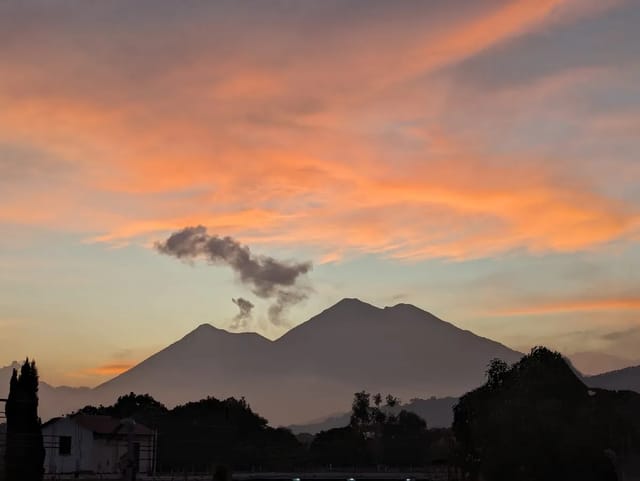
Quick summary: A chapinismo is, in the Real Academia’s own dictionary, a word or turn of phrase special to how chapines (Guatemalans) speak. This page lists 36 words and expressions that the Diccionario de la lengua española (DLE) or the Diccionario de americanismos (DAMER) marks for Guatemala, with the meaning each dictionary gives and the other countries it names. Guatemala uses vos: the RAE’s Diccionario panhispánico de dudas describes voseo there as general across social classes, with vos for people you are close to, tú for middle formality and usted for formal use.
Slang lists online are easy to write and hard to check. This one only includes a word if a Spanish-language academy dictionary marks it for Guatemala. Two dictionaries are used, both read on 8 October 2026:
- the Diccionario de la lengua española (DLE), the Real Academia Española and ASALE’s general dictionary, where a sense marked Guat. is used in Guatemala;
- the Diccionario de americanismos (DAMER), ASALE’s 2010 dictionary of Latin American Spanish, where Gu marks Guatemala.
Translations into English are ours. Where the dictionaries add a register label (colloquial, youth, euphemism, derogatory), the table keeps it.
What chapín and chapinismo mean
- chapín, chapina: the DLE defines it as guatemalteco, and lists it for Costa Rica, El Salvador, Guatemala, Honduras and Nicaragua. The DAMER also gives a second meaning: the variety of Spanish spoken by Guatemalans.
- chapinismo: the DLE defines it as a word, turn of phrase or special way of speaking of the chapines, listed for Guatemala, Honduras and Nicaragua.
- guatemaltequismo: the DLE’s other word for the same idea, a word or usage proper to the Spanish spoken in Guatemala.
Why chapín? The DLE does not say. Its entry for the demonym gives no origin. A separate headword, chapín 1, is a cork clog formerly worn by women, and the dictionary does not link the two. Neither dictionary prints an origin story, so this page does not give one.
Does Guatemala use vos?
Yes. The RAE’s Diccionario panhispánico de dudas (DPD), entry voseo, section 2.3.5, groups Guatemala with El Salvador, Honduras, Nicaragua and Costa Rica and says “el voseo es un fenómeno general en todas las clases sociales”. According to the same section, in Guatemala, El Salvador and Nicaragua educated speakers use a three-way system:
| Form | When the DPD says it is used |
|---|---|
| vos | family and close friends (familiar o de confianza) |
| tú | middle formality |
| usted | the most formal |
The DPD adds that use of the pronoun tú (tuteo pronominal) is frequent in Guatemala and Honduras. The DLE’s own entry for vos lists Guatemala and says it is used in informal situations or with people you are familiar with. The DAMER adds a Guatemalan use worth knowing: vos can also be used to address a subordinate or a child when scolding them.
The DPD’s verb table gives these forms for Guatemala:
| Verb | Present (vos) | Imperative (vos) | Compare tú (present) |
|---|---|---|---|
| cantar | cantás | cantá | cantas |
| comer | comés | comé | comes |
| vivir | vivís | viví | vives |
The glossary: 36 words the dictionaries mark for Guatemala
People
| Word | What it means | Countries the dictionary lists | Source |
|---|---|---|---|
| patojo, patoja | child, youngster | Guatemala, Honduras | DLE; DAMER |
| chirís | child | Guatemala | DLE |
| güiro, güira | child | Guatemala, Mexico | DLE |
| cuate, cuata | close friend, buddy | El Salvador, Guatemala, Honduras, Mexico | DLE |
| muchá | form of address among people who know each other well, like guys | Guatemala, Honduras, El Salvador | DAMER |
| traído, traída | boyfriend, girlfriend | Guatemala | DAMER |
| canche | fair-haired, light-skinned person; also blond hair | Guatemala, El Salvador (hair sense: Guatemala) | DAMER |
| chispudo, chispuda | quick, sharp, especially in business | Guatemala, El Salvador; rural Honduras | DAMER |
| pilas | sharp, clever | Guatemala, Ecuador, Peru; youth use in Venezuela | DAMER |
| shute | nosy, meddling (the DAMER also lists a vulgar sense) | Guatemala | DAMER |
| brocha | freeloader (youth use); also a flatterer | Guatemala, Honduras, El Salvador; flatterer: Guatemala, Costa Rica | DAMER |
| cachureco, cachureca | a Catholic who makes a show of devotion | Guatemala | DLE |
| cuque | soldier | Guatemala, El Salvador | DAMER |
| choco, choca | one-eyed, short-sighted or blind | Guatemala, Honduras, El Salvador, Nicaragua | DAMER |
| salado, salada | unlucky | Guatemala and a long list of Latin American countries | DAMER |
Money, work and things
| Word | What it means | Countries the dictionary lists | Source |
|---|---|---|---|
| pisto | money | El Salvador, Guatemala, Honduras, Nicaragua | DLE; DAMER |
| chamba | job, work (colloquial) | Central America, Ecuador, Mexico | DLE |
| chumpa | short jacket fitted at the hip | El Salvador, Guatemala, Honduras, Nicaragua | DLE |
| chunche | thingamajig, an object you can’t or won’t name | Costa Rica, Guatemala, Honduras, Nicaragua, Panama | DLE |
| chompipe | turkey | Mexico, Guatemala, Honduras, El Salvador, Nicaragua, Costa Rica | DAMER |
| brocha (bus) | the driver’s helper who calls out the route and collects fares | Guatemala, El Salvador | DAMER |
| dar jalón | to give someone waiting by the road a ride | El Salvador, Guatemala, Honduras | DLE |
| cargar con los tanates | to move out, to leave (colloquial) | El Salvador, Guatemala, Honduras, Nicaragua | DLE |
| chivo | crib sheet for an exam (student use) | Cuba, Guatemala, Dominican Republic | DLE |
| clavo | a problem that is hard to solve; in Guatemala also an embarrassing act | Guatemala and others; embarrassing act: Guatemala | DAMER |
| shuco, shuca | dirty, grubby, in bad shape | Guatemala, El Salvador | DAMER |
| mara | people, crowd (DLE); a youth gang (DAMER) | El Salvador, Guatemala (DLE) | DLE; DAMER |
Drink and nights out
| Word | What it means | Countries the dictionary lists | Source |
|---|---|---|---|
| bolo, bola | drunk | Costa Rica, El Salvador, Guatemala, Honduras, Mexico, Nicaragua | DLE |
| guaro | cane liquor (aguardiente de caña); in youth use, any alcoholic drink | Central America | DLE; DAMER |
| chela | beer (youth, playful) | Guatemala and others | DAMER |
Exclamations and set phrases
| Word | What it means | Countries the dictionary lists | Source |
|---|---|---|---|
| chilero, chilera | nice, pretty (colloquial); of a thing, very good | Guatemala | DLE; DAMER |
| ¡púchica! | expresses surprise, admiration, annoyance or fear (euphemism) | Guatemala and others | DAMER |
| ¡la gran púchica! | expresses amazement, or anger | Guatemala, Nicaragua | DAMER |
| ¡puchis! | expresses surprise, admiration, annoyance or fear (euphemism) | Guatemala, El Salvador, Costa Rica | DAMER |
| ¡aguas! | watch out! | Mexico, Guatemala, El Salvador | DAMER |
| sho | silence, keeping quiet | Guatemala | DAMER |
| babosada | nonsense, foolishness | Guatemala and others | DAMER |
Two notes on that list. Chilero has a second Guatemalan sense in the DLE, a person who lies, so context matters. And chucho, the word for dog that a visitor hears everywhere, carries no country label in the DLE: it is listed as colloquial and derogatory Spanish in general. The DAMER does record a Guatemalan and Salvadoran proverb with it, chucho no come chucho (two people of the same kind don’t harm each other).
Words we left out
Some words that appear on slang lists online are not here:
- Slurs. The DAMER lists ixto/ishto for Guatemala as derogatory, and cerote in a vulgar sense. This page does not teach them.
- Words without a Guatemala label. The DLE marks chafa (poor quality) for Mexico and Nicaragua only, and chela for Mexico only, though the DAMER does include Guatemala for chela. Where only one dictionary marks Guatemala, the table names that dictionary.
- Brand names. Tortrix is a snack brand; the DAMER has no entry for it.
Where this fits
Slang is the informal layer. For the official picture (Spanish as the only official language, and the 22 Mayan languages counted in the 2018 census), see Languages of Guatemala: is Spanish enough?. For schools and classes, see learning Spanish in Guatemala and the Spanish schools in Antigua.
Related
- Languages of Guatemala: is Spanish enough?
- Are Guatemalans Hispanic or Latino?
- Learn Spanish in Guatemala
- Guatemalan traditional clothing: huipil and corte
- All guides
Sources
- Real Academia Española and ASALE, Diccionario de la lengua española (DLE), entries chapín, chapinismo, guatemaltequismo, patojo, chirís, güiro, cuate, cachureco, pisto, chamba, chumpa, chunche, jalón, tanate, chivo, mara, bolo, guaro, chilero, chucho, chafa, chela and vos: https://dle.rae.es/ (read 8 October 2026).
- ASALE, Diccionario de americanismos (2010), entries chapín, patojo, muchá, traído, canche, chispudo, pilas, shute, brocha, cuque, choco, salado, pisto, chompipe, clavo, shuco, mara, guaro, chela, chilero, púchica, puchis, aguas, sho, babosada, chucho, chumpa, vos, ixto and cerote: https://www.asale.org/damer/ (read 8 October 2026).
- Real Academia Española, Diccionario panhispánico de dudas, entry voseo, sections 2.3.5 and the verb-forms table: https://www.rae.es/dpd/voseo (read 8 October 2026).
Information current as of 8 October 2026.
Frequently Asked Questions
Does Guatemala use vos?
Yes. The RAE’s Diccionario panhispánico de dudas (entry voseo, section 2.3.5) says that in Guatemala, El Salvador, Honduras, Nicaragua and Costa Rica voseo is general across all social classes. For Guatemala it describes a three-way system among educated speakers: vos for family and close friends, tú for middle formality and usted for the most formal. Its table gives the Guatemalan forms as vos cantás, comés, vivís in the present and cantá, comé, viví in the imperative.
Why do Guatemalans call themselves chapines?
The dictionaries record the word but not the reason. The Diccionario de la lengua española defines chapín, chapina as guatemalteco, listed for Costa Rica, El Salvador, Guatemala, Honduras and Nicaragua, and gives no origin for that meaning. A separate entry, chapín 1, is a cork clog formerly worn by women; the dictionary does not connect the two.
What does patojo mean in Guatemala?
A child or youngster. The Diccionario de la lengua española defines patojo, patoja as niño, muchacho and marks that sense for Guatemala and Honduras. The Diccionario de americanismos gives the same meaning for Guatemala.
What does chilero mean?
Nice or pretty. The Diccionario de la lengua española gives chilero as colloquial Guatemalan for bonito, elegante. The Diccionario de americanismos adds very good or excellent, said of a thing. The same DLE entry also lists a Guatemalan sense of chilero as a person who lies.
What is pisto in Guatemala?
Money. The Diccionario de la lengua española lists pisto as dinero in El Salvador, Guatemala, Honduras and Nicaragua.
What is a chumpa?
A short jacket. The Diccionario de la lengua española defines chumpa as a cazadora, a short jacket fitted at the hip, for El Salvador, Guatemala, Honduras and Nicaragua. The Diccionario de americanismos traces the word to the English jumper.