Guatemala has two Nobel laureates whose books make a natural start to a reading list: Miguel Ángel Asturias (Literature, 1967) and Rigoberta Menchú Tum (Peace, 1992). Add a reported book on a political murder case and three films, from a Kaqchikel-language drama to two civil-war documentaries, and you have a pre-trip shelf that covers Maya legend, dictatorship, war and its aftermath. Every title below was checked against the Nobel Foundation, the publisher or the distributor for author or director, year and publisher; the one-line descriptions follow what those sources say.
TL;DR: Read Asturias (Leyendas de Guatemala, El Señor Presidente, Hombres de maíz, the 1950s banana trilogy) and Menchú (I, Rigoberta Menchú, Crossing Borders), plus Francisco Goldman’s The Art of Political Murder. Watch Ixcanul (2015), When the Mountains Tremble (1983) and Granito: How to Nail a Dictator (2011).
Quick summary
| Title | Author / director | Year | Type | Checked against |
|---|---|---|---|---|
| Leyendas de Guatemala | Miguel Ángel Asturias | 1930 | Stories | Nobelprize.org |
| El Señor Presidente (The President) | Miguel Ángel Asturias | 1946 (English 1963) | Novel | Nobelprize.org |
| Hombres de maíz (Men of Maize) | Miguel Ángel Asturias | 1949 (English 1975) | Book | Nobelprize.org |
| Viento fuerte, El papa verde, Los ojos de los enterrados | Miguel Ángel Asturias | 1950, 1954, 1960 | Trilogy | Nobelprize.org |
| I, Rigoberta Menchú: An Indian Woman in Guatemala | Rigoberta Menchú, ed. Elisabeth Burgos-Debray | 1984 | Testimony | Nobelprize.org |
| Crossing Borders: An Autobiography | Rigoberta Menchú Tum | 1998 | Autobiography | Nobelprize.org |
| The Art of Political Murder: Who Killed the Bishop? | Francisco Goldman | 2007 | Non-fiction | Grove Atlantic |
| Ixcanul | Jayro Bustamante | 2015 | Feature film | Kino Lorber |
| When the Mountains Tremble | Pamela Yates | 1983 | Documentary | PBS POV |
| Granito: How to Nail a Dictator | Pamela Yates, Peter Kinoy, Paco de Onís | 2011 | Documentary | PBS POV |
Books
Miguel Ángel Asturias, Nobel Prize in Literature 1967
Nobelprize.org gives the prize motivation as “for his vivid literary achievement, deep-rooted in the national traits and traditions of Indian peoples of Latin America”. Nobelprize.org’s bibliography is the cleanest list of his works and English translations:
- Leyendas de Guatemala (Madrid: Oriente, 1930). His first book, a collection of stories that grew out of Maya legends, according to Nobelprize.org.
- El Señor Presidente (Mexico City: Costa-Amic, 1946). His first novel; Nobelprize.org calls it a brutal portrait of a Latin American dictatorship of the early twentieth century. In English: The President, translated by Frances Partridge (London: Gollancz, 1963), also issued as El Señor Presidente (New York: Atheneum, 1963).
- Hombres de maíz (Buenos Aires: Losada, 1949). In English: Men of Maize, translated by Gerald Martin (New York: Delacorte/Seymour Lawrence, 1975).
- The 1950s trilogy: Viento fuerte (1950), El papa verde (1954) and Los ojos de los enterrados (1960), which Nobelprize.org describes as a trilogy about the United Fruit Company’s conduct in Guatemala. In English, all translated by Gregory Rabassa for Delacorte: Strong Wind (1968), The Green Pope (1971) and The Eyes of the Interred (1973).
In Antigua, the Casa Santo Domingo complex has a museum devoted to Asturias (see our Casa Santo Domingo museums page), and Guatemala City’s national theatre carries his name, the Centro Cultural Miguel Ángel Asturias.
Rigoberta Menchú Tum, Nobel Peace Prize 1992
Menchú, born on 9 January 1959 in Aldea Chimel, received the Peace Prize “for her struggle for social justice and ethno-cultural reconciliation based on respect for the rights of indigenous peoples”. Her Nobel biography lists two books:
- I, Rigoberta Menchú: An Indian Woman in Guatemala (New York and London: Verso, 1984), edited and introduced by Elisabeth Burgos-Debray. Nobelprize.org says it is her life story, built from a week of recorded interviews that the editor revised and arranged, first published in Spanish in 1983, and that a controversy over its credibility arose in 1999.
- Crossing Borders: An Autobiography (New York: Verso, 1998), first published in Italian in October 1997 and in Spanish in April 1998.
Francisco Goldman, The Art of Political Murder: Who Killed the Bishop?
Grove Press published the hardcover on 17 September 2007 (416 pages) and a Grove paperback on 21 April 2020. Grove describes it as the account of the investigation into the murder of a Guatemalan bishop, and as Goldman’s first non-fiction book.
Films
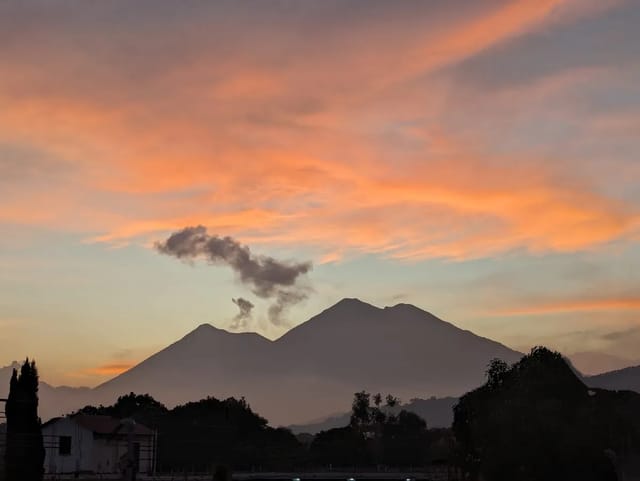
- Ixcanul (2015), directed by Jayro Bustamante. Kino Lorber, its US distributor, lists it as a Guatemalan film in Kaqchikel and Spanish and as Bustamante’s first feature, following Kaqchikel-speaking Maya on a coffee farm at the foot of an active volcano. If it makes you want to see a working finca, our coffee tours guide lists farms that take visitors.
- When the Mountains Tremble (1983), a documentary by Pamela Yates. PBS’s POV series says the film supplied key evidence for the genocide charge brought by a Guatemalan court against former dictator Efraín Ríos Montt.
- Granito: How to Nail a Dictator (2011), by Pamela Yates, Peter Kinoy and Paco de Onís. Selected for the 2011 Sundance Film Festival, it runs 90 minutes and premiered on POV on 28 June 2012. POV presents it as the story of how the 1983 film became a small grain of evidence in that case.
Reading in Spanish
Asturias’s books appear above with their original Spanish titles and publishers, so reading one in the original is a good test once your Spanish is going. If you plan to study on the trip, see our Spanish schools guide, and for everyday social norms, our etiquette and customs guide.
Sources
- Nobel Prize Outreach, Miguel Angel Asturias, Facts: https://www.nobelprize.org/prizes/literature/1967/asturias/facts/ (read 4 November 2026)
- Nobel Prize Outreach, Miguel Angel Asturias, Bibliography: https://www.nobelprize.org/prizes/literature/1967/asturias/bibliography/ (read 4 November 2026)
- Nobel Prize Outreach, Rigoberta Menchú Tum, Facts: https://www.nobelprize.org/prizes/peace/1992/tum/facts/ (read 4 November 2026)
- Nobel Prize Outreach, Rigoberta Menchú Tum, Biographical: https://www.nobelprize.org/prizes/peace/1992/tum/biographical/ (read 4 November 2026)
- Grove Atlantic, The Art of Political Murder: https://groveatlantic.com/book/the-art-of-political-murder/ (read 4 November 2026)
- Kino Lorber, Ixcanul: https://www.kinolorber.com/film/ixcanul (read 4 November 2026)
- PBS POV, Granito: https://www.pbs.org/pov/films/granito/ (read 4 November 2026)
Frequently Asked Questions
Which Guatemalan writer won the Nobel Prize in Literature?
Miguel Ángel Asturias, in 1967. Nobelprize.org gives his birth as 19 October 1899 in Guatemala City and his death as 9 June 1974 in Madrid. His first book, Leyendas de Guatemala (1930), collects stories drawn from Maya legends.
What is a good first Guatemalan novel to read in English?
Asturias’s El Señor Presidente (1946), which Nobelprize.org describes as a brutal portrait of an early-twentieth-century Latin American dictatorship, was published in English as The President, translated by Frances Partridge (Gollancz and Atheneum, both 1963).
Is there a well-known film made in a Mayan language?
Ixcanul (2015), directed by Jayro Bustamante, is in Kaqchikel and Spanish according to its US distributor, Kino Lorber, which describes it as Bustamante’s debut and sets it among Kaqchikel-speaking Maya on a coffee farm below an active volcano.
Which documentaries cover Guatemala's civil war?
Pamela Yates’s When the Mountains Tremble (1983) and her later Granito: How to Nail a Dictator, selected for the 2011 Sundance Film Festival and premiered on PBS’s POV on 28 June 2012. POV says the 1983 film provided key evidence for the genocide indictment of former dictator Efraín Ríos Montt.
What did Rigoberta Menchú write?
Nobelprize.org lists I, Rigoberta Menchú: An Indian Woman in Guatemala (Verso, 1984), edited and introduced by Elisabeth Burgos-Debray from a week of recorded interviews, and her autobiography Crossing Borders (Verso, 1998). It also notes that a controversy over the 1984 book’s credibility arose in 1999.