In short: Guatemala is not El Salvador. Bitcoin has never been legal tender here — Banguat said so in 2017, the Superintendencia de Bancos repeated it in 2021, and neither position has changed. What did change, on 17 September 2026, is Decreto 15-2026: Guatemala’s rewritten anti-money-laundering law, which for the first time brings exchanges and custodians under supervision as Proveedores de Servicios de Activos Virtuales, reporting to the IVE at the Superintendencia de Bancos. Your own wallet is expressly excluded — the obligations land on the intermediaries. And on the ground, spendability is a small, real, Panajachel-centred merchant circle, not a national payment rail.
Three separate questions people run together
Almost every English article about crypto in Guatemala collapses these. They have different answers.
| Question | Answer | As of |
|---|---|---|
| Is it legal tender? | No. The quetzal is the monetary unit; only Banguat issues currency | Unchanged since 2017 / 2021 statements |
| Is it illegal? | No. Nothing located prohibits holding or spending it between willing parties | — |
| Is it regulated? | Newly, yes — for businesses. Decreto 15-2026 | In force 17 September 2026 |
| Is it taxed? | No published answer. SAT has issued nothing findable | Checked 17 September 2026 |
| Can you spend it? | At a limited merchant circle, concentrated around Panajachel | Best published count is from 2023 |
The legal position, and who said it
Banguat, December 2017
The Banco de Guatemala’s then acting president, Sergio Recinos, put it directly:
“las monedas virtuales no son reconocidas como una moneda en Guatemala y, por tanto, no constituyen un medio de pago de curso legal”
The legal basis he cited was Articles 1 and 2 of the Ley Monetaria, which establish the quetzal as the country’s monetary unit and the Banco de Guatemala as its sole issuer. He added that cryptocurrencies have no government backing and no central issuer, so no institution maintains their value over time. (Prensa Libre, 19 December 2017)
A sourcing note: the Ley Monetaria PDF on banguat.gob.gt returned a 404 on 17 September 2026, so the articles are named here as Banguat cited them, and their text is not quoted.
Superintendencia de Bancos, February 2021
The SIB issued a communiqué on 19 February 2021 whose reasoning is the same and whose warnings go further. As reported, it states that “la unidad monetaria de Guatemala es el Quetzal y únicamente el Banco de Guatemala puede emitir billetes y monedas”, that “las monedas virtuales no son monedas de curso legal en el país”, and that they “no tienen respaldo del Estado de Guatemala”, are “no se consideran divisas, no están garantizadas”, and cannot be imposed on anyone as payment for goods or services.
Then the risk list, in the SIB’s own framing:
| The SIB’s warning | What it means for you |
|---|---|
| “no se encuentran bajo la vigilancia e inspección de la Superintendencia de Bancos, por lo que podrían no cumplir con estándares de seguridad” | Nobody was supervising the platforms — this is the sentence Decreto 15-2026 changes |
| “el valor de las mismas podría aumentar o reducir drásticamente e incluso llegar a cero” | Price risk, stated at its extreme |
| “su uso en distintas operaciones ilícitas, como en captaciones no autorizadas de recursos, lavado de dinero y financiamiento del terrorismo” | The rationale that eventually produced the 2026 law |
(Prensa Libre, reporting the SIB communiqué)
A second sourcing note, and it matters: the SIB’s own PDF of that communiqué returned HTTP 403 on 17 September 2026, and sib.gob.gt returned 403 to every request. The SIB’s wording is therefore quoted here at one remove, through Prensa Libre. Treat the phrasing as reported rather than as read from the original.
What Decreto 15-2026 does — and does not do
Guatemala’s comprehensive anti-money-laundering and counter-terrorist-financing law, Decreto 15-2026, entered into force on 17 September 2026, three months after publication. Congress approved it with 147 votes of 160 deputies. It replaces a framework roughly twenty-five years old, and it is the first Guatemalan statute to put crypto businesses under direct state supervision.
| What the reporting says the law does | Who it binds |
|---|---|
| Creates the category PSAV — Proveedor de Servicios de Activos Virtuales: a business that, on another’s behalf, exchanges cryptoassets for local or foreign currency, transfers them, or holds third parties’ digital funds | Exchanges, custodians, asset issuers — domestic or foreign — operating in Guatemala |
| Obligatory registration with the Intendencia de Verificación Especial (IVE), which sits under the Superintendencia de Bancos | PSAVs |
| KYC: “políticas estrictas de debida diligencia o conocimiento del cliente”, verifying identity before opening a commercial relationship | PSAVs |
| Report suspicious transactions lacking evident economic or legal basis to the IVE | PSAVs |
| Keep daily records of cash operations above US$10,000 or the quetzal equivalent | PSAVs |
| Register beneficial ownership of legal entities at a 15% threshold | PSAVs |
| Retain records for five years | PSAVs |
| Expressly excludes individuals who only hold cryptocurrency in their own wallet | Not you, if that is all you do |
The driver is external: Guatemala is aligning with the 40 FATF/GAFI recommendations ahead of an evaluation in February 2027, and trying to stay off the grey list.
⚠ How confident should you be in this section? Medium, and here is exactly why. The decree’s own text was not read — no Congress PDF for Decreto 15-2026 could be located on 17 September 2026 — so no article numbers are cited anywhere on this page, and everything above is attributed reporting from CriptoNoticias. Two pieces from that same outlet also give different months for the 147-vote approval; they agree on the vote count and on the commencement date, so those are what is stated here. Before you act on any specific obligation, read the decree.
What this means in practice
- If you hold your own coins: nothing changed for you on 17 September. The exclusion is explicit.
- If you use an exchange: expect stricter identity verification, and expect providers serving Guatemala to start saying whether they are IVE-registered. That registration is now the useful question to ask a platform — more useful than any “is it legal in Guatemala” article.
- If you run anything that touches other people’s crypto here: you are potentially a PSAV, including if you are a foreign business operating into Guatemala, and this is a lawyer question now rather than a reading question.
- What it is not: this is an anti-money-laundering law, not a crypto-adoption law, not a tax law, and not a change to legal tender.
Tax: the honest answer is that nobody has published one
Searches on 17 September 2026 for a SAT (Superintendencia de Administración Tributaria) position on cryptocurrency returned no Guatemalan source whatsoever — every result concerned Mexico, Spain, Colombia or the United States.
That is a finding, not a gap to paper over. This page publishes no crypto tax guidance because Guatemala’s tax authority has published none that could be located. It would be easy to reason from Guatemala’s territorial income-tax system to a confident-sounding conclusion; it would also be exactly the kind of invented answer that gets repeated across a dozen relocation blogs until everyone believes it. If the amounts are material, this is a question for a Guatemalan tax professional.
Where crypto is actually spendable
The Lake Atitlán merchant circle
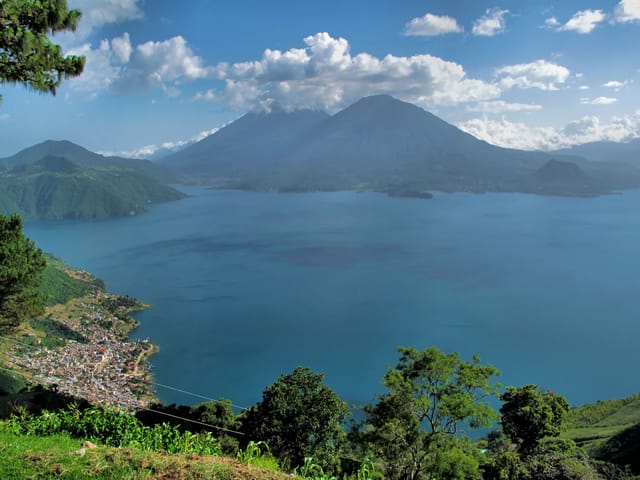
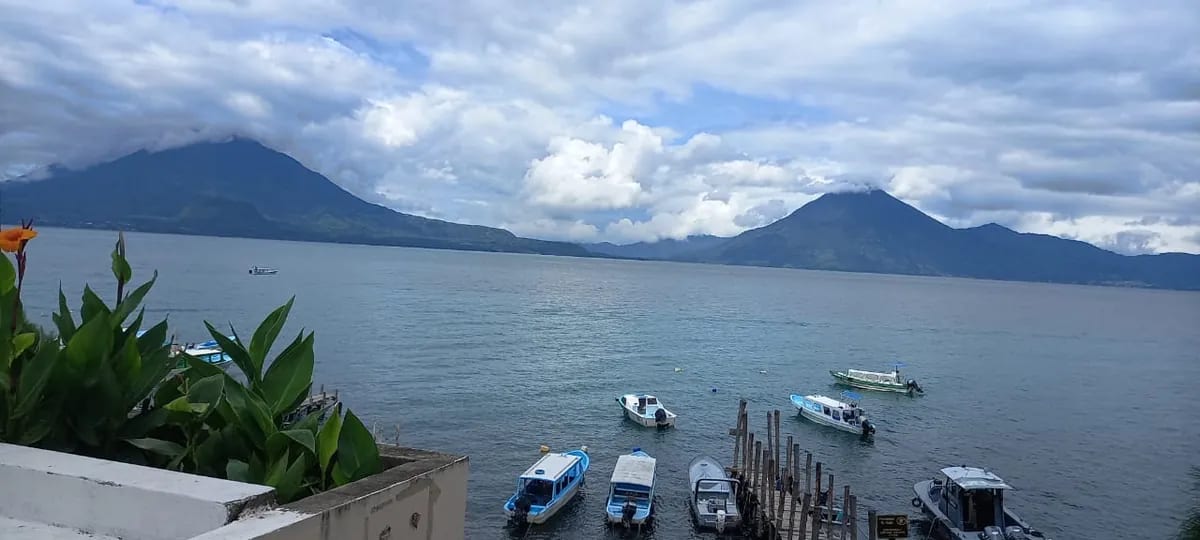
The one place in Guatemala with a deliberate, organised bitcoin economy is Panajachel, on Lake Atitlán, through the Bitcoin Lake project. The most concrete published account is Bitcoin Magazine’s dispatch of 9 March 2023, which reported that the project had:
“successfully onboarded more than 60 merchants, of whom 90% are unbanked”
and named Café del Arte among them, plus Centro Educativo Josué, a school, and two initiatives that tell you the flavour better than any statistic: a “Bitcoin tuk tuk” and a boat called “Peer To Peer”.
Read that number carefully. It is from 2023, from an outlet close to the project, written by a volunteer. No independent or current merchant count could be verified on 17 September 2026. It describes the scale of an ambition at a point in time, not today’s inventory. Merchant circles like this churn: businesses close, staff turn over, the phone with the wallet on it gets replaced.
What BTC Map says — and where it disagrees
BTC Map, the community-maintained map of bitcoin-accepting businesses, publishes a Guatemala country page. Its own description reads:
“Guatemala has a growing grassroots Bitcoin scene, helped by a huge flow of remittances from the United States and a young population. Bitcoin is not legal tender, and the quetzal remains the official currency. The central bank has warned that crypto is not recognised, and there is no dedicated licensing regime, so adoption is mostly peer-to-peer and merchant-driven in places such as Antigua. Guatemala City and Antigua host a small but active Bitcoin community.”
Note the disagreement and do not let anyone smooth it over. Bitcoin Lake’s story is about Panajachel; BTC Map’s own framing names Antigua and Guatemala City. Both are plausibly true — a concentrated, organised project at the lake, and a thinner, more spontaneous merchant presence in the two places with the most foreign residents and tourists.
No merchant count is published here from BTC Map either. Its country area exists in the API, but no total could be retrieved on 17 September 2026. What the rendered listings do show is arguably more useful: individual “Last Surveyed” dates running from 18 December 2023 through late 2025. A community map is only as current as its last volunteer visit, and several Guatemalan entries had not been checked in a long time.
The practical rule for a traveller
- Assume cash. The quetzal is what works everywhere; see Lake Atitlán town-by-town costs for what things actually price at.
- Ask, at the counter, before you order. No merchant is obliged to accept crypto, and a sticker in a window may be years old.
- Nobody has published how a tourist actually pays. No source captured on 17 September 2026 explains the payment mechanics at these merchants — ask at the counter before you order.
- Do not plan a trip around it. A merchant circle of this size is a novelty to enjoy where it exists, not an infrastructure to depend on.
Crypto as a remittance rail — a different question
The reason crypto keeps coming up in Guatemala is not tourism. It is the remittance corridor: BTC Map’s own description points at “a huge flow of remittances from the United States” as what drives the grassroots scene. That is a genuinely different use case from spending sats at a café, it has different costs, and it is covered separately in the best ways to send money to Guatemala from the USA.
One thing Decreto 15-2026 does change about that use case: a platform moving value on that corridor into or out of Guatemala is squarely inside the PSAV definition, so from 17 September 2026 the question “is this provider IVE-registered?” is a real one, with a real answer.
What would change this page
- The decree text. When Congress publishes Decreto 15-2026’s PDF, the PSAV obligations above can be cited by article rather than attributed to reporting, and the approval-date discrepancy resolves itself.
- An IVE register of PSAVs. The moment that list is public, the “which exchange” question becomes answerable from a primary source instead of unanswerable.
- Anything at all from SAT. A single published criterion would turn the tax section from a blank into a table.
- A current merchant count for the Atitlán circle, from the project or from a survey with a date on it.
Related pages
- Sending money to Guatemala from the USA: the real cost comparison
- Lake Atitlán towns compared
- Cost of living at Lake Atitlán
- Starlink in Guatemala
- Guatemala phone plans
Sources
All read 2026-09-17.
- Prensa Libre — Banguat refiere que criptomonedas no son un medio de pago legal (Sergio Recinos, 19 December 2017)
- Prensa Libre — SIB advierte que criptomonedas no tienen validez en Guatemala (SIB communiqué, 19 February 2021; the SIB’s own PDF returned HTTP 403)
- CriptoNoticias — Guatemala inicia en septiembre el control antilavado sobre exchanges de criptomonedas (Decreto 15-2026, PSAV, IVE, 147 votes)
- CriptoNoticias — Guatemala exige KYC y reportar transacciones a plataformas de criptomonedas
- Bitcoin Magazine — “Inside Bitcoin Lake” (9 March 2023)
- BTC Map — Guatemala
Nothing on this page cites an article number of Decreto 15-2026, because the decree’s own text could not be obtained on 17 September 2026. Where a source could only be read at one remove, this page says so in the body rather than in a footnote.
Frequently Asked Questions
Is bitcoin legal tender in Guatemala?
No, and it never has been. Guatemala is not El Salvador. The Banco de Guatemala said so publicly in December 2017 through its then acting president Sergio Recinos — ’las monedas virtuales no son reconocidas como una moneda en Guatemala y, por tanto, no constituyen un medio de pago de curso legal’ — citing Articles 1 and 2 of the Ley Monetaria, which make the quetzal the monetary unit and Banguat the sole issuer. The Superintendencia de Bancos repeated it in a February 2021 communique: ’las monedas virtuales no son monedas de curso legal en el pais.'
Is bitcoin illegal in Guatemala, then?
No. Not legal tender is not the same as illegal. Nothing located prohibits holding or spending crypto between willing parties. What the 2021 SIB communique establishes is that nobody can be compelled to accept it: virtual currencies have no state backing, are not considered foreign exchange, are not guaranteed, and cannot be imposed as a means of payment for goods and services. A merchant who takes bitcoin is choosing to; a merchant who refuses it is fully within their rights.
What changed on 17 September 2026?
Decreto 15-2026, Guatemala’s rewritten anti-money-laundering law, entered into force that day. According to trade reporting, it creates the category Proveedor de Servicios de Activos Virtuales — PSAV — covering businesses that exchange cryptoassets for local or foreign currency, transfer them, or hold third-party digital funds, whether domestic or foreign. Those providers must register with the Intendencia de Verificacion Especial at the Superintendencia de Bancos, run customer due diligence, register beneficial owners at a 15% threshold and keep records for five years. Congress approved it with 147 votes of 160 deputies.
Does the new law apply to me personally?
Not if you simply hold your own coins. The reporting is explicit that the regulation excludes individuals who only hold cryptocurrency in their own wallet. The obligations fall on the intermediaries. What reaches you indirectly is stricter identity verification: providers must apply ‘politicas estrictas de debida diligencia o conocimiento del cliente’ and verify who you are before opening a commercial relationship, and must keep daily records of cash operations above US$10,000 or the quetzal equivalent.
Do I owe Guatemalan tax on crypto gains?
No published answer exists. Searches on 17 September 2026 for a SAT position on cryptocurrency returned no Guatemalan source at all — every result concerned Mexico, Spain, Colombia or the United States. This page will not guess. Guatemala runs a territorial income-tax system, but how a crypto gain sits inside it is precisely the question the tax authority has not answered in public, and anyone telling you otherwise is not quoting SAT. If the amounts matter, this is a question for a Guatemalan tax professional, not a website.
Can I actually spend bitcoin at Lake Atitlan?
At some merchants in Panajachel, yes — that is what the Bitcoin Lake project set out to build. The most concrete published figure remains Bitcoin Magazine’s March 2023 dispatch, which reported the project had ‘successfully onboarded more than 60 merchants, of whom 90% are unbanked’, and named Cafe del Arte among them along with a bitcoin-accepting tuk-tuk and a boat. That number is from 2023, from an outlet close to the project, and no independent current count could be verified. Treat it as the scale of the ambition, not as today’s inventory.
Which exchange should I use to buy crypto in Guatemala?
This page names none, because no exchange’s own published page confirming Guatemala support, quetzal deposit rails or a Guatemalan banking partner could be read on 17 September 2026. What search does return is price-converter pages, which exist for every currency pair and prove nothing about availability. Check the provider’s own country-availability page — and, from 17 September 2026, whether it is registered with the IVE as a PSAV, because that is now the mark of a provider operating inside the Guatemalan framework rather than around it.
Where in Guatemala is crypto most used?
The two available sources disagree, which is itself informative. The Bitcoin Lake project is centred on Panajachel on Lake Atitlan. BTC Map’s own Guatemala country description instead says adoption is ‘mostly peer-to-peer and merchant-driven in places such as Antigua’ and that ‘Guatemala City and Antigua host a small but active Bitcoin community.’ Both can be true — a concentrated grassroots project at the lake, and a thinner, more spontaneous merchant presence in the two cities with the most foreign residents.