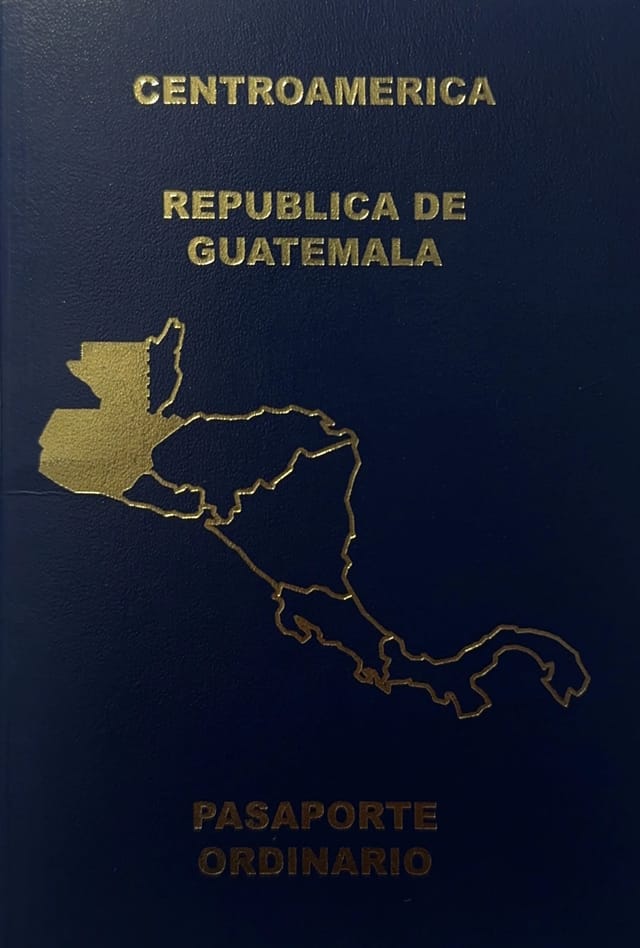
A Guatemalan by origin can apply for Spanish nationality after two years of legal residence in Spain, instead of the general ten, without renouncing Guatemalan nationality and without sitting the DELE language exam; the CCSE test is still required.
In short: Spain’s Código Civil (art. 22) gives Ibero-American nationals of origin a two-year residence route. Article 23 spares them the usual renunciation, and the 1961 Spain-Guatemala nationality convention, as amended in 1999, confirms dual nationality. Real Decreto 1004/2015 exempts Guatemalans from the DELE Spanish exam but not from the CCSE civics test. Spain has one year to decide, and silence counts as a refusal. The Ley de Memoria Democrática window for descendants has closed.
The two-year rule in Código Civil article 22
Article 22.1 sets the general requirement at ten years of residence, five for refugees, and two years for a defined group. The text reads: “dos años cuando se trate de nacionales de origen de países iberoamericanos”, followed by Andorra, the Philippines, Equatorial Guinea, Portugal and Sephardic Jews. Guatemala is an Ibero-American country, so Guatemalans of origin fall in the two-year group. The article says nacionales de origen, so the shortcut is written for people who are Guatemalan by origin.
Three conditions apply to every route:
- The residence must be legal, continuous and immediately before the application (art. 22.3). Time spent in Spain without legal residence does not count toward the two years.
- Good civic conduct and sufficient integration into Spanish society must be shown (art. 22.4). Real Decreto 1004/2015 measures integration through the exams below.
- The Minister of Justice grants it (art. 21.2) and can refuse for reasoned motives of public order or national interest. A refusal can be taken to the contentious-administrative courts (art. 22.5).
Some situations shorten the wait to one year, whatever the nationality; the last three rows are the standard periods for comparison:
| Situation (Código Civil art. 22.1 and 22.2) | Residence needed |
|---|---|
| Born in Spanish territory | 1 year |
| Married to a Spanish citizen for one year at the time of applying, not legally or de facto separated | 1 year |
| Widow or widower of a Spanish citizen, not separated at the time of death | 1 year |
| Born outside Spain to a father, mother, grandfather or grandmother who was originally Spanish | 1 year |
| Legally subject to the guardianship (tutela, or curatela with full powers of representation), custody (guarda) or foster care (acogimiento) of a Spanish citizen or institution for two consecutive years | 1 year |
| Did not exercise an option right in time | 1 year |
| Guatemalan national of origin (Ibero-American) | 2 years |
| Refugee | 5 years |
| General rule | 10 years |
Source: Código Civil, arts. 22.1 and 22.2, BOE consolidated text (last update published 3 January 2025). As of 9 November 2026.
You keep Guatemalan nationality
Article 23 lists the conditions every new Spaniard must meet: an oath or promise of loyalty to the King and obedience to the Constitution and laws, and registration in the Spanish Civil Registry. It also requires a declaration renouncing the previous nationality. That renunciation does not apply to natives of the countries named in article 24.1, which are the Ibero-American countries, Andorra, the Philippines, Equatorial Guinea and Portugal.
The bilateral treaty points the same way. Spain and Guatemala signed a Convenio de Nacionalidad on 28 July 1961, published in Spain’s BOE on 10 March 1962 and in force from 1 February 1962. A second additional protocol of 19 November 1999, in force from 7 February 2001, rewrote its first article. Guatemalans and Spaniards of origin can now acquire the other nationality “sin perder su nacionalidad de origen”, in accordance with each country’s internal legislation.
The protocol adds two practical points:
- Inside its own territory, each country recognises only its own nationality. In Spain you are treated as Spanish, in Guatemala as Guatemalan.
- People covered by the convention can obtain and renew passports and identity documents in either country, or both at the same time.
A 1995 protocol, in force from 14 February 1996, defines domicile for the convention as the country where you hold legal, permanent and continuous residence under its immigration law. For the Guatemalan side of dual nationality, including what Guatemala’s Constitution says, see our dual citizenship guide.
The exams: no DELE, but the CCSE
Real Decreto 1004/2015, the regulation for nationality by residence, requires applicants to pass two Instituto Cervantes tests: the DELE Spanish diploma at A2 level or higher and the CCSE test. Article 6.5 then exempts from the DELE anyone who already holds a DELE A2 or higher, and nationals of a list of countries that includes Guatemala.
There is no nationality-based exemption from the CCSE. For applicants under 18 and persons whose legal capacity has been modified by a court, article 6.6 has their legal representatives prove integration with certificates from the training, residence, care or special-education centres where the applicant was enrolled. The regulation fixes the CCSE’s content: 60% of the questions on the Constitution and Spain’s administrative and territorial organisation, and 40% on Spanish culture, history and society. All questions are closed-answer and carry equal weight. Instituto Cervantes describes the test as one of the legal requirements for nationality for residents in Spain. It publishes a free official app, CCSE Nacionalidad Española, and a 2026 preparation manual.
Sessions published by Instituto Cervantes (read 9 November 2026):
| Session | Official date |
|---|---|
| November 2026 | 26 November 2026 (registration closed 5 November) |
| January 2027 | 28 January 2027 |
| February 2027 | 25 February 2027 |
| March 2027 | 18 March 2027 |
| April 2027 | 29 April 2027 |
| May 2027 | 27 May 2027 |
| June 2027 | 24 June 2027 |
| July 2027 | 29 July 2027 |
| September 2027 | 30 September 2027 |
| October 2027 | 28 October 2027 |
| November 2027 | 25 November 2027 |
Registration for the 2027 sessions opens on 23 November 2026. There are no August or December sessions in the 2027 calendar. The exam prices are separate from the nationality application fee, as the regulation’s first additional provision states.
Documents and the timeline
The procedure is electronic (RD 1004/2015, art. 3). Article 5 lists what goes into the file:
- the standard application form;
- a birth certificate from the country of origin, legalised and translated where needed;
- passport;
- proof of the exams or authorisation for the ministry to check them with Instituto Cervantes;
- proof of payment of the application fee (tasa);
- for adults, a criminal-record certificate from the country of origin, legalised and translated.
For the Guatemalan pieces, see our guides to the PNC criminal record certificate and the MINEX apostille. If you are tracing an older family record, see searching old RENAP birth records.
Once filed, article 11.3 gives Spain a maximum of one year from the day the application reaches the Dirección General to decide and notify. If no express decision arrives in that year, the application is treated as refused. After a grant, you have 180 days from notification to swear or promise loyalty, make any renunciation that applies and request registration in the Civil Registry. If you miss that window, the grant lapses (Código Civil art. 21.4; RD 1004/2015 art. 12.1).
Descent: the Memoria Democrática window has closed
Spain’s Ley 20/2022 de Memoria Democrática, in force from 21 October 2022, opened an option to Spanish nationality in its eighth additional provision. It covered people born outside Spain whose father, mother, grandfather or grandmother was originally Spanish and lost or renounced that nationality through exile for political, ideological, belief or sexual-orientation reasons. It also covered children born abroad to Spanish women who lost their nationality by marrying foreigners before the 1978 Constitution. The law required the declaration within two years of its entry into force and allowed the Council of Ministers to extend that by one year. Even with the extension, the window ended in October 2025.
An instruction of 5 November 2024 from Spain’s Dirección General de Seguridad Jurídica y Fe Pública lets people who requested a consular appointment through the official online tool within the window file in person later, on the date they are given, with the receipt. It does not reopen the window for new applicants.
The permanent Código Civil routes remain:
- Art. 17.1.a: anyone born to a Spanish father or mother is Spanish of origin.
- Art. 20.1.b: people whose father or mother was originally Spanish and born in Spain can opt for Spanish nationality, with no age limit (art. 20.3).
- Art. 22.2.f: people born outside Spain to a parent or grandparent who was originally Spanish need only one year of legal residence in Spain.
This page is general information about Spanish law as published in the BOE, not legal advice. For the passport side, see where a Guatemalan passport travels visa-free.
Sources
- BOE, Código Civil, consolidated text, arts. 17, 20-24 (last update published 3 January 2025): https://www.boe.es/buscar/act.php?id=BOE-A-1889-4763 (read 9 November 2026)
- BOE, Instrumento de ratificación del Convenio de Nacionalidad entre España y Guatemala (28 July 1961), BOE-A-1962-4442: https://www.boe.es/buscar/doc.php?id=BOE-A-1962-4442 (read 9 November 2026)
- BOE, Protocolo de modificación del artículo 3 del Convenio (10 February 1995), BOE-A-1996-15075: https://www.boe.es/buscar/doc.php?id=BOE-A-1996-15075 (read 9 November 2026)
- BOE, Segundo Protocolo Adicional al Convenio de Nacionalidad (19 November 1999), BOE-A-2001-7229: https://www.boe.es/buscar/doc.php?id=BOE-A-2001-7229 (read 9 November 2026)
- BOE, Real Decreto 1004/2015, Reglamento del procedimiento de adquisición de la nacionalidad española por residencia: https://www.boe.es/buscar/act.php?id=BOE-A-2015-12047 (read 9 November 2026)
- BOE, Ley 20/2022 de Memoria Democrática, BOE-A-2022-17099: https://www.boe.es/buscar/act.php?id=BOE-A-2022-17099 (read 9 November 2026)
- BOE, Instrucción de 5 de noviembre de 2024, Dirección General de Seguridad Jurídica y Fe Pública, BOE-A-2024-23338: https://www.boe.es/buscar/doc.php?id=BOE-A-2024-23338 (read 9 November 2026)
- Instituto Cervantes, Prueba CCSE (sessions and preparation): https://cervantes.org/es/examenes/ccse (read 9 November 2026)
Frequently Asked Questions
Can a Guatemalan get Spanish citizenship, and how fast?
Yes. Article 22 of Spain’s Código Civil cuts the residence requirement from ten years to two for nationals of origin of Ibero-American countries, which includes Guatemala. The two years must be legal, continuous and immediately before the application. Spain’s Justice Ministry then has up to one year to decide under Real Decreto 1004/2015.
Do I have to give up my Guatemalan nationality?
No. Código Civil article 23 normally requires renouncing the previous nationality, but exempts natives of the countries listed in article 24.1, which include the Ibero-American countries. The 1999 protocol to the Spain-Guatemala nationality convention also says Guatemalans of origin can acquire Spanish nationality without losing their nationality of origin.
Do Guatemalans have to pass the DELE Spanish exam?
No. Article 6.5 of Real Decreto 1004/2015 exempts nationals of a list of countries from the DELE exam, and Guatemala is on that list. The CCSE test on Spain’s constitution and society is still required.
What is the CCSE and when is the next session?
The CCSE is the Instituto Cervantes test of constitutional and sociocultural knowledge of Spain. Under Real Decreto 1004/2015, 60% of its questions cover the Constitution and Spain’s administrative and territorial organisation and 40% culture, history and society, all closed-answer. Instituto Cervantes lists a session on 26 November 2026, but its registration closed on 5 November; the next session is 28 January 2027, and registration for the 2027 sessions opens on 23 November 2026.
Can I get Spanish citizenship through a Spanish grandparent?
The special window under Spain’s Ley 20/2022 (Memoria Democrática) ran two years from 21 October 2022, with a possible one-year extension, so it has closed at the latest, except for people who requested a consular appointment through the official tool within the window and file on the date they were given. For a grandparent, the Código Civil route is a one-year residence route; the option right with no age limit (art. 20.1.b) is only for people whose father or mother was originally Spanish and born in Spain. The one-year residence route for people born outside Spain to a parent or grandparent who was originally Spanish (art. 22.2.f).
What happens if Spain does not answer my application?
Real Decreto 1004/2015 article 11.3 sets a one-year deadline from when the application reaches the Dirección General. If no express decision is issued in that time, the application is treated as refused, and Código Civil article 22.5 leaves the contentious-administrative courts open.