I spent years working remote from the US before moving back to Guatemala. The difference: my cost of living dropped 60-70% while my internet stayed fast enough for video calls all day. Guatemala isn’t on most digital nomad radar yet — which is exactly why it’s worth considering.
This guide covers the practical reality of working remotely from Guatemala: internet quality, coworking options, costs, visa logistics, and the day-to-day experience.
TL;DR: Guatemala offers 150 Mbps fiber for $30/month, US Central Time alignment, and a comfortable nomad lifestyle for $1,000-$2,000/month. Antigua and Guatemala City are the top spots, with coworking from $10/day.
The Time Zone Advantage
Guatemala runs on Central Standard Time (CST/UTC-6) year-round. No daylight saving time changes. This means:
| US Time Zone | Guatemala Offset | Overlap with 9-5 |
|---|---|---|
| Eastern (NYC, Miami) | 1 hour behind | 10am-6pm your time = 9am-5pm ET |
| Central (Chicago, Dallas) | Same time | Perfect overlap |
| Mountain (Denver) | 1 hour ahead | 8am-4pm your time = 9am-5pm MT |
| Pacific (LA, Seattle) | 2 hours ahead | 7am-3pm your time = 9am-5pm PT |
For US-based remote workers, this is ideal. You’re either in the same timezone or 1-2 hours off — close enough that Slack messages and meetings don’t require 3am alarms. Compare that to Bali (13-16 hours ahead) or Thailand (12-15 hours ahead) where working US hours means living nocturnal.
European time zones are trickier: you’re 7-9 hours behind. Working for a London company means your afternoon is their end of day. Doable, but less convenient.
Internet: The Real Numbers
Internet in Guatemala has improved dramatically in the last 5 years. Here’s what you can actually get:
By City
| City | Best Available Speed | Typical Remote Worker Speed | Reliability | Provider |
|---|---|---|---|---|
| Guatemala City (Z10/14/16) | 500 Mbps fiber | 100-300 Mbps | 99%+ uptime | Tigo/Claro fiber |
| Antigua | 150 Mbps fiber | 50-150 Mbps | 95-98% uptime | Tigo/Claro |
| Quetzaltenango | 150 Mbps fiber | 30-100 Mbps | 95-97% uptime | Tigo/Claro |
| Panajachel (Atitlan) | 50 Mbps cable | 15-30 Mbps | 85-93% uptime | Tigo cable/Starlink |
| San Pedro La Laguna | 20 Mbps | 5-15 Mbps | 80-90% uptime | Claro wireless/Starlink |
| San Marcos La Laguna | 10-20 Mbps | 5-10 Mbps | 75-85% uptime | Starlink recommended |
| Flores (Peten) | 50 Mbps | 15-30 Mbps | 90-95% uptime | Tigo/Claro |
| Coban | 50 Mbps | 15-30 Mbps | 88-93% uptime | Tigo/Claro |
ISP Plans & Pricing (2026)
Prices verified February 2026. See our exchange rates page for today’s USD/GTQ rate.
| Provider | Plan | Speed | Monthly Cost (GTQ) | Monthly Cost (USD) |
|---|---|---|---|---|
| Tigo | Home Fibra 150 | 150 Mbps | Q235 | ~$30 |
| Tigo | Home Fibra 300 | 300 Mbps | Q375 | ~$49 |
| Claro | Hogar Fibra 120 | 120 Mbps | Q229 | ~$30 |
| Claro | Hogar Fibra 300 | 300 Mbps | Q349 | ~$45 |
| Starlink | Residential | 50-200 Mbps | Q345-510 | ~$45-66 |
| Claro | 5G Home (GC only) | 100-300 Mbps | Q299 | ~$39 |
Key insight: 150 Mbps fiber costs $30/month. That’s enough for multiple simultaneous video calls, streaming, and heavy uploads. In the US, equivalent service costs $60-100/month.
Always buy your own WiFi router. The routers Tigo and Claro provide are universally bad. A TP-Link Archer or similar costs Q400-600 (~$52-78) and dramatically improves your WiFi experience.
For the full ISP breakdown with coverage maps, see our Internet in Guatemala guide.
Backup Internet Strategy
Every serious remote worker in Guatemala should have a backup connection:
- Primary: Home fiber (Tigo or Claro) — $30-50/month
- Backup: Mobile hotspot (Tigo or Claro 4G plan) — $10-20/month for 15-30GB
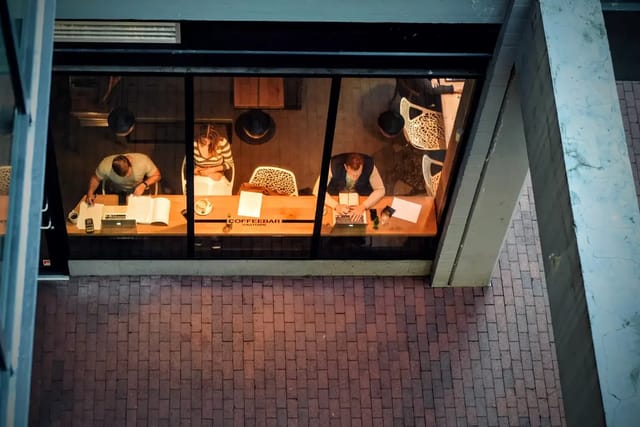
- Emergency: Coworking space with their own connection
- Nuclear option: Starlink as primary (if in rural area) or backup (if in city)
Total internet budget: $40-70/month for bulletproof connectivity. That’s what you’d pay for a single ISP in most US cities.
Coworking Spaces
Guatemala’s coworking scene is small but growing. Here are the main options:
Guatemala City
| Space | Location | Day Pass | Monthly | WiFi Speed | Notes |
|---|---|---|---|---|---|
| WorkHub | Zone 14 | Q60 (~$8) | Q600-900 (~$78-117) | 80+ Mbps | Quiet, professional. |
Two listings were removed from this table on 2026-08-05. Impact Hub Guatemala (Zone 10) is gone — guatemala.impacthub.net no longer resolves at all. Selina Guatemala City is gone as well: Selina exited Guatemala, and unlike Antigua and Lake Atitlán, the capital got no successor property. Impact Hub does still operate in Antigua — see the next table.
Antigua
| Space | Location | Day Pass | Monthly | WiFi Speed | Notes |
|---|---|---|---|---|---|
| Impact Hub Antigua | 3a Calle Poniente 4 | 50+ Mbps | Best option. Garden setting. *Our own survey — see note below. | ||
| Socialtel Antigua (formerly Selina) | 6a Av. Norte 43A | Not published | Not published | 40+ Mbps | Rebranded from Selina; operator publishes no coworking rates. |
| Cafe Fernando’s | Central | Free (buy coffee) | N/A | 20-30 Mbps | Not a coworking, but popular work cafe. |
* Impact Hub publishes no rate card. Its own coworking page lists three plans with no figures under the pricing heading, so the amounts above are our own survey observations (checked 6 August 2026), not quoted prices. Confirm directly — Mon–Fri 8am–6pm, Sat 9am–1pm, +502 3180 4159.
Lake Atitlan
| Space | Location | Day Pass | Monthly | WiFi Speed | Notes |
|---|---|---|---|---|---|
| The Yoga Forest | San Marcos | Q50 (~$7) | Q400 (~$52) | 10-20 Mbps | Peaceful but slow internet. |
| Various hostels | San Pedro | Free-Q30 | N/A | 5-20 Mbps | Unreliable. Bring backup. |
| Cafe spaces | Panajachel | Free | N/A | 15-30 Mbps | Several cafes with decent WiFi. |
Reality check: Antigua now has the deepest bench of dedicated coworking in the country. The capital lost both Impact Hub and Selina, and what remains there is thinner than this page used to claim. Lake Atitlan’s coworking is more “cafe with WiFi” than professional workspace. If reliable coworking is important to your workflow, Antigua is the safer base — and confirm any space is still open before you build a month around it.
Monthly Cost Breakdown for Remote Workers
Here’s what a comfortable digital nomad life actually costs in Guatemala’s main remote work cities:
Antigua (Most Popular for Nomads)
| Expense | Monthly Cost (USD) |
|---|---|
| Furnished apartment (1BR, central) | $400-700 |
| Internet (150 Mbps fiber) | $30 |
| Mobile plan (calls + 15GB data) | $15 |
| Coworking (optional, 10 days/month) | $100 |
| Groceries + cooking | $150-200 |
| Eating out (lunch + some dinners) | $150-250 |
| Uber/transport | $30-50 |
| Utilities (electric, water, gas) | $30-50 |
| Entertainment, coffee, misc | $100-150 |
| Total | $1,005-1,445 |
Guatemala City (Zone 10/14/16)
| Expense | Monthly Cost (USD) |
|---|---|
| Furnished apartment (1BR, nice zone) | $500-900 |
| Internet (300 Mbps fiber) | $45 |
| Mobile plan | $15 |
| Coworking (optional) | $80-150 |
| Groceries | $150-200 |
| Eating out | $200-350 |
| Uber | $50-80 |
| Utilities | $40-60 |
| Gym membership | $25-40 |
| Entertainment | $100-200 |
| Total | $1,205-2,035 |
Lake Atitlan (Budget Option)
| Expense | Monthly Cost (USD) |
|---|---|
| Furnished room/apartment | $200-500 |
| Internet (Starlink or shared) | $45-65 |
| Mobile plan | $15 |
| Groceries | $100-150 |
| Eating out | $80-150 |
| Boat transport between towns | $20-40 |
| Misc | $50-100 |
| Total | $510-1,005 |
For a complete city-by-city comparison, see our cost of living calculator.
Visa Situation for Remote Workers
Short stay (under 90 days): Enter visa-free, work remotely, leave. No issues. See our complete visa guide for details on the CA-4 agreement and extensions.
Medium stay (3-12 months): Extend your tourist visa for 90 more days ($26), then do a visa run to Mexico or Belize every 6 months. This is what most digital nomads do.
Long-term (1+ year): Apply for residency under the Rentista category ($2,500/month income) or the new remote worker visa ($1,500/month income, introduced 2025-2026). A residency lawyer costs $500-1,000 and handles the paperwork.
Tax advantage: Guatemala uses a territorial tax system. Income earned from foreign clients/employers is generally NOT taxed in Guatemala. This is a significant advantage over countries that tax worldwide income.
The Lifestyle: What It’s Actually Like
Pros:
- Cost of living 60-70% lower than US cities while maintaining quality of life
- Excellent coffee culture (your daily espresso costs $2, not $6)
- Rich culture, history, and weekend trip opportunities
- Growing expat/nomad community (especially Antigua and Lake Atitlan)
- US Central Time Zone alignment
- Easy flights to US ($150-350 round trip to Miami, Houston, LAX)
- Warm weather year-round in the highlands (eternal spring)
Cons:
- Internet in rural areas can be unreliable
- Spanish is necessary for daily life outside tourist zones (Spanish schools in Guatemala, or the Antigua schools price comparison, can help)
- Driving is chaotic (Uber is the answer)
- Limited nightlife compared to Lisbon, Medellin, or Bangkok
- Power outages happen (get a UPS for your router/laptop)
- Some bureaucracy can be frustrating (banks, government offices)
Honest assessment: Guatemala isn’t Bali or Lisbon with their massive digital nomad scenes and purpose-built infrastructure. It’s rougher around the edges. But for someone who values affordability, US time zone alignment, cultural depth, and not living in a tourist bubble, it’s a strong option — especially Antigua and Guatemala City. See our neighborhood guide for remote workers for the best areas to base yourself.
Getting Set Up: First Week Checklist
Get a local SIM card. Tigo or Claro. Available at any mall, corner store, or airport kiosk. $5-10 for the SIM, $15/month for a plan with 15GB+ data. See our phone plans comparison for the best deals.
Set up home internet. If you’re renting, ask if internet is included. If not, Tigo installation takes 2-5 days. Buy your own router.
Open a local bank account (optional). BAC Credomatic or Banco Industrial accept foreign residents. Useful for paying rent and utilities. Requires passport and proof of address. See our complete banking guide. If you need to send money between your US and Guatemalan accounts, compare remittance rates to find the cheapest transfer option.
Download essential apps: Uber (transport), PedidosYa/Hugo (food delivery), Waze (navigation), WhatsApp (everyone uses it), Google Translate (emergency Spanish).
Find your work spot. Test your apartment internet with a video call. Identify 2-3 backup cafes/coworking spaces nearby.
Get a UPS (uninterruptible power supply). Power outages happen 1-3 times per month in most areas. A basic UPS ($40-60) keeps your router and laptop running through short outages.
Sort out health insurance. Guatemala’s public healthcare system is limited, and private hospital visits can be expensive without coverage. Many digital nomads use SafetyWing’s Nomad Insurance, which starts at $42/month and covers medical emergencies, trip interruptions, and even travel in neighboring countries.
Use a VPN for public WiFi and streaming. If you work from cafes or coworking spaces, a VPN protects your banking sessions and work credentials on shared networks. NordVPN works well in Guatemala and also lets you access US streaming libraries when the content differs here.
Explore internet speeds, safety ratings, and cost of living by department on our interactive map.
Frequently Asked Questions
Is Guatemala good for digital nomads?
Yes. Guatemala offers fiber internet in major cities (100-200 Mbps), low cost of living ($800-2,000/month), US Central timezone alignment, and a growing coworking scene. Antigua and Guatemala City are the top spots for remote work.
How much does it cost to live as a digital nomad in Guatemala?
Budget $800-1,200/month in Antigua or Lake Atitlan, $1,500-2,500 in Guatemala City’s upscale zones. This covers rent, food, internet, coworking, and entertainment. Significantly cheaper than Lisbon, Bali, or Mexico City.
Does Guatemala have a digital nomad visa?
Yes. Guatemala introduced a remote worker visa in October 2025 for people employed by foreign companies. It grants 1-5 year temporary residency. You can also stay on the 90-day tourist entry (extendable to 180 days) for shorter stays.
What is the best city for remote work in Guatemala?
Antigua is the top choice — fast fiber internet, coworking spaces, walkable center, good food scene, and a built-in expat community. Guatemala City Zona 10 has the fastest internet (200+ Mbps) and most co-working options but less charm.
Why is Guatemala's timezone good for remote work?
Guatemala uses Central Standard Time (UTC-6) year-round — aligned with Chicago, Dallas, and Mexico City. You are only 1-2 hours off from both US coasts, making real-time collaboration easy without early mornings or late nights.
![Best Places for Remote Workers in Guatemala [2026 Ranked]](/cdn-cgi/image/width=640,format=auto,quality=80/images/photos/antigua-street-scene-2020.webp)