If you want walkability and tourist energy, live on or near Calle Santander. If you want lake views and slightly more residential calm, Calle del Lago. If budget rules and you can cross the bridge daily, Jucanyá. If you want panoramic views and don't mind a 10-15 minute walk down to town, Patanatic. The honest reality: most people moving to Lake Atitlán don't actually live in Pana long-term — Pana is a base of operations, the place with banks and supermarkets and hospitals. The lake-life community lives in San Pedro, San Marcos, or Santa Cruz. Decide which side of that divide you are on before signing a 12-month lease.
The 5-Sector Comparison
Based on Sololá-area encuentra24.com listings, Google Places data, plus owner field research. Prices in USD/month for a furnished 1BR apartment.
| Sector | Vibe | Rent 1BR (USD/mo) | Lake access | Water reliability | ENERGUATE outage risk | Walkable? |
|---|---|---|---|---|---|---|
| Calle Santander | Tourist core, restaurants, hostels | $400–800 | 5-min walk to dock | ⭐⭐⭐⭐ Stable | ⭐⭐⭐ 2-4 cuts/mo | ⭐⭐⭐⭐⭐ |
| Calle del Lago | Lakeside walk, partial views | $500–1,100 | Direct, 1-block | ⭐⭐⭐⭐ Stable | ⭐⭐⭐ 2-4 cuts/mo | ⭐⭐⭐⭐⭐ |
| Jucanyá (across the river) | Residential, quiet, cheaper | $250–500 | 10-min walk to dock | ⭐⭐⭐ Dry-season cuts | ⭐⭐⭐ 2-4 cuts/mo | ⭐⭐⭐ |
| Patanatic (mountainside) | Panoramic views, isolated | $350–700 | 15-25-min walk down | ⭐⭐ Dry-season hard | ⭐⭐ 4-8 cuts/mo | ⭐⭐ Steep |
| El Tzanjuyú (north end) | Quiet, residential, locals | $300–600 | 10-min walk | ⭐⭐⭐⭐ Stable | ⭐⭐⭐ 2-4 cuts/mo | ⭐⭐⭐⭐ |
Calle Santander — The Tourist Core
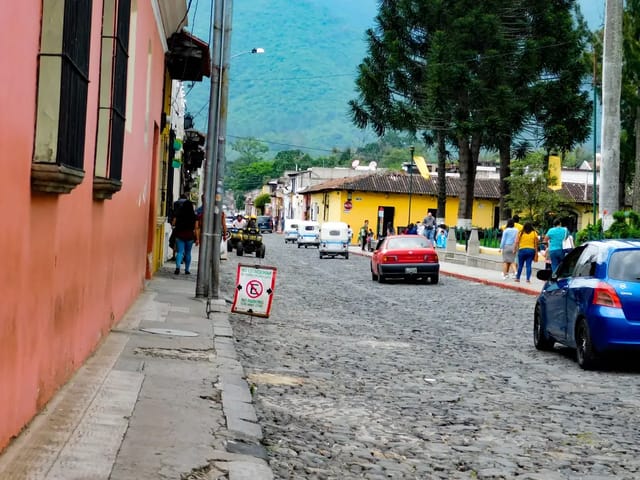
Calle Santander is Panajachel’s main artery — a 1-kilometer pedestrian-heavy street that runs from the highway entrance down to the public dock at the lake. Every backpacker hostel, every textile vendor, every tour-shuttle ticket booth, every ATM, and most of the restaurants the average tourist will ever see are within a five-minute walk of this street.
Living on Calle Santander means accepting that your home is one block from a continuous Tuesday-Sunday market: K’aqchikel and K’iche’ women selling huipiles and corte fabrics from temporary stalls, vendors hawking miniature trompos and hammocks, tuk-tuks parked three deep waiting for fares. From roughly 9 AM to 9 PM, the street is loud. Friday and Saturday nights it gets louder — Pana Rock Cafe, Circus Bar, and a rotating cast of smaller bars push live music until 1-2 AM.
Rent on Calle Santander runs $400-800/month for a furnished 1BR apartment. The cheaper end of that range is small studios above commercial spaces (so the noise from the strip goes through your floor). The upper end gets you a proper apartment with a balcony, sometimes with a partial lake view if you are at the south end near the dock. Houses with multiple bedrooms and patios run $1,000-1,800/month and require word-of-mouth or longer searches.
Water on Calle Santander is generally reliable — the main municipal lines run under this corridor and EMAPET prioritizes pressure here. Power is the bigger issue; ENERGUATE serves the entire Sololá department and outages of 1-3 hours are common, especially during the rainy-season afternoon storms (May-October). Any restaurant or coworking space on Calle Santander has a generator running 4-6 times a month minimum.
Who Calle Santander is right for: Short-term residents (3-12 months) who want maximum walkability and don’t mind the noise. Single travelers, digital nomads who treat Pana as a 60-90 day stop, anyone who genuinely enjoys living in the middle of a tourist-economy street.
Who should skip it: Anyone planning a 2+ year stay. Light sleepers. Families with school-age kids. Anyone who wants quiet mornings — the street has vendors setting up at 6:30 AM most days.
Calle del Lago — Lakeside Walk and Partial Views
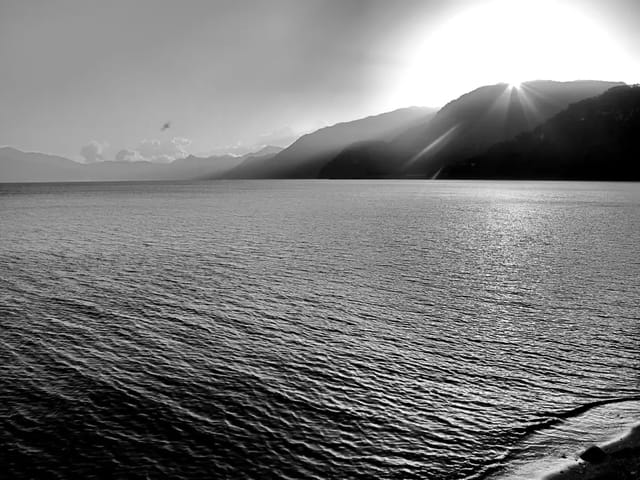
Calle del Lago runs along the lake from the public dock east toward the Jucanyá river mouth. It is the closest you can get to “lakeside living” inside Pana proper. The street itself is one block from the water; some restaurants and apartments have direct lake-facing terraces, others are on the inland side with partial views over rooftops.
This is where most of Panajachel’s mid-tier hotels (Hotel Atitlán adjacent, Posada de Don Rodrigo Pana, Mikaso Hotel) and some of the better restaurants (Sunset Cafe, La Terazza) cluster. Living here means walking to dinner without crossing Calle Santander, which becomes meaningful in your second month when the novelty of the tourist strip wears thin.
Rent runs $500-1,100/month for a furnished 1BR. The premium over Calle Santander is real and is mostly about the view and the one-block buffer from the noise. Apartments with direct lake views — those where you can see all three volcanoes (San Pedro, Tolimán, Atitlán) from your living room — start around $800/month and go up to $1,500-2,000 for genuinely large units.
The downside is the wet season. May through October, the lake level rises (sometimes by 1-2 meters), and during the worst years the water reaches the Calle del Lago retaining wall. Apartments at street level have flooded historically; ground-floor units are best avoided. Anything on a second floor or higher is fine.
Who Calle del Lago is right for: Couples, retirees, remote workers who want quiet mornings with a lake view, anyone who wants to walk to the dock daily for lancha trips. Best mix of services and calm in the Pana orbit.
Who should skip it: Budget-conscious residents (Jucanyá is half the price), families needing a yard or garden (limited inventory), anyone who specifically dislikes the touristy feeling that the lakeside walk maintains.
Jucanyá — The Local Neighborhood Across the River
Jucanyá sits across the Río San Francisco bridge, on the east side of Panajachel. It is where most of the Guatemalan residents of Pana actually live: Kaqchikel families, schoolteachers, restaurant workers, tuk-tuk drivers, the people who run the town when the tourists aren’t watching.
Rent is dramatically lower — $250-500/month gets a furnished 1BR or small house. Two-bedroom houses with a small yard and parking run $400-700. The trade-off is that Jucanyá is residential in the Guatemalan sense: chickens in some yards, neighbors who get up at 5 AM, churches that broadcast services through external speakers on Sundays, no foreign-resident community to speak of.
The walk from Jucanyá to Calle Santander is 10-15 minutes across the bridge. A tuk-tuk costs Q5-10. Most expat residents who choose Jucanyá do so specifically because they want immersion and reduced cost — and because they have at minimum conversational Spanish. If your Spanish is limited and you cannot communicate with neighbors, vendors, the tuk-tuk drivers, the comedor cook, you will feel isolated here.
Water reliability in Jucanyá is the weakest of the five sectors. Dry-season cuts (March-April) are common — sometimes 12-24 hours without supply. Cisterns are essential. Modern homes have them; older ones do not. Always ask: ¿Tiene cisterna? ¿Cuántos litros?
Who Jucanyá is right for: Long-term residents (1+ year), families with children attending local schools, anyone with intermediate-to-fluent Spanish who wants integration over tourism. Best price point on the lake.
Who should skip it: Beginner Spanish speakers. Short-term visitors. Anyone whose work depends on stable utility infrastructure.
Patanatic — Panoramic Views, Steep Walks
Patanatic is the mountainside neighborhood that climbs above Pana toward Sololá. Rent here is moderate — $350-700/month for a 1BR or small house — and what you pay for is the view: from the upper sections of Patanatic you see the entire lake, all three volcanoes, the lakeside towns on the south shore, and the curve of the bay. The sunsets are unobstructed.
The trade-off is the walk. From upper Patanatic to Calle Santander is 15-25 minutes downhill, and 25-40 minutes uphill on the way home. The road is paved but steep. Tuk-tuks will take you up for Q15-25 (negotiated; some drivers refuse the climb after dark). A scooter or motorcycle is the realistic vehicle here; small cars manage but burn through clutches.
Patanatic has the worst utility profile of the five sectors. Water requires a larger cistern (at least 2,000 liters) because EMAPET pressure drops at altitude. Power outages are noticeably more frequent — the lines that serve Patanatic are exposed to landslide risk in the rainy season, and a single fallen tree on the road from Sololá takes the neighborhood offline for half a day. Internet via fixed cable (Tigo / Claro) is intermittent in the upper sections; many residents rely on 4G/5G hotspots.
Who Patanatic is right for: People who specifically want the view and accept the trade-offs, anyone with a vehicle, photographers and YouTubers who need the panorama, residents who work asynchronously and can absorb half-day outages.
Who should skip it: Anyone working synchronously online (calls, livestreams), residents without a vehicle, anyone with mobility limitations — the walks here are steeper than they look on a map.
El Tzanjuyú — The North-End Quiet Zone
El Tzanjuyú is the residential pocket north of Calle Santander, between the highway entrance and the lakefront’s western edge. It is the quietest of the in-town sectors and is where many of Panajachel’s longer-term Guatemalan professional families and a smaller population of expats have settled.
Rent runs $300-600/month for a 1BR. Houses with small yards run $500-900. The character is genuinely residential — single-family homes on side streets, a few small tiendas, a couple of comedores, the mid-century Tzanjuyú Hotel that used to host Bill Clinton and now caters to weekend Guatemala City visitors. No nightlife. Limited tourist infrastructure. A 10-minute walk to Calle Santander or the dock.
Water and power profiles match Calle Santander — generally stable. The neighborhood is well-lit at night and has lower foot-traffic crime than the tourist strip. Several modest gated condominium buildings exist here for residents who want garage parking and 24-hour security guards (vigilancia privada).
Who El Tzanjuyú is right for: Long-term residents who want quiet without crossing the river, retirees, families, anyone who values residential calm over walkability to nightlife.
Who should skip it: Solo travelers seeking the social scene of Calle Santander, very budget-conscious residents (Jucanyá is cheaper).
Water, Power, and Internet: The Real Infrastructure Picture
Three things matter more in Pana than they do in Antigua, and you should plan for them before signing any lease.
Water (EMAPET municipal supply): Generally adequate in Calle Santander, Calle del Lago, and El Tzanjuyú. Variable in Jucanyá. Difficult in Patanatic. Dry-season cuts (March-April) affect outer sectors most. Always confirm cistern capacity before signing.
Power (ENERGUATE): ENERGUATE serves the entire Sololá department and is the source of more complaints than any other utility in Panajachel. Outages are normal; planning for them is mandatory. A small UPS for your laptop and router (sufficient for 30-90 minutes) is the minimum. A gas-station generator for longer outages is overkill for residential use but standard for cafés and coworking spaces. Power is more reliable in Calle Santander and Calle del Lago because they are on the same circuit as the tourist economy; Patanatic and Jucanyá are on separate, more vulnerable circuits.
Internet: Tigo 4G and 5G cover all of Pana proper and most of Patanatic and Jucanyá. Fiber via Claro is available on Calle Santander, Calle del Lago, and parts of El Tzanjuyú at speeds of 50-200 Mbps. Patanatic upper sections are 4G-only. Most remote workers use a primary fiber connection with a 4G hotspot backup — both circuits are needed because either alone has weekly hour-long failures.
Safe questions to ask any landlord:
- Does the property have a backup cistern? What capacity in liters?
- How many power outages happened in the past 30 days? Last 90 days?
- Is the property served by Tigo 4G fiber, Claro fiber, or both?
- During the wet season (May-October), does ground water reach the property? Has it ever flooded?
- Is the road to the property accessible in heavy rain, or do landslides occasionally close it?
The Foreigner-Tax Reality in Panajachel
Foreigners pay more here, just like in Antigua, and the dynamics are similar — but the gap can be even larger on Calle Santander because of the high turnover of short-term tourists. Landlords there are accustomed to weekly Airbnb pricing, monthly Booking.com pricing, and short-term-expat rates that are 2-3x what a local family would pay for a comparable space.
The mitigation is the same as Antigua. Sign a 12-month lease. Pay in quetzales by local bank transfer. Have a Guatemalan friend or coworker negotiate first — ideally before the landlord ever sees you. Walk the side streets of Jucanyá and El Tzanjuyú looking for handwritten Se Alquila signs. The supply that circulates through Facebook expat groups and encuentra24.com is priced for foreigners; the supply that circulates by word of mouth is priced for everyone.
The largest gaps are in:
- Short-term Airbnb-style rentals on Calle Santander (50-80% above local rate).
- Calle del Lago apartments with lake views during dry-season high tourist months (40-60% premium).
- “Foreigner-friendly” listings on international platforms (40-50% premium).
The best deals in Pana follow the same pattern as the best deals in Antigua — they come from staying long enough to be known, asking the right people, and being willing to live one street off the tourist drag.
Pana vs. San Pedro vs. San Marcos vs. Santa Cruz
Before you sign a Pana lease, decide if Pana is actually where you want to be. The four lakeside towns serve genuinely different people:
- Panajachel — services, infrastructure, banks, hospital, supermarkets, hardware stores, tuk-tuks, ATMs, the place you can actually live a normal life.
- San Pedro La Laguna — the party town and Spanish-school capital. Dense backpacker scene, many language schools, cheaper rent ($150-400 for a 1BR), nightlife, weak infrastructure, no real bank or hospital.
- San Marcos La Laguna — wellness, yoga, sound healing, spiritual retreats, vegan cafés, small but established expat community focused on alternative living. Even smaller than San Pedro, even less infrastructure, but the highest concentration of foreigners-living-on-the-lake per capita.
- Santa Cruz La Laguna — quietest, hardest to reach (lancha-only most of the time), small expat community, the most “lake hermit” of the towns. Houses cling to the cliffs above the water.
Pana is the obvious choice for anyone who needs services. The alternative-lake-life crowd lives in San Marcos. The Spanish-immersion crowd lives in San Pedro. Santa Cruz is for people who want to disappear. The choice between these is a lifestyle question, not a budget one.
Frequently Asked Questions
Should I actually live in Panajachel, or is San Pedro / San Marcos better?
Panajachel makes sense if you want services — banks, ATMs, supermarkets, hospitals, vet care, hardware stores — within walking distance. The Atitlán lakeshore towns are 20-50 minute lancha rides away with limited infrastructure. Most long-term residents choose Pana as their base and visit San Pedro (party / yoga / Spanish school crowd) or San Marcos (wellness / spiritual community) for day trips. If you specifically want the alternative-living energy of San Marcos or San Pedro, live there. For everyone else, Pana is the practical choice on the lake.
How much is rent in Panajachel?
Calle Santander corridor (tourist core): $400–800/mo for a furnished 1BR. Calle del Lago / lake-adjacent: $500–1,100/mo with partial lake views. Jucanyá (across the river, residential): $250–500/mo. Patanatic (mountainside, panoramic views): $350–700/mo for houses with terraces. El Tzanjuyú (north end, quieter): $300–600/mo. High-end lakeside houses with private docks reach $1,500–2,500/mo.
Is there reliable water and power in Panajachel?
Water comes from EMAPET (the municipal water authority) and is generally adequate but has dry-season cuts (March-April), particularly in Jucanyá and Patanatic. Most modern homes have backup cisterns of 1,000–3,000 liters. Power is from ENERGUATE — outages are more frequent than Antigua, typically 2-6 cuts per month, lasting 30 minutes to 4 hours. Anyone working remotely should plan for a UPS plus a 4G/5G hotspot backup.
Is Panajachel safe at night?
Calle Santander and Calle del Lago are well-lit, patrolled by tourist police (POLITUR) until late evening, and feel safe up to about 10 PM. After that the strip empties out and it gets dark. Jucanyá and Patanatic are residential and quiet but unlit on most blocks — use a flashlight or headlamp at night. The road from Sololá into Pana (RN-1) has had occasional armed-robbery incidents at night; locals avoid that road after dark. Within Pana proper, petty theft and pickpocketing on Calle Santander are the main concerns; violent crime is rare.
Is the foreigner-tax markup worse in Pana than Antigua?
It is comparable — 30-50% over what locals pay, particularly along Calle Santander where landlords have decades of experience renting to backpackers and short-term expats. The markup compresses on 12-month leases paid in quetzales. The cheapest rentals never appear online — they are word-of-mouth in Jucanyá and Patanatic. Have a Guatemalan friend ask first, before the landlord knows you are foreign.
Will I need a car in Panajachel?
No. Pana proper is walkable end-to-end in 25 minutes. Tuk-tuks run constantly (Q5-15 for in-town trips). For lake travel you take lanchas from the public dock. A car becomes useful only if you live in Patanatic, Sololá, or want to make regular trips out of the lake basin (Antigua, Guatemala City, Xela). The road down from Sololá is steep and narrow — small cars are fine; large SUVs and trucks struggle with the switchbacks.
Related Panajachel Resources
- Things to Do in Panajachel — Reserva Natural, lake tours, Calle Santander, half-day plans
- Restaurants in Panajachel — lakeside dining, comedores, tourist-trap warnings
- Transportation in Panajachel — lanchas to San Pedro and San Marcos, shuttles, tuk-tuks
- Safety in Guatemala — current crime patterns, area-by-area context
- Cost of Living Guatemala — full monthly budget breakdown