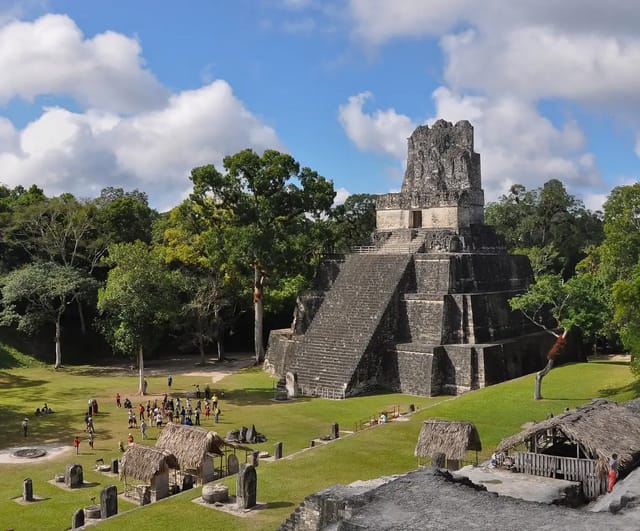
Miguel Ángel Asturias (born Guatemala City, 19 October 1899; died Madrid, 9 June 1974) won the 1967 Nobel Prize in Literature “for his vivid literary achievement, deep-rooted in the national traits and traditions of Indian peoples of Latin America”. His landmark books are Leyendas de Guatemala (1930), the dictator novel El Señor Presidente (1946), Hombres de maíz (1949) and a trilogy on the United Fruit Company (1950-1960).
In short: Lawyer by training, ten years in Paris, diplomat for Guatemala, exile in Argentina from 1954 to 1962, then ambassador to France. He received the whole Nobel Prize (share 1/1), with Guatemala as his residence at the time of the award. The full list of his works in Spanish, as NobelPrize.org prints it, is below.
His life, as the Nobel record tells it
The biography NobelPrize.org publishes, written at the time of the award for Les Prix Nobel, and the facts page give this outline:
| Year | Event |
|---|---|
| 1899 | Born on 19 October in Guatemala City; childhood and adolescence in Guatemala |
| 1923 | His thesis for the law degree he took at the University of San Carlos, The Social Problem of the Indian, published. After his law studies he and fellow students founded the Popular University of Guatemala, to offer courses to people who could not afford the national university |
| 1923-1933 | Left for Europe to study political economy in England; a few months in London, then ten years in Paris. At the Sorbonne he became a disciple of Professor Georges Raynaud, who lectured on the religions of the Mayas. Travelled as a correspondent for Latin American newspapers |
| 1928 | Short return to Guatemala; lectures at the Popular University, collected as La arquitectura de la vida nueva |
| 1930 | Leyendas de Guatemala published in Madrid |
| 1931 | French edition of the Leyendas, with Paul Valéry’s letter as preface; the book won the Silla Monsegur Prize for the best Spanish-American book published in France |
| 1933 | Returned to Guatemala, then ruled by the dictator Jorge Ubico, leaving the manuscript of El Señor Presidente behind because of its political implications |
| 1944-1946 | After Ubico’s fall, President Juan José Arévalo made him cultural attaché at the embassy in Mexico, where El Señor Presidente first appeared in 1946 |
| 1947-1949 | Cultural attaché in Argentina from late 1947; two years later, a ministerial post |
| 1954-1962 | After the fall of President Jacobo Arbenz Guzmán’s government in 1954, exile in Argentina, his wife’s native country |
| 1966 | Awarded the Lenin Peace Prize; appointed ambassador to France by President Julio Méndez Montenegro |
| 1967 | Nobel Prize in Literature |
| 1974 | Died on 9 June in Madrid |
NobelPrize.org’s facts page adds that he opposed the military dictatorship in Guatemala on several occasions, that he was married twice and had two sons. When the Academy presented the prize, its Permanent Secretary, Anders Österling, noted that he was then the Guatemalan Ambassador in Paris.
What the Swedish Academy said about his major works
Österling’s presentation speech went through the books in turn:
- Leyendas de Guatemala (1930): his first work, a collection of Guatemalan legends, “a treasure of images and symbols which has, ever since, been the inexhaustible source of his inspiration”. The Nobel biography adds that its French translation by Francis de Miomandre impressed Paul Valéry, whose letter became the preface to the 1931 French edition. The legends themselves are retold on Guatemalan legends.
- El Señor Presidente (1946): “This magnificent and tragic satire criticizes the prototype of the Latin American dictator”, the speech says, and his evocation of the terror and distrust of the time makes the book “a challenge and an invaluable aesthetic gesture”.
- Hombres de maíz (1949): “a folktale whose chief inspiration is in the imagination but which, nevertheless, remains true to life”, drawn from the mythology of a land where people struggle against nature and against oppression and tyranny.
- The trilogy Viento fuerte (1950), El papa verde (1954) and Los ojos de los enterrados (1960): the speech names its theme as “the struggle against the domination of American trusts, epitomized by the United Fruit Company”.
- Clarivigilia primaveral (1965), a cycle of poems on the genesis of the arts and poetic creation.
The Nobel biography also describes Mulata de tal (Losada, 1963) as a surrealistic blend of Indian legends. For which of these to read first, and the English editions to look for, see books and films about Guatemala.
Magical realism?
The Academy’s 1967 speech does not use the term. It says “his explosive style bears a close kinship to French surrealism” and adds that he always takes his inspiration from real life; NobelPrize.org’s facts page speaks of “a powerful language combining myth and reality”. Among the critical studies the Nobel bibliography selects is Alicia Llarena’s Realismo mágico y lo real maravilloso: Una cuestión de verosimilitud (Hispamérica, 1997).
Complete list of works in Spanish
In the order NobelPrize.org’s bibliography (compiled by the Swedish Academy, 2006) lists them, with place and publisher as printed there. Titles 1 to 40 appeared in his lifetime.
| # | Title | Place and publisher | Year |
|---|---|---|---|
| 1 | Sociologia guatemalteca: El problema social del indio | Guatemala City: Sánchez y de Guise | 1923 |
| 2 | Rayito de estrella | Paris: Imprimerie Française de l’Edition | 1925 |
| 3 | La arquitectura de la vida nueva | Guatemala City: Goubaud | 1928 |
| 4 | La barba provisoria | Havana | 1929 |
| 5 | Leyendas de Guatemala | Madrid: Oriente | 1930 |
| 6 | Émulo Lipolidón, fantomima | Guatemala City: Américana | 1935 |
| 7 | Sonetos | Guatemala City: Américana | 1936 |
| 8 | Alclasán, fantomima | Guatemala City: Américana | 1940 |
| 9 | Con el rehén en los diente: Canto a Francia | Guatemala City: Zadik | 1942 |
| 10 | El Señor Presidente | Mexico City: Costa-Amic | 1946 |
| 11 | Poesía: Sien de alondra | Buenos Aires: Argos | 1949 |
| 12 | Hombres de maíz | Buenos Aires: Losada | 1949 |
| 13 | Viento fuerte | Buenos Aires: Ministerio de Educación Pública | 1950 |
| 14 | Ejercicios poéticos en forma de sonetos sobre temas de Horacio | Buenos Aires: Botella al Mar | 1951 |
| 15 | Alto es el Sur: Canto a la Argentina | La Plata, Argentina: Talleres gráficos Moreno | 1952 |
| 16 | Carta aérea a mis amigos de América | Buenos Aires | 1952 |
| 17 | El papa verde | Buenos Aires: Losada | 1954 |
| 18 | Bolívar: Canto al Libertador | San Salvador: Ministerio de Cultura | 1955 |
| 19 | Soluna: Comedia prodigiosa en dos jornadas y un final | Buenos Aires: Losange | 1955 |
| 20 | Obras escogidas (3 vols.) | Madrid: Aguilar | 1955-1966 |
| 21 | Week-end en Guatemala | Buenos Aires: Losada | 1956 |
| 22 | La audiencia de los confines | Buenos Aires: Ariadna | 1957 |
| 23 | Los ojos de los enterrados | Buenos Aires: Losada | 1960 |
| 24 | El alhajadito | Buenos Aires: Goyanarte | 1961 |
| 25 | Mulata de tal | Buenos Aires: Losada | 1963 |
| 26 | Rumania, su nueva imagen | Xalapa, Mexico: Universidad Veracruzana | 1964 |
| 27 | Teatro: Chantaje, Dique seco, Soluna, La audiencia de los confines | Buenos Aires: Losada | 1964 |
| 28 | Clarivigilia primaveral | Buenos Aires: Losada | 1965 |
| 29 | El espejo de Lida Sal | Mexico City: Siglo Veintiuno | 1967 |
| 30 | Latinoamérica y otros ensayos | Madrid: Guadiana | 1968 |
| 31 | Obras completas (3 vols.) | Madrid: Aguilar | 1968 |
| 32 | Comiendo en Hungría (with Pablo Neruda) | Barcelona: Lumen | 1969 |
| 33 | Maladrón | Buenos Aires: Losada | 1969 |
| 34 | Tres de cuatro soles | Madrid: Closas-Orcoyen | 1971 |
| 35 | El problema social del indio y otros textos (collected by Claude Couffon) | Paris: Centre de Recherches de l’Institut d’Etudes Hispaniques | 1971 |
| 36 | Novelas y cuentos de juventud | Paris: Centre de Recherches de l’Institut d’Etudes Hispaniques | 1971 |
| 37 | Torotumbo; La audiencia de los confines; Mensajes indios | Barcelona: Plaza & Janés | 1971 |
| 38 | América, fábula de fábulas y otros ensayo (compiled by Richard Callan) | Caracas: Monte Ávila | 1972 |
| 39 | Viernes de dolores | Buenos Aires: Losada | 1972 |
| 40 | Mi mejor obra: Autoantología | Mexico City: Organización Editorial Novaro | 1973 |
| 41 | Tres de cuatro soles, critical edition (Dorita Nouhaud) | Madrid: Fondo de Cultura Económica | 1977 |
| 42 | El Señor Presidente, critical edition (Ricardo Navas Ruiz, Jean-Marie Saint-Lu) | Paris: Klincksieck | 1978 |
| 43 | Viernes de dolores, critical edition (Iber H. Verdugo) | Paris: Klincksieck | 1978 |
| 44 | Sinceridades (compiled by Epaminondas Quintana) | Guatemala City: Académica Centroamericana | 1980 |
| 45 | Hombres de maíz, critical edition (Gerald Martin) | Madrid: Fondo de Cultura Económica | 1981 |
| 46 | El hombre que lo tenía todo, todo, todo; La leyenda del Sombrerón; La leyenda del tesoro del Lugar Florido | Barcelona: Bruguera | 1981 |
| 47 | Viajes, ensayos y fantasías (compiled by Richard J. Callan) | Buenos Aires: Losada | 1981 |
| 48 | París 1924-1933: periodismo y creación literaria (critical edition, Amos Segala) | Nanterre: ALLCA XX | 1988 |
| 49 | Cartas de amor, entre M. A. Asturias y Blanca de Mora y Araujo (1948-1954) | Madrid: Cultura Hispánica | 1989 |
| 50 | El árbol de la cruz | Nanterre: ALLCA XX/Université Paris X | 1993 |
| 51 | Con la magia de los tiempos | Guatemala City: Ministerio de Cultura y Deportes | 1999 |
| 52 | Miguel Ángel Asturias, raíz y destino: Poesía inédita, 1917-1924 (Marco Vinicio Mejía, ed.) | Guatemala City: Artemis Edinter | 1999 |
| 53 | Cuentos y leyendas, critical edition | Madrid: ALLCA XX | 2000 |
| 54 | El señor presidente: edición crítica, centenary edition (Gerald Martin) | Madrid: Allca | 2000 |
Source: NobelPrize.org, Miguel Angel Asturias bibliography, read 13 November 2026.
English translations
| English title | Translator | Publisher | Year |
|---|---|---|---|
| The Mulatta and Mr. Fly | Gregory Rabassa | London: Owen | 1963 |
| The President | Frances Partridge | London: Gollancz (republished as El Señor Presidente, New York: Atheneum) | 1963 |
| Cyclone | Darwin Flakoll and Claribel Alegría | London: Owen | 1967 |
| Strong Wind | Gregory Rabassa | New York: Delacorte | 1968 |
| Sentimental Journey around the Hungarian Cuisine | Barna Balogh | Budapest: Corvina | 1969 |
| The Bejeweled Boy | Martin Shuttleworth | Garden City, N.Y.: Doubleday | 1971 |
| The Green Pope | Gregory Rabassa | New York: Delacorte | 1971 |
| The Talking Machine | Beverly Koch | Garden City, N.Y.: Doubleday | 1971 |
| The Eyes of the Interred | Gregory Rabassa | New York: Delacorte | 1973 |
| Men of Maize | Gerald Martin | New York: Delacorte/Seymour Lawrence | 1975 |
| Guatemalan Sociology: The Social Problem of the Indian | Maureen Ahern | Tempe: Arizona State University Center for Latin American Studies | 1977 |
| The Mirror of Lida Sal: Tales Based on Mayan Myths and Guatemalan Legends | Gilbert Alter-Gilbert | Pittsburgh: Latin American Literary Review | 1997 |
Guatemala’s two Nobel laureates
NobelPrize.org lists two laureates born in Guatemala; the other is Rigoberta Menchú Tum, Peace 1992. Both are on famous Guatemalans, with the country’s Olympic medalists and Grammy winners.
Sources
- NobelPrize.org, Nobel Prize API: laureates with birth country Guatemala (two records). Read 13 November 2026.
- NobelPrize.org, Miguel Angel Asturias: Facts. Read 13 November 2026.
- NobelPrize.org, The Nobel Prize in Literature 1967: Summary. Read 13 November 2026.
- NobelPrize.org, Miguel Angel Asturias: Biographical, from Les Prix Nobel. Read 13 November 2026.
- NobelPrize.org, Miguel Angel Asturias: Bibliography, the Swedish Academy, 2006. Read 13 November 2026.
- Anders Österling, Permanent Secretary of the Swedish Academy, Award ceremony speech, 1967. Read 13 November 2026.
Frequently Asked Questions
Who was Miguel Ángel Asturias and what did he write?
A Guatemalan writer and diplomat, born in Guatemala City on 19 October 1899 and died in Madrid on 9 June 1974, who won the 1967 Nobel Prize in Literature. His best-known books are Leyendas de Guatemala (1930), the novel El Señor Presidente (1946), Hombres de maíz (1949) and the trilogy Viento fuerte (1950), El papa verde (1954) and Los ojos de los enterrados (1960).
Why did Miguel Ángel Asturias win the Nobel Prize?
The Swedish Academy gave him the 1967 prize, unshared, for his vivid literary achievement, deep-rooted in the national traits and traditions of Indian peoples of Latin America.
What is El Señor Presidente about?
The Swedish Academy’s presentation speech calls it a magnificent and tragic satire of the prototype of the Latin American dictator. The Nobel biography says he wrote it in Paris between 1923 and 1933, could not bring it home under the dictator Jorge Ubico, and published it in Mexico City in 1946.
Was Miguel Ángel Asturias a magical realist?
The Swedish Academy’s 1967 speech does not use the term. It says his explosive style bears a close kinship to French surrealism, and NobelPrize.org’s facts page describes a powerful language combining myth and reality. The Nobel bibliography lists a 1997 critical study by Alicia Llarena on realismo mágico.
When and where was Miguel Ángel Asturias born and when did he die?
NobelPrize.org gives his birth as 19 October 1899 in Guatemala City and his death as 9 June 1974 in Madrid, Spain.
What other prizes did Asturias receive?
The Nobel biography says Leyendas de Guatemala won the Silla Monsegur Prize for the best Spanish-American book published in France, and that he was awarded the Lenin Peace Prize in 1966.