Guatemalan and Mexican cooks share the tamal and many dish names, but several of those names belong to different dishes on each side of the border. The Guatemalan enchilada Prensa Libre describes is loaded with meat, egg and beet rather than rolled, Guatemalan mole can be a plantain dessert, a Guatemalan mollete is a filled variant of the torreja rather than a bean-and-cheese roll, and the hot maize drink is atol in Guatemala and atole in Mexico. The table sets eight pairs side by side; each Guatemalan dish links to our recipe.
TL;DR: Same words, different plates. Enchilada, mole and mollete change meaning across the border; pepián has a Mexican cousin in pipián; tamales change wrappers; atol and guacamol are spelling differences recorded by the Spanish Royal Academy.
Quick summary
| Name | In Guatemala | In Mexico | Our recipe |
|---|---|---|---|
| Enchilada | Beef or pork, cheese, hard-boiled egg, tomato sauce and beet, so full it can break (Prensa Libre) | Rolled corn tortilla filled with meat, covered in tomato sauce with chile (RAE) | Enchiladas guatemaltecas |
| Mole | Mole de plátano: a dessert of fried ripe plantain in a sauce with chocolate and spices (Prensa Libre) | A thick sauce of different chiles and many spices, or a chicken, turkey or pork stew made with it (RAE) | Plátanos en mole |
| Pepián / pipián | Pepián: a recado with tomato, pepitoria, chile guaque and chile pasa (Ministerio de Cultura) | Pipián: a sauce of ground squash seeds, almonds or toasted corn with green chile (RAE) | Pepián |
| Tamal | Tamales colorados and negros wrapped in maxán leaves (AGN) | The RAE definition allows plantain leaves or corn husk | Tamales colorados |
| Chuchito | A small tamal (RAE, Guatemala sense) of masa, recado and meat (Prensa Libre) | The RAE’s chuchito entry lists Guatemala only | Chuchitos |
| Mollete | A filled Guatemalan variant of the torreja (Prensa Libre) | A halved bolillo or telera with refried beans and cheese, baked (Larousse Cocina) | Molletes |
| Atol / atole | Atol (RAE: used in Guatemala and five other countries) | Atole (RAE: Honduras and Mexico); same hot maize drink | Atol de elote |
| Guacamol / guacamole | Guacamol (RAE: Guatemala and four other Central American countries) | Guacamole, the RAE entry that guacamol points to | Guacamol chapín |
Enchiladas: rolled in the dictionary, loaded in Guatemala
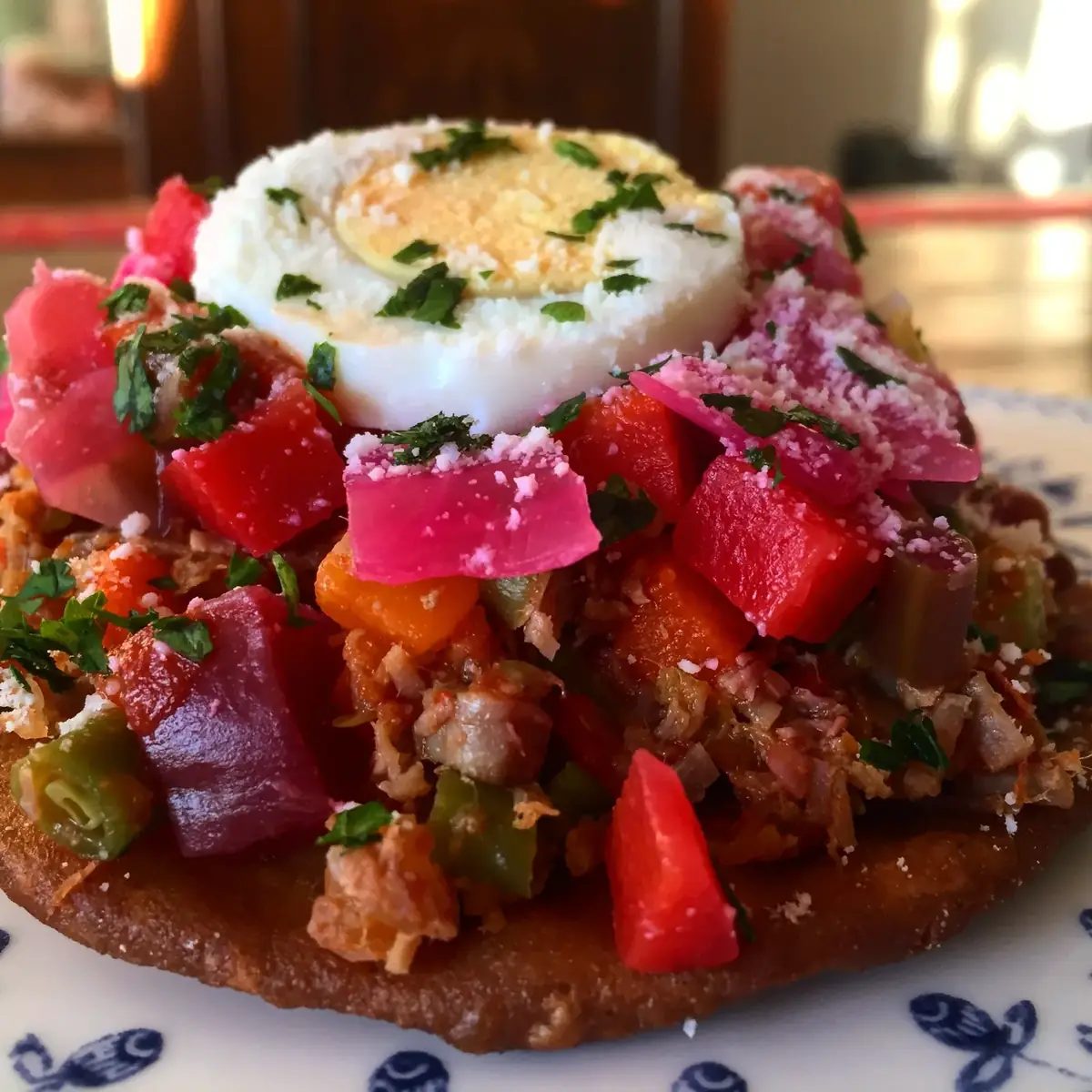
The Real Academia Española (RAE) dictionary gives one definition of enchilada for El Salvador, Guatemala, Honduras, Mexico and Nicaragua: a rolled corn tortilla filled with meat and covered in a tomato sauce with chile. The Guatemalan enchilada in Prensa Libre’s guide to Guatemalan food is something else. The guide lists it first, made with beef or pork (chopped or ground), cheese, slices of hard-boiled egg, tomato sauce and beet, and warns that it is so full it sometimes breaks as you eat it. Our recipe builds it on a fried tostada.
Mole: a sauce in Mexico, a dessert in Guatemala
In the RAE dictionary, mole in Honduras and Mexico is a thick sauce made with different chiles and many other ingredients and spices, and in Mexico also a chicken, turkey or pork stew prepared with that sauce.
Guatemala’s mole de plátano is sweet. Prensa Libre describes mole de plátano as a dessert that uses ripe plantain: the sauce is made with tomato, chile pasa, chile guaque, sesame and pepitoria, sweetened with cinnamon and chocolate and thickened with champurrada, and the fried plantains simmer in it. Guatemala declared jocón, kak’ik, pepián and plátanos en mole part of its intangible cultural heritage in November 2007. Recipe: plátanos en mole.
Pepián and pipián
Prensa Libre counts pepián among Guatemala’s traditional recados. The Ministerio de Cultura y Deportes glossary describes it as a recado of pre-Hispanic origin, made with tomato, pepitoria, chile guaque, chile pasa and other spices, with hen, chicken, pork, beef or turkey. Prensa Libre’s list adds miltomate, allspice, onion, garlic, sesame, a touch of cinnamon, cumin and crumbled bread to thicken it, and vegetables such as güisquil, green beans and potato.
The RAE dictionary records pepián only as a Mexican variant of pipián, which in Mexico is a sauce of ground squash seeds, almonds or toasted corn with green chile, or a meat or poultry stew made with it. Both are built on seeds; the Guatemalan glossary’s version adds tomato and two named chiles, guaque and pasa, where the RAE’s pipián names green chile. Recipe: pepián.
Tamales and chuchitos
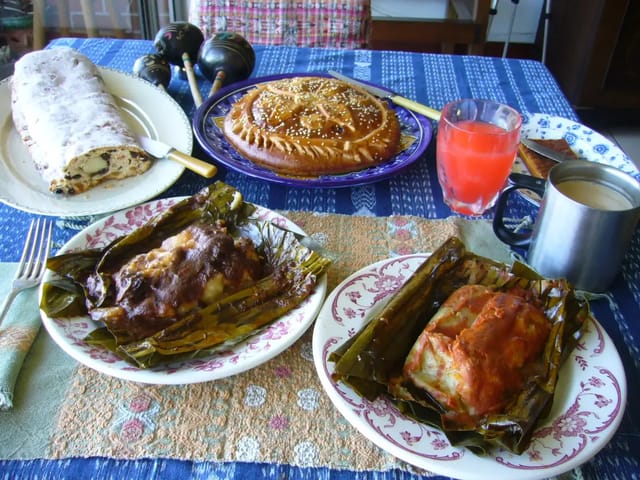
The RAE defines a tamal as corn-masa dough, filled with meat or other ingredients, wrapped in plantain leaves or corn husks, and steamed or baked. Prensa Libre describes Guatemalan tamales made with corn and rice masa and a recado of tomatoes, chiles and spices, wrapped in plantain leaves, and notes that variants of the pre-Columbian tamal are made across Mesoamerica, from Mexico to South America. At the end of the year, AGN writes, the tamales colorados or negros on Guatemalan tables come wrapped in maxán leaves. Prensa Libre adds that some cooks make the masa with rice and that tamales are eaten on Saturdays and at year-end.
The chuchito is the everyday version. The RAE records the word for Guatemala only, as a small kind of tamal, and Prensa Libre gives its formula as masa, recado and meat, eaten at any hour. Recipes: tamales colorados and chuchitos.
Molletes: two different breads
Larousse Cocina’s dictionary of Mexican gastronomy defines a mollete as a bolillo or telera roll cut in half, spread with refried beans, topped with cheese and baked, with salsa added at the table. Prensa Libre describes the Guatemalan mollete as a local variant of the torreja that is distinguished by its filling. Recipe: molletes.
Atol, guacamol: the words change, not the dish
Some differences are only spelling. The RAE gives the same definition, a hot drink of maize flour dissolved in water or milk that can be sweetened or flavoured, under atole for Honduras and Mexico and under atol for Cuba, El Salvador, Guatemala, Honduras, Nicaragua and Venezuela. It records guacamol as the word for guacamole in Costa Rica, El Salvador, Guatemala, Honduras and Nicaragua. Recipes: atol de elote and guacamol chapín. For the spoken language, see Guatemalan Spanish vs Mexican Spanish; for the full list of dishes, the recipes hub.
Sources
- Real Academia Española, Diccionario de la lengua española: enchilada, mole, pipián, pepián, tamal, chuchito, atol, atole, guacamol; read 4 November 2026
- Ministerio de Cultura y Deportes, glossary of recados, read 4 November 2026
- Agencia Guatemalteca de Noticias (AGN), Nochevieja dishes, read 4 November 2026
- Prensa Libre: Qué comer en Guatemala, Los siete platos más ricos de Guatemala, tamales and mollete vs torreja; read 4 November 2026
- Guatemala.com, list of intangible cultural heritage, read 4 November 2026
- Larousse Cocina, mollete, read 4 November 2026
Frequently Asked Questions
Is Guatemalan food the same as Mexican food?
No, although the two kitchens share corn masa, tamales and many dish names. Several shared names mean different dishes: a Mexican mollete is a bolillo with refried beans and cheese, according to Larousse Cocina, while a Guatemalan mollete is a filled variant of the torreja, according to Prensa Libre. Guatemala’s mole de plátano is a dessert of ripe plantain in a sauce with chocolate.
What is the difference between Guatemalan and Mexican enchiladas?
The Real Academia Española dictionary defines an enchilada, for Mexico and four Central American countries including Guatemala, as a rolled corn tortilla filled with meat and covered in tomato sauce with chile. The Guatemalan market enchilada that Prensa Libre describes is a different build: beef or pork, cheese, slices of hard-boiled egg, tomato sauce and beet, so full that it sometimes breaks.
Is pepián the same as mole?
No. Guatemala’s Ministerio de Cultura y Deportes describes pepián as a recado of pre-Hispanic origin made with tomato, pepitoria, chile guaque, chile pasa and other spices, cooked with chicken, hen, pork, beef or turkey. The RAE dictionary’s Mexican mole is a thick sauce of different chiles and many other ingredients and spices. The closest Mexican relative by name is pipián, a sauce of ground squash seeds, almonds or toasted corn with green chile.
Are Guatemalan tamales wrapped in corn husks?
Guatemala’s festive tamales colorados and negros are wrapped in maxán leaves, according to the government news agency AGN, and Prensa Libre describes tamales wrapped in plantain leaves. The RAE dictionary’s general definition of a tamal allows either plantain leaves or corn husks.
Do Guatemalans say guacamole?
The RAE dictionary records guacamol as the word used in Costa Rica, El Salvador, Guatemala, Honduras and Nicaragua for guacamole.