Short version: The federal rule that makes banks identify their customers (31 CFR 1020.220) does not require a Social Security number from a non-US person. For a non-US customer, a bank can record a taxpayer identification number (ITIN), a passport number and country of issuance, an alien ID card number, or the number and country of another government photo ID showing nationality or residence. In 2003 Treasury said its rules neither endorse nor preclude foreign IDs such as consular ID cards. But the rule is risk-based: each bank writes its own program and can ask for more. General information, not legal or financial advice.
If you were looking for which banks accept the matricula consular, this page has no list of banks: we found no official one. What it has is the rule all of those banks must follow, so you can tell what is a legal requirement and what is bank policy.
What the bank must collect before opening the account
The rule requires every bank to have a Customer Identification Program (CIP). Before opening an account, the bank must obtain at least:
| Item | What the rule says |
|---|---|
| Name | — |
| Date of birth | For individuals |
| Address | A residential or business street address. Without one, an APO/FPO box, or the street address of next of kin or another contact person |
| Identification number | For a US person, a taxpayer identification number. For a non-US person, one or more of: a taxpayer identification number; passport number and country of issuance; alien identification card number; or the number and country of issuance of any other government-issued document evidencing nationality or residence and bearing a photograph or similar safeguard |
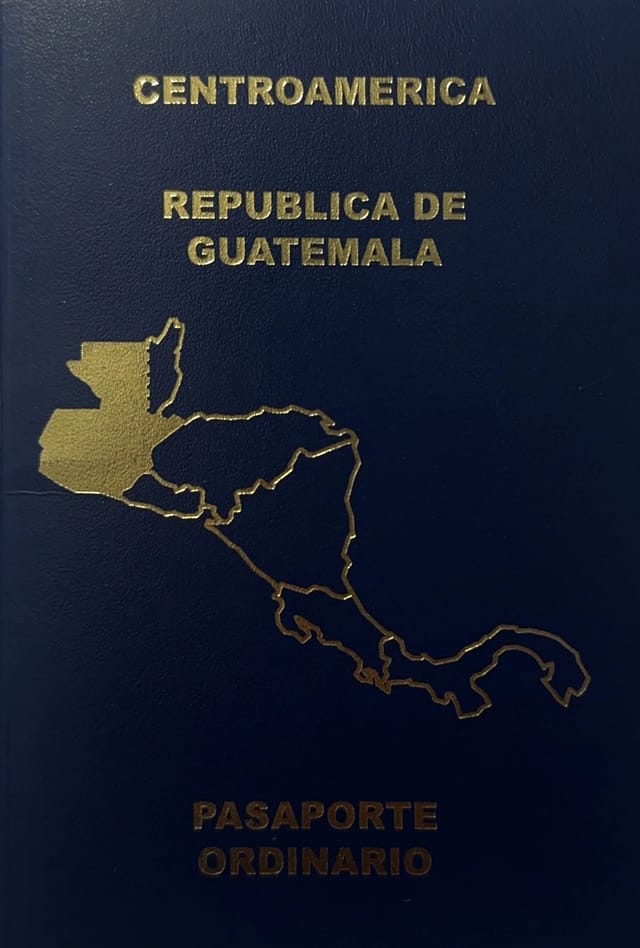
For a Guatemalan, that means a Guatemalan passport satisfies the identification-number element under the federal rule.
If you applied for an ITIN and it hasn’t arrived: the rule lets a bank’s program open the account for a customer who has applied for, but not received, a taxpayer number, provided the bank confirms the application was filed and obtains the number within a reasonable time. How to get an ITIN is covered in ITIN for Guatemalans.
How the bank verifies it’s you
Collecting the number is one step; verifying identity is another. The rule lets each bank use documents, non-documentary methods, or both:
- Documents: for an individual, the rule’s example is unexpired government-issued identification evidencing nationality or residence with a photograph, such as a driver’s license or passport.
- Non-documentary methods: contacting the customer, comparing the customer’s information with a consumer reporting agency or public database, checking references with other financial institutions, or obtaining a financial statement.
- Mandatory for the bank: its non-documentary procedures must cover, among others, cases where a person cannot present unexpired government photo ID, where the bank is not familiar with the documents presented, and where the account is opened without the customer appearing in person.
The program must also say when the bank should not open an account, on what terms an account can be used while verification is pending, and when the bank closes an account after verification fails.
The consular ID card: what Treasury said
In 2003 the Treasury Department ran a public inquiry on two questions, one being whether the rules should bar banks from relying on certain identification issued by foreign governments. The outcome, published in the Federal Register of 25 September 2003:
- About 24,000 comments on foreign IDs, virtually all about the Mexican matricula consular; nearly 83 percent did not want the rule changed to bar such IDs.
- Its conclusion: “As issued, the final rules neither endorse nor preclude reliance on particular forms of foreign government issued identification.”
- It added that, given the range of documents and their changing security, specifying unacceptable documents in the regulation made little sense.
That notice discusses consular ID cards as a group and names the Mexican one; it does not mention the Guatemalan card. It also speaks about the rules as issued in 2003; the current text of 31 CFR 1020.220, summarized above, likewise contains no list of barred documents. Guatemala’s card is officially the Tarjeta de Identificación Consular Guatemalteca (TICG); what MINEX publishes about it, and what is known about its issuance, is on our TICG page.
What to ask before you go
Because the rule is risk-based and each bank builds its own program, the useful answer sits with the bank. Concrete questions that follow from the rule:
- Which identification number do you accept from a non-US person: foreign passport, ITIN, consular ID?
- Which documents do you use to verify identity, and do you accept an expired passport or a document you’re not familiar with, with other verification?
- What address do you need if the customer has no proof of address in their name?
- If the ITIN is pending, will you open the account with proof that it was applied for?
If you’re moving back to Guatemala
Keeping a US account while living in Guatemala is a different problem with different rules: see keeping your US bank account while living in Guatemala. For an account at a Guatemalan bank opened from the US, see opening a USD account in Guatemala from the USA.
Related pages
- ITIN for Guatemalans: Form W-7
- Guatemalan consular ID card (TICG)
- Renew your Guatemalan passport from the US
- Remittance scams and how to get money back
- Guatemalan diaspora services from the US
Sources
Read on 3 October 2026.
| Document | Institution | Link |
|---|---|---|
| 31 CFR 1020.220, Customer identification program requirements for banks (current eCFR text) | Treasury Department (FinCEN) | https://www.ecfr.gov/current/title-31/subtitle-B/chapter-X/part-1020/subpart-B/section-1020.220 |
| Customer Identification Programs for Financial Institutions, disposition of comments, 68 FR 55335 (25 September 2003) | Treasury Department | https://www.federalregister.gov/documents/2003/09/25/03-24226/customer-identification-programs-for-financial-institutions |
General information, not legal or financial advice. Each bank sets its own requirements within the federal rule. En español: Abrir una cuenta de banco en EE. UU. con pasaporte guatemalteco o matrícula consular.
Frequently Asked Questions
Can I open a US bank account without a Social Security number?
The federal rule does not require one from a non-US person. The Customer Identification Program rule (31 CFR 1020.220) has the bank obtain, before opening the account, name, date of birth, address and an identification number. For a non-US person, that number can be one or more of: a taxpayer identification number (such as an ITIN), a passport number and country of issuance, an alien identification card number, or the number and country of another government-issued document evidencing nationality or residence with a photograph. But each bank writes its own risk-based program and can ask for more.
Do banks accept the Guatemalan consular ID card?
It depends on the bank. In 2003, closing a public inquiry that drew about 24,000 comments on foreign IDs (almost all about the Mexican matricula consular), the Treasury Department said its rules neither endorse nor preclude reliance on particular forms of foreign government-issued identification, and that listing unacceptable documents in the rule made little sense. We found no official list of banks that accept the Guatemalan card; ask each bank.
Does an expired Guatemalan passport work?
For documentary verification the rule refers to unexpired government-issued photo ID, such as a driver’s license or passport. Where a customer cannot present one, the same rule requires the bank to have non-documentary verification procedures for that situation. Whether a given bank accepts it is up to that bank’s program.
Do I need an ITIN to open the account?
The rule does not require one from a non-US person: a passport number and country already satisfy the identification-number element. If a bank does ask for a taxpayer number, the rule lets it open the account for someone who has applied but not yet received one, confirming the application was filed and getting the number afterwards.
What address will they ask for?
A residential or business street address. For someone without one, the rule accepts an APO or FPO box number, or the street address of next of kin or another contact person.