A US citizen and a Guatemalan who want to marry in Guatemala deal with two systems: Guatemalan law decides whether the marriage is valid, and US immigration law decides what happens next if the couple wants to live in the United States. This page walks both, using the US Embassy’s own guidance and the Guatemalan Civil Code. For a wedding where both partners are foreigners, see marriage between foreigners in Guatemala. For a Guatemalan marrying in the US, see the single status certificate for a US marriage.
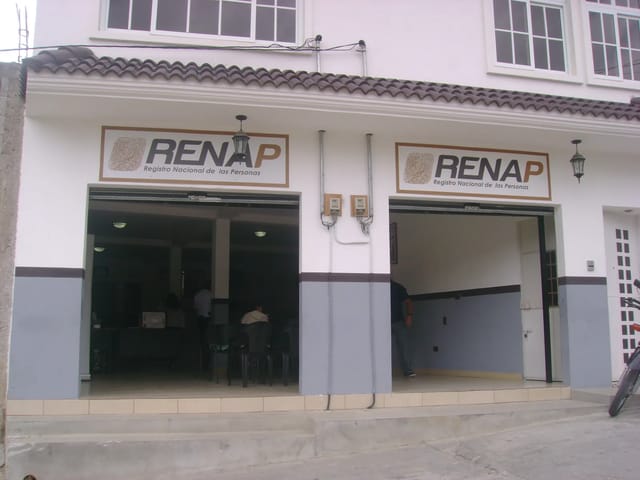
In short: The American brings a passport, an apostilled birth certificate, proof that any earlier marriage ended, and a sworn libertad de estado (freedom to marry) affidavit, which the US Embassy notarizes for $50 by appointment. Because one partner is a foreigner, edicts are published for 15 days before the wedding (Civil Code Art. 96). A mayor or a Guatemalan notary performs it; the act is then registered with RENAP. The Embassy says the marriage’s validity depends on following Guatemalan law. To bring your spouse to the US afterwards, you file Form I-130 (the K-1 visa is not available once you marry abroad).
What the American must bring
From the US Embassy in Guatemala’s marriage page:
| Document | Detail |
|---|---|
| Valid passport | Listed by the Embassy |
| Birth certificate | Listed by the Embassy; apostilled (below) |
| Proof a previous marriage ended, if any | A divorce decree or the former spouse’s death certificate |
| Apostille on every non-Guatemalan document | For federal documents, the State Department’s Authentications and Apostilles office; for state documents, the Secretary of State of the issuing state |
| Affidavit of freedom to marry (libertad de estado) | Sworn by the US citizen and notarized at the Embassy; see below |
The Embassy’s page does not cover translation. For putting US documents into Spanish, see marriage between foreigners in Guatemala and ask the officiant which translation they accept.
The libertad de estado affidavit
The Embassy explains why it exists: Guatemalan law asks for a certificate from a competent authority that there is no impediment to the marriage, and no such document exists in the United States. The Embassy says Guatemalan authorities usually accept, instead, an affidavit written by the US citizen stating they are free to marry, notarized at the Embassy.
- Fee: $50 for the consular notarization, payable in US dollars or quetzales.
- How: a notarial services appointment at the Consular Section, through the Embassy’s appointment system.
- Wording: the Embassy publishes sample Spanish text for the affidavit on its marriage page.
The Civil Code’s rule behind this is Article 96: a foreign spouse (or a naturalized Guatemalan) must reliably prove both identity and freedom to marry.
The 15-day edicts
Article 96 continues: before the wedding, edicts are published in the Diario Oficial and in another newspaper of wide circulation for fifteen days, calling on anyone who knows of a legal impediment to report it. If the wedding does not happen within six months of publication, the edicts lose their legal effect. The Embassy describes the same requirement as publication in the official newspaper for two weeks.
Plan the date around it: the 15 days run before the ceremony, not after.
Who performs the wedding, and the registration
| Officiant (Civil Code Art. 92) | How the act is recorded (Art. 101) | Notice to the registry (Art. 102) |
|---|---|---|
| The municipal mayor or the councillor acting for them | In a special book kept by the municipality | The mayor sends a certified copy within 15 working days |
| A notary legally able to practise | In an acta notarial that must be protocolized | The notary sends a detailed notice within 15 working days |
| A minister of any religion given that power by the corresponding administrative authority | In books authorised by the Ministerio de Gobernación | Same 15 working days |
The Embassy adds that weddings in Guatemala are almost always performed by the municipal mayor or a Guatemalan lawyer, and, as a rule, not on the premises of an American embassy or consulate: «American diplomatic and consular officers are NOT permitted to perform marriages». Registration fees, the civil ceremony at the municipality and what the notary route costs are on civil marriage registration in Guatemala.
Before the ceremony, Article 93 has each partner declare under oath, among other things, their nationality, that they have no legal impediment, and the property regime they choose if they do not bring a separate prenuptial deed.
When a prenuptial agreement is mandatory
Article 118 of the Civil Code lists four cases in which capitulaciones matrimoniales are obligatory (the OAS-hosted copy and the Judicial Branch’s annotated Civil Code, CENADOJ, updated to August 8, 2025, carry the same text):
- Either partner has assets worth two thousand quetzales.
- Either partner earns more than two hundred quetzales a month from a profession, art or trade.
- Either partner administers property of minors or incapacitated persons under their authority.
- The woman is Guatemalan and the man is a foreigner or a naturalized Guatemalan.
Article 119 says the capitulaciones go in a public deed or in an act before the official who performs the marriage, and are registered with the civil registry (and the property registry where relevant) after the wedding. Ask the notary or municipality how they apply these cases to you.
After the wedding: the US side
Validity. The Embassy’s position: «The validity of marriages abroad is not dependent upon the presence of an American diplomatic or consular officer, but upon adherence to the laws of the country where the marriage is performed.»
Get the RENAP certificate. The State Department’s civil-documents page for Guatemala tells immigrant-visa applicants to request marriage certificates from RENAP, and says an annotated birth certificate is not accepted in place of the marriage certificate.
Bringing your spouse to the US. USCIS: a US citizen whose spouse is outside the United States files Form I-130; when it is approved it goes to consular processing, and the embassy provides notification and processing information. USCIS’s fee schedule lists the I-130 at $675 on paper or $625 online. The next steps for a Guatemalan spouse are on:
- Affidavit of support I-864 for a Guatemalan relative
- Immigrant visa interview in Guatemala City
- US immigrant visa pause and Guatemalans: whether visas are being issued
The K-1 route closes. USCIS says a partner is not eligible for a fiancé(e) visa if the couple has already married or plans to marry outside the United States. If you would rather marry in the US, see the K-1 fiancé(e) visa for a Guatemalan partner.
Living in Guatemala instead. If the couple will live in Guatemala, the American’s residency as the spouse of a Guatemalan is covered in the spouse visa for Guatemala, and the path to citizenship in naturalization in Guatemala.
Related
- Register a US marriage in Guatemala: the reverse case, a wedding held in the US
- Recognition of a marriage performed abroad
- Divorcing in Guatemala while living in the USA
Sources, read on 24 September 2026: US Embassy Guatemala, Marriage in Guatemala page (dated October 12, 2023); Código Civil, Decreto-Ley 106, Articles 92, 93, 96, 101, 102, 118 and 119 (OAS-hosted copy, read 21 September 2026; Article 118 also checked against the CENADOJ annotated Civil Code updated to 8 August 2025, read 23 September 2026); USCIS pages on bringing a spouse and on fiancé(e) visas; USCIS fee schedule G-1055, edition 09/09/26; State Department reciprocity and civil documents for Guatemala (Wayback copy of May 11, 2026). General information, not legal advice.
Frequently Asked Questions
Can a US citizen legally marry a Guatemalan in Guatemala?
Yes. The US Embassy in Guatemala says marriages there are almost always performed by local civil officials (the alcalde municipal) or a Guatemalan lawyer, and that the validity of a marriage abroad depends on following the laws of the country where it takes place, not on the presence of a US consular officer. The Embassy adds that US consular officers are not permitted to perform marriages and that, as a rule, marriages are not performed on the premises of a US embassy or consulate.
What documents does the American need?
The Embassy lists a valid passport and birth certificate; proof that any earlier marriage ended (a divorce decree or the former spouse’s death certificate); and apostilles on every non-Guatemalan document. Guatemalan law also asks for proof of freedom to marry, and the Embassy says Guatemalan authorities usually accept an affidavit sworn by the US citizen and notarized at the Embassy, for a $50 notarial fee, by appointment.
Is there a waiting period?
When one partner is a foreigner, Article 96 of the Civil Code requires edicts (public notices) in the Diario Oficial and another newspaper of wide circulation for fifteen days before the wedding, inviting anyone who knows of a legal impediment to report it. The notices lapse if the marriage is not celebrated within six months. The Embassy describes this as two weeks of publication.
Is the marriage valid in the United States?
The Embassy states that the validity of a marriage abroad depends on adherence to the laws of the country where it was performed. Register it with RENAP in Guatemala so that a RENAP marriage certificate exists; US immigration processing for Guatemala asks for marriage certificates from RENAP.
Can I use a K-1 fiancé visa if we marry in Guatemala?
No. USCIS says a partner is not eligible for a fiancé(e) visa if you have already married or plan to marry outside the United States. A US citizen married abroad files Form I-130 ($675 on paper, $625 online on USCIS’s schedule), and the spouse goes through consular processing.
Do we need a prenuptial agreement?
Article 118 of the Civil Code (same text in the OAS-hosted copy and in the Judicial Branch’s annotated Civil Code, CENADOJ, updated to August 8, 2025) makes capitulaciones matrimoniales mandatory in four cases, including when the woman is Guatemalan and the man is a foreigner or naturalized Guatemalan, and when either spouse has assets worth two thousand quetzales or income above two hundred quetzales a month. Ask the notary or municipality how they apply it to your case.