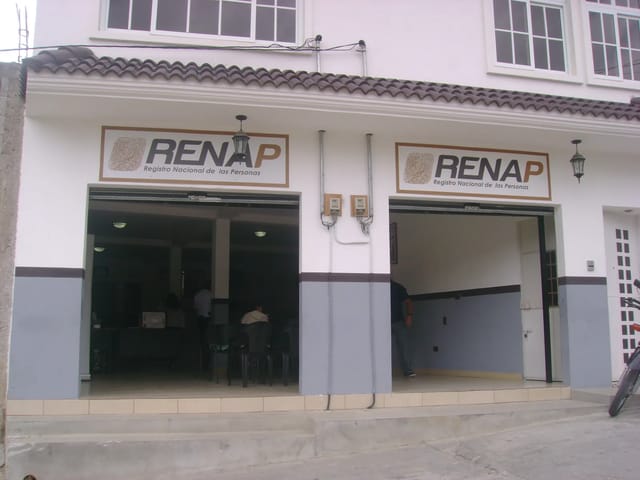
Short version: Guatemala’s Civil Code allows five forms of acknowledging a child (Art. 211). From the US, two don’t require you to appear in Guatemala: (1) by proxy, with an attorney-in-fact in Guatemala who appears before RENAP’s civil registrar with a power of attorney recorded in the Electronic Registry of Powers, or (2) by public deed before a consul who is a qualified notary (Notary Code, Art. 6), whose certified copy (testimonio) is then filed with RENAP. The acknowledgment cannot be revoked by the person who made it and takes effect from the child’s date of birth. General information, not legal advice.
This page is for a father (or mother) living in the US who wants to acknowledge a child whose birth is already registered in Guatemala. If the child was born in the US and isn’t yet registered as Guatemalan, that is a different process: register your US-born child as Guatemalan.
What the law says
Civil Code, Decree-Law 106:
- Art. 210. When parentage does not arise from marriage or a registered de facto union, the father’s is established by voluntary acknowledgment or by a court judgment declaring paternity.
- Art. 211. Voluntary acknowledgment can be made: 1) in the birth record, by appearing before the civil registrar; 2) by special record before that registrar; 3) by public deed; 4) by will; and 5) by admission in court. In the last three cases, the certified copy or certification of the document must be presented to the civil registrar for registration and annotation on the birth record.
- Art. 212. The acknowledgment cannot be revoked by the person who made it.
- Art. 214. Parents may acknowledge jointly or separately; an acknowledgment by one parent only has effect regarding that parent. The parent who did not take part, the child, or a third party with a legitimate interest may challenge it within six months of learning of it; a child who was a minor may contest it within the year after reaching adulthood.
- Art. 215. A parent acknowledging separately need not reveal the other parent’s name. And a father may not acknowledge a child by attributing maternity to a woman married to someone else, unless the husband challenged paternity and won. (RENAP has a separate procedure for that case.)
- Art. 217. A minor father cannot acknowledge a child without the consent of whoever holds parental authority over him or the person under whose guardianship he is, or, failing that person, without court authorization.
- Art. 227. Acknowledgment is declarative and takes effect from the child’s date of birth.
The routes, one by one
| Route | Travel needed? | Who appears before RENAP | Basis |
|---|---|---|---|
| By proxy before the civil registrar | No | Your attorney-in-fact in Guatemala | Art. 211 (2) and RENAP’s procedure |
| Public deed before a consul who is a qualified notary, then registration | No (signed at the consulate) | Whoever files the certified copy | Art. 211 (3), Notary Code Art. 6 and RENAP’s procedure |
| In person before the civil registrar | Yes | You | Art. 211 (1 and 2) and RENAP’s procedure |
| Will or admission in court | — | — | Art. 211 (4 and 5); not covered on this page |
1. By proxy: your attorney-in-fact at RENAP
First you grant the power of attorney (mandato) from the US. How a power of attorney is granted at a consulate, and what is known about its notarization in Guatemala, is in our consular power of attorney guide. For this route, RENAP requires the power to be recorded in the Electronic Registry of Powers of the General Archive of Notarial Records.
What RENAP lists on its page Reconocimiento por medio de mandato ante el Registrador Civil de las Personas:
- The attorney-in-fact appears in person with the certified copy of the power of attorney, duly recorded in the Electronic Registry of Powers, original and photocopy, and their own DPI, in good condition and valid.
- DPI of the father and of the mother, in good condition and valid.
- A current certificate of the birth registration of the person being acknowledged.
- A record before the civil registrar in which the attorney-in-fact states under oath the capacity in which they act.
RENAP publishes the form for that statement, the Declaración Jurada Administrativa de Reconocimiento por Medio de Mandato (annex 9). In it the attorney-in-fact states that they act on behalf of the parent who granted the power, identifies that power as “debidamente registrado en Guatemala” (duly registered in Guatemala), and fills in the child’s birth registration data and the mother’s ID. The form warns that it is not accepted with crossings-out, erasures, overwriting, or without a signature or fingerprint.
What the registrar reads in the power: RENAP’s form has the attorney-in-fact act “con las facultades otorgadas en el referido mandato” (with the powers granted in that mandate), so the acknowledgment rests on what the power says. RENAP does not publish model wording; the lawyer or consulate drafting the power is where to confirm it covers appearing before the civil registrar to acknowledge that child.
2. Public deed before a consul, then registration
The Notary Code (Art. 6) says notarial functions may also be exercised by “Los cónsules o los agentes diplomáticos de la República, acreditados y residentes en el exterior, que sean notarios hábiles conforme, esta ley” (the Republic’s consuls or diplomatic agents, accredited and resident abroad, who are qualified notaries under this law). Two practical consequences:
- Not every consul can authorize the deed: only one who is a qualified notary. When you book, ask the consulate whether its consul authorizes public deeds of acknowledgment. How to book: Guatemalan consulate appointments in the US.
- The deed alone does not change the birth record. Art. 211 requires the certified copy to be presented to the registrar for registration.
For Inscripción de reconocimiento notarial, RENAP asks for the certified copy of the public deed, original and duplicate, showing the birth registration data or CUI of the person acknowledged. Make sure the deed includes them.
3. In person, if you travel to Guatemala
For acknowledgment in person at the civil registry, RENAP asks for the DPI of the father and of the mother making the acknowledgment, in good condition and valid, a current certificate of the child’s birth registration, and the record before the civil registrar in which the parent states under oath the paternity or maternity claimed. RENAP publishes the application form and the sworn statement for this route.
What RENAP asks for in every registration
All three RENAP pages cite Article 16 of Board Agreement 104-2015 (Civil Registry Registration Regulations): every registration needs the RENAP form, where one exists for that type of registration, and proof of payment for late registration, where applicable. The in-person page adds Article 7 of those regulations: RENAP may ask for additional documentation to resolve an application.
ID: RENAP’s pages cite an Article 38 under which, without a DPI because of theft, loss or damage, a certification of the DPI is accepted, and foreigners identify themselves with a valid passport.
Costs that are published
From RENAP’s fee schedule (Board Agreement 15-2020 and amendments):
| Service | Fee |
|---|---|
| Birth registration certificate (in Guatemala) | Q15.00 |
| Birth registration certificate requested abroad (consulate, mobile consulate or online) | US$6.00 |
| Late registration (except when ordered by a competent judge) | Q25.00 |
The schedule adds a 25% surcharge when a service is paid online by card. We found no separate fee for registering an acknowledgment on RENAP’s acknowledgment pages, nor which acknowledgments count as late. What the consulate charges for the deed or the power, the lawyer’s fee, or the General Archive of Notarial Records fees are not on those pages; for recording the power, see our consular power of attorney guide.
You can order the birth certificate from the US: Guatemalan birth certificate from the US.
If the other parent disagrees
Voluntary acknowledgment is an act of the parent making it, but the law gives the other parent, the child and third parties with a legitimate interest deadlines to challenge it (Art. 214, above). Where paternity is disputed, the route is a court judgment (Art. 210). Child support is a separate matter: a Guatemalan child support order when you live in the USA.
Related pages
- Consular power of attorney from the US
- Register your US-born child as Guatemalan
- Guatemalan birth certificate and apostille from the US
- Hiring a lawyer in Guatemala from the USA
- Guatemalan diaspora services from the US
Sources
Read on 3 October 2026.
| Document | Institution | Link |
|---|---|---|
| Civil Code, Decree-Law 106 (Arts. 210-217, 227) | Copy published by the OAS; Art. 211 matches the CENADOJ annotated Civil Code | https://www.oas.org/dil/esp/codigo_civil_guatemala.pdf |
| Notary Code, Decree 314 (Art. 6) | Copy published by the Registry of Legal Persons (MINGOB) | https://repeju.gob.gt/wp-content/uploads/2025/10/Codigo_de_Notariado_Decreto_No._314.pdf |
| Reconocimiento por medio de mandato ante el Registrador Civil de las Personas, and its sworn statement (annex 9) | RENAP | https://www.renap.gob.gt/servicios/reconocimiento-por-medio-de-mandato-ante-el-registrador-civil-de-las-personas |
| Inscripción reconocimiento notarial | RENAP | https://www.renap.gob.gt/servicios/inscripcion-reconocimiento-notarial |
| Inscripción de reconocimiento de manera personal en el Registro Civil de las Personas | RENAP | https://www.renap.gob.gt/servicios/reconocimiento-de-manera-personal-en-el-registro-civil-de-las-personas |
| RENAP fee schedule (Board Agreement 15-2020 and amendments) | RENAP | https://www.renap.gob.gt/sites/default/files/Comunicacion-Social/pdf/tarifario-renap.pdf |
RENAP’s pages blocked direct requests on 3 October 2026 and were read through a text proxy; the Judiciary’s server did not respond that day, so the Notary Code was read in the Registry of Legal Persons’ copy. General information, not legal advice: a Guatemalan lawyer can review the power of attorney or the deed before you sign. En español: Reconocer a un hijo en Guatemala desde Estados Unidos.
Frequently Asked Questions
Can I acknowledge my child in Guatemala while living in the US?
Yes. The Civil Code (Art. 211) allows voluntary acknowledgment in the birth record before the civil registrar, by special record before that registrar, by public deed, by will, or by admission in court. From the US there are two routes where you do not appear before RENAP yourself: acknowledgment through a proxy (mandato), where your attorney-in-fact appears before the civil registrar, and an acknowledgment made by public deed (for example before a consul who is a qualified notary), whose certified copy is then filed with RENAP for registration.
What does my proxy need to acknowledge my child at RENAP?
According to RENAP: to appear in person with the certified copy (testimonio) of the power of attorney, recorded in the Electronic Registry of Powers of the General Archive of Notarial Records, original and photocopy, plus their own valid DPI; the DPI of the father and of the mother, in good condition and valid; a current certificate of the birth registration of the person being acknowledged; and a sworn record before the civil registrar stating the capacity in which they act. RENAP publishes the form for that sworn statement (annex 9).
Can the Guatemalan consul draw up the acknowledgment deed?
The Notary Code (Art. 6) allows consuls or diplomatic agents of Guatemala, accredited and resident abroad, who are qualified notaries under that law, to act as notaries. So it depends on whether the consul at your consulate is a qualified notary. Ask the consulate before the appointment. The certified copy of the deed is then filed with RENAP, original and duplicate, showing the child’s birth registration data or CUI.
Can an acknowledgment be undone?
Not by the person who made it: the Civil Code (Art. 212) says the acknowledgment cannot be revoked by the one who made it. It can be challenged by the parent who did not take part, by the child, or by a third party with a legitimate interest, within six months of learning of it; and a child who was a minor can contest it within the year after reaching adulthood (Art. 214).
How much does it cost?
On the acknowledgment pages we checked, RENAP lists no fee for registering it. For every registration it asks for the RENAP form where one exists and proof of payment for late registration where applicable; its fee schedule puts late registration at Q25.00 (except when ordered by a judge). A birth certificate costs Q15.00 in Guatemala and US$6.00 when requested at a consulate or online from abroad. What the consulate, notary or lawyer charges is not on those pages.