
Panama built a purpose-made short-stay visa for remote workers and attached a hard income floor to it. Guatemala took the opposite path: no dedicated “nomad visa” brand, but a general temporary residency that remote workers use — with a published floor of US$2,000/month from a foreign employer and fees of $25 to file plus $200-$500 by residency term — plus the 90-day tourist stamp most nomads actually run on. Add a genuinely split internet picture (Panama wins fixed, Guatemala wins mobile) and a real cost gap, and the choice is less one-sided than the marketing suggests. Here is the side-by-side, built on Panama’s official requirements sheet and our Guatemala canon pages.
Weighing the two countries for retirement rather than remote work? That is a different decision with different visas — see Guatemala vs Panama for retirees.
Guatemala vs Panama for remote workers at a glance
| Factor | Guatemala | Panama |
|---|---|---|
| Remote-work route | Temporary residency used by remote workers (Código de Migración, Art. 75 a + Reglamento de Residencias, Acuerdo IGM-016-2025, Art. 11); most short-stayers use the 90-day CA-4 tourist stamp | Visa de Corta Estancia como Trabajador Remoto — purpose-built short-stay remote-worker visa (Decreto Ejecutivo No. 198 de 2021) |
| Income floor | US$2,000/month from abroad (US$3,000 with dependents) — Acuerdo IGM-016-2025, Art. 11 numeral 2 | ≥ B/.36,000/year (≈ US$36,000) foreign-source; employer letter must state ≥ B/.3,000/month |
| Duration | Residency: 1 year, extendable · tourist stamp: 90 days, extendable | 9 months, extendable once for the same period (18 months max) |
| Government fees | $25 USD to file + residency term fee $200 (1 yr) / $300 (2 yr) / $500 (3-5 yr), Tarifario IGM-029-2023 | B/.250 to Migración + B/.50 carné |
| Median internet (Ookla via DataReportal, 12 months to Aug 2025) | Fixed 80.70 Mbps · Mobile 56.58 Mbps | Fixed 185.94 Mbps · Mobile 32.43 Mbps |
| Currency | Floating quetzal (GTQ) — FX exposure for dollar earners | US dollar (balboa pegged 1:1, coins only) — no FX risk |
| Tax on foreign remote income | Territorial — generally not taxed locally; US citizens still owe US tax | Territorial — exempt even if remitted; US citizens still owe US tax |
| Cost band, 1BR (relocation-source ranges) | Antigua $400-$900/mo | Panama City center ~$1,100/mo; Boquete/Coronado from ~$700-$900 |
| Scene | Smaller, tighter (Antigua, Lake Atitlán, GC Zona 10 / 4 Grados Norte); more Spanish needed | Larger, more polished expat ecosystem; easier banking |
Panama’s remote-worker visa: what the official sheet requires
Panama’s route is the Visa de Corta Estancia como Trabajador Remoto (Short-Stay Visa as a Remote Worker), a No Residente category created by Decreto Ejecutivo No. 198 of 7 May 2021, on the base of Decreto Ley 3 de 2008 and Decreto Ejecutivo 320/2008. The official requirements sheet from the Servicio Nacional de Migración sets the terms:
- Who qualifies: you work for a transnational company registered abroad, or you are self-employed — in either case your functions take effect abroad and your income comes from a foreign source.
- Income floor: annual income of at least B/.36,000 (the balboa is pegged 1:1, so roughly US$36,000). Employed applicants need an employer letter stating monthly income of at least B/.3,000, paid from a foreign source.
- Duration: 9 months, extendable once for the same period — 18 months maximum. The visa grants the right to work remotely from Panama with no additional permit from any other state entity.
- Fees: B/.250 to the Servicio Nacional de Migración plus B/.50 for the carné.
The dossier is notarized and lawyer-shaped: a notarized power of attorney and application (including your parents’ names), three photos, a notarized or authenticated passport copy, a criminal-record certificate, a health certificate, a sworn personal-background form, a commitment to cover your repatriation costs, and a health-insurance policy covering Panama for the whole stay. Employees add certification that the foreign company exists where it is registered, plus the employer letter covering position, functions, income, remote modality, and the repatriation commitment.
The self-employed variant swaps the company documents for certification of your own foreign-registered company plus a notarized sworn declaration describing your client relationships — names, services, amounts, source of funds, and payment periodicity. Income is proven either with a bank certification that the money is foreign-source and tied to the declared work, or with authenticated bank statements showing the transfers. Foreign documents must be apostilled or authenticated, and the extension repeats the same requirements, income proof included.
One clause deserves emphasis: applicants sign a sworn declaration not to accept work or provide services in Panama. The visa is strictly for foreign-source work.
Guatemala’s routes: the 90-day stamp and the 1-year residency
First, a correction to something repeated all over nomad forums: Guatemala does have a residency route that remote workers use — it is just not packaged as a branded “digital nomad visa.” It is a temporary residency under the Código de Migración (Art. 75 a) with its requirements in the Reglamento de Residencias Guatemaltecas, Acuerdo IGM-016-2025 (Art. 11), and the full guide to Guatemala’s digital nomad residency covers documents and process. The two realistic options:
- The 90-day CA-4 tourist stamp, issued on arrival to US, Canadian, UK, and EU passport holders among others, and extendable. When it runs out, many nomads reset it — mechanics and pitfalls in the CA-4 border run guide. This is what most short-stay nomads actually use. What the instruments say about actually working on that stamp — and the US$2,000/month floor IGM published for the foreign-employer residency in Acuerdo IGM-016-2025 — is traced article by article in can you work remotely in Guatemala on a tourist stamp?
- The temporary residency remote workers use: 1 to 5 years (Código de Migración, Art. 75 a), with a published income floor for the foreign-employer case of US$2,000/month from abroad, US$3,000 with dependents (Acuerdo IGM-016-2025, Art. 11 numeral 2), and government fees of $25 to file plus the term fee of $200 (1 yr) / $300 (2 yr) / $500 (3-5 yr) (Tarifario IGM-029-2023, numerals 3.1 and 3.3.1-3.3.3).
The contrast writes itself. Panama demands US$36,000 per year of proven income and about $300 in government fees for 9 (+9) months; Guatemala’s route publishes US$2,000 per month (US$24,000 over twelve months by arithmetic — the Reglamento publishes only the monthly figure) and charges $25 to file plus $200 for a one-year residency. The honest trade: Panama’s is a polished, purpose-built program with your remote-work right spelled out in the decree; Guatemala’s is a general temporary-residency mechanism that remote workers have adopted — slower, paper-heavy, and in person.
Internet: Panama wins fixed, Guatemala wins mobile
Per Ookla data as reported by DataReportal (twelve months to August 2025):
| Median download | Guatemala | Panama |
|---|---|---|
| Fixed broadband | 80.70 Mbps (+54.2% YoY) | 185.94 Mbps (+22.4% YoY) |
| Mobile | 56.58 Mbps (+42.4% YoY) | 32.43 Mbps (+48.8% YoY) |
Both sides of this are real. Panama’s fixed lines are much faster at the median — more than double Guatemala’s. Guatemala’s mobile median is markedly faster than Panama’s. And both countries are improving quickly year over year.
A median is not what you will actually buy, though — national medians include rural lines. In Guatemala’s cities, fiber plans reach 100-1000 Mbps, far above the national median, and Lake Atitlán runs on cable or Starlink. Provider-by-provider detail, prices, and town-level reality are in the Guatemala internet speed guide and the Starlink in Guatemala guide. Country data pages: DataReportal Guatemala and DataReportal Panama.
Money: taxes, currency, and what it costs
Tax. Both countries use territorial taxation: foreign-source remote income is generally not taxed locally. Panama’s version is one of the most generous — foreign income is exempt even if you bring it into Panama. US citizens owe US tax on worldwide income regardless of which flag they sit under; the US-side mechanics are in our guide to US taxes while working remotely from Guatemala.
Currency. Panama uses the US dollar as everyday money (the balboa is pegged 1:1 and circulates only as coins), so dollar earners carry no FX risk. Guatemala uses the floating quetzal, so dollar earners carry exchange-rate exposure — which also means your dollar stretches when the quetzal is favorable.
Cost. On a like-for-like basis, Panama generally runs more expensive. Typical ranges from relocation sources — not government statistics: a Panama City 1BR in the center runs ~$1,100/month, with interior hubs like Boquete and Coronado from ~$700-$900; in Guatemala, an Antigua 1BR runs $400-$900. Line-item budgets for the Guatemala side are in the cost of living in Guatemala guide and the Antigua cost of living guide.
The scene: where nomads actually base
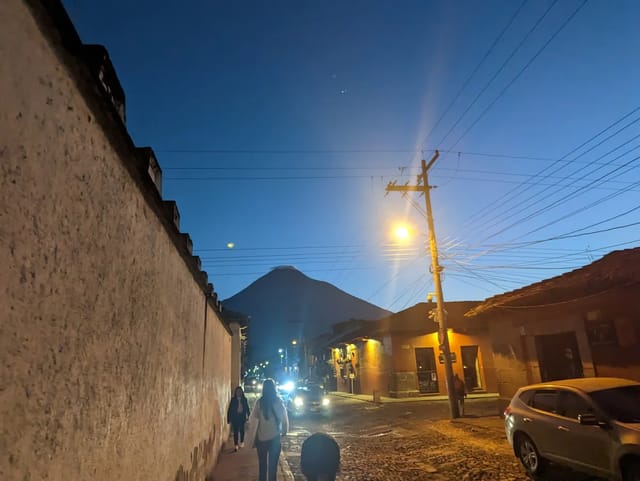
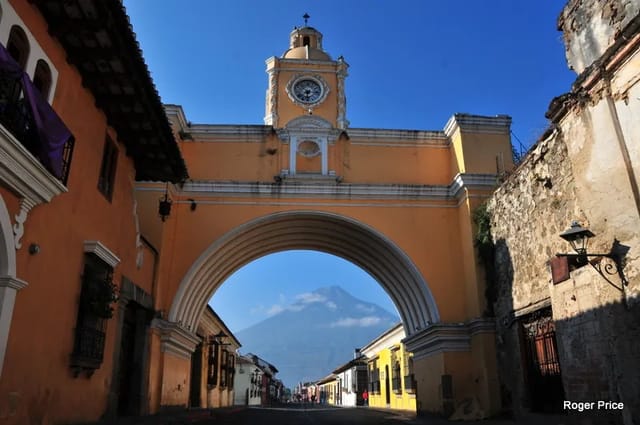
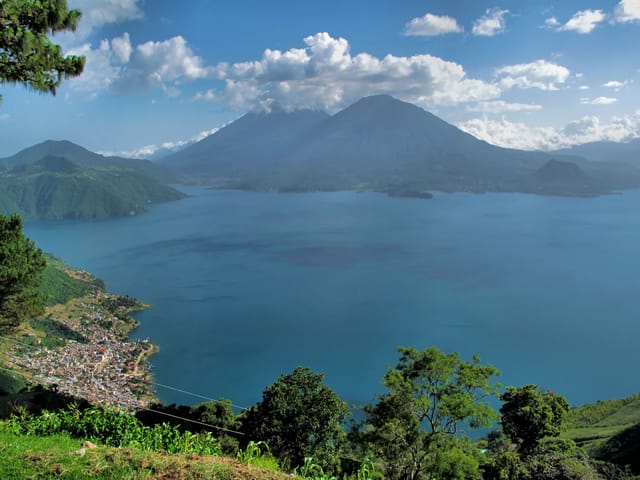
Guatemala’s nomad geography is compact: Antigua is the hub — see coworking in Antigua and the best laptop-friendly cafés in Antigua — with Lake Atitlán as the slower-paced alternative and Guatemala City’s Zona 10 and 4 Grados Norte for city energy (laptop-friendly cafés in Guatemala City). It is a smaller, tighter scene, and more Spanish helps. For the question every nomad asks first, see Is Guatemala safe for digital nomads?
Panama’s expat ecosystem is larger and more polished, with easier banking — the standing draw of a USD economy plugged into international finance.
One practical note: Panama’s visa requires a health-insurance policy covering the country for your entire stay. For coverage options on the Guatemala side, see the travel insurance for Guatemala guide.
Pick Panama if… pick Guatemala if…
Pick Panama if:
- You clear the US$36,000/year income floor comfortably and want a purpose-built visa with the right to work remotely spelled out in the decree.
- Your work leans on fast fixed broadband wherever you land — a 185.94 Mbps national median is a different baseline from 80.70.
- You want a USD economy with no FX risk and easier banking.
- You value the most generous territorial-tax setup — foreign income exempt even when remitted.
Pick Guatemala if:
- Your provable foreign income clears US$2,000/month but not Panama’s US$36,000/year: Guatemala’s published floor is the lower of the two, and the 90-day tourist stamp needs no income documentation at all up front.
- Budget is the constraint: an Antigua 1BR at $400-$900 versus Panama City at ~$1,100 changes a monthly runway.
- You work mobile-first, or from city fiber (100-1000 Mbps plans), rather than depending on the national fixed median.
- You want the Antigua-Atitlán texture: a smaller, tighter scene where more Spanish goes further.
On taxes, it is close to a tie — both are territorial, and Americans owe the IRS either way. This is a framework, not legal advice: confirm the current rules with Panama’s official requirements sheet and Guatemala’s nomad residency guide before you book flights.
Frequently Asked Questions
Does Guatemala have a digital nomad visa?
Yes — just not packaged under that brand. Guatemala’s remote-worker route is a temporary residency under the Código de Migración (Decreto 44-2016, Art. 75 a) and the Reglamento de Residencias (Acuerdo IGM-016-2025), granted for 1 to 5 years. For a foreign employer, Art. 11 numeral 2 of that Reglamento publishes an income floor of US$2,000 per month from abroad, or US$3,000 with dependents. Government fees are US$25 to file plus the residency term fee — US$200 for 1 year, US$300 for 2 years, US$500 for 3 to 5 years (Tarifario IGM-029-2023, numerals 3.1 and 3.3.1 to 3.3.3). Most short-stay nomads simply use the 90-day CA-4 tourist stamp instead, extending it or doing a border run.
How much income do you need for Panama's remote worker visa?
Panama’s Visa de Corta Estancia como Trabajador Remoto requires foreign-source annual income of at least B/.36,000 — the balboa is pegged 1:1 to the US dollar, so about US$36,000. If you are employed, the employer letter must state monthly income of at least B/.3,000 paid from a foreign source. Self-employed applicants replace the company documents with certification of their own foreign-registered company and a notarized sworn declaration describing their client relationships. Guatemala’s residency route publishes a monthly floor instead, and a lower one: US$2,000/month from abroad, US$3,000 with dependents (Acuerdo IGM-016-2025, Art. 11 numeral 2).
How long can a remote worker stay in each country?
Panama’s remote-worker visa runs 9 months, extendable once for the same period — 18 months maximum, with the extension repeating the full requirements including income proof. Guatemala offers a 90-day CA-4 tourist stamp on arrival (extendable, with border runs as the fallback) or the temporary residency used by remote workers: 1 year, extendable.
Which country has faster internet, Guatemala or Panama?
It is genuinely split. Per Ookla data as reported by DataReportal (twelve months to August 2025), Panama’s median fixed download is 185.94 Mbps versus Guatemala’s 80.70 Mbps — much faster at the median. But Guatemala’s median mobile download is 56.58 Mbps versus Panama’s 32.43 Mbps, and both countries are improving fast. National medians include rural lines: in Guatemalan cities, fiber plans reach 100-1000 Mbps, far above the national median.
Do digital nomads pay local income tax in Guatemala or Panama?
Both countries use territorial taxation, so foreign-source remote income is generally not taxed locally. Panama runs one of the most generous versions — foreign income is exempt even if you bring it into Panama. US citizens still owe US tax on worldwide income in either country. Note that Panama’s remote-worker visa also requires a sworn declaration not to accept work or provide services inside Panama — it is strictly for foreign-source work.
Is Guatemala or Panama cheaper for a digital nomad?
On a like-for-like basis, Panama generally runs more expensive. Typical ranges from relocation sources — not government statistics: a Panama City 1BR in the center runs about $1,100/month, with interior hubs like Boquete and Coronado from about $700-$900, while an Antigua Guatemala 1BR runs $400-$900. Panama’s US-dollar economy removes FX risk; Guatemala’s floating quetzal adds exposure but also means your dollar stretches when the rate is favorable.