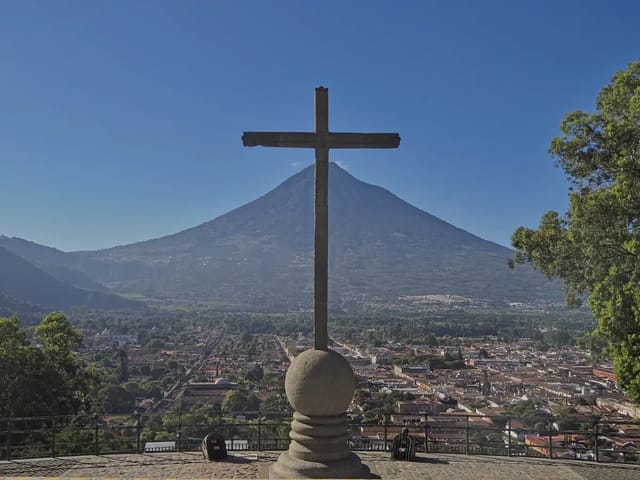
Antigua is among the safest cities in Guatemala and one of the safest in Central America. Sacatepéquez department scores 8/10 on our safety index — "Very Safe" — with an estimated homicide rate of approximately 3 per 100,000 residents, versus a national average of 16–20. For tourists and expats, petty theft on cobblestone streets is the primary concern. Violent crime against visitors is rare. POLITUR (tourist police) maintain a visible, continuous presence in the historic center.
The Data: Sacatepéquez vs Guatemala
The safety data for Guatemala comes from MININT homicide records processed through INE, cross-referenced with US State Department travel advisories. Sacatepéquez is consistently one of the lowest-crime departments in the country.
| Department | Safety Score | Rating | Notes |
|---|---|---|---|
| Sacatepéquez (Antigua) | 8 / 10 | Very Safe | Tourist police, low homicide rate (~3/100K est.), petty theft is main risk |
| Chimaltenango | 6 / 10 | Generally Safe | Mostly transit area between Antigua and Lake Atitlán, quiet towns |
| Guatemala (dept.) | 5 / 10 | Mixed | Zones 10/14/15/16 very safe; zones 18/21 and city outskirts avoid at night |
| Escuintla | 4 / 10 | Caution | Pacific coast beach towns OK for day trips; city has higher crime |
| National average | ~5 / 10 | Mixed | 16–20 homicides per 100K; heavily concentrated in metro zones and Atlantic corridor |
Sacatepéquez’s score of 8/10 is the highest of any department in this dataset, tied only with Totonicapán (indigenous highlands, very low crime) and matched by Sololá (Lake Atitlán towns). The department has been in the “Very Safe” rating band consistently since 2020.
What drives the low numbers: Antigua’s economy is almost entirely tourism-dependent. The municipal government and INGUAT have strong incentives to maintain a safe environment — and it shows. POLITUR officers walk the central grid in pairs from 6 AM to 2 AM. Security cameras cover the Parque Central and main commercial streets. Organized crime activity in the area is extremely low compared to Guatemala’s Pacific and Atlantic departments.
For national context, see our Guatemala safety overview.
Block-by-Block Reality
Antigua is small enough — roughly 12 blocks by 12 blocks in the central zone — that “block-by-block” analysis is genuinely useful. The risk profile changes meaningfully across short distances.
Centro Histórico (Plaza Central + surrounding streets)
The area within 3–4 blocks of Parque Central is Antigua’s most secured zone. POLITUR maintains a booth at the park and regular foot patrols on 5a Avenida Norte, 4a Calle Oriente, and the main pedestrian streets. During the day, this area is as safe as any tourist center in Mexico or Colombia’s main cities — watch for pickpockets in crowded moments, especially during market days or when tour groups pass through. At night until around midnight, the area is still active with restaurants and well-lit foot traffic. After midnight, the risk calculus shifts as bar crowds thin out and visibility decreases.
Plaza Central and the main market (daytime)
The Plaza Central itself is heavily patrolled and genuinely safe for wandering during daylight hours. The adjacent Mercado de Artesanias (craft market) has the pickpocket density you’d expect in any market — keep bags in front, phones in pockets, cameras around your neck rather than in bags. Opportunistic theft from bags set down on market stalls or cafe chairs is more common than confrontational theft.
Calzada Santa Lucía (4a Calle Poniente)
This is Antigua’s main commercial crossing and a key pedestrian thoroughfare. During the day it’s crowded and fine. The section near the chicken bus terminal (between 7a and 9a Avenida) becomes a pickpocket zone — not dangerous, but actively targeted by petty thieves working the crowded departure area. If you’re catching a chicken bus, secure your bag before getting to the terminal, not at it.
San Felipe de Jesús
San Felipe sits slightly north and east of the central grid. It is a calm residential neighborhood with minimal reported incidents. Evening walks in San Felipe are lower risk than, say, the bar strip on 5a Avenida after midnight. The area feels like a Guatemalan neighborhood rather than a tourist zone — which it mostly is.
Jocotenango
Jocotenango, directly north of Antigua and functionally continuous with the city, has a higher petty theft rate than the historic center — particularly after dark. It is not dangerous by Guatemalan standards, but you should exercise the same awareness you would in an unfamiliar urban area at night: walk in groups, use tuk-tuks for late returns, keep phones out of back pockets. The main road through Jocotenango has decent lighting; the side streets are less well-lit.
Calle del Arco (5a Avenida Norte, the arch area)
The famous arch connecting the Santa Catalina convent to the street is a major photo stop and tourist concentration point during the day — safe and well-watched. At night, it becomes the anchor of Antigua’s bar strip. Concentration of tourists plus alcohol plus later hours equals opportunistic theft risk. The specific pattern: phones left on tables while people take photos, bags hung on chair backs, and distraction approaches near bar doorways. Stay aware; don’t leave valuables unattended. Violent crime at the arch is not a pattern.
Night Zones: When and Where to Be Careful
The historic center’s risk increases meaningfully after midnight — not because violent crime spikes, but because the protective factors (crowds, open businesses, POLITUR visibility) diminish. Three specific patterns emerge in the late-night window:
5a Avenida Norte between bars after midnight. The bar strip concentrates tourists in a way that attracts opportunistic theft. The specific approach: a stranger strikes up a conversation, walks with you, and an accomplice uses the distraction to grab a bag or phone. It is not aggressive — it is theatrical. The tell is being approached by someone very interested in talking to you after midnight when you are clearly a tourist heading somewhere.
ATM approaches. If someone positions themselves near an ATM while you use it — an “amigo” who wants to help, an ATM “security guard” in plain clothes — that is a scam pattern. Cover your PIN, take your card, and complete the transaction before engaging with anyone around you. Use ATMs inside Farmacias Galeno, Dispensa Familiar, or bank lobbies (Banrural, G&T Continental on 5a Calle Poniente).
Late tuk-tuks vs Uber. After 1 AM, Uber is the better option over street-hail tuk-tuks. Not because tuk-tuk drivers are dangerous — most are not — but because the Uber record creates accountability and the routes are tracked. The risk with street-hail tuk-tuks very late at night is low in absolute terms but unnecessary when Uber is available and similarly priced.
The Worst Part Nobody Talks About
Tourist Police and Emergency Numbers
POLITUR (Policía de Turismo) is the primary safety resource for visitors in Antigua. They are specifically trained to assist tourists, speak some English, and patrol the historic center continuously.
POLITUR Antigua station: Located on 4a Calle Oriente, half a block from Parque Central. Open 24 hours. You can report theft, request an escort, or ask for directions to the nearest consulate.
Emergency contacts:
| Service | Number |
|---|---|
| PNC (National Police) | 110 |
| Fire Department (Bomberos Voluntarios) | 122 |
| Emergency / Ambulance | 1212 |
| POLITUR (tourist police) | 1500 |
| Cruz Roja (Red Cross) | 125 |
For the full directory of emergency contacts by department, see our Guatemala emergency numbers page.
Petty Crime and Scam Patterns
The scams that affect tourists in Antigua are consistent year-over-year. None of them are violent. All of them work on inattention or trust.
Phantom tour operators at Parque Central. Individuals approach tourists offering Pacaya or Acatenango climbs, Hobbitenango trips, or Chichicastenango market runs at prices noticeably below market. The issue ranges from overpriced and under-delivered tours to outright no-shows after payment. Book through INGUAT-registered agencies on 5a Avenida (Adrenalina Tours, Old Town Outfitters, and similar established operators) or through your hotel. Legitimate guides carry an INGUAT badge — ask to see it.
Fake police inspections. Two men in plain clothes approach and say they are police conducting an anti-drug or anti-counterfeit inspection. They ask to see your wallet to verify your currency is real. This is not how Guatemalan police operate. Real police wear uniforms, do not conduct wallet inspections on tourists, and do not approach foreign visitors this way. If this happens: do not open your wallet. Say “Quisiera ver su carnet policial” (I’d like to see your police ID) and walk directly toward any uniformed officer or the POLITUR station.
The coffee spill / distraction theft. Someone bumps into you or spills something on you and is very apologetic and helpful — while an accomplice grabs your bag, phone, or camera from behind or from the ground. The variation: someone points to something on the ground near your feet, and while you look, the bag on your shoulder is gone. The fix is simple: keep bags in front or secured between your feet at cafes.
Tuk-tuk price switching. Quote given verbally before the ride, different amount requested at destination. Always confirm the price before getting in and have exact change. Standard within-Antigua price is Q10–20 (approximately $1.30–2.60 USD). Q30+ is tourist pricing for short hops.
Unofficial parking attendants. Men with no official credentials who “watch” your car for Q5–10 while you park. This is informal and widespread. Paying is optional but reduces the (low) risk of a key scratch. There is no formal municipal parking system in most of Antigua.
Safety by Sector
Centro Histórico: The safest zone for tourists during the day. Walk freely, photograph freely. After midnight, apply the bar-district caution described above. Violent crime is not a pattern here.
San Pedro las Huertas: Gated communities and a residential character make this a very low-incident area. Night walks are lower risk than the tourist center’s bar strip because there is no foot traffic to hide opportunistic theft in.
San Felipe de Jesús: Quiet residential, low incident rate. The main concern is the same as any quiet area at night — reduced visibility and fewer people around to notice something is wrong. Walk in well-lit areas and get home before midnight.
Jocotenango: As noted, higher petty theft rate than the historic center — particularly after 9 PM near the main commercial road. The side streets are dimly lit. Use tuk-tuks for late returns. During the day and early evening, Jocotenango is ordinary and safe.
Pastores: Very quiet, almost entirely residential. The main risk is that it is isolated enough that you would be alone if something happened. It is not a high-crime area — it is just more rural than the other sectors.
For full sector detail including rent, water, and security ratings, see our where to live in Antigua guide.
Frequently Asked Questions
Is Antigua Guatemala safe overall?
Yes. Antigua is among the safest cities in Central America for tourists and expats. Sacatepéquez department scores 8/10 on our safety index, rated “Very Safe” — the highest rating of any department in Guatemala. Tourist police (POLITUR) patrol the central historic grid day and night. Petty theft on cobblestone streets is the main risk; violent crime against tourists is rare.
What is the homicide rate in Sacatepéquez?
Sacatepéquez has an estimated homicide rate of approximately 3 per 100,000 residents — well below Guatemala’s national average of 16–20 per 100,000 and a fraction of Guatemala department’s rate (which includes Guatemala City). This places Antigua in the range of mid-tier European cities and well below most US cities.
Where are the night zones to avoid in Antigua?
After midnight, exercise caution on 5a Avenida Norte between the bars and the Arco de Santa Catalina, and in the area around the central market (Mercado de Artesanias) on 4a Calle Poniente. Jocotenango after dark has more petty theft than the historic center. Tuk-tuks or Uber are recommended over walking alone after 11 PM outside the well-lit Plaza Central area.
What scams target newcomers in Antigua?
The most common: fake tour operators at Parque Central offering volcano climbs at below-market prices (use INGUAT-registered agencies); fake police in plain clothes asking to inspect your wallet or passport (real police wear uniform and won’t ask to handle your money); distraction theft (someone bumps into you or spills something, an accomplice grabs your bag). ATM skimmers have been reported — use ATMs inside pharmacies, supermarkets, or bank lobbies.
Is the historic center safe at night?
The Plaza Central and main streets within 4–5 blocks of Parque Central are well-lit, well-patrolled by POLITUR, and generally safe until midnight. Beyond midnight or beyond this perimeter, apply additional caution. Walk in groups, stay on lit streets, avoid displaying expensive phones or cameras. The Calle del Arco area concentrates tourists and has opportunistic theft near bar closing times.
How does Antigua compare to Guatemala City for safety?
Antigua is significantly safer than Guatemala City overall. Sacatepéquez scores 8/10 (Very Safe) vs Guatemala department’s 5/10 (Mixed). Guatemala City’s safer zones (Zona 10, Zona 14, Zona 16/Cayala) are roughly equivalent to Antigua’s tourist core — but the capital’s risk is more unevenly distributed and requires more situational awareness. For a first move to Guatemala, Antigua is the clear choice on safety.