- 📄 Original vehicle title (US title, not copy)
- 🚗 Vehicle type — IPRIMA is set by type, not model year: 20% up to 5 seats, 15% for 6-9 seats, 10% motorcycles
- 💵 Original seller invoice — for a used vehicle this is the tax base, not CIF
- 👨💼 SAT-registered customs broker ($500-$1,000) — NOT optional
- ⏰ No model-year import ban — the old 10-year rule was struck down as unconstitutional in 2013
Importing a vehicle from the United States to Guatemala is one of the most common tramites for the Guatemalan diaspora. Every year, thousands of cars, trucks, and SUVs make the journey from US ports to Puerto Quetzal or Puerto Santo Tomas de Castilla. Whether you are sending a car to family back home, moving to Guatemala with your vehicle, or buying a US-spec car for the better price and selection, this guide walks you through the entire process.
The key things to understand upfront. Customs duty (DAI) on cars and motorcycles is 0% — Guatemala’s line in the Central American tariff is zero, so there is no arancel to plan for. What you actually pay is 12% IVA and IPRIMA, the first-registration tax, at 20% for a vehicle carrying up to five people. Both are charged on the original invoice from the foreign seller, not on CIF, and neither is charged on top of the other — so the tax on a used car is about 32% of the invoice, full stop. You need a licensed customs broker (agente aduanero) in Guatemala — this is not optional. And you need the original title, not a copy.
Quick summary: Importing a used vehicle costs 0% DAI + 12% IVA + 20% IPRIMA on the seller’s invoice — about 32% for a ≤5-seat car — plus $1,050-$3,900 shipping from the US. The process takes 4-6 weeks total. You need the original title, a customs broker, and your NIT. There is no model-year import ban. Electric and hybrid vehicles pay IPRIMA at 5% and get further exemptions under Decreto 40-2022.
Tax rates read from SAT’s consolidated text of Decreto 10-2012 (Libro II, arts. 108-118) on 6 August 2026; DAI measured at SIECA the same day. Check our exchange rate page for today’s USD/GTQ rate.
Total Cost Breakdown
| Cost Component | Amount |
|---|---|
| Vehicle purchase price | Your cost |
| Shipping (RoRo from Florida) | $1,050 - $2,800 |
| Shipping (Container from Florida) | $2,500 - $3,500 |
| Shipping (RoRo from California) | $2,000 - $3,900 |
| Marine insurance | 1.5-2% of vehicle value |
| DAI (customs duty) — cars and motorcycles | 0% |
| IVA | 12% of the seller invoice |
| IPRIMA (first registration) — vehicle up to 5 seats | 20% of the same invoice |
| Customs broker fee | $500 - $1,000 |
| Port handling & storage | $150 - $400 |
| SAT vehicle registration | Q75 (plates) + circulation tax |
| Tax subtotal | 32% of the invoice value (0 + 12 + 20) |
| Everything else | $1,700 - $5,300 (shipping + insurance + broker + port + plates) |
Cost Example: $15,000 Used SUV from Florida
A five-seat SUV, so IPRIMA numeral 1 at 20%. The tax base is the $15,000 seller invoice — shipping and insurance are not part of it, because CIF applies only to new vehicles.
| Item | Estimated Cost |
|---|---|
| Vehicle purchase (the tax base) | $15,000 |
| Shipping (RoRo, Miami to Puerto Quetzal) | $1,500 |
| Marine insurance (2%) | $300 |
| DAI (0%) | $0 |
| IVA (12% of $15,000) | $1,800 |
| IPRIMA (20% of $15,000) | $3,000 |
| Customs broker | $750 |
| Port handling | $250 |
| Registration & plates | ~$50 |
| Total to import | ~$7,650 |
| Total cost (vehicle + import) | ~$22,650 |
Note: These are estimates. If SAT cannot validate your foreign invoice — it must be legally valid where issued, verifiable, backed by the foreign title, and paid through the banking system — the base becomes SAT’s annual valuation table instead, which is where model year changes what you owe.
Calculator
Vehicle Import Tax Calculator (DAI + IVA + IPRIMA)
IPRIMA is set by vehicle type in article 114 of Decreto 10-2012 — there is no model-year rate scale. DAI on cars and motorcycles is 0%. IVA and IPRIMA sit on the same base and neither is charged on the other (art. 116).
Source: Decreto 10-2012 (Ley de Actualizacion Tributaria) arts. 113, 114 and 116; SIECA Arancel Centroamericano (DAI 0% on HS 8703 and 8711); Decreto 27-92 (IVA). For a used vehicle the base is the original foreign seller invoice, not CIF — if SAT cannot validate that invoice, it uses its annual valuation table (Acuerdos de Directorio 16-2025 and 17-2025) instead, which is the only place model year changes the bill. USD converted at the Banguat reference rate, Q7.6254/$1, refreshed daily. Estimate only — verify exact tax with a SAT broker.
Customs Duties and Taxes Explained
DAI (Derechos Arancelarios a la Importacion)
Zero. Guatemala’s line in the Central American tariff (Arancel Centroamericano de Importacion) is 0% for both cars and motorcycles:
| Tariff line | What it is | Guatemala DAI |
|---|---|---|
| 8703.23.69.11 | Car, up to 5 persons | 0% |
| 8711.20.90 | Motorcycles | 0% |
| 2203.00.00.00 | Beer (control reading) | 40% |
The beer line is there as a control: it shows the tariff database really is returning Guatemala-specific values, so the 0% on vehicles is a measurement and not an empty field. Guatemala’s neighbours are not at zero — Honduras charges 15% and El Salvador 25% on the same car line.
One consequence worth knowing: CAFTA-DR makes no difference to a car import. The most-favoured-nation rate is already 0%, so a US-built car and a Japanese-built car pay identical duty. Origin only changes the answer where the MFN rate is above zero.
IPRIMA (Impuesto Especifico a la Primera Matricula)
This is the real tax, and it is set by vehicle type in article 114 of Decreto 10-2012 — never by model year:
| Vehicle type | IPRIMA |
|---|---|
| Up to 5 persons including the driver, with or without 4WD | 20% |
| Sport-competition vehicles, tricimotos, cuatrimotos | 20% |
| Hearses | 20% |
| Special-use (tow trucks, cranes, mixers) | 20% |
| 6 to 9 persons including the driver | 15% |
| Four-wheel drive with a two-range transfer case | 15% |
| Tankers, refrigerated vehicles, refuse collectors | 10% |
| Motorcycles, any displacement | 10% |
| 10 or more persons (buses, microbuses) | 5% |
| Goods vehicles, any tonnage | 5% |
| Ambulances and fire engines | 5% |
| Hybrid, electric, hydrogen; electric motorcycles | 5% |
Watch the overlap between the first row and the two-range row. Numeral 1 says con o sin traccion en las cuatro ruedas — so a five-seat AWD crossover is 20%, not 15%. The 15% row is for a true low-range 4x4 with a two-range transfer case.
IVA (Impuesto al Valor Agregado)
12%, on every vehicle. There is no 16% band and no used-vehicle surcharge.
IVA and IPRIMA are cumulative but they do not cascade: both sit on the same base, and neither is charged on top of the other. Article 116 sets the order — IVA is paid at the aduana de ingreso, the vehicle is presented to the Registro Fiscal de Vehiculos within three days, and SAT then determines and collects IPRIMA.
The taxable base — invoice, not CIF
For a used vehicle, article 113 sets the base as the value on the original invoice issued by the seller abroad. That holds as long as four things are true: the invoice is legally valid where it was issued, SAT can verify it, the foreign title is presented, and the payment is documented through the banking system.
Fail any one of those and the base becomes SAT’s tabla de valores imponibles, published each November (portal.sat.gob.gt/portal/tablas-y-acuerdos-vehiculos/); for 2026 those are Acuerdo de Directorio 16-2025 (IVA) and 17-2025 (IPRIMA). That table is the only place model year changes what you owe — it sets a higher taxable value for a newer car. The rate itself never moves with age.
CIF (value plus insurance and freight) appears in article 113 only for new vehicles built or assembled abroad. Using CIF as the base for a used import overstates the tax.
Shipping Options
RoRo (Roll-On/Roll-Off)
The most common and affordable option. Your car is driven onto a cargo ship and driven off at the destination port. The vehicle is exposed to sea spray but secured on the deck.
| Departure Port | Arrival Port | Transit Time | Cost Range |
|---|---|---|---|
| Miami/Jacksonville, FL | Puerto Quetzal | 10-15 days | $1,050 - $2,800 |
| Houston, TX | Puerto Quetzal | 12-18 days | $1,200 - $2,500 |
| Los Angeles, CA | Puerto Quetzal | 19-25 days | $2,000 - $3,900 |
| New York/New Jersey | Puerto Quetzal | 20-38 days | $2,500 - $3,500 |
Container Shipping
Your car is loaded into a shipping container, providing complete protection from weather and theft. Costs more but ideal for luxury vehicles or if you want to ship personal belongings inside the car.
Container shipping typically costs $1,000-$2,000 more than RoRo from the same port.
Guatemala’s Ports
- Puerto Quetzal (Pacific coast, Escuintla) — most common for US imports, closer to Guatemala City
- Puerto Santo Tomas de Castilla (Atlantic coast, Izabal) — sometimes used for East Coast shipments
Most vehicles arrive at Puerto Quetzal because it is about 2 hours from Guatemala City, where most customs processing happens.
Documents Required
From the US Side
- Original vehicle title (not a copy — this is critical)
- Bill of sale or commercial invoice
- Copy of your passport or DPI
- Vehicle export certificate (from US Customs, CBP Form 7512)
- Proof of ownership (registration in your name)
For Guatemala Customs
- NIT of the importer — get yours here
- DPI or passport of the importer
- DUCA (Declaracion Unica Centroamericana) — your customs broker prepares this
- Bill of lading (from the shipping company)
- Commercial invoice with vehicle details
- Power of attorney (if someone else is handling customs on your behalf)
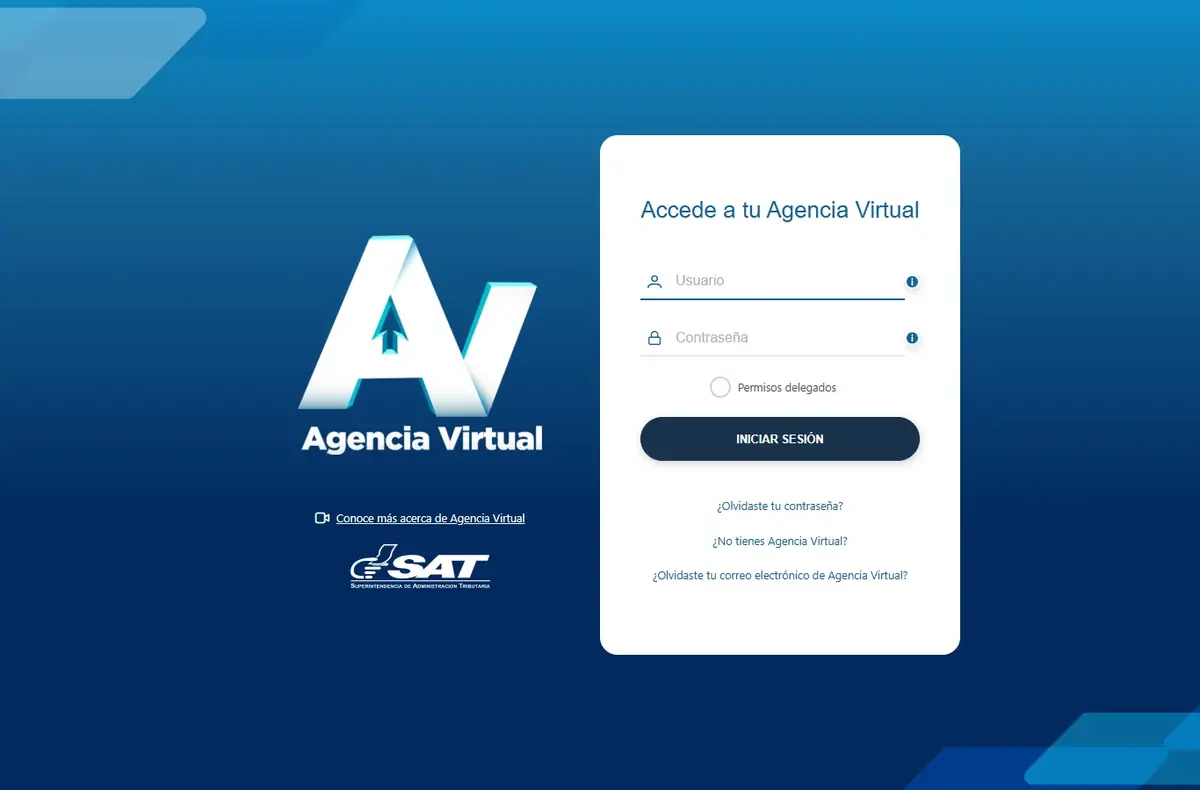
SAT Agencia Virtual login (agenciavirtual.sat.gob.gt). Your NIT is the username. If you have not registered, use ‘¿No tienes Agencia Virtual?’ to start.
Step-by-Step Process
Phase 1: Preparation in the US (1-2 weeks)
- Obtain the original title. If there is a lien, you must pay off the loan and get a clean title first. Salvage titles are accepted but should be disclosed.
- Get the vehicle appraised or save the purchase receipt. You will need to declare the value to customs.
- Choose a shipping company. Get quotes from multiple carriers. Florida-based shippers are usually cheapest for Guatemala.
- Hire a customs broker (agente aduanero) in Guatemala. This is essential — do not try to clear customs yourself. Ask for recommendations from family or the Guatemalan community. Budget $500-$1,000 for their services.
- Prepare a power of attorney if you will not be in Guatemala when the vehicle arrives. This must be notarized and authenticated (apostilled).
Phase 2: Shipping (10-38 days)
- Deliver the vehicle to the shipping port or arrange inland transport to the port.
- Complete US export documentation. The shipping company handles most of this, including CBP Form 7512.
- Ship the vehicle. You will receive a bill of lading — send a copy to your customs broker immediately.
- Purchase marine insurance. Typically 1.5-2% of vehicle value. Optional but strongly recommended.
Phase 3: Customs Clearance in Guatemala (1-2 weeks)
- Your customs broker receives the bill of lading and prepares the DUCA (customs declaration).
- Vehicle arrives at port (Puerto Quetzal or Santo Tomas).
- Physical and documentary inspection by SAT customs officers. They verify the VIN, condition, and declared value.
- SAT assesses the taxes. Article 116 sets the order: IVA is paid at the aduana de ingreso on the invoice value, the vehicle is then presented to the Registro Fiscal de Vehiculos within three days, and SAT determines and collects IPRIMA on that same base. If your invoice cannot be validated, SAT substitutes its own valuation table.
- Pay all customs duties and taxes. Your broker will tell you the exact amount. Payment is made at authorized banks.
- Vehicle is released from customs once all payments are verified.
Phase 4: Registration (1-2 days)
- Register the vehicle with SAT through the standard registration process or at a SAT office.
- Obtain plates and circulation card.
- Get the vehicle inspected if required — see our vehicle inspection guide.
- Purchase Guatemalan vehicle insurance.
Electric & Hybrid Vehicle Benefits
Two different things are at work here, and it is worth keeping them apart:
1. The statutory rate. Decreto 40-2022 reformed numeral 14 of article 114 so that hybrid, electric and hydrogen vehicles — and electric motorcycles — pay IPRIMA at 5%, against the 20% a five-seat petrol car pays. That difference alone is worth $4,500 on a $30,000 vehicle ($1,500 of IPRIMA instead of $6,000).
2. The exemptions on top of it. Decreto 40-2022 also grants exemptions for fully electric vehicles, which step down over time. We have not re-read the step-down years against the decree, so confirm the figure that applies to your import year with your broker rather than budgeting around a number you read online.
0% DAI is not an EV benefit. DAI is 0% on every car and motorcycle, electric or not — anyone quoting it as an electric-vehicle saving is selling you something you already had.
Reduced circulation tax (ISCV) also applies to fully electric vehicles.
Details
If your vehicle arrives at Puerto Quetzal but a document is missing (most commonly the original title), the vehicle stays at port accumulating storage fees of $15-$50 per day. After 30 days, port authorities may classify the vehicle as abandoned. If the title was lost in transit, request a duplicate from the US state DMV — this can take 2-4 weeks. To avoid this nightmare: ship the title separately via FedEx/DHL to your customs broker BEFORE the vehicle arrives, and keep a notarized copy as backup.
Details
Article 113 says the base for a used import is the original invoice from the seller abroad — but only if the invoice is legally valid where it was issued, SAT can verify it, you present the foreign title, and the payment is documented through the banking system. Miss one of those and SAT falls back to its own valuation table (Acuerdo de Directorio 16-2025 for IVA, 17-2025 for IPRIMA). So if you bought a car at auction for $8,000 with a receipt SAT cannot validate, and the table values that make/model/year at $14,000, you pay on $14,000. There is no formal appeal of the table. Two things help: keep the paper trail clean enough that the invoice stands on its own, and — if the vehicle has documented damage or abnormally high mileage — have your broker request a physical inspection and manual valuation, though approval is not guaranteed. Check SAT’s tables BEFORE buying so there are no surprises.
Details
If you are entering Guatemala as a tourist or temporary resident with your own vehicle, you can import it temporarily without paying duties. You receive a temporary import permit (permiso temporal) valid for 90 days (extendable). However, you CANNOT sell or transfer the vehicle during this period. If you overstay the permit, the vehicle can be seized by customs. If you decide to stay permanently, you must either export the vehicle and re-import it formally (paying duties) or apply for a permanent import conversion at a SAT customs office.
Common Questions
How much does it cost to import a car from the US to Guatemala?
The taxes are fixed by law and do not depend on the model year. DAI on cars is 0% for Guatemala, IVA is 12%, and IPRIMA is 20% for a vehicle carrying up to five people. IVA and IPRIMA both sit on the original seller invoice and neither is charged on the other, so a $15,000 used sedan owes $4,800 in tax, about 32%. On top of that: shipping ($1,050-$3,900 depending on port), a customs broker ($500-$1,000), port handling ($150-$400) and first plates Q75 plus minor registration costs (about $50). Typical all-in import cost on a $15,000 car: $6,850-$10,450, and about $7,650 on the common Miami-to-Puerto-Quetzal RoRo route.
Is there an age limit for importing vehicles to Guatemala?
No. Guatemala has no model-year import ban. Article 109 of Decreto 10-2012 originally contained one, but the Corte de Constitucionalidad struck literals a) and b) down as unconstitutional in Expediente 2959-2012, 28 June 2013, and SAT’s own consolidated text now prints both simply as “Inconstitucional.”
What survives is literal c): a vehicle that arrives collided or damaged so badly that it cannot circulate may not be registered from its seventh model year onward, and a vehicle declared unrebuildable in the country it was exported from may never be registered. Cargo vehicles, buses, microbuses and fire-service vehicles carry no prohibition at all.
Model year still costs you money — but through the base, not the rate. SAT’s annual valuation table sets a higher taxable value for a newer car.
How long does it take to import a car from the US to Guatemala?
Shipping takes 10-38 days depending on departure port (Florida is fastest at ~10 days, California is ~19 days). Customs clearance adds 1-2 weeks. Total time from purchase to driving: approximately 4-6 weeks.
Can I import a salvage title vehicle to Guatemala?
Yes, Guatemala does accept salvage title vehicles, which is one reason the US-to-Guatemala vehicle corridor is so active. However, the vehicle must still pass customs inspection and meet basic safety requirements. Salvage vehicles may be valued differently by SAT for tax purposes.
The one hard legal limit is article 109 literal c) of Decreto 10-2012: a vehicle that arrives collided or damaged so that it cannot circulate may not be registered from its seventh model year onward, and a vehicle declared unrebuildable in the exporting country may never be registered. A rebuilt, drivable salvage-title car is not caught by either rule.
What is the cheapest way to import a vehicle to Guatemala?
RoRo (Roll-on/Roll-off) shipping from Miami or Jacksonville to Puerto Quetzal is the cheapest option at $1,050-$2,800. Florida ports are closest to Guatemala, reducing transit time and cost. Avoid container shipping unless the vehicle is high-value or you need to ship personal items inside.
Tips & Common Mistakes
Never send a copy of the title — always the original. Guatemala customs requires the original US title to clear the vehicle. If you send a copy, the car will be stuck at port accumulating storage fees ($15-$50/day) while you scramble to send the original.
Hire the customs broker BEFORE shipping. Your broker needs to prepare documentation in advance. Finding a broker after the car arrives means delays and extra port storage costs.
Do not hide items inside the vehicle. Customs officers inspect imported vehicles thoroughly. Personal items left inside may be subject to separate import duties or confiscation. Some shipping companies allow personal items in container shipments, but check first.
Check SAT’s valuation table before buying. The table at portal.sat.gob.gt shows exactly how much Guatemala values each make/model/year. If SAT values the car higher than what you paid, you pay taxes on SAT’s value.
Budget for the full cost before shipping. Too many people ship a car and then cannot afford the taxes. The car sits at port accumulating storage fees. Calculate all costs — shipping, IVA, IPRIMA, broker, registration — before committing.
Do not shop for a model year to lower your rate. There is no rate to lower. IPRIMA is 20% for a five-seat car whether it is one year old or twelve. What age changes is the base, through SAT’s valuation table — a newer car is worth more on the table, so the same 12% and 20% land on a bigger number. Anyone selling you a “9-10 year sweet spot” is quoting a rate scale that does not exist in article 114.
From the US (Diaspora Guide)
This is one of the most common tramites for Guatemalans living in the United States. Here is what you need to know:
Power of attorney is essential. If you are sending a car to a family member in Guatemala, you need a poder especial (special power of attorney) that authorizes your customs broker to act on your behalf. Have this notarized in the US and apostilled for use in Guatemala.
The most popular route is Miami to Puerto Quetzal. This is the cheapest and fastest option. Many Guatemalan-owned shipping companies operate this route and understand the specific requirements.
Shipping companies in the US that serve Guatemala:
- Companies in Miami, Houston, and Los Angeles regularly ship to Guatemala
- Look for companies with Guatemalan staff who know both systems
- Get at least 3 quotes and verify references
Wire the customs payment early. Your broker will need funds to pay the duties at the bank. Wire the money before the ship arrives to avoid port storage delays.
Stay in communication with your broker. The process can hit unexpected bumps — a discrepancy in the VIN, a missing document, or a question about the vehicle’s condition. Respond quickly to your broker’s calls to avoid delays.
Popular Vehicles for Import
Based on Guatemala’s market, these are commonly imported from the US:
- Toyota Tacoma / Hilux — extremely popular for rural Guatemala
- Toyota RAV4 / Corolla — reliable and parts are widely available
- Honda CR-V / Civic — strong resale value in Guatemala
- Hyundai Tucson / Elantra — growing popularity
- Ford F-150 — popular for work and agriculture
- Tesla Model 3/Y — increasingly popular due to tax exemptions
Common Errors and Solutions
If the SAT portal or customs process does not work as expected during vehicle import, these are the most common issues and how to resolve them:
“Invalid user or password” on Agencia Virtual when paying SAT-4041 / SAT-4081
The NIT is your username. Try without dashes. If you still cannot log in, use “Olvide mi contrasena” — the reset link goes to the email registered in your RTU. If that email is outdated, you (or someone with notarized power of attorney) must visit a SAT office with a valid DPI/passport to update the email before you can generate IPRIMA forms online.
Captcha will not load when generating forms in Declaraguate
Ad blockers like uBlock, AdGuard, and Brave Shields commonly block the SAT hCaptcha. Fix: disable your ad blocker for declaraguate.sat.gob.gt only, or use a different browser. Incognito/private mode also bypasses most blockers.
“Vehicle data does not match the SAT table”
This happens when the VIN or model year you entered on SAT-4041 does not match SAT’s decoding, or when the vehicle is not in the 2026 valuation table. Fix: confirm the model year on the US title (not the year of sale), recheck each character of the VIN (17 characters, never contains I, O, or Q), and if it persists ask your customs broker to verify against the 2026 tables — Acuerdo de Directorio 16-2025 for IVA and 17-2025 for IPRIMA. For rare or very new vehicles, SAT may require a manual appraisal.
“The vehicle is more than 10 years old” — will it be rejected?
No, and no broker should tell you otherwise. There is no model-year import ban: the prohibitions in article 109 literals a) and b) of Decreto 10-2012 were declared unconstitutional and expelled from the legal order by the Corte de Constitucionalidad in Expediente 2959-2012 on 28 June 2013. There is also no fixed-quota IPRIMA for older vehicles — no Q1,100 bracket, no Q700 bracket. Article 114 sets one rate per vehicle type and an eleven-year-old five-seat car pays the same 20% as a new one.
What can actually block registration is article 109 literal c): a vehicle that arrives collided or damaged so it cannot circulate cannot be registered from its seventh model year onward, and one declared unrebuildable where it was exported can never be registered. If a form or a quote is built on a 10-year rule or a fixed quota, ask which article it comes from.
The car has been at port for 5+ days and clearance is not advancing
Top causes in 2026: (1) original title never arrived or lacks apostille, (2) commercial invoice does not match the Bill of Lading, (3) your customs broker was hired too late and the DUCA was not pre-filed. Every additional day costs $30-$50 in port storage. Fix: contact your broker with the NIT/DUCA number and demand a status report. If the title is the problem, ship it apostilled by FedEx/DHL directly to your broker — do not wait.
“SAT values the vehicle higher than the purchase price”
Your invoice is supposed to be the base (article 113), but only if SAT can validate it: legally valid where issued, verifiable, backed by the foreign title, and paid through the banking system. When it cannot, SAT falls back to its annual valuation tables — Acuerdo de Directorio 16-2025 for IVA and 17-2025 for IPRIMA. So if you paid $12,000 for a Tacoma with paperwork that does not stand up and the table values it at $18,000, IPRIMA and IVA are both calculated on $18,000. There is no formal appeal of the table, but if the vehicle has documented damage or unusually high mileage, the broker can request a physical inspection and manual valuation — no guarantee. Best practice: keep the invoice and bank trail clean, and check the table BEFORE buying.
The SAT-2000 payment voucher (IPRIMA or IVA) cannot be paid at the bank
The voucher expires 3 business days after generation. If you missed that window, regenerate it in Declaraguate. Some ATMs do not process customs vouchers — use a bank teller during business hours or online banking with Banrural, BI, BAM, or BG. For large amounts (>$5,000), notify the bank a day in advance to unlock daily transaction limits.
The portal is unavailable / blank page in Declaraguate
SAT runs scheduled maintenance most Sundays from 12am-6am Guatemala time. Customs systems also saturate around the IVA deadline (day 14-15). Try off-peak hours (4-7 AM or 10 PM-12 AM Guatemala time). If it persists for more than an hour during business hours, call 1550. Every day of delay costs port storage — do not wait passively.
From the US: cannot reach SAT or Declaraguate
The SAT site is occasionally rate-limited from non-Guatemala IP ranges. Fix: try at off-peak hours (4-7 AM or 10 PM Guatemala time), or have your customs broker run the steps from Guatemala — most brokers handle the SAT-4041 / SAT-8620 generation as part of their service.
Related SAT Vehicle Tramites
- New Vehicle Registration — register after import
- Vehicle Transfer — if transferring to another person
- Annual Circulation Card — yearly renewal
- Vehicle Deregistration — remove from registry if needed
- Vehicle Inspection — may be required after import
- NIT (Tax ID) — required for customs
- Driver’s License — to drive your imported car