Between November and February, Guatemala’s weather flips into its mirror image: the rainy season ends, and instead, every week or two a polar air mass slides down across the Gulf of Mexico and pushes into Central America — a cold front, or norte. For the highlands it means frosty dawns and crystal skies; for Izabal and the Verapaces, days of grey drizzle; for the high western valleys, frost.
TL;DR: Season: November-March, peaking December-January. INSIVUMEH’s October 2026 outlook expects 16 fronts in 2026-27 (2 in November, 4 in December, 4 in January, 3 in February, 3 in March). Regional effects: western highlands = dry cold and frost (Xela can dip below 0°C), Caribbean slope = persistent rain and wind, Pacific coast = barely notices. It’s the exact mirror of the canícula — the two phenomena that quarter Guatemala’s climate calendar.
What a Cold Front Does Here
A dense, cold air mass pushed down from the Arctic crosses the Gulf of Mexico and slams into Central America’s tropical air. When it reaches Guatemala:
- Winds swing to the north and accelerate — the famous nortes that churn the Caribbean.
- Caribbean moisture piles against the mountains — the Sierra de las Minas, the Verapaces and the Cuchumatanes wring out persistent drizzle (the temporal del norte) on the windward side.
- The Pacific side gets descending dry air — cloudless skies, low humidity, and the coldest dawns of the year through nighttime radiative cooling.
A front passes in 2-4 days; the coldest morning comes 1-2 days behind it, then the pattern relaxes until the next one.
Effects by Region
| Region | Typical effect | Risk |
|---|---|---|
| Western highlands (Xela, Totonicapán, Cuchumatanes) | Lows of 0 to -5°C in high valleys, frost | Crop-killing frost; hypothermia risk for vulnerable communities |
| Guatemala City / Antigua / Atitlán | Average December-January lows of 10-12°C (climate normals), windy, brilliant skies | Low — pack layers |
| Verapaces / northern Huehue & Quiché | Persistent drizzle, fog | Muddy rural roads |
| Izabal / Caribbean | Rain, strong north wind, rough seas | Rough water for lanchas; wet days in Río Dulce/Livingston |
| Petén | Grey, cool days, light drizzle | Low |
| Pacific coast | Almost unchanged (lows 18-20°C), some wind | Minimal |
Frost: the Season’s Real Hazard
Guatemala’s cold makes news not for thermometers but for what it burns: in the high valleys of Quetzaltenango, Totonicapán and Huehuetenango, the clear dawn after a front produces frost that kills potato and vegetable crops — hitting the same subsistence-farming communities the canícula hits in August. CONRED activates its annual cold season plan (shelters, monitoring of vulnerable populations), and MINEDUC occasionally adjusts school schedules in the coldest municipalities.
Does it snow? Rarely: the white December 2023 mornings in Xela were frost, per Prensa Libre’s fact-check with INSIVUMEH, and Guatemala’s 2019 climate assessment lists two snowfalls in 2008, on Tajumulco’s slopes and in Santa Ana, Quetzaltenango. The sources and the record lows are in Does it snow in Guatemala?
For Travelers: the Best Season, with One Asterisk
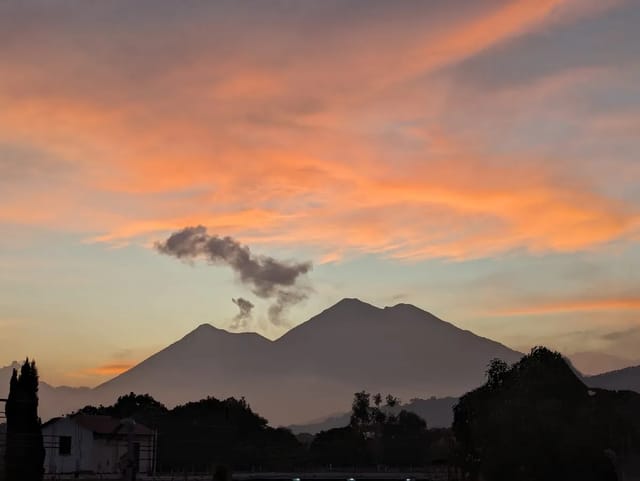
November-February is high season for a reason — the cold front is the only thing that interrupts weeks of perfect sky.
- Antigua–Atitlán–Xela circuit: sunny 20-24°C days, cold nights. December-January volcano views are the year’s best. Pack real layers — the classic mistake is a 4°C night in Xela with only a hoodie.
- Acatenango overnight: the dry window is ideal — but an active front means -5 to -10°C wind chill at the summit with north winds. Check the Weather Hub forecast before committing.
- Izabal / Río Dulce / Livingston: the asterisk. If your dates coincide with an incoming front, expect grey, wet days. Ask your boat operator before you travel: we found no published weather-cancellation policy for the Río Dulce-Livingston lanchas. Shift the visit a few days if you can.
- Tikal: cool and grey under an active front, perfect otherwise.
Following the Season
- Weather Hub — department-level forecasts and live temperatures
- INSIVUMEH — official cold front and temperature-drop advisories; the October 2026 climate outlook has the month-by-month front count
Correction (15 October 2026): this page said a typical season brings 8-12 cold fronts and attributed that to INSIVUMEH; INSIVUMEH’s own outlook for 2026-27 expects 16. It also said fronts suspend lancha traffic on the Golfete and Amatique Bay; we found no source for that, so it is gone. It also gave Guatemala City and Antigua lows of 8-12°C without a source; it now uses the averages from our climate table.
- Canícula 2026 — the mid-rainy-season mirror phenomenon
- Rainy Season 2026 — the full climate calendar
- Guatemala Right Now — live storms, volcano and seismic status in one place
Frequently Asked Questions
When do cold fronts hit Guatemala?
INSIVUMEH’s outlook published 2 October 2026 expects 16 cold fronts in the 2026-27 season: none in October, 2 in November, 4 in December, 4 in January, 3 in February and 3 in March. December-January, with 8 of the 16, is the peak.
How cold does Guatemala get during a cold front?
It depends entirely on altitude. In the western highlands (Quetzaltenango, Totonicapán, the Cuchumatanes plateau) clear nights after a front can drop to 0°C and below, with frost. Guatemala City averages lows of 12°C in December-January and Antigua 11°C, in our climate table of historical normals. The coasts barely change (lows of 18-20°C) — but the north wind is felt everywhere.
Does it snow in Guatemala?
Rarely: an INSIVUMEH specialist told Prensa Libre (22 December 2023) that the tropical climate does not produce snowfall, while Guatemala’s 2019 climate assessment records two snowfalls in 2008, on Tajumulco volcano’s slopes and in Santa Ana, Quetzaltenango. The full answer, with the record lows: livinginguatemala.com/guides/does-it-snow-in-guatemala/.
Do cold fronts bring rain to Guatemala?
Only on one side of the country. The cold push wrings persistent drizzle out of Caribbean moisture against the mountains — Izabal, the Verapaces, northern Huehuetenango and Quiché, and Petén get grey, wet days. The Pacific side and central highlands get the opposite: bone-dry air, north winds and the clearest skies of the year. It’s the only time of year when Izabal is rainy while the rest of the country is dry.
Is cold front season a good time to visit Guatemala?
It’s the best time for most itineraries — November-February means weeks of clear skies, perfect volcano views and zero rain on the Antigua-Atitlán circuit. Two caveats: pack genuinely warm layers (the classic tourist mistake is being shocked by a 4°C night in Xela or at Lake Atitlán), and if your Río Dulce/Livingston days coincide with an incoming front, expect rain and rough water on the Caribbean side.