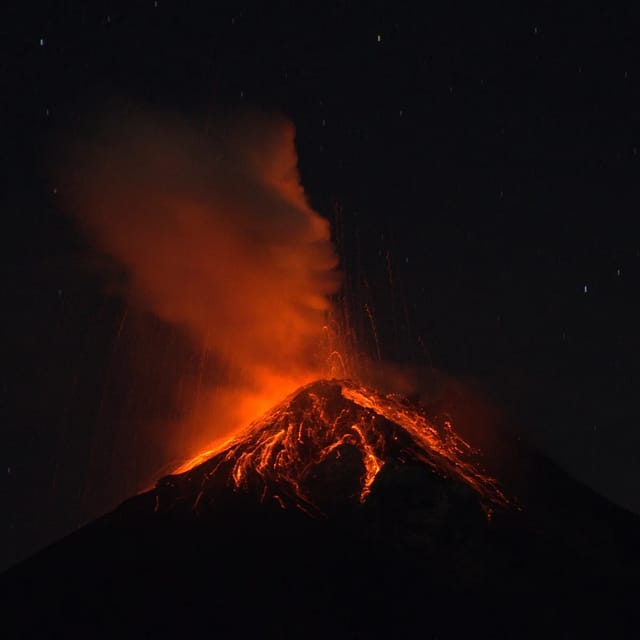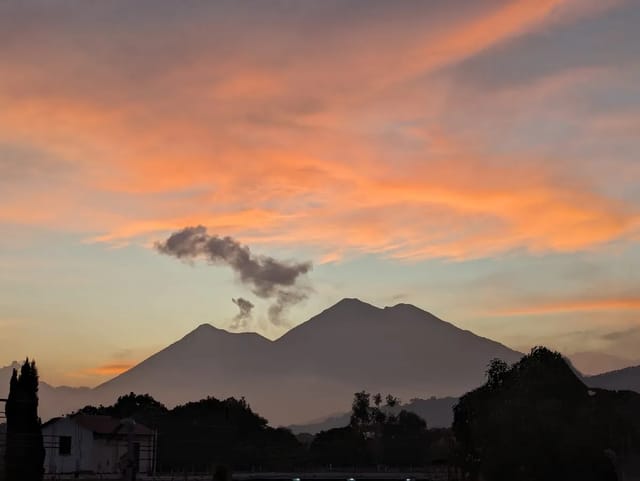
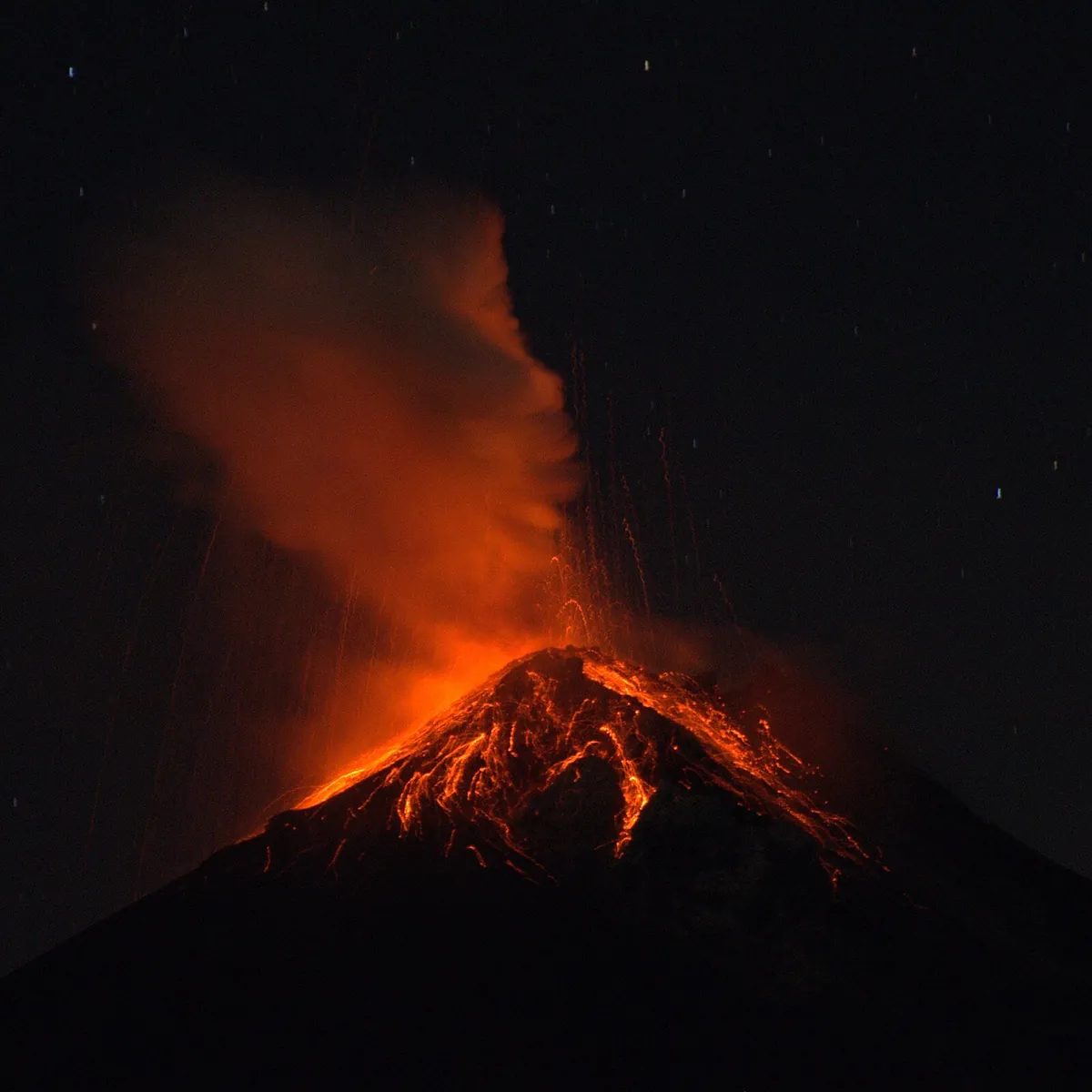
The Acatenango overnight hike is Guatemala’s signature adventure — a 2-day expedition that puts you on a base camp at 3,600 meters watching Volcan de Fuego erupt every 15-20 minutes through the night, with red lava arcing across the sky. As of 2026, verified Viator listings price the trek between $84 and $150 USD per person, with most reputable operators in the $90-$129 range. This page compares the 8 main tour options by price, rating, and inclusions, and walks you through fitness requirements, gear, and how far ahead to book.
For altitude orientation before the hike, plan a day in Antigua first (1,500m). For the alternative day-hike that requires no overnight commitment, see our Pacaya day tours comparison. And for live volcano alert levels before you book, check the Guatemala volcano tracker.
Book your Acatenango overnight hike
Affiliate links — we earn a commission if you book, at no extra cost to you. We only recommend operators with consistent 4.5+ star ratings and verified safety records.
Verified Acatenango Operators & Prices (2026)
Prices below are pulled from live Viator listings on May 14, 2026. Ratings reflect actual review counts at time of capture.
| Operator listing | Price USD | Rating | Reviews | Notes |
|---|---|---|---|---|
| Overnight Adventure Hike Acatenango | $84 | 4.8 | 347 | Cheapest verified listing. Solid mid-range gear. |
| Acatenango Volcano Overnight Tour (2D/1N) | $90 | 4.5 | 371 | Marked “Likely to Sell Out”. Strong volume. |
| Acatenango Volcano Overnight Tour | $119 | 4.6 | 367 | Free cancellation. Mid-premium tier. |
| Two day hiking tour Acatenango | $120 | 4.8 | 142 | Smaller groups (typical 6-10 people). |
| 2-Day Camping & Fuego Views Acatenango | $125 | 5.0 | — | Premium camp setup with Fuego summit add-on. |
| Acatenango Overnight Hike Multiday | $129 | 4.8 | 249 | Includes porter option. |
| 2-Days Tour Acatenango from Antigua | $150 | 4.6 | — | Top-tier gear, smaller groups, premium meals. |
Mid-range sweet spot: The $90-$129 cluster is where most travelers book. Below $84 we no longer see verified operators with consistent ratings — be cautious of unlisted operators offering significantly less, since gear quality and safety standards drop sharply.
Above $150: Custom private tours with porters and gear upgrades exist but require direct booking with local Antigua agencies. For most travelers, the $84-$150 Viator/GetYourGuide range is the right tier.
What’s Included in a Standard Tour
Every operator in the $84-$150 range provides:
- Round-trip transport from Antigua to the La Soledad trailhead (Alotenango, ~1 hour drive)
- Certified bilingual guide (Spanish/English; some offer French/German on request)
- Tent and sleeping bag rental at base camp (3-season minimum)
- Hot dinner at base camp on Day 1 (typically pasta, beans, hot chocolate)
- Breakfast on Day 2 (eggs, tortillas, coffee)
- Snacks and water during the hike (typically 1-2L provided; bring more)
- Park entry permit (Q100 / ~$13 municipal fee for foreigners — official fee schedule, checked July 2026; most operators bundle it, confirm when booking)
- Walking poles (loaner — bring your own if you have a preference)
- First aid kit and emergency radio (carried by guide)
Operators in the $125+ tier typically upgrade:
- 4-season sleeping bags (rated to -10°C)
- Better-insulated tents and inflatable sleeping pads
- Hot lunch on Day 1 (most $84-$100 tours skip lunch)
- Optional Fuego summit hike (3-4 hour pre-dawn adjacent climb, $20-40 extra)
- Porter service (carry your pack for $30-50 extra)
What to Bring
The biggest mistake travelers make is underestimating how cold base camp gets. At 3,600m the night temperature regularly drops to 2-5°C (35-41°F) and during November-February can fall below freezing. Wind chill makes it feel colder.
Essential gear (bring yourself)
- Warm base layer (merino wool or synthetic — no cotton)
- Mid-layer fleece + insulated jacket (down or synthetic)
- Waterproof/windproof outer shell
- Gloves (light + insulated pair)
- Beanie / warm hat
- Hiking boots with ankle support (sneakers are not adequate)
- Wool or synthetic hiking socks (2 pairs minimum)
- Headlamp with spare batteries (mandatory for 3am summit push)
- 3 liters of water in bottles or hydration bladder
- Sun protection (SPF 50+, hat, sunglasses — UV is intense at altitude)
- Personal medications including ibuprofen and altitude pills if prescribed
- Camera with full battery (cold drains batteries fast — bring power bank)
- Cash in small bills (tips are voluntary and not included in some operators’ prices; see tipping in Guatemala)
Optional but helpful
- Trekking poles (operators loan basic ones — bring your own if you prefer)
- Hand warmers (chemical packets — game-changers at 3am)
- Pee bottle (you do not want to leave the tent at 3am at 3,600m)
- Toilet paper (base camp has a basic pit toilet)
Fitness Level & Altitude
The hike covers approximately 8 km one-way with 1,500m of elevation gain. The first hour is steep sand/dirt switchbacks through farmland; hours 2-3 cross cloud forest with better grip; hours 4-6 traverse exposed volcanic scree where each step slides back half a step.
Honest fitness check: if you can comfortably hike 6 hours with a 20-lb pack on hills at home, you can complete Acatenango. If you do not exercise regularly, expect the hike to be one of the hardest days of your life — but the operator will not turn you back.
Altitude considerations:
- Base camp: 3,600m (11,811 ft)
- Summit: 3,976m (13,044 ft)
- Coming from sea level, plan at least 2 nights in Antigua (1,500m) before the hike to begin acclimatization
- Symptoms of altitude sickness: headache, nausea, dizziness, shortness of breath
- If symptoms become severe, descend immediately — guides will arrange this
Who should skip Acatenango: people with heart conditions, untreated high blood pressure, recent altitude illness history, or pregnancy. The Pacaya day hike tours at 2,552m is a safer alternative for these groups.
The Optional Fuego Summit (Add-On)
Many travelers book Acatenango not to summit Acatenango itself but to climb the adjacent Volcan de Fuego for closer eruption views. This is an additional 3-4 hour pre-dawn hike from Acatenango base camp, leaving around 11pm or 2am to reach a viewing ridge approximately 1 km from Fuego’s active vent.
- Cost: $20-$40 extra on top of your base tour
- Risk: Fuego is in continuous Strombolian eruption since 2002. The June 2018 pyroclastic event left more than 200 confirmed dead and hundreds more missing — commonly cited as 400+ dead and missing — guides keep a safe distance, but conditions change. CONRED can close the route on short notice.
- Reward: standing 1 km from an active volcano with lava bombs visible against the night sky is one of the most intense experiences available in tourism anywhere.
- Book separately: ask your Acatenango operator about the Fuego add-on at the time of booking; not all include it.
Before booking the Fuego add-on, always check current volcano alert levels — Orange or Red alerts close the route.
When to Book
| Season | Lead time | Why |
|---|---|---|
| May-October (low/rainy) | 2-7 days | Lower demand; afternoon rain common but base camp usually clear |
| November-April (dry/high) | 1-3 weeks | Best weather, highest demand |
| Semana Santa (Easter) | 3-4 weeks | Antigua’s busiest week — books out completely |
| Christmas / New Year | 4-6 weeks | Peak demand + private bookings dominate |
The $84-$90 budget tours sell out first. Free cancellation up to 24 hours before departure is offered by most Viator-listed operators — book early and re-shop closer to your date if you find a better option.
Where to Stay Before and After
Acatenango treks depart from Antigua, and you will want a real bed on both sides of the overnight. Live availability around Antigua:
Where to stay in Antigua Guatemala
Compare Booking.com, Airbnb and hotels on one map. Drag the map and set your dates to see live availability and real prices.
Affiliate links — if you book, we earn a small commission at no extra cost to you.
Safety
- Mandatory certified guide: enforced at the La Soledad trailhead checkpoint
- CONRED radio coverage: guides carry emergency radios and the route is well-trafficked
- Acatenango itself is dormant — the eruption risk is from neighboring Fuego, which guides observe from a safe distance
- Theft on the trail has been reported historically; modern certified-guide tours have largely eliminated this — stay with the group
- Travel insurance is strongly recommended; standard medical evacuation policies cover altitude rescue
Faye sells single-trip plans to U.S. residents (not to residents of Puerto Rico, Guam, the U.S. Virgin Islands, the Northern Mariana Islands or American Samoa), and Guatemala is not on its list of excluded destinations. Its FAQ lists emergency medical cover of up to $250K and emergency medical evacuation of up to $500K, and its site lists trip cancellation, trip interruption, trip delay and baggage among what its plans cover. It must be bought before you leave home.
Volcano hikes: Faye lists hiking among the recreational activities it covers, and lists mountain climbing among the adventure activities that need its paid adventure & extreme sports add-on for medical cover. It does not say which one a guided volcano summit counts as, so ask Faye before you buy.
Get a Faye quote →Affiliate link: we earn a commission if you buy, at no extra cost to you. Coverage limits and prices are Faye's own figures as of September 24, 2026; this is not insurance advice. Disclosure
See our Guatemala safety guide for general traveler safety considerations.
How Acatenango Compares to Other Guatemala Treks
| Trek | Length | Difficulty | Highest point | Typical cost |
|---|---|---|---|---|
| Acatenango | 2 days | Hard | 3,976m | $84-$150 |
| Pacaya day tour | 4-6 hours | Easy-Moderate | 2,552m | $24-$96 |
| Tajumulco | 2 days | Hard | 4,220m (Central America’s highest) | $50-$120 |
| El Mirador (Peten) | 5 days | Hard (heat + distance) | jungle, low elevation | Q2,000-4,000 (~$260-520) |
| Lake Atitlan Indian Nose | 2-3 hours | Easy-Moderate | 2,400m | $15-$35 |
Acatenango remains the single-best value for adventure-tier difficulty + iconic payoff. The volcano you watch erupt all night (Fuego) is the headline; the volcano you climb (Acatenango) is the comfortable seat for the show.
After the Hike
Most travelers return to Antigua mid-afternoon Day 2 — sore, exhausted, and hungry. Recovery itinerary that works well:
- Day 2 evening: hot meal at one of the restaurants in Antigua, early sleep
- Day 3: rest day. Explore things to do in Antigua — Cerro de la Cruz, the cathedral ruins, ChocoMuseo — at a slow pace
- Day 4+: continue to Lake Atitlan (shared shuttle $25, 3 hours) or coffee tours
If you arrived for Acatenango as part of a longer Guatemala trip, see our Antigua coffee tours for a relaxed Day 3 activity, or authentic cooking classes where you spend the afternoon learning to make pepian or jocon.
Bottom Line
Acatenango is hard, cold, and not for everyone — but for travelers in reasonable fitness who want a single experience that defines their Guatemala trip, this is it. Book a $90-$129 mid-range operator with 4.5+ star ratings and 100+ reviews. Plan 2 nights in Antigua before the hike for altitude acclimatization. Pack warm layers and a headlamp. Tip your guide.
The night you spend at base camp watching Fuego throw lava against the stars is something you remember for the rest of your life.
Ready to book? Compare Acatenango tours on Viator or browse GetYourGuide options.
Affiliate links — if you book, we earn a commission at no extra cost to you.
Frequently Asked Questions
How much does the Acatenango overnight hike cost in 2026?
Verified Viator listings range from $84 to $150 USD for the 2-day / 1-night overnight tour from Antigua, with most operators clustering around $90-$129. The price typically includes transport from Antigua, certified guide, sleeping gear, base camp meals, and the optional Fuego summit add-on. Booking directly with guides at the La Soledad trailhead can drop the price to around $30-$50, but tents and meals are usually self-arranged.
How long is the Acatenango hike?
Total trip duration is 2 days / 1 night. Day 1: 4-6 hour ascent from La Soledad (2,400m) to base camp around 3,600m, leaving Antigua at 8-9am. Sunset views of Fuego erupting begin around 6pm. Day 2: optional 3am summit push to 3,976m for sunrise, then 2-3 hour descent. You are back in Antigua by mid-afternoon Day 2.
What is included in an Acatenango tour?
Standard inclusions across the $84-$150 operators: round-trip transport from Antigua, certified bilingual guide, entry permit, tent and sleeping bag rental, hot dinner and breakfast at base camp, and snacks/water. Higher-priced tours ($120-$150) add gear-quality upgrades (4-season sleeping bags, better food), porter support, or the optional Fuego summit (Volcan de Fuego adjacent hike, $20-40 extra).
How hard is the Acatenango hike?
Hard. You climb 1,500+ meters in 5-6 hours on steep, sandy switchbacks at altitudes above 3,000m where the air is 30% thinner. Most fit hikers find it strenuous but doable. The base camp itself sits at 3,600m and the optional pre-dawn summit reaches 3,976m. Altitude sickness is the most common issue — give yourself a day in Antigua (1,500m) first if coming from sea level.
Do I need a guide for Acatenango?
Yes. CONRED and INGUAT require a registered guide on Acatenango as of 2026. Solo hiking is prohibited and unsafe — multiple tourists have died attempting it. Every operator in the $84-$150 range provides certified guides, and the La Soledad community now staffs a checkpoint at the trailhead.
When should I book Acatenango?
Book 2-7 days ahead in low season (May-October) and 1-3 weeks ahead in high season (November-April, plus Semana Santa and Christmas/New Year). The $84-$90 budget tours frequently sell out first. Free cancellation is offered by most Viator-listed operators up to 24 hours before departure.
What should I bring for Acatenango?
Mandatory: warm layers (base camp drops to near-freezing), waterproof shell, gloves, beanie, headlamp with spare batteries, hiking boots (not sneakers), 3 liters of water, sun protection, and personal medications. The operator provides tent, sleeping bag, dinner, and breakfast. Bring cash in small bills for extras and, if you choose, a tip for your guide (tips are voluntary).