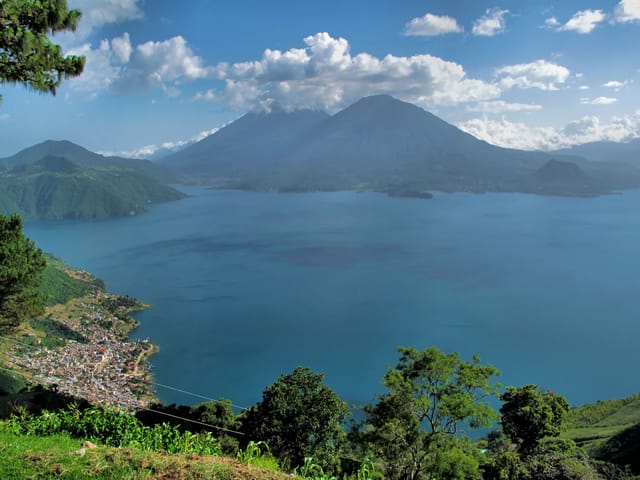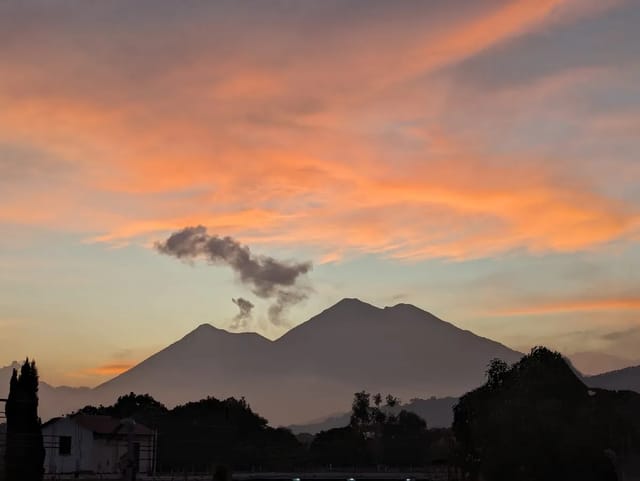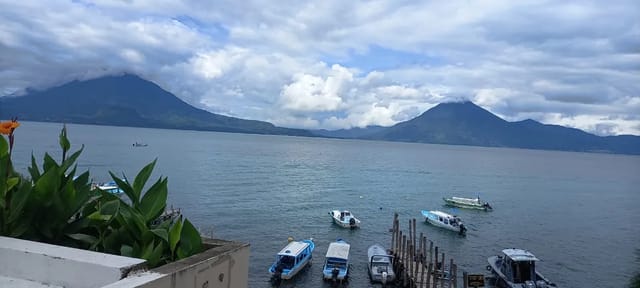
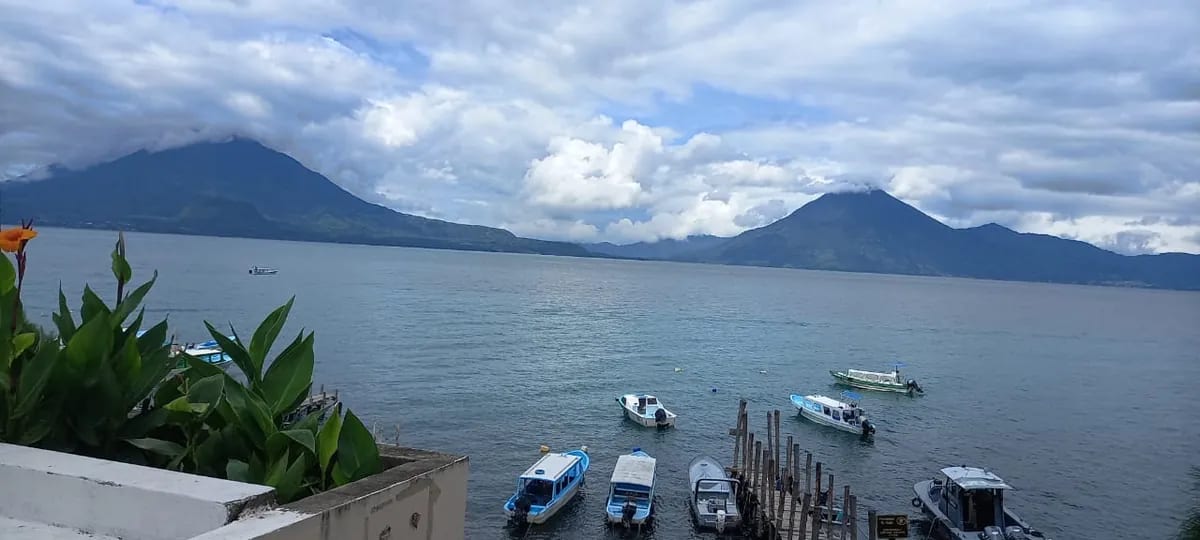
Lake Atitlán is one of Central America’s most beautiful destinations and a popular travel choice for American visitors seeking volcanoes, Maya culture, wellness retreats, or simply spectacular natural beauty. The lake sits in a 1,560-meter caldera surrounded by three volcanoes, with twelve traditional Maya towns dotting its shore — each with distinct character. This page covers how to get there from the USA, where to stay for a first visit, what to do, and practical travel logistics.
How to get to Lake Atitlán from the USA
Step 1: Fly to Guatemala City
Direct flights to Guatemala City (La Aurora airport) from major US cities:
| US City | Airline | Approximate flight time |
|---|---|---|
| Los Angeles | American, United, Avianca, Aeroméxico | 4.5-5 hours |
| Houston | United, American, Avianca | 3-3.5 hours |
| Miami | American, Avianca, Spirit | 3.5-4 hours |
| New York/Newark | United, JetBlue, Avianca | 5-5.5 hours |
| Atlanta | Delta | 3.5-4 hours |
| Chicago | United, American | 4.5-5 hours |
| San Francisco | United, Aeroméxico (via Mexico City) | 6-8 hours total |
| Washington DC / Boston | Direct from some airports; otherwise connecting | 5-7 hours |
Round-trip airfare: $400-$800 typical, varies by season.
Step 2: Get from Guatemala City to Panajachel
The main options for getting from Guatemala City to Panajachel (the lake’s main town):
Shared shuttle ($32-$40 per person, operator prices read 2 September 2026):
- AtitlanTour — $32, departures 05:40 (via Antigua), 11:00 and 14:00 (both listed as direct)
- Atitrans — $35, departures 06:00, 09:30 and 13:30, all routed through Antigua with a one-hour wait there
- Guatemala Transportation (Casa Alegre) — $35, departures 05:30 (45-minute pause in Antigua), 11:00 and 14:00 (direct)
- Adrenalina Tours — $40, departures 06:00, 09:30 and 13:30; the 06:00 and 09:30 change bus in Antigua
- Pickup at the airport or a Zona 10/13 hotel. No operator publishes an evening departure — the last one of the day leaves between 13:30 and 14:00, so a late landing means a private transfer or a night in the city
- Travel time: the operators that publish one give 5 hours (Adrenalina Tours) and 4.5-6.5 hours (Atitrans, which publishes both figures across its own sites); AtitlanTour and Guatemala Transportation publish none
- Adrenalina warns international arrivals in its own words: “collective shuttles do not wait!” — a delayed flight forfeits the seat
Private transfer ($185-$200 per vehicle, Atitrans, prices read 2 September 2026):
- Atitrans lists a private car from Guatemala City airport to Panajachel at $185 for a minimum of 1 and a maximum of 3 people, and a private minivan at $200 for up to 6 — these are per-vehicle prices, not per person
- Faster (no other stops)
- Direct hotel drop-off
- More flexible departure time — and the only option if you land in the evening, since no operator publishes an evening shuttle
- Cheaper per head than a $35-$40 shared seat once six people share the minivan. The full per-person math at 1, 2, 4 and 6 travellers is in our Guatemala City airport to Lake Atitlán guide
Public chicken bus:
- Multiple transfers (Guatemala City to Sololá, Sololá to Panajachel)
- No fare is published for this routing. The Municipalidad de Panajachel lists Transportes Rebuli departures from Guatemala City at 07:00, 10:15, 11:20 and 13:30, but publishes no price, no terminal address and no journey time, and the third-party figures that circulate contradict each other — carry cash and ask at the terminal
- For budget travelers willing to manage transfers
- Adventure factor
For most American visitors, the shared shuttle is the right choice — affordable and reliable.
Where to stay (first-visit recommendation)
For first-time visitors, Panajachel is the obvious choice:
Where to stay in Panajachel
Compare Booking.com, Airbnb and hotels on one map. Drag the map and set your dates to see live availability and real prices.
Affiliate links — if you book, we earn a small commission at no extra cost to you.
Why Panajachel for first visits
- Most infrastructure (ATMs, restaurants, hotels at every price point)
- Boat connections to all other lake towns
- Walking distance from shuttle drop-off
- English-speaking staff at most accommodations
- Daily life amenities (groceries, laundry, pharmacies)
- Active expat presence — ask anyone for advice
- Easy day trips by boat to other lake towns
Day trip strategy
From Panajachel, take boat day trips to the lake villages. The fare is Q25 flat per direction (about $3.28 at Q7.62479) to any village on the Asociación de Lancheros San Juan Bautista’s Panajachel–San Juan route — Santa Cruz, Jaibalito, Tzununá, San Marcos, San Pablo and San Juan — per the association’s own tariff page, updated 04/04/2025. Santiago Atitlán is not on that route list, so the Q25 fare does not cover it.
San Marcos La Laguna: Wellness/yoga community. Multiple yoga studios, vegan restaurants, a few good hostels and small hotels. Half day: explore town, light lunch. Full day: yoga class + lakeside time.
San Juan La Laguna: Artisan town. Maya textile cooperatives demonstrate traditional weaving. Coffee farm tours. Quieter, more authentic feel. Half day comfortable.
Santa Cruz La Laguna: Quiet boat-access town. Boutique hotels, fewer crowds. Visit Iguana Perdida or another lakeside hotel for lunch with view.
San Pedro La Laguna: Backpacker hub. Hot springs nearby. Indigenous Mam culture. Half-day visit to feel the contrast.
Santiago Atitlán: Largest town on the lake, strong Tz’utujil Maya cultural identity. Visit Maximón shrine (a syncretic local saint figure). Half-day for exploration.
After 3-5 days, you’ll know which town fits your travel style if you want to relocate or visit again.
Where to stay in Panajachel
Budget ($20-$50/night)
- Hospedaje Mario’s
- Hospedaje Maya
- Socialtel Atitlán (Calle del Embarcadero, Zona 2) — the lakeside hotel-and-coworking hub that traded as Selina until that chain wound down; it publishes no rates, so confirm the price before assuming it lands in this band
- Several smaller hostels
Mid-range ($60-$150/night)
- Posada de Santiago (Santiago Atitlán)
- Hotel Atitlán
- Posada Don Rodrigo
- Several boutique B&Bs
Premium ($150-$400+/night)
- Casa Palopó
- Hotel La Casa del Mundo
- Lush Atitlán
- Private vacation rentals
For first visits, a 3-4 night stay at Panajachel mid-range is the sweet spot — comfortable base, easy access, manageable cost.
What to do at Lake Atitlán
Essential first-visit experiences
- Boat tour around the lake ($30-$60 for half-day private boat) — orient yourself geographically
- Visit at least 2 Maya towns — see how each differs
- Volcano view sunrise or sunset from a hilltop or boat
- Eat at a lakeside restaurant with view
- Take a Spanish school class (even one day, $20-$40, immersive language experience)
Adventure activities
- Indian Nose hike (sunrise hike, popular)
- Tandem paragliding over the lake (Q650-Q800, three verified operators)
- Kayaking on the lake
- Stand-up paddleboarding
- Cycling between San Pedro and San Juan
- San Pedro volcano summit (4-6 hour hike)
- Atitlán volcano summit (multi-day, more serious)
Cultural experiences
- Maya textile workshops in San Juan (cooperative demonstrations)
- Coffee farm tours in San Juan and Santa Catarina
- Maximón shrine visit in Santiago Atitlán
- Local market days (Panajachel Sunday and Thursday)
Wellness
- Yoga classes in San Marcos
- Meditation retreats (multi-day)
- Massage and spa services in Panajachel and Santa Catarina
- Spanish school + wellness combinations (popular among American visitors)
Day trips off-lake (if extending)
- Antigua Guatemala (2-3 hours) — colonial city
- Chichicastenango Sunday market (1.5 hours) — Maya market
- Iximché Maya ruins (1.5 hours) — pre-Columbian archaeological site
Costs
Daily budget (mid-range visit)
| Category | Cost (USD) |
|---|---|
| Hotel (mid-range) | $80-$150 |
| Food (3 meals at restaurants) | $25-$45 |
| Activities/tours (per day average) | $20-$40 |
| Local transportation (boats, tuk-tuks) | $5-$15 |
| Drinks/coffee/snacks | $8-$15 |
| Daily total (mid-range) | $140-$265 |
Week-long visit estimate
| Quality tier | Per person, 7 nights |
|---|---|
| Budget | $400-$800 |
| Mid-range | $1,000-$1,800 |
| Luxury | $2,500-$5,000+ |
For couples, double these and slightly discount (some costs are shared).
When to go
Best season: November-April
Dry season. Mild temperatures (60-75°F daytime, 50-60°F evening). Clear lake views. Less afternoon rain. Higher prices and busier in late December and around Easter/Holy Week.
Rainy season: May-October
Afternoon storms common but mornings usually clear. Less crowded, lower prices. The lake remains beautiful — many visitors actually prefer the dramatic skies and lush green of rainy season. Pack quick-dry clothing and a good rain jacket.
Specific timing
- Holy Week (March/April): Spectacular religious processions in nearby Antigua but very crowded; book months ahead
- Christmas/New Year (December): Festive atmosphere; expensive; book ahead
- Independence Day (September 15): Festive in Santiago and other towns
- Day of the Dead (November 1-2): Cultural events, especially in larger towns
Practical tips
Money
- Bring USD cash for shuttle (small bills) and tips
- ATMs in Panajachel: BAC, BI, Banrural all available
- Most hotels and restaurants take credit cards in Panajachel
- Smaller villages: cash essential
- See ATM cards that work in Guatemala for ATM strategy
Spanish
- English speakers common in Panajachel; less so in smaller villages
- Basic Spanish helps significantly
- Spanish schools at the lake offer intensive courses ($150-$300/week)
What to pack
- Layers (warm days, cool evenings)
- Quick-dry clothing
- Hiking shoes/sandals
- Sun protection (high altitude = strong sun)
- Light rain jacket
- Bug spray (some areas have mosquitoes)
Health
- Don’t drink lake water (contaminated)
- Bottled or filtered water everywhere
- Most restaurants serve safe food; smaller stalls vary
- Travel insurance highly recommended
Boat travel
- Most lake connections are by boat; on the Asociación de Lancheros San Juan Bautista’s Panajachel–San Juan route the fare is Q25 flat per direction (about $3.28 at Q7.62479; association tariff page, updated 04/04/2025)
- Schedules: morning runs are most reliable; afternoon storms can suspend service
- Always wear life jackets where provided
What if you fall in love and want to stay longer
Many first-time American visitors discover they want to extend or return. If that’s you:
- Stay longer: US passports get 90 days visa-free, extendable to 180 days. See visa requirements.
- Live there long-term: Pensionado visa for retirees, other visa types for others
- Buy property: Real estate at Lake Atitlán and buying guide
- Work remotely: Internet at Lake Atitlán — Starlink works everywhere
What’s next
For continued exploration:
- Lake Atitlán Real Estate — if you’re considering longer stays
- USA Traveler Visa Requirements — entry, extensions
- ATM Cards — money strategy
- Best Banks — for extended stays
For specific Lake Atitlán questions or local connections, email stu@livinginguatemala.com.
Frequently Asked Questions
How do I get from the USA to Lake Atitlán?
Fly to Guatemala City (La Aurora airport) from major US cities (LA, NYC, Houston, Miami all have direct flights, 4-5 hours). From Guatemala City, take a shared shuttle to Panajachel ($32-$40 per person — AtitlanTour $32, Atitrans and Guatemala Transportation $35, Adrenalina Tours $40, prices read 2 September 2026; the operators that publish a duration give 4.5 to 6.5 hours). Or hire a private transfer: Atitrans lists $185 for a private car carrying up to 3 people and $200 for a minivan carrying up to 6, priced per vehicle rather than per person (prices read 2 September 2026).
Which Lake Atitlán town is best for first-time American visitors?
Panajachel for first visits — it has the most infrastructure (ATMs, restaurants, hotels, English speakers), boat connections to all other lake towns, and serves as the main hub. Day trips from Panajachel reveal whether you prefer the wellness/yoga vibe of San Marcos, the village charm of San Juan, or the quiet of Santa Cruz.
How much does a week at Lake Atitlán cost?
Budget: $400-$800 for one person, one week (hostel/budget hotel $20-$40/night, food $15-$30/day, activities $20-$40/day). Mid-range: $1,000-$1,800 (boutique hotel $80-$200/night, restaurant dining, tours). Luxury: $2,500+ (premium lakefront resorts, private guides, multi-day excursions).
Is Lake Atitlán safe for American tourists?
Yes, generally safe — comparable to most US tourist destinations. Petty theft (opportunistic) exists but violent crime against tourists is rare. Standard precautions: don’t walk isolated paths after dark, watch valuables, take licensed boats and shuttles. Panajachel, San Marcos, and Santa Cruz are particularly safe in tourist-active sectors.
When is the best time to visit Lake Atitlán?
November-March is ideal — dry season, mild temperatures (60-75°F), clear lake views. April is also good. May-October is rainy season — afternoon storms common but not constant; mornings are usually clear. The lake is beautiful year-round; rainy season has fewer crowds and lower prices.