In short: Lake Atitlán has 11 main villages around its shore, each with a distinct character. San Pedro La Laguna = backpacker / party / Spanish schools. San Marcos La Laguna = yoga / wellness / digital nomads. Santiago Atitlán = traditional Tz’utujil Maya, less touristy. San Juan La Laguna = textile cooperatives, coffee tours, quiet. Panajachel = gateway hub for first arrivals. Santa Cruz, Tzununá, Jaibalito = chill mid-range and luxury. Santa Catarina + San Antonio Palopó = traditional eastern shore. San Lucas Tolimán + San Pablo La Laguna = least touristy. Public lanchas (Q25 published fare) connect all villages. Lake elevation 1,560 m, surrounded by 3 volcanoes (San Pedro 3,020 m, Tolimán 3,158 m, Atitlán 3,535 m). Best season Nov-Apr.
Plan your Lake Atitlán trip
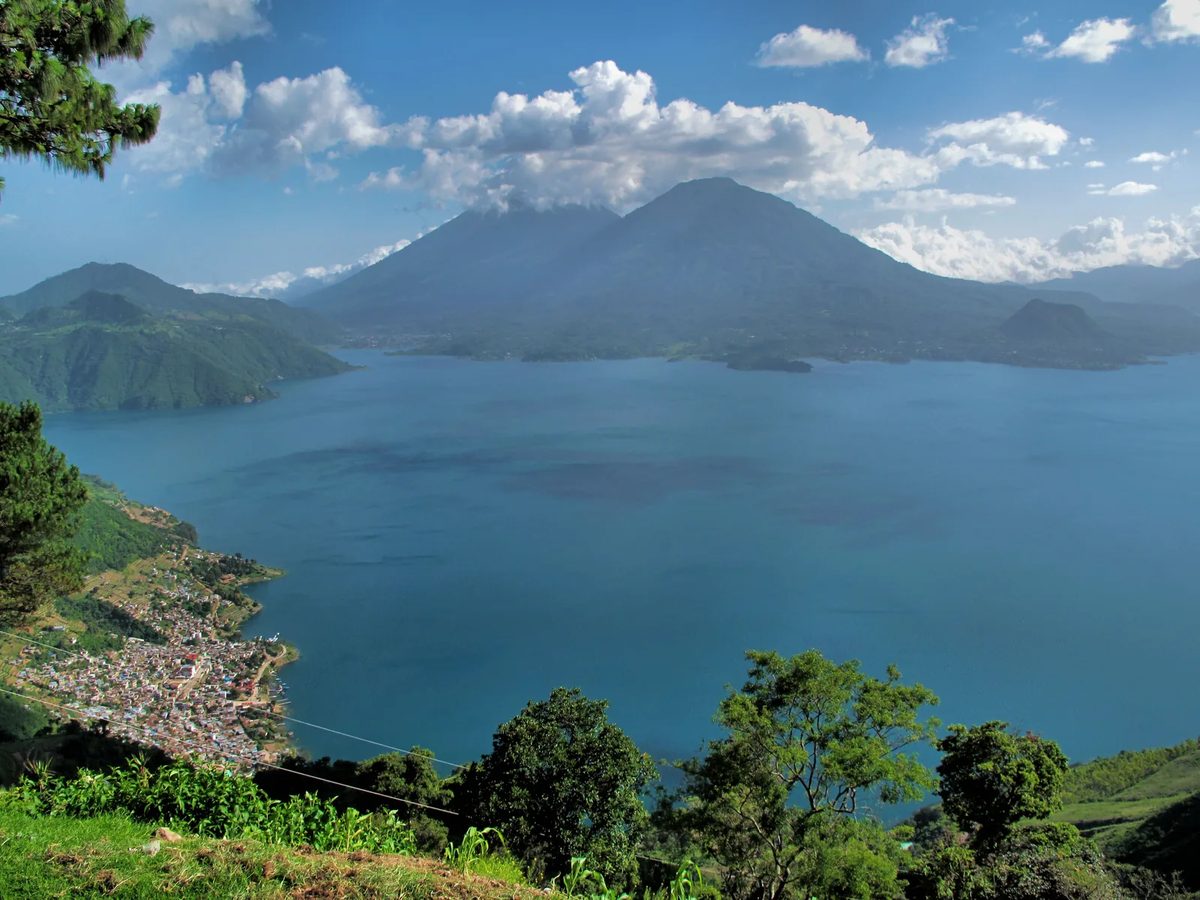
Lake Atitlán is one of the most photographed lakes in the world — a 130 km² caldera surrounded by three volcanoes, with eleven Maya villages along its shore. Each village has its own personality, and choosing where to stay matters more than at most destinations. This guide compares all eleven villages side-by-side, explains how to move between them by lancha, and gives sample itineraries for both quick visits and longer stays.
Lake Atitlán — the basics
Lake Atitlán sits in the Sololá department of Guatemala’s western highlands, at an elevation of 1,560 meters (5,118 ft). The lake itself is the flooded caldera of a massive eruption roughly 84,000 years ago, and it is the deepest lake in Central America — over 340 meters in places.
The lake is surrounded by three volcanoes on its southern shore:
| Volcano | Elevation | Status |
|---|---|---|
| Volcán San Pedro | 3,020 m | Dormant, hikeable |
| Volcán Tolimán | 3,158 m | Dormant |
| Volcán Atitlán | 3,535 m | Dormant, highest of the three |
The villages around the lake are predominantly Maya, with two main language groups: Kaqchikel speakers on the eastern shore (Panajachel, Santa Catarina, San Antonio Palopó), and Tz’utujil speakers on the southern and western shores (Santiago, San Pedro, San Juan, San Pablo). Spanish is widely spoken everywhere, and English is common in tourist-facing businesses in San Marcos, San Pedro, and Panajachel.
Daytime temperatures average 20-26°C (68-79°F) year-round. Nights at lake elevation are cool — 10-14°C (50-57°F) in December-February. The dry season is November through April; the rainy season is May through October.
For a deeper view of the surrounding volcanic landscape, see the Guatemala volcano tracker.
11 villages compared in one matrix
| Village | Character | Best for | Accommodation tier | Day-trip or stay? | Lancha from Panajachel |
|---|---|---|---|---|---|
| Panajachel (“Pana”) | Busy gateway town, restaurants, ATMs, shuttle hub | First arrival, logistics, families | Budget to mid-range | First night base; day-trip after | — (this is the hub) |
| San Pedro La Laguna | Backpacker, Spanish schools, late-night bars | Budget travelers, students, 20s-30s | Budget to mid-range | Stay 2-4 nights | 20-30 min direct / 45-60 min stopping |
| San Marcos La Laguna | Yoga, wellness, vegan, digital nomad | Wellness, longer stays, remote workers | Mid-range to boutique | Stay 3-7 nights | 20-25 min |
| Santiago Atitlán | Traditional Tz’utujil Maya, market town | Maya culture, photographers | Budget to mid-range | Half-day trip or 1 overnight | 35-40 min |
| San Juan La Laguna | Textile cooperatives, coffee tour, quiet | Artisans, slow travelers, families | Budget to mid-range | Day-trip from San Pedro or overnight | 30-35 min |
| Santa Cruz La Laguna | Chill, dock-access only, mid-range hotels | Quiet stays, kayaking | Mid-range to boutique | Stay 2-4 nights | 10-15 min |
| Tzununá | Tiny, yoga retreats, off-grid | Yoga retreats, deep quiet | Mid-range to boutique | Overnight if doing a retreat | 25-30 min |
| Jaibalito | Smallest village, luxury hideaways | Luxury, honeymoons | Mid-range to luxury | Overnight | 20-25 min |
| San Lucas Tolimán | Coffee region, agricultural | Coffee farm tours, off-the-path | Budget to mid-range | Half-day trip | 40-50 min |
| Santa Catarina Palopó | Lakeside boutique hotels, painted houses | Mid-range to upscale, photographers | Mid-range to luxury | Day-trip or overnight | Road 15 min from Pana |
| San Antonio Palopó | Traditional, pottery, eastern shore | Cultural day-trippers | Budget guesthouses | Day-trip | Road 25 min from Pana |
| San Pablo La Laguna | Tz’utujil, least touristy | Travelers seeking no-tourist exposure | Very limited | Pass-through | 30 min |
There are technically a few additional small settlements (San Marcos Cerro, Pasajquim), but these eleven are the villages travelers actually visit and stay in.
San Pedro La Laguna
Best for: budget travelers, Spanish students, backpackers, 20-something nightlife seekers.
San Pedro La Laguna sits beneath Volcán San Pedro on the southwestern shore. It has two distinct zones: the dockside strip (international cafés, hostels, bars) and the upper village (Tz’utujil residential, church plaza, local market).
- Spanish language schools — at least a dozen schools offer immersion programs at $150-$250 per week including 20 hours of class and homestay. One of the cheapest places in Latin America to learn Spanish.
- Nightlife — the only village on the lake with a real bar scene.
- Budget accommodation — hostel dorms Q60-100, private rooms from Q150, mid-range guesthouses Q300-600.
- Volcán San Pedro hike — 5-6 hour round trip to 3,020 m. Always go with a guide hired through the municipal office near the dock.
- Indian Nose (Nariz del Indio) sunrise hike — Atitlán’s signature dawn climb, a short 20-30 min uphill trail to a ridgeline viewpoint over the lake and volcanoes. See our Indian Nose hike guide for routes, costs, and trailheads.
Most petty theft incidents on Atitlán happen here at night on dark paths between the docks and the upper village. Take a tuk-tuk after 10 PM.
San Marcos La Laguna
Best for: yoga retreats, wellness, digital nomads, longer stays.
San Marcos is small — you can walk the entire developed area in 15 minutes — and the population is roughly half Maya local and half long-term foreign residents who run retreats, cafés, and meditation centers.
- Yoga and meditation centers — day classes and week-long retreats; prices are set by each center.
- Las Cristalinas (Cerro Tzankujil nature reserve) — small lakeside reserve with swimming platforms (check the cianosemáforo level first: can you swim in Lake Atitlán?). Entry about Q15-20 for foreigners, around Q10-15 for Guatemalans (AtitlanVida, 2025; Small Girl Big Backpack, Feb 2026). Cliff-jumping platform — see our Cerro Tzankujil guide.
- Vegan cafés — more vegan options per capita than anywhere else in Guatemala.
- Digital nomad coworking — limited but growing; Wi-Fi is decent at most cafés.
Quiet, slow-paced, alcohol-light. The village where travelers most often extend their stay from 3 nights to 3 weeks.
Santiago Atitlán
Best for: Maya cultural experience, photographers, half-day trippers, market-day visits.
Santiago is the largest indigenous town on the lake — predominantly Tz’utujil Maya. It sits on the southern shore between volcanoes Tolimán and Atitlán. Tourism is a smaller part of the economy than on the western shore.
- Maximón shrine — syncretic folk saint (also called San Simón) blending pre-Columbian Maya beliefs with Catholic iconography. The shrine rotates between cofradía (brotherhood) houses each year; ask locals where Maximón is currently housed. Small offerings of cigarettes, alcohol, and quetzales are customary.
- Iglesia Parroquial de Santiago Apóstol — colonial-era church on the central plaza with a complex Catholic-Maya religious tension history. Father Stanley Rother, an American priest assassinated here in 1981 during the civil war, was beatified by the Vatican in 2017.
- Friday and Sunday market days — the central market draws traders from across the lake. Traditional Maya dress (huipiles, the men’s striped pants unique to Santiago) is still everyday wear.
Santiago works as a half-day trip from Panajachel or San Pedro. Lodging is more limited and basic than on the western shore.
San Juan La Laguna
Best for: textile lovers, coffee tour enthusiasts, slow travelers, families, quiet stays.
San Juan is San Pedro’s quiet neighbor — a 5-minute lancha hop or 30-minute walk along the lakeshore road. Where San Pedro is loud and backpacker, San Juan is artisan and contemplative.
- Women’s weaving cooperatives — at least six cooperatives demonstrate the natural-dye and backstrap-weaving process. Watch women boil dye plants (achiote for orange, indigo for blue) and buy textiles direct from the weavers with no middleman markup.
- Coffee tours — San Juan sits on the slopes of Volcán San Pedro at coffee-growing elevation. Small cooperatives run tours covering planting, picking, processing, and roasting. Cost Q60-100 including tasting.
- Murals — self-guided street-art walking tour celebrating Tz’utujil culture.
- Quiet evenings — almost no bars; restaurants close by 9 PM. Good base for families and travelers avoiding the San Pedro party energy.
Widely recommended as a base for travelers who want the western shore without the backpacker volume of San Pedro.
Panajachel (“Pana”)
Best for: first arrivals, families, travelers who want infrastructure, shorter visits.
Panajachel is the gateway and largest town with full infrastructure. Shuttles drop here, the public lancha hub is here, and the ATMs, supermarkets, pharmacies, and tourist services are all in Pana.
- Calle Santander — main tourist street with restaurants, souvenir vendors, tour offices, hotels, and the dock at its southern end.
- Hotels for every budget — from Q100 hostel dorms to Q1,500+ lakefront boutique.
- Reserva Natural Atitlán — nature reserve 1.5 km from the centre with a butterfly dome, hanging bridges, zip lines and a coati observation deck. Entry Q80 for adults and Q45 under 12; zip lines Q310 or Q450 with entry included (the reserve’s own site, read 25 September 2026).
- Best logistics — laundry, ATMs (Banco Industrial, BAM, Banrural), gas, supermarkets.
Honest take: Pana is the most touristy, least quaint of the lake villages. But it is the most practical first stop. One night, scout day-trips, then relocate to a quieter village.
Santa Cruz La Laguna
Best for: quiet stays, mid-range accommodation, kayaking, travelers who want lake views without crowds.
Santa Cruz is 10-15 minutes from Panajachel — the closest village. Dock-access only; the upper village where the local population lives sits on a steep hill above the lakeside hotels, connected by footpath.
- Lakefront mid-range hotels — Q500-Q1,500 per night, lake views, swimming docks, on-site restaurants.
- Kayaking — calm morning water; hotel docks rent kayaks Q40-80 per hour.
- Scuba diving — ATI Divers, a PADI dive centre at the La Iguana Perdida hostel, runs fun dives from $55 and the PADI Open Water course for $410 (checked 1 October 2026); see scuba diving Lake Atitlán.
- Hiking trail to Tzununá — about 1.5 hours along the lakeshore footpath with classic Atitlán viewpoints.
No real village center for tourists — you stay at your hotel and either eat there or take a lancha to Pana for variety. One of the lake’s quietest options.
San Lucas Tolimán
Best for: coffee farm visits, agricultural tourism, travelers wanting the least touristy village with a real-economy feel.
San Lucas Tolimán is on the southeastern shore, a working agricultural town — coffee, sugar, avocado — with limited tourism infrastructure.
- Coffee farm tours — local Catholic mission cooperative and small fincas run educational tours showing bean-to-cup processing at altitude.
- Real Guatemala — local market, Spanish-only, no English menus. What the western shore villages looked like 30 years ago.
- Access — about 1 hour by road from Panajachel around the eastern shore, or 45 minutes by lancha.
For travelers who specifically want to step outside the gringo trail. Most come as a half-day trip.
Other villages briefly
Tzununá — tiny village between Santa Cruz and San Marcos. Mainly known for off-grid yoga retreats (Mayachik, La Cooperativa) and permaculture projects. No real village center for casual visitors; you come here for a retreat, not exploration. Lancha access only.
Jaibalito — the smallest of the lakefront villages, between Tzununá and Santa Cruz. Famous for one luxury hotel (Casa del Mundo, a cliff-built property regularly featured in international travel press) and one or two smaller boutique options. Lancha access only.
Santa Catarina Palopó — eastern shore village, road-accessible from Panajachel (15 minutes). Recently the focus of an ambitious community art project that painted the entire village’s houses in traditional Kaqchikel patterns. Several upscale lakeside hotels (Casa Palopó, Villa Santa Catarina). Day-trip or overnight.
San Antonio Palopó — further east along the road from Santa Catarina (10 more minutes). Known for pottery — the cooperative produces high-fired stoneware that ships internationally. Very few overnight options.
San Pablo La Laguna — small Tz’utujil village between San Marcos and San Juan. Almost no tourism infrastructure. If you want to see what a non-tourist Tz’utujil village looks like, this is it.
How to navigate by lancha
There is no road around most of Lake Atitlán — the western and southern shore villages (Santa Cruz, Tzununá, Jaibalito, San Marcos, San Pablo, San Juan, San Pedro, Santiago) are accessible only by boat. The eastern shore (Santa Catarina, San Antonio, San Lucas) has a road from Panajachel.
Public scheduled lanchas depart from Panajachel’s Calle del Embarcadero main public dock every 20-40 minutes during daylight. Two routes: western shore (Santa Cruz → Jaibalito → Tzununá → San Marcos → San Pablo → San Juan → San Pedro) and Santiago direct. Service runs roughly 6 AM to 6 PM. After dark, sparse and pricier.
| Route | Published fare |
|---|---|
| Pana to Santa Cruz | Q25 |
| Pana to San Marcos | Q25 |
| Pana to San Pedro | Q25 |
| Pana to Santiago | Q25 |
| Adjacent villages (e.g. San Pedro–San Juan) | Q10-15 |
Q25 is the published fare from Panajachel to any village on the route (Asociación de Lancheros San Juan Bautista, checked July 2026). Captains often open at Q40-50 for visitors — that is markup, not the fare; agree the price before you board. Pay when you board or when the driver collects mid-ride. Have small bills.
Private chartered lanchas run Q200-500 to any village (negotiable). Useful for groups, running late after scheduled service ends, or custom routes. Arrange at the dock or through your hotel.
Pickup vs scheduled. Pickup lanchas (colectivas) wait until full, then depart — slightly cheaper, unpredictable. Scheduled lanchas leave on a timetable regardless of fill. In peak season (Dec-Jan, Semana Santa, July-August), service is frequent enough that the difference rarely matters.
Take licensed lanchas with painted boat numbers and life jackets onboard.
Best week-long Atitlán itinerary
This itinerary assumes you arrive in Panajachel on Day 1 and have 7 nights total on the lake.
| Day | Base | Activities |
|---|---|---|
| Day 1 | Panajachel | Arrive, orient at Calle Santander, lakefront sunset walk, dinner in Pana |
| Day 2 | Panajachel | Half-day trip to Santa Catarina + San Antonio Palopó (road) for painted houses and pottery |
| Day 3 | Move to San Pedro La Laguna | Morning lancha, settle in San Pedro, afternoon coffee tour in San Juan |
| Day 4 | San Pedro | Volcán San Pedro hike (5-6 hours, early start), evening rest |
| Day 5 | Move to San Marcos La Laguna | Morning lancha hop (10 min), check in, yoga class, swim at Las Cristalinas |
| Day 6 | San Marcos | Day-trip to Santiago Atitlán (visit Maximón shrine + market), return to San Marcos for dinner |
| Day 7 | San Marcos | Slow morning, kayak rental, lancha back to Pana for shuttle out the next day |
This itinerary gives you the four most distinct flavors of the lake: gateway hub (Pana), backpacker / volcano-hike (San Pedro), wellness village (San Marcos), and traditional Maya town (Santiago).
Best 3-day Atitlán itinerary
For travelers tight on time — coming from Antigua or making this a quick Guatemala loop addition.
| Day | Base | Activities |
|---|---|---|
| Day 1 | Panajachel | Arrive by shuttle, walk Calle Santander, dinner in Pana |
| Day 2 | Day-trip from Pana | Morning lancha to San Marcos (1 hour at Las Cristalinas + yoga or café), lunch in San Pedro, afternoon coffee tour in San Juan, evening lancha back to Pana |
| Day 3 | Day-trip from Pana | Morning lancha to Santiago Atitlán (Maximón + market + church plaza, 3-4 hours), back to Pana for departure shuttle |
This gets you a taste of the four flagship villages in 3 days but skips depth. Recommended only if you genuinely cannot extend.
Where to stay across budgets
Sample tiers by village. Prices are per double room per night, 2026 levels.
Where to stay in Panajachel
Compare Booking.com, Airbnb and hotels on one map. Drag the map and set your dates to see live availability and real prices.
Affiliate links — if you book, we earn a small commission at no extra cost to you.
Backpacker / budget (Q60-300 / $8-40)
- San Pedro La Laguna — hostel dorms from Q60, private rooms from Q150. Cheapest on the lake.
- Panajachel — backpacker hotels along Calle Santander, Q150-300.
- San Juan La Laguna — small guesthouses Q150-250.
- Santiago Atitlán — basic hotels near the dock and plaza, Q150-300.
Mid-range (Q300-Q900 / $40-$115)
- San Marcos La Laguna — wellness-focused boutique guesthouses and retreat lodging.
- Santa Cruz La Laguna — lakefront mid-range with on-site restaurants and swim docks.
- Panajachel — mid-range hotels off Calle Santander.
- San Juan La Laguna — newer family-run boutique guesthouses.
Luxury (Q1,200+ / $155+)
- Jaibalito — cliff-built property; the lake’s signature luxury experience.
- Santa Catarina Palopó — upscale lakeside hotels with restaurant + spa.
- Santa Cruz La Laguna — high-end villa-style properties.
- Panajachel — two large legacy luxury hotels at the north and south ends with gardens, pools, private docks.
Lakefront properties on the western shore (Santa Cruz, Jaibalito, Tzununá) are lancha-access only. Confirm arrival logistics with your hotel — most arrange a Pana-dock pickup or have a private dock.
Safety at Atitlán
Lake Atitlán is broadly safe for travelers. The core points:
- Daylight travel between villages by public lancha is routine and safe. Thousands of tourists do this every day. Take licensed lanchas (painted numbers, life jackets onboard).
- Petty theft happens in San Pedro La Laguna at night. Mostly on dark paths between the docks and the upper village. Take a tuk-tuk after 10 PM, keep valuables on you, do not walk alone deep into unlit areas.
- Violent crime against tourists is rare. The lake has not had the patterns of express-kidnapping or armed robbery seen in some larger Guatemalan cities.
- Swimming. The lake has had recurring cyanobacteria blooms. Many travelers swim at Las Cristalinas (San Marcos), Santa Cruz docks, and quiet coves — check current water conditions and avoid swallowing water.
- Hiking volcanoes. Always go with a licensed guide on Volcán San Pedro or any of the other volcanoes. Solo hikes have had historical incidents.
- Standard precautions. Don’t flash expensive electronics on the lancha or in markets. Take licensed taxis or tuk-tuks at night. Trust your gut.
The country-level Guatemala safety overview gives broader context. Atitlán is on the safer end of Guatemalan destinations for foreign travelers.
Combining with the rest of Guatemala
Lake Atitlán is one stop on a classic Guatemala loop. The standard 10-14 day route:
- Guatemala City — arrive (La Aurora airport), transfer same day to Antigua
- Antigua — 3-4 nights (colonial city, Acatenango volcano hike, Pacaya day trip)
- Lake Atitlán — 4-7 nights (this guide)
- Chichicastenango — 1-2 nights (massive Thursday/Sunday market, halfway between Atitlán and the highlands)
- Quetzaltenango (Xela) — 1-2 nights (highland city, less touristy, Spanish schools)
- Tikal / Flores — 2-3 nights (fly from Guatemala City to Flores; classic Maya ruins. See the Tikal multi-day itinerary)
If you want shorter, the Antigua + Atitlán loop is 7-10 days total and covers the two flagship destinations without rushing. For travelers with kids, the Pacaya day hike and a few quiet Atitlán days (San Juan or Santa Cruz base) is a gentler combination than the Acatenango overnight.
For the drive itself, see our Guatemala City to Lake Atitlán and Antigua to Lake Atitlán route guides.
Related guides
- Guatemala volcano tracker — live activity for Fuego, Santiaguito, and Pacaya
- Acatenango overnight hike (2026) — most popular volcano adventure in Guatemala
- Pacaya day hike with kids — family-friendly alternative
- Tikal multi-day itinerary — the Maya ruins half of the classic loop
- Antigua hub — the colonial city most travelers combine with Atitlán
- Lake Atitlán from USA — flights, shuttles, and logistics for American travelers
- Methodology — how we research and verify Guatemala data
Frequently Asked Questions
Which Lake Atitlán village is best for first-time visitors?
Panajachel for first visits — it has the most infrastructure (ATMs, restaurants, hotels, English speakers), serves as the main lancha hub connecting all other villages, and is the easiest arrival point from Guatemala City or Antigua. Spend 1-2 nights in Pana, then day-trip or relocate to San Marcos, San Pedro, or San Juan based on what vibe you preferred.
How do I get between the Lake Atitlán villages?
Public lanchas (small motorboats) — there is no road around most of the lake. From Panajachel’s main public dock, scheduled lanchas run roughly every 20-40 minutes during daylight to all major villages. Typical fare: Q25 per person from Panajachel to any village on the route (the published lancheros’ fare — higher quotes are tourist markup). Service slows after 6 PM. Private lanchas can be chartered for Q200-500.
What is the difference between San Pedro and San Marcos?
San Pedro La Laguna is the backpacker and party hub — cheapest accommodation on the lake, Spanish schools, bars open late, lots of 20-something travelers. San Marcos La Laguna is the wellness village — yoga retreats, vegan cafés, meditation centers, digital nomads, quiet evenings. They are 10 minutes apart by lancha but feel like different worlds.
Is Santiago Atitlán worth visiting?
Yes, if you want the most authentic Maya cultural experience on the lake. Santiago is the largest indigenous Tz’utujil town on Atitlán with a strong traditional identity — the famous Maximón shrine rotates between cofradía houses each year. Friday market day and the church plaza are highlights. Less touristy than the western shore villages, but lancha service is frequent from Panajachel.
How many days do I need at Lake Atitlán?
Minimum 2 nights to see the lake at all (1 in Panajachel + 1 in either San Pedro or San Marcos). 3-4 nights to visit multiple villages without rushing. A week lets you settle into one village while day-tripping to others — the sweet spot for travelers who actually want to experience the lake instead of checking it off a list.
Is Lake Atitlán safe for tourists?
Generally yes. Daylight travel between villages by public lancha is routine and safe. San Pedro La Laguna has occasional petty theft at night near the bar strip — keep valuables secure and avoid walking alone on dark paths after midnight. Santa Cruz, San Marcos, Santa Catarina, and the eastern shore villages are particularly quiet. Take licensed lanchas and avoid swimming alone in remote spots.
When is the best season to visit Lake Atitlán?
Dry season is November through April — clear lake views, mild daytime temperatures, minimal rain. December and January get cool at night (the lake sits at 1,560 m elevation). Rainy season is May through October, when the surrounding hills are deeply green. The lake is beautiful year-round; rainy season has fewer tourists and lower prices.
Can I drink the water at Lake Atitlán?
No — drink only bottled or properly filtered water, including for brushing teeth. The lake authority AMSCLAE reports recurring cyanobacteria blooms and publishes a four-colour alert (cianosemáforo); in 2026 the lake was at orange by 26 May and at yellow by 1 July. Check the current level before swimming, and don’t swallow lake water.

![Antigua to San Pedro or San Marcos La Laguna: Direct Shuttles [2026]](/cdn-cgi/image/width=640,format=auto,quality=80/images/articles/og-default.webp)