The Easy Half and the Hard Half
Moving a dog or cat from Australia to Guatemala splits cleanly into two halves, and they are nothing alike.
Getting your pet OUT of Australia and INTO Guatemala is the easy half. Australia is rabies-free, so the export leg is light, and Guatemala’s entry rules are the same reasonable checklist any origin faces — microchip, rabies vaccine, health certificate, import permit, no quarantine.
Getting your pet BACK to Australia is the trap. Guatemala is a non-approved country for pet import to Australia. A pet that has been living in Guatemala cannot fly home to Australia directly — no matter how healthy, how well-documented, or how long you owned it before you left. This catches Australians completely off guard, and the fix has to be started before you leave Australia. If there is any chance you will one day take your pet home, read the re-import section below first.
Exporting Your Pet Out of Australia (the DAFF Side)
The Australian export leg is controlled by DAFF (the Department of Agriculture, Fisheries and Forestry). Because Australia is rabies-free, it is straightforward:
- No export licence is required for dogs or cats (only livestock need one).
- A DAFF export permit AND a government health certificate ARE required, and both are issued by a DAFF veterinary officer.
- Guatemala (via MAGA) sets the actual health requirements — DAFF only certifies your pet against them. You supply Guatemala’s requirements (and the MAGA import permit) in writing to the vet. Any non-English document needs a NAATI level 2/3 certified translation.
The export process, in order:
- Confirm Guatemala’s import requirements (the MAGA checklist below) and obtain the MAGA import permit.
- Use a registered veterinarian to prepare the animal.
- Submit a Notice of Intention (NOI) to Export Live Animals (other than Livestock) to your DAFF regional office at least 10 working days before departure.
- Have the registered vet perform a final health and welfare examination within 72 hours of departure.
- Attend the DAFF pre-export appointment. Once satisfied, DAFF issues the export permit and health certificate.
- The animal must leave Australia within 72 hours of the permit being issued, in an IATA-standard crate inspected by the vet.
That is the whole outbound leg. There is no titre test to enter Guatemala from Australia, no quarantine on either end, and no export licence. Weeks, not months.
What Guatemala Requires to Let Your Pet In
Guatemala’s side is handled by MAGA (Ministerio de Agricultura, Ganaderia y Alimentacion) and its OIRSA veterinary inspectors at the airport. A compliant pet needs:
Microchip (ISO 11784/11785)
An ISO-compliant microchip must be implanted before the rabies vaccination. If your pet was chipped years ago, confirm the chip is ISO standard so Guatemalan scanners can read it. The chip number appears on every subsequent document.
Rabies vaccination (at least 30 days before travel)
A current rabies vaccination, given after the microchip and at least 30 days before travel, recorded with the chip number, batch and date. Boosters within the manufacturer’s validity window count.
International health certificate (within 10 days of travel)
A government-accredited veterinarian issues an international health certificate within 10 days of travel. For Australians this is filled by the DAFF export health certificate from the step above — you do not need a second document.
MAGA import permit (about 30 days before arrival)
Apply through MAGA roughly 30 days before arrival. The permit confirms Guatemala accepts your pet under the documents provided. Fee approximately Q150-300. It can be filed by the owner, a Guatemalan customs broker, or a pet relocation specialist handling the whole move.
No quarantine in Guatemala. A pet with complete, matching paperwork clears the MAGA-OIRSA inspection at La Aurora and goes home with you the same day.
The Re-Import Trap: You Cannot Fly Home to Australia From Guatemala
This is the section that makes this page different from every other “moving your pet” guide.
As of 2026, Guatemala is a non-approved country for pet import to Australia. DAFF sorts origin countries into Group 1 (rabies-free, e.g. New Zealand), Group 2 (recognised rabies-free) and Group 3 (rabies present but controlled — which includes the USA, Canada, the UK, the EU states and much of the Americas). Everything else is non-approved. Guatemala appears on none of these lists — and no mainland Central American country does. (DAFF can revise these lists without notice, so re-check before you rely on it.)
A pet cannot be exported to Australia from a non-approved country. To bring a Guatemala-resident dog or cat to Australia, you must:
- Relocate the pet to an approved country — for example the USA (see our USA-to-Guatemala pet guide in reverse) or a European country.
- Do the rabies vaccination and RNATT titre test THERE. All vaccination and testing must take place in an approved country — rabies work done in Guatemala is not accepted. The RNATT (rabies neutralising antibody titre test, FAVN or RFFIT method) must return >=0.5 IU/ml.
- Keep the pet continuously resident in that approved country for 180 consecutive days immediately before export. This is a residency period, not quarantine — the clock starts when the RNATT blood sample reaches the lab. There are no exceptions to the 180-day period except the pre-departure ACDP exemption below.
- Export to Australia on a valid import permit, flying directly into Melbourne as manifested cargo (not cabin).
- Complete mandatory quarantine at Mickleham (see below).
The RNATT sample must be taken between 12 months and 180 days before export, and the RNATT is valid for 12 months. The Australian import permit is applied for through BICON and typically takes 20-40 business days (up to 123 business days). For the approved-country leg alone, allow at least 6-7 months — DAFF recommends starting a Group 3 import at least 7 months out.
Read that again: a relocation to a third country, six to seven months of residence, air cargo, and quarantine — just to bring the pet you already own back home. That is why the next section is the most valuable thing on this page.
Plan Now: Do the ACDP Rabies Titre Test Before You Leave Australia
There is exactly one exemption to the 180-day residency rule, and it costs a fraction of what a return relocation does.
Before you leave Australia:
- Vaccinate your pet against rabies in Australia, and
- Get an RNATT titre test done through the ACDP (Australian Centre for Disease Preparedness, CSIRO) with a result >=0.5 IU/ml.
A valid pre-departure ACDP RNATT is the only way to skip the 180-day residency requirement, and it is also the path to the minimum 10-day Mickleham quarantine instead of 30 days — provided the pet returns within 12 months of the blood sample and its rabies protection has been maintained the entire time.
What the pre-departure ACDP RNATT does not do: it does not let the pet fly directly from Guatemala. A pet that has visited a non-approved country must still be prepared for export in an approved country — it just skips the 180-day wait once it gets there.
Maintaining it while you live in Guatemala: you must keep the rabies vaccination continuously valid (if it lapses even by one day, eligibility is lost) and re-do the RNATT every year before it expires. Because Guatemala is non-approved, that means travelling to an approved country each year for the booster, a fresh RNATT, and an RNATT declaration endorsed by an official government vet of that approved country.
Two more things worth doing before you go, if return within six months is even possible:
- Apply for and hold a valid Australian import permit before you leave.
- Note that a trip under 45 days may qualify for reduced testing/short-stay conditions (declare it on the permit application), and returning from a Group 1 country such as New Zealand means no quarantine at all.
The bottom line: the ACDP titre test costs a fraction of a return relocation. Doing it before you fly out is the difference between your dog coming home after roughly 10 days of quarantine and being stranded through a 180-day residency in a third country. If there is any chance you will return to Australia, do the ACDP RNATT before you leave.
Mandatory Quarantine at Mickleham (Return Only)
Post-entry quarantine on the way back into Australia is mandatory and can only be done at the Mickleham post-entry quarantine facility near Melbourne. Home quarantine is not allowed.
- Duration: minimum 30 days, reducible to a minimum of 10 days only if an official government vet verified the pet’s identity before the RNATT blood draw (or the pet is Australian-origin with export certification). The stated range is at least 10-30 days and up to 180 days if any biosecurity issue arises.
- DAFF cost estimates (import permit + quarantine only): about A$3,114 for the 10-day quarantine and A$4,234 for the 30-day quarantine, per animal (2026 DAFF fees, subject to annual review; excludes transport/vet).
Itemised Mickleham fees per animal (also DAFF-only — air cargo, crate, and vet prep are all extra):
| Mickleham fee item | Amount (AUD) |
|---|---|
| Reservation | A$282 |
| Importation charge | A$1,132 |
| Inspection | A$84 / 30 min |
| Document assessment | A$84 / 30 min |
| Daily husbandry | A$56 / day |
| Terminal service fee (min) | A$170 |
| Out-of-hours collection | A$176 weekday / A$186 weekend |
These are 2026 DAFF fees, reviewed annually (DAFF fees typically increase from 1 July). Confirm current amounts before you budget.
Cost: What to Budget
- Guatemala import side: the only firm fee is the MAGA import permit at roughly Q150-300. An optional MAGA broker to smooth an after-hours arrival runs about $50-150.
- Australia export side (vet prep + air cargo): no reliable Australian-dollar figure exists for the outbound vet work and cargo, so treat it as several thousand AUD and get quotes — it depends on your pet’s size, the route, and whether you use a relocation specialist.
- The return trip is the expensive one: the DAFF permit + quarantine estimates above (A$3,114 / A$4,234) are only part of it. Add the third-country relocation, up to 180 days of boarding there, the rabies + RNATT work, air cargo and crate.
Moving money for permits, vet bills and boarding? See the live AUD to GTQ exchange rate before you convert.
Flying Your Pet: Cabin vs Cargo, and Which Airlines
There are no direct Australia-Guatemala flights, so every route is multi-leg, connecting through a US, European or Gulf hub.
| Factor | In-cabin | Cargo |
|---|---|---|
| Pet weight (incl. carrier) | Under ~8kg | Any weight |
| Carrier | Soft, IATA-approved, fits under seat | Hard IATA-compliant crate |
| Handling | Owner carries the pet | Manifested cargo, temperature-controlled hold |
| Paperwork | Lower | Higher (specialist usually engaged) |
Small dogs and cats often fly in-cabin on a carrier that allows it; larger pets go as manifested cargo. On the hub-to-Guatemala leg, KLM/Air France and Lufthansa have the strongest animal-welfare reputations for cargo. Avoid budget carriers and multi-airline tickets where the pet has to be re-checked between carriers. For most multi-leg cargo moves, a pet relocation specialist handling the crate, airline coordination, MAGA permit and both-end vet visits pays for itself in reduced delays and paperwork risk.
Banned and Restricted Breeds (Two Separate Lists)
Airlines (for the flight into Guatemala): Guatemala itself has no breed ban, but carriers commonly refuse Pit Bull Terrier, American Staffordshire Terrier, Staffordshire Bull Terrier, Tosa, Fila Brasileiro and certain Mastiff variants, and restrict snub-nosed breeds (Pugs, French/English Bulldogs, Boxers, Boston Terriers, Persians, Himalayans) in cargo for welfare reasons. Check the specific airline’s policy before booking.
Australian government import ban (only matters if you plan to return): separate from the airlines, Australia bans importing dogo Argentino, fila Brasileiro, Japanese tosa, American pit bull terrier / pit bull terrier and Perro de Presa Canario, plus prohibited hybrids (Czechoslovakian wolfdog/Vlcak, Saarloos wolfdog, Lupo Italiano, Kunming wolfdog, and hybrid cats such as Savannah, Safari, Chausie and Bengal). Mixed breeds are allowed.
Arriving at La Aurora, and Vets in Guatemala
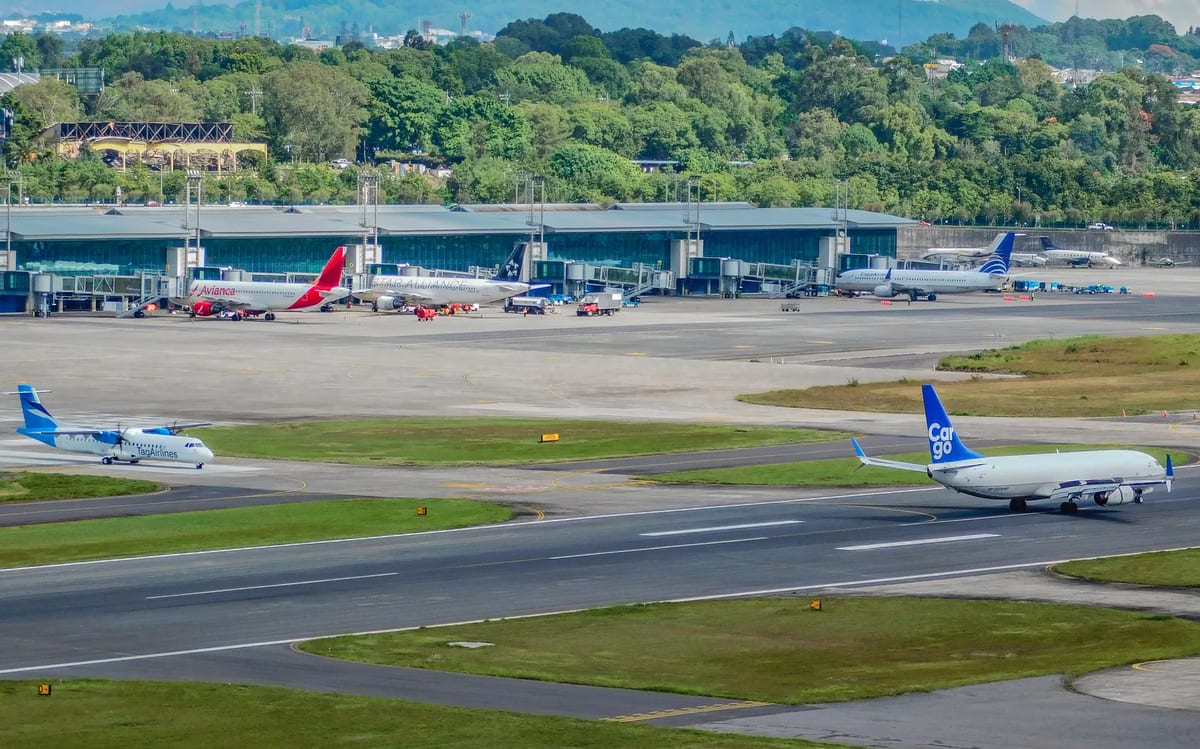
At La Aurora International Airport (GUA), MAGA-OIRSA inspectors scan the microchip and check it against your paperwork. If everything matches, the pet is cleared and walked out with you the same day. OIRSA prefers original paper certificates, and its counter thins out after roughly 8-9pm — daytime arrivals clear same-day, while late red-eyes risk an overnight hold. A MAGA broker can pre-coordinate an after-hours release.
Once you are settled, Guatemala has international-quality veterinary clinics in Guatemala City, Antigua and Cayala, many with English-speaking vets. The big difference from home is the climate: year-round tick and flea pressure and much higher heartworm prevalence than Australia, so keep preventatives going all year. Routine pet care runs well below Australian private-vet prices — a practical reason many owners find the day-to-day easier here than they expected.
Cross-Links
- AUD to GTQ exchange rate — convert money for permits, vet bills and boarding
- Australian passport & visa options for Guatemala
- Australian superannuation in Guatemala
- Australian tax residency when moving to Guatemala
- Visiting Guatemala from Australia
- Best time for Australians to visit Guatemala
- Antigua for Australian backpackers
- Pet relocation UK to Guatemala — the UK counterpart
- Pet relocation USA to Guatemala — the USA counterpart (a useful approved-country return route)
- Healthcare in Guatemala
- Retire in Guatemala
Sources
- DAFF (Department of Agriculture, Fisheries and Forestry): Exporting companion animals — export permit, NOI, 72-hour final exam. https://www.agriculture.gov.au/biosecurity-trade/export/controlled-goods/live-animals/companion-and-other-live-animals
- DAFF Industry Advice 80-2023: export permit + health certificate issued by a DAFF veterinary officer. https://www.agriculture.gov.au/biosecurity-trade/import/industry-advice/2023/80-2023
- DAFF: Cats and dogs — frequently asked questions (non-approved country, group system, 180-day residency, quarantine, A$3,114 / A$4,234). https://www.agriculture.gov.au/biosecurity-trade/cats-dogs/frequently-asked-questions
- DAFF: Category 3 step-by-step guide for dogs (RNATT, 180 days, Mickleham, banned breeds). https://www.agriculture.gov.au/biosecurity-trade/cats-dogs/how-to-import/step-by-step-guides/category-3-step-by-step-guide-for-dogs
- DAFF: Cats and dogs returning to Australia (pre-departure ACDP RNATT, the only exemption, short-stay rules). https://www.agriculture.gov.au/biosecurity-trade/cats-dogs/cats-dogs-returning-to-australia
- DAFF: Quarantine in Australia (Mickleham only, no home quarantine). https://www.agriculture.gov.au/biosecurity-trade/cats-dogs/quarantine-in-australia
- DAFF: Quarantine facility fees (itemised Mickleham AUD fees). https://www.agriculture.gov.au/biosecurity-trade/cats-dogs/quarantine-facilities-and-fees/fees
- ACDP (CSIRO): companion animal rabies (RNATT) testing. https://acdp.csiro.au/info/companion_and_equine_testing.aspx
- MAGA Guatemala: Permiso de importacion de mascotas (Guatemala import requirements), published on VISAR’s importaciones page
- IATA Live Animals Regulations (LAR) 2026
This page provides general guidance for Australian pet owners moving to (and potentially back from) Guatemala. It is not veterinary or legal advice. Pet import and export rules, group-country lists, quarantine periods and fees change — confirm current requirements with DAFF, the ACDP, MAGA and your veterinarian before booking anything.
Frequently Asked Questions
What do I need to bring my dog or cat from Australia to Guatemala?
Four things on the Australia side plus Guatemala’s permit: (1) an ISO 11784/11785 microchip; (2) a current rabies vaccination given at least 30 days before travel and after the microchip; (3) a DAFF export permit and government health certificate issued by a DAFF veterinary officer — this doubles as the international health certificate Guatemala requires within 10 days of travel; (4) a MAGA import permit from Guatemala’s Ministerio de Agricultura, applied for about 30 days before arrival, fee roughly Q150-300. No export licence is needed for dogs or cats. Every document must match the microchip number.
Can my pet fly straight home to Australia from Guatemala later?
No. As of 2026 Guatemala is a non-approved country for pet import to Australia — it is on none of DAFF’s approved lists (Group 1, 2 or 3). A pet living in Guatemala cannot be exported directly to Australia. To bring it back you must first relocate it to an approved country (for example the USA or a European country), do the rabies vaccination and RNATT titre test THERE (rabies work done in Guatemala is not accepted), keep the pet continuously resident in that approved country for 180 days, then export to Australia, then complete mandatory quarantine at the Mickleham facility in Melbourne. This is the single biggest thing Australians underestimate.
How do I keep the return-to-Australia option open?
Before you leave Australia, vaccinate your pet against rabies and get an RNATT titre test (result >=0.5 IU/ml) done through the ACDP (Australian Centre for Disease Preparedness, CSIRO). A pre-departure ACDP RNATT is the ONLY exemption to the 180-day residency rule, and it also cuts Mickleham quarantine to a minimum of 10 days instead of 30 — provided the pet returns within 12 months of the blood sample and rabies protection is maintained. It does not let the pet fly directly out of Guatemala; the pet must still depart for Australia from an approved country. To keep it valid long-term you must re-do the RNATT every year in an approved country before it expires.
Is there quarantine in Guatemala for pets from Australia?
No. A pet arriving with complete, matching paperwork (microchip, valid rabies vaccine, international health certificate, MAGA permit) passes a MAGA-OIRSA veterinary inspection at La Aurora airport and goes home the same day. The risk is mismatched or incomplete documents, or a late-night arrival after the OIRSA counter thins out — a MAGA broker (about $50-150) can pre-coordinate an after-hours release.
How much does the return trip to Australia cost?
DAFF’s own estimates for the import permit plus quarantine are about A$3,114 for the reduced 10-day quarantine and A$4,234 for the 30-day quarantine, per animal (2026 DAFF fees, subject to annual review; excludes transport/vet). On top of that you pay for the mandatory relocation to a third approved country, the rabies plus RNATT work there, up to 180 days of boarding there, air cargo, an IATA crate, and vet prep. The return leg costs far more than the outbound move.
How long should I allow to bring the pet back to Australia?
For the approved-country leg alone, allow at least 6-7 months — DAFF recommends starting a Group 3 import at least 7 months out. The RNATT sample must be taken between 12 months and 180 days before export, and the 180-day residency clock starts when the sample reaches the lab. The Australian import permit (applied via BICON) typically takes 20-40 business days and up to 123 business days, and the pet must fly directly into Melbourne as manifested cargo, not cabin.
What's the best way to fly a pet from Australia to Guatemala?
There are no direct Australia-Guatemala flights, so every route connects through a US, European or Gulf hub. Small pets (under about 8kg including the carrier) can travel in-cabin on some carriers; larger pets go as manifested cargo in an IATA-compliant crate. Carriers with strong animal-welfare reputations on the hub-to-Guatemala leg include KLM/Air France and Lufthansa. For multi-leg cargo moves, most owners use a pet relocation specialist to handle the crate, airline coordination, MAGA permit and vet inspection at both ends.
Are any breeds banned?
Two separate lists apply. Guatemala has no breed ban, but airlines refuse some breeds — Pit Bull Terrier, American Staffordshire and Staffordshire Bull Terriers, Tosa, Fila Brasileiro and certain Mastiff types — and restrict snub-nosed breeds (Pugs, Bulldogs, Boxers, Persians) in cargo. Separately, if you ever plan to return to Australia, Australia’s government bans importing dogo Argentino, fila Brasileiro, Japanese tosa, American pit bull / pit bull terrier and Perro de Presa Canario, plus certain wolf-dog and hybrid-cat crosses.