- Best weather: November-April dry season.
- Best value: Mid-Nov to mid-Dec, late Jan to mid-Mar.
- Australian summer peak: Great weather, worst prices (AU$3-5K flights).
- Australian winter escape: Cheap, lush, but afternoon rain daily.
- Avoid: Aug-Sep (peak rain), Holy Week if budget-tight, hurricane months for Caribbean coast.
This page maps Guatemala’s climate against the Australian calendar — when to go, what it costs, and when each major attraction is at its best for Aussie travellers planning the 25-30 hour journey.
For the month-by-month data behind this — temperature by altitude, how wet each month is, and INGUAT visitor numbers — see best time to visit Guatemala, month by month.
Dry Season vs Rainy Season
Guatemala has two seasons, not four:
| Season | Months | Highland weather (Antigua, Atitlán) | Jungle weather (Tikal, Petén) |
|---|---|---|---|
| Dry season | Mid-November to late April | Sunny days 22-26°C, cool nights 8-15°C, dust | Hot 28-32°C, dry, manageable |
| Rainy season | Mid-May to late October | Sunny mornings, 2-5 PM downpours, 18-25°C | Hot 30-36°C, humid, persistent rain |
The rainy-season pattern is critical to understand: it is NOT all-day rain. It’s:
- 7-11 AM: clear, sunny, perfect
- 11 AM-2 PM: cloud builds, occasional drizzle
- 2-5 PM: torrential downpour (often only 1-2 hours)
- 5-9 PM: clearing, often beautiful evenings
This means rainy-season travel works if you front-load outdoor activities and accept afternoon flexibility. Most Aussie backpackers who visit June-September have a fine time — they just don’t book sunset volcano hikes.
Aligning with the Australian Calendar
| Australian period | Months | Guatemala season | Verdict for Aussies |
|---|---|---|---|
| Summer school holidays | Dec 18 - Jan 25 | Peak dry | Best weather, worst prices |
| Late summer | Feb | Late dry | Excellent — moderate prices, dry |
| Autumn | Mar-May | Dry → wet transition | Mar good; Apr Easter spike; May rain starts |
| Easter school holiday | Variable Mar-Apr | Late dry / Holy Week | Semana Santa spectacular but expensive |
| Winter | Jun-Aug | Peak rainy | Cheap but afternoon storms daily |
| Winter school holiday | Jul (2 weeks) | Peak rainy | Worst weather, decent prices, lush |
| Spring | Sep-Nov | Late rainy → dry | Sep storms; Oct clearing; Nov ideal |
| Spring school holiday | Sep-Oct | Late rainy | Variable; Oct improving rapidly |
Australian Summer Holidays (Dec 18 - Jan 25)
Weather: Peak dry season. Best of the year. Sunny daily, cool clear nights, no rain.
Prices: Brutal. SYD/MEL → GUA economy returns AU$3,000-5,000 vs AU$2,000-2,800 in shoulder seasons. Antigua hostels dorm beds AU$25-40 vs AU$15-25 normal. Acatenango overnight AU$130-180 vs AU$80-120 normal.
Crowds: Antigua busy but not unmanageable. Tikal sunrise tour sells out 2-4 weeks ahead. Lake Atitlán hostels in Panajachel and San Pedro book solid.
Verdict: Worth the premium ONLY if you have no flexibility — best weather guaranteed, but expect 40-60% cost premium across the board.
Australian Autumn (Mar-May)
March: Excellent. Dry season still strong, prices moderate, Acatenango clear nights, Tikal accessible.
April: Mixed. Early April Easter / Semana Santa = price spike + crowds in Antigua specifically (rest of country less affected). Late April = transition to wet season begins.
May: Wet season starts mid-month. Plan dry-season activities first half, accept afternoon rain in second half. Prices excellent.
Australian Winter Escape (Jun-Aug)
Weather: Guatemala’s peak rainy season. Antigua daily 2-5 PM downpours, 15-22°C. Lake Atitlán green and gorgeous, lake levels at their highest. Tikal hot, wet, mosquito-heavy. Caribbean coast hurricane risk emerging.
Prices: 20-40% lower than dry season. Flights AU$1,900-2,800 economy return SYD-GUA. Hostels at low end. Acatenango tours discounted.
Pros: Cheap, fewer crowds, lush green landscapes, easy to find accommodation walk-in.
Cons: Daily afternoon rain disrupts plans, Acatenango summit often clouded (you may not see Fuego erupting), Tikal sweaty, hurricane risk for Caribbean coast.
Verdict: Solid choice for budget-conscious Aussies escaping a cold Sydney/Melbourne winter — accept the rain pattern and you’ll have a great trip at 25-40% less cost than the dry season.
Australian Spring (Sep-Nov)
September: Peak rain. Avoid unless flexible. October: Improving rapidly second half. Excellent value, weather firms up. November: Ideal month. Dry season starts mid-month, prices still moderate before Christmas spike, crowds light.
November 15 - December 10 is arguably the single best Australian travel window for Guatemala — dry weather established, prices pre-peak, manageable crowds.
Best Months for Specific Activities
| Activity | Best months | Acceptable | Avoid |
|---|---|---|---|
| Acatenango overnight | Dec-Mar | Nov, Apr | May-Oct (cloud cover) |
| Pacaya day hike | Year-round (dry season best) | Wet season AM | Heavy rain days |
| Tikal Mayan ruins | Dec-Mar | Apr, Nov | Jun-Sep (heat + mosquitos) |
| Lake Atitlán | Year-round | Wet season fine for highland visit | None really |
| Antigua city | Year-round | All months work | None |
| Semuc Champey | Nov-Apr (road accessibility) | May, Oct | Jun-Sep (road washouts) |
| Caribbean coast (Río Dulce, Livingston) | Jan-May | Nov-Dec | Aug-Oct (hurricane risk) |
| Pacific surf coast | May-Oct (biggest swells) | Year-round | None — but cooler swells Nov-Apr |
| Coffee tours | Nov-Mar (harvest season) | Year-round | None |
| Spanish school | Year-round | All months | None — climate doesn’t affect classes |
Hurricane Season — Caribbean Coast Risk
Atlantic hurricane season: June 1 to November 30, peak August-October.
| Region | Hurricane risk | Practical impact |
|---|---|---|
| Caribbean coast (Río Dulce, Livingston, Puerto Barrios) | HIGH Aug-Oct | Flooding, road closures, ferry disruptions |
| Petén (Tikal, Flores) | LOW (inland) | Heavy rain from remnants, jungle muddy |
| Highlands (Antigua, Atitlán, Xela) | NEGLIGIBLE direct hurricane | Increased rainfall from tropical systems |
| Pacific coast | NEGLIGIBLE direct | Increased rainfall, occasional flooding |
| Guatemala City | NEGLIGIBLE | Tropical rain events |
Recent major hurricanes affecting Guatemala:
- Hurricane Eta + Iota (Nov 2020) — devastating Caribbean coast and Alta Verapaz flooding
- Hurricane Stan (Oct 2005) — major Atitlán region landslides
- Tropical Storm Agatha (Jun 2010) — Pacaya eruption coincidence + heavy rain
If you must visit Caribbean coast in hurricane season: monitor NOAA NHC forecasts (3-5 day track reliability), buy travel insurance with trip-cancellation cover, and have flexibility to skip Caribbean leg.
Australian Public Holiday Clusters
Australian public holiday alignment is sometimes useful for extending shorter trips:
| Australian holiday cluster | Dates 2026 | Guatemala consideration |
|---|---|---|
| Easter long weekend | Apr 3-6, 2026 | Likely overlaps with Semana Santa in Antigua |
| ANZAC Day | Apr 25, 2026 (Saturday) | Late dry season, good weather |
| King’s Birthday | Jun 8, 2026 (varies by state) | Start of wet season |
| Labour Day | Varies by state | Generally October — late wet, good value |
| Melbourne Cup (Vic) | Nov 3, 2026 | Late wet, weather improving |
| Christmas/New Year | Dec 25-Jan 1 | Peak everything — prices, weather, crowds |
For 2-3 week trips, the Easter + ANZAC Day combination (3-4 weeks April) lines up with Guatemala’s late dry season — Semana Santa atmosphere available, then quieter weather window after.
For 1-2 week trips, the November 15 - December 5 window is the single best price-to-weather sweet spot.
Specific Considerations for Australian Travellers
Long-haul recovery time
The 25-30 hour journey from Sydney/Melbourne to Guatemala City demands recovery time. Plan:
- Day 1 in Antigua: arrival evening, simple meal, early sleep (don’t book activities)
- Day 2: gentle walking around the colonial centre, acclimatise to 1,533m altitude
- Day 3+: start activities
If you’re squeezing a 7-day trip, expect to spend the first 36-48 hours genuinely tired. A 10-14 day minimum trip is strongly recommended to amortise the flight.
Jet lag direction
Sydney/Melbourne is GMT+10 (or +11 in daylight savings). Guatemala City is GMT-6. Total difference: 16-17 hours.
Westward travel is generally easier than eastward — you’ll arrive in Guatemala feeling like it’s late evening Australian time. Most Aussies adjust within 2-3 days. The return journey home is harder — expect 4-7 days of disrupted sleep on return to Sydney/Melbourne.
Altitude adjustment
Antigua (1,530m), Lake Atitlán (1,562m), Guatemala City (1,500m) are all at moderate altitude. Sea-level Australians may notice:
- Mild shortness of breath on stairs Day 1-2
- Headaches if dehydrated
- Slightly reduced alcohol tolerance
- Disturbed sleep first 1-2 nights
Acatenango at 3,976m is a separate altitude challenge. Even fit travellers from sea level can experience altitude sickness above 3,500m. Hydrate aggressively (3+ litres/day) and don’t book Acatenango for Day 1-2.
Pre-Christmas vs post-New Year for school-holiday travellers
For Australian families with school-aged kids, the school holidays (mid-Dec to late Jan) align with peak Guatemalan weather and prices. The decision becomes:
| Window | Pros | Cons |
|---|---|---|
| Dec 18-30 (pre-Christmas) | Festive Posadas atmosphere | Highest prices, Antigua busy |
| Dec 30-Jan 5 (New Year) | New Year festivities, peak weather | Peak peak prices, most crowded |
| Jan 6-25 (post-NY) | Prices drop 15-25%, still dry | Some attractions still busy |
Best Aussie family pick: Jan 8-25 window. Schools still on holiday, prices have softened from Christmas peak, weather still peak dry, less crowded than December.
Festival Calendar from an Australian Perspective
| Festival | Date | Location | Aussie verdict |
|---|---|---|---|
| Quema del Diablo | Dec 7 | Antigua, GC | Atmospheric, brief — fits any Dec itinerary |
| Posadas | Dec 16-24 | Nationwide | Charming nightly processions |
| Christmas Eve | Dec 24 | Nationwide | Family-focused, restaurants close 8 PM |
| New Year | Dec 31-Jan 1 | Antigua spectacular | Fireworks, parties, book ahead |
| Semana Santa | Mar-Apr (variable) | Antigua headline | Once-in-a-lifetime if you can swing it |
| Day of the Cross | May 3 | Nationwide | Religious, less tourist-focused |
| Independence Day | Sep 15 | Nationwide | Parades, school marches |
| Rabin Ajaw | Last weekend July | Cobán | Indigenous queen ceremony, unique |
| Día de Muertos kites | Nov 1 | Sumpango, Santiago Sacatepéquez | Visually spectacular, easy day trip from Antigua |
| Quema del Diablo | Dec 7 | Antigua, GC | Atmospheric start to Christmas season |
For Australians, the Día de Muertos kites at Sumpango (Nov 1) is often the underrated highlight — giant decorated kites raised beside (and, in Santiago Sacatepéquez, inside) the cemeteries (in Sumpango’s 2025 programme the giants were exhibited on poles and only the 4-metre kites were scheduled to fly; in Santiago the 2025 agenda scheduled the flight for November 2) — day-trip from Antigua, falls just before the prime November dry-season window.
Related Guides
- Visiting Guatemala from Australia — full Australia → Guatemala travel briefing
- Australian Passport Visa Guatemala — visa, CA-4 zone, residency
- Antigua for Australian Backpackers — hostel, budget, Spanish school
- AUD to GTQ Exchange Rate — currency planning
- Antigua city hub — full Antigua guide
- Atitlán from USA — applies to Aussie routing via LAX
- Volcanoes of Guatemala — full volcano breakdown
- Tikal sunrise tour — best month for Tikal
- Weather in Guatemala — full weather hub
- Holidays calendar — Guatemalan public holidays
This page provides general seasonal guidance for Australian travellers to Guatemala. Weather patterns shift year-to-year — check NOAA, NHC and local forecasts close to departure. Confirm festival dates with the Instituto Guatemalteco de Turismo (INGUAT) website.
Frequently Asked Questions
What is the best time of year for Australians to visit Guatemala?
November to April is Guatemala’s dry season — the optimal weather window for volcano hikes, Tikal jungle, Lake Atitlán, and Antigua. This aligns with Australian summer school holidays (mid-December through January) and the Australian autumn-winter escape window (May-June shoulder). For Australians wanting the best weather + reasonable prices, mid-November to mid-December and late January through mid-March are the sweet spots. Avoid the July-September peak rainy months unless you accept afternoon downpours.
When is the wet season in Guatemala?
Mid-May through late October. Pattern: sunny mornings, building cloud through midday, torrential 2-5 PM downpours (often only 1-2 hours), clearing evenings. June, August and September are the wettest months with rain on roughly 25 days/month. October typically tapers as the dry season approaches. The Caribbean coast (Río Dulce, Livingston) extends its wet season through November and faces additional hurricane risk August-October. Highland regions (Antigua, Lake Atitlán, Quetzaltenango) stay green and lush during wet season but afternoon plans need flexibility.
Are Australian summer school holidays a good time for Guatemala?
Weather-wise YES — December-January is peak dry season, sunny days 22-26°C in Antigua, perfect for volcano hikes and lake time. Price-wise NO — Australian summer (Dec 18-Jan 25) overlaps with peak North American holiday travel, pushing economy SYD-GUA flights to AU$3,000-5,000 return vs AU$2,000-2,800 in shoulder months. Hotel and Acatenango tour prices spike 30-60%. Best compromise: travel the first 2 weeks of December (school holidays start late, prices still moderate) or mid-January after the peak passes.
How does Semana Santa affect Australian travellers in Antigua?
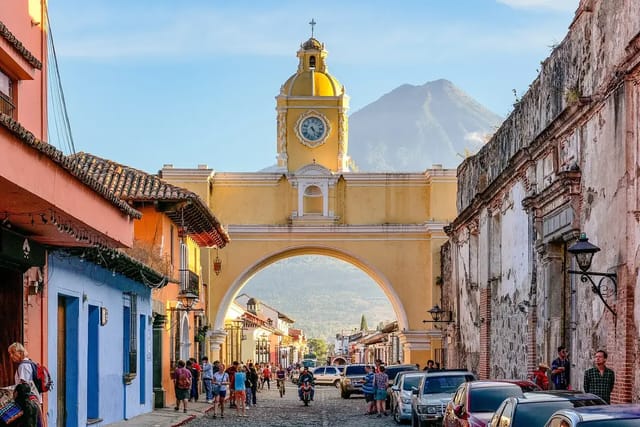
Holy Week (Semana Santa) is the largest religious event in Latin America — Antigua transforms into a colour-saturated procession route with elaborate alfombras (sawdust carpets) on cobbled streets, candle-lit night processions, and an atmosphere unmatched elsewhere. Dates vary annually (Easter dependent — typically late March to mid-April). For Australians this falls in our autumn (Mar-Apr school holidays sometimes align). The downside: accommodation prices triple, book 6+ months ahead, restaurants require reservations, day trips to other sites limited. If you can attend Semana Santa, go — but plan early and accept the premium.
What's the weather like during the Australian winter (Jun-Aug) in Guatemala?
Australian winter is Guatemala’s rainy season. Antigua highland temperature stays 15-22°C (cool nights, mild days). Pattern: sunny 8 AM-noon, building cloud noon-2 PM, heavy 2-5 PM rain, clear evening. Lake Atitlán is similar but warmer (18-25°C). Tikal jungle: hot (28-34°C), wet, humid, the most challenging time for the ruins. Pacific coast: warm but persistent rain. Upside for Australians escaping winter: green landscapes, fewer tourists, prices 20-40% lower than dry season, accommodation availability excellent. Pack quick-dry clothing, light rain jacket, waterproof shoes.
When is hurricane season in Guatemala?
Atlantic hurricane season runs June 1 to November 30, with peak activity August through October. Guatemala’s Caribbean coast (Río Dulce, Livingston, Puerto Barrios) faces direct hurricane risk during peak months — Hurricane Eta (Nov 2020) and Iota (Nov 2020) caused major flooding. Pacific coast and highlands rarely see direct hurricane impact but get tropical rainfall remnants. Tikal (Petén) sits inland and is mostly unaffected by hurricanes but rainy season jungle visits during Aug-Oct can be miserable. If you’re set on Caribbean coast (snorkelling at Punta de Manabique, Livingston Garifuna culture), travel January-May.
Are volcanoes hikeable year-round?
Acatenango (3,976m) and Pacaya (2,552m) are technically hikeable year-round but the EXPERIENCE differs dramatically. Dry season (Nov-Apr): clear skies, you actually see Fuego erupting at night, manageable trail conditions, summit views unobscured. Rainy season (May-Oct): clouds often blanket the summit, you may see nothing at the top, trails are muddy and slippery (especially Acatenango’s loose volcanic ash), risk of being inside a cloud all night. For Acatenango overnight specifically, December through March give the highest probability of clear nighttime Fuego viewing. Tajumulco (4,220m) and Volcán de Agua should NOT be attempted in rainy season.
When should I visit Tikal Mayan ruins?
December to April. Petén jungle dries out, temperatures moderate to 25-32°C (still hot but manageable), morning fog clears by 8 AM giving good Temple IV sunrise visibility, mosquitos and dengue risk lower. May-October Tikal is hot (30-36°C), persistently humid, mosquitos relentless, afternoon storms guaranteed, and the famous sunrise tour often clouded out. The best month for Tikal is February — coolest, driest, fewest crowds outside Christmas. June and September are the worst months.
What festivals happen in Guatemala that Australians should plan around?
Major festivals worth planning around: (1) Semana Santa (Easter, late Mar-Apr) — Antigua spectacular; (2) Día de los Muertos (Nov 1-2) — kites in Sumpango and Santiago Sacatepéquez; (3) Quema del Diablo (Dec 7) — burning effigies at sunset, primarily Guatemala City and Antigua; (4) Christmas (Dec 16-25) — Posadas processions, Antigua festive; (5) Independence Day (Sep 15) — parades nationwide; (6) Rabin Ajaw indigenous queen ceremony (last weekend July, Cobán); (7) Day of the Cross (May 3) — Holy Cross celebrations countrywide. For Australian school holiday alignment: late Dec posadas through early Jan, or late Mar-Apr Semana Santa if Easter falls in your school break.