- Visa-free 90 days on arrival. No application, no fee.
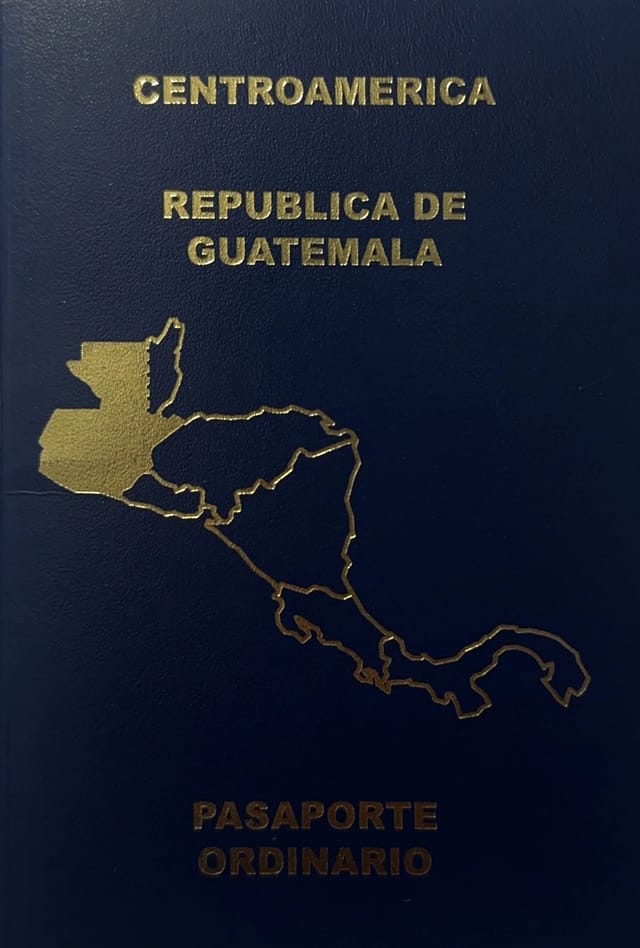
- Passport: Valid and in good condition. IGM's entry checklist and Reglamento General Art. 15 state no minimum months, and no blank-page requirement is published; six months is published for visa issuance (Acuerdo IGM-015-2025, Arts. 3 and 21).
- Extension: published filing fee US$25.00 (Acuerdo IGM-029-2023, Art. 3, numeral 2.2) at IGM Guatemala City, one extension only, total 180 days.
- CA-4 zone: Days shared with Honduras, El Salvador, Nicaragua. Mexico/Belize/Costa Rica reset clock.
- Long-stay: rentista/pensionado needs US$1,250/mo proven foreign income plus US$300 per dependent; investor residency needs US$100,000 (Acuerdo IGM-016-2025, Arts. 33 and 17).
This page is the practical visa briefing for Australian travellers heading to Guatemala — entry rules, extension process, the CA-4 zone trap, residency options for anyone planning beyond six months, and the often-missed children’s parental-consent requirement.
Entry: 90 Days Visa-Free, No Paperwork
Guatemala sorts nationalities into visa categories, and IGM’s entry checklist notes that “están exentos de visa para ingresar a Guatemala la categoría (A)”. We did not retrieve the current per-nationality category list in this research pass, so this page states no nationality’s category — including Australia’s. Confirm yours with IGM directly before you book.
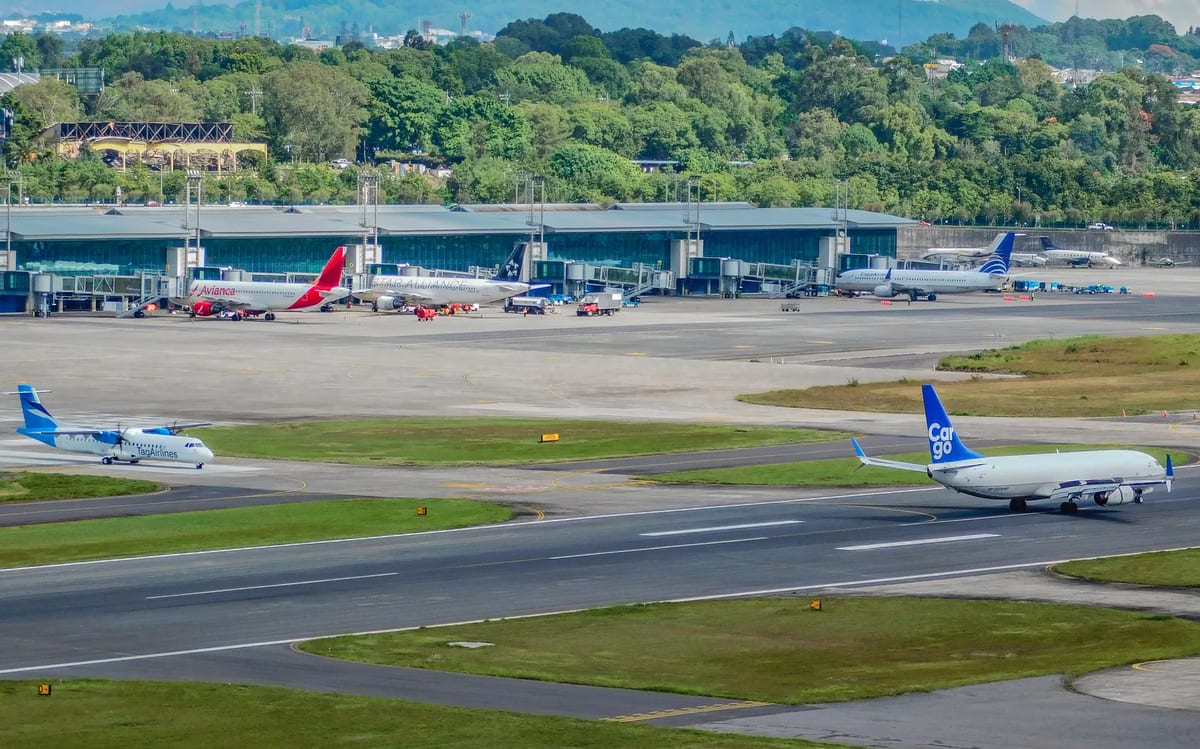
In practice this means at Aeropuerto La Aurora (GUA) or any land border:
- Hand over your Australian passport
- The officer scans it, asks length of stay and purpose (say “tourism, X days”)
- You get an entry stamp dated today with a 90-day validity
- Total time: 30-90 seconds per person, no application form
We publish no figure for how often onward travel is actually checked at the border — no such rate is published by IGM and we did not measure one. Carrying evidence of onward travel is cheap insurance either way. No yellow fever certificate is required for direct arrivals from Australia.
Passport Requirements — What Is Actually Published
| Requirement | Detail |
|---|---|
| Validity | Valid and in good condition. No months figure is published for entry; six months is published for visa issuance (Acuerdo IGM-015-2025, Arts. 3 and 21) |
| Blank pages | No blank-page requirement is published in IGM’s entry checklist or in Reglamento General Art. 15 |
| Damage | No water damage, torn cover, or unauthorised stickers — boarding can be denied |
| Children | The same published rules apply to Australian child passports — Guatemala publishes no separate months figure for them |
Renewal in Australia:
- Processing times and fees (standard and priority) are published by the Australian Passport Office and change; this page does not reproduce them
- Apply online at passports.gov.au
Renewal while in Guatemala:
- Australia’s nearest full passport office is the Australian Embassy in Mexico City (no full consular service at the Guatemala City honorary consul)
- Emergency travel documents available from the honorary consul; full passport renewal requires a Mexico City trip or postal application
The CA-4 Zone — The Trap Most Australians Miss
The most important visa concept for Australians planning a Central American loop is the CA-4 agreement. The CA-4 manual IGM applies (Sección I, numeral 1 literal c) dates it to 30 June 2005, describing the “Convenio de Creación de la ‘Visa Única Centroamericana para la Libre Movilidad de Extranjeros entre las Repúblicas de El Salvador, Guatemala, Honduras y Nicaragua’, firmado por los señores Presidentes el 30 de junio de 2005” — between:
- Guatemala
- Honduras
- El Salvador
- Nicaragua
What it means: your 90-day tourist stamp from Guatemala is valid across all four countries — meaning border-hopping between them does NOT reset your visa days.
| Scenario | What happens |
|---|---|
| Enter Guatemala Day 1, exit to Honduras Day 30 | Honduras admits you on the original CA-4 stamp; 60 days remain across HN/SV/NI |
| Enter Guatemala Day 1, exit to Mexico Day 45 | Mexico gives you a fresh 180-day stamp; on re-entry to Guatemala you get a fresh 90 days |
| Enter Guatemala Day 1, fly to Costa Rica Day 60 | Costa Rica gives 90 days; re-entry to Guatemala = fresh 90 days |
| Bounce GT → HN → GT → SV thinking each is a fresh 90 | NO. Border officers see the original GT stamp and count cumulative days |
The CA-4 reset: to get a fresh 90 days in Guatemala (or any CA-4 country) you must exit the zone — Mexico, Belize, Costa Rica, Panama all count, as does flying back to Australia/USA/EU. No instrument we retrieved publishes a minimum time you must stay outside the zone, and we do not estimate one; a longer absence is the conservative choice, and IGM is the body to confirm it with.
Strict enforcement countries: Nicaragua and Honduras are most strict — they read your Guatemalan entry stamp at land borders. El Salvador less so. Guatemala itself enforces strongly at GUA airport on return arrivals.
Extending Your 90 Days at IGM
Instituto Guatemalteco de Migración (IGM) Address, as IGM publishes it on its own fee pages: 6a avenida 3-11 zona 4, Ciudad de Guatemala. Phone, same source: 2411-2411. (IGM, “Tarifario de Extranjería” and “Tarifario Control Migratoria”, retrieved 2026-08-13.) IGM does not publish opening hours on those pages, so none are stated here.
The published fee — in US dollars, not quetzales. Acuerdo IGM-029-2023, Art. 3, numeral 2.2:
“2.2 Ingreso de solicitud de prórroga de visa de turista o viajero, requerida en el territorio guatemalteco, veinticinco dólares de los Estados Unidos de América (25.00 USD);”
That is US$25.00. No Quetzal amount for this service appears in the tarifario.
What the reglamento requires you to present (Acuerdo IGM-015-2025, Art. 15, “Prórroga de Visa de Turista o Viajero”):
- “Formulario de solicitud de prórroga de visa de turista o viajero”
- “Pasaporte válido y vigente donde conste el sello del último ingreso a Guatemala” — with an express alternative only where the passport was lost in Guatemala (“En caso de extravío del pasaporte en territorio guatemalteco, podrá presentar documento de viaje válido y vigente”)
- An onward travel ticket, or an international credit card, or a Guatemalan guarantor with the notarial paperwork the article specifies
- “Comprobante de pago”
On timing, the same article says only: “La solicitud podrá hacerse antes de expirar el plazo otorgado para no incurrir en multa por estadía irregular o causa justificada de expulsión.” The extension may be granted once, for a period equal to the one granted at entry, and the total may not exceed 180 days (Acuerdo IGM-015-2025, Art. 14; Decreto 44-2016, Art. 74).
Not published, so not stated here: IGM publishes no processing time, no counter hours, no photocopy count and no notification method for this trámite. Anything giving those as fixed numbers is somebody’s experience, not a published rule.
Visa Runs (Limited Use)
Many backpackers refer to a “visa run” — leaving the country briefly to reset their 90 days. For Australians in Guatemala, the rules are:
| Scenario | Works? |
|---|---|
| Day 90 → cross to Belize → return next day | Worked historically; now risk of officer flagging “abuse of visitor status” |
| Day 90 → Mexico for 7 days → return | Generally works; safer with 7+ days outside |
| Day 90 → Mexico for 90+ days → return | Definitely resets; legally clean |
| Day 90 → Honduras for 30 days → return | DOES NOT WORK — CA-4 means days continue counting |
The safer modern approach for anyone wanting to stay over 6 months: apply for temporary residency before your 180 days expire (rentista, pensionado, or investor — see below).
Long-Term Residency Options for Australians
| Visa type | Income/asset requirement | Best for | Cost (AUD est.) |
|---|---|---|---|
| Rentista (permanent residence, Código Art. 78 e) | US$1,250/month individual + US$300 per dependent, generated abroad (IGM-016-2025, Art. 33.1.1) | Australians living on investment, rental or securities income — Art. 31 excludes “cualquier clase de actividad remunerada” | AU$2,500-4,500 incl. lawyer + fees |
| Pensionado (permanent residence, Código Art. 78 e) | US$1,250/month individual + US$300 per dependent, from a pension (IGM-016-2025, Art. 33.1.2) | Australian retirees | AU$2,500-4,500 |
| Investor (temporary residence) | US$100,000 — “por un monto de cien mil dólares” (IGM-016-2025, Art. 17) | Real estate buyers, entrepreneurs | AU$4,500-9,000 |
| Worker visa | GT employer sponsorship | Australians offered local employment | AU$2,500-5,000 (employer often pays) |
| Family reunification | Spouse/parent of Guatemalan citizen | Mixed-nationality couples | AU$2,000-4,000 |
The rentista path is popular with Australians wanting to base in Antigua or Lake Atitlán long-term, but read what the Reglamento actually defines before assuming your income fits. Art. 32 lists rentas as deposits and investments held in banks or companies abroad, remittances originating from real estate or from religious or academic support, and securities issued in foreign or national currency by authorised financial institutions or by the State; pensionados are people receiving periodic payments “por jubilación, viudez, orfandad, incapacidad o seguridad social de gobiernos, organismos internacionales o empresas particulares extranjeras”. Art. 31 limits the whole route to people who will stay “sin dedicarse a ninguna clase de actividad remunerada” — so income you actively work for is not what this route is written around. We found no published rule on how many months of bank statements are required for it.
After 5 years of temporary residency, you can apply for Permanent Residency (no income test required at renewal).
The application is filed at IGM Guatemala City. IGM publishes no processing time for this trámite and we do not estimate one. A Guatemalan immigration lawyer is commonly used; we publish no success-rate or fee figures, because no source we retrieved publishes either.
See our Pensionado/Rentista Visa guide for the full document checklist and process.
Children’s Passports and Parental Consent
Travelling to Guatemala with Australian children involves an often-overlooked requirement: parental consent letters when a child is not travelling with both parents.
| Scenario | Required documentation |
|---|---|
| Both parents + child(ren) | No extra paperwork |
| One parent + child(ren) | Notarised consent letter from absent parent, apostilled in Australia |
| Grandparent/guardian + child(ren) | Notarised consent from BOTH parents, apostilled, plus relationship proof |
| Unaccompanied minor | Airline-specific UM service + IGM unaccompanied-minor form |
| Sole legal custody parent + child | Court custody order, apostilled |
Apostille process in Australia:
- Notarise the consent letter at a Public Notary (AU$80-150)
- Submit to DFAT for apostille — Sydney, Melbourne, Brisbane, Perth, Adelaide, Canberra offices
- DFAT apostille fee AU$98, processing 5-10 business days
- The apostilled letter is valid worldwide under the Hague Apostille Convention (Guatemala accepted in 2017)
At Guatemalan border: officers may or may not request the letter — but if they do and you don’t have it, the family will be denied entry. Always carry it for any non-standard family travel configuration.
Embassy and Consular Services
Embassy of Guatemala in Australia: Located in Canberra. Provides notarial services, passport guidance for Guatemalan citizens, and emergency consular help for Australians traveling. Limited honorary consul presence in Sydney and Melbourne.
Australian consular services in Guatemala: Australia does NOT have a full embassy in Guatemala City. The closest full Australian embassy is in Mexico City. There is an Australian Honorary Consulate in Guatemala City which can conduct passport interviews and provide provisional travel documents — direct contact: (+502) 4210 9805, consuladoaustralia.guate@gmail.com (per Smartraveller, verified July 2026).
In an emergency in Guatemala:
- Australian DFAT Consular Emergency Centre (24/7): +61 2 6261 3305 (call collect from Guatemala)
- Local emergency: PNC 110, Bomberos 122/123, tourist assistance (English) 1500
Register your trip on smartraveller.gov.au before departure — Australia uses this for emergency contact during natural disasters or political instability.
Common Visa Mistakes Australians Make
- Booking a flight that connects through Mexico City for under 24 hours and not researching Mexican visa rules — Mexico visa-free for Australians, but counter staff sometimes ask questions
- Assuming Honduras/Nicaragua resets the Guatemala visa — CA-4 means it doesn’t
- Assuming Guatemala publishes a 6-month passport-validity rule for entry — it does not; six months is published for visa issuance (Acuerdo IGM-015-2025, Arts. 3 and 21), while the entry checklist and Reglamento General Art. 15 state no months figure
- Forgetting parental consent letters for kids travelling with one parent — denied entry at GUA
- Trying to extend on Day 89 of 90 — IGM holds passport 1-2 weeks, you’ll overstay
- Doing a Belize hop and returning the next day — increasingly flagged as visa abuse
- Assuming remote work on a tourist stamp is settled — no instrument we found says a tourist may work online for an Australian employer, and none says they may not; what IGM did publish for that fact pattern is a residency route with an income floor of US$2,000/month (IGM-016-2025, Art. 11 numeral 2). Posting “I work for an Australian company from Guatemala” changes none of the texts, but it does put the question in front of an official at extension time. The article-by-article read is on working remotely on a tourist stamp
Related Guides
- Visiting Guatemala from Australia — the full travel briefing
- Antigua for Australian Backpackers — hostel + city guide
- Best Time for Australians to Visit — seasonal alignment
- AUD to GTQ Exchange Rate — currency, banks, Wise
- Pensionado/Rentista Visa Guatemala — full residency process
- Digital Nomad Visa Guatemala — current status
- Work Permit for Foreigners — for Australians taking Guatemalan employment
- Student Visa Guatemala — for Spanish school stays over 90 days
- IGM Guatemala overview — main immigration agency
This page provides general visa guidance for Australian passport holders. Immigration rules change — confirm current requirements with the Embassy of Guatemala in Australia and DFAT Smart Traveller before travel.
Frequently Asked Questions
Do Australians need a visa to enter Guatemala?
No. Australian passport holders enter Guatemala visa-free for up to 90 days as tourists. You get an entry stamp on arrival at Aeropuerto La Aurora (GUA) or any land border — no application, no fee. Guatemala’s entry rules run on a category structure — IGM’s entry checklist notes that ’están exentos de visa para ingresar a Guatemala la categoría (A)’ — but we did not retrieve the current per-nationality category list in this research pass, so this page states no nationality’s category. Check yours with IGM directly. The 90 days is extendable once, and Acuerdo IGM-015-2025 Art. 14 caps the total stay at ‘que no podrá exceder de 180 días a su ingreso al territorio’ — counted from your entry, not per rolling 12-month period.
How long must my Australian passport be valid for entry?
Guatemala does not publish a months figure for entry. IGM’s entry checklist asks you to ‘IDENTIFICARSE POR MEDIO DE DOCUMENTO DE VIAJE VÁLIDO: Pasaporte en buen estado al cual se le verifica autenticidad y vigencia)’, and the Reglamento General’s entry article requires a passport ‘válido y vigente y en buen estado’ (Acuerdo IGM-015-2025, Art. 15) — neither states a number of months. Where six months IS published is visa issuance: ’la visa guatemalteca se emitirá en pasaporte con vigencia mínima de seis meses’ (Acuerdo IGM-015-2025, Art. 3; the same floor appears at Art. 21). Separately, carriers carry their own exposure: Código de Migración Art. 213 and Acuerdo IGM-029-2023 numerals 4.2.12-4.2.13 place US$3,000 per refused passenger, rising to US$10,000, on the transport company. We make no claim about what any given airline does at check-in. Renewal times and fees are published by the Australian Passport Office — check passports.gov.au, as this page does not carry those figures.
What is the CA-4 visa zone and how does it affect Australians?
CA-4 (Central America 4) is a shared visa zone between Guatemala, Honduras, El Salvador and Nicaragua. As an Australian tourist, your 90-day visa stamp counts across ALL FOUR countries — not 90 days each. If you spend 30 days in Guatemala and then cross to Honduras, you have 60 days remaining for Honduras + El Salvador + Nicaragua combined. The CA-4 manual IGM applies dates the Convenio to 30 June 2005 (Sección I, numeral 1 literal c), and border officials at Honduran/Salvadoran/Nicaraguan crossings will check your original Guatemalan entry date. Costa Rica, Belize, Mexico and Panama are NOT part of CA-4 — exiting to them gives you a new 90 days on re-entry to Guatemala.
How do I extend my 90-day Guatemala visa as an Australian?
IGM publishes its address as 6a avenida 3-11 zona 4, Ciudad de Guatemala, and its phone as 2411-2411, on both of its fee pages (retrieved 2026-08-13). The published fee for filing the request is in US dollars, not quetzales: ‘Ingreso de solicitud de prórroga de visa de turista o viajero, requerida en el territorio guatemalteco, veinticinco dólares de los Estados Unidos de América (25.00 USD)’ — US$25.00 (Acuerdo IGM-029-2023, Art. 3, numeral 2.2). No Quetzal figure for this service is published in the tarifario. The reglamento lists what to bring: an extension application form, a valid passport bearing your last-entry stamp, an onward travel ticket or international credit card or a Guatemalan guarantor, and proof of payment (Acuerdo IGM-015-2025, Art. 15). The same article says the request ‘podrá hacerse antes de expirar el plazo otorgado para no incurrir en multa por estadía irregular o causa justificada de expulsión’. The extension may be granted once, for a period equal to the one granted on entry, and total stay may not exceed 180 days. IGM publishes no processing time for this trámite and we do not estimate one.
Can I do a visa run from Guatemala to extend my stay?
Yes, but with limits. Acuerdo IGM-015-2025 Art. 14 caps the tourist stay at ‘que no podrá exceder de 180 días a su ingreso al territorio’ — 180 days counted from your entry, not per rolling 12-month period. Once you’ve used those 180 days (90 + extension), you cannot simply hop the border to reset. You must exit to a non-CA-4 country (Mexico, Belize, Costa Rica) and stay outside the CA-4 zone for at least 90 days before re-entering Guatemala. Quick borders runs to Tapachula (Mexico) for 24-48 hours used to work but immigration started enforcing the 90-day exit rule in 2018. If you need to stay longer than 180 days, apply for temporary residency before your 180 days expire — see the rentista visa option below.
What residency visas are available for Australians wanting to stay long-term?
Three published routes, with the figures taken from the instruments themselves. (1) Rentista or pensionado — a permanent-residence route under Código de Migración Art. 78 literal e), with requirements in the Reglamento de Residencias (Acuerdo IGM-016-2025, Arts. 31-33). Art. 33 numeral 1 publishes the floor for both: ‘ingreso mensual individual mínimo de un mil doscientos cincuenta dólares de los Estados Unidos de América’ — US$1,250/month — ‘y por cada dependiente un monto adicional de trescientos dólares’, US$300 more per dependent. Art. 31 scopes it to people who will stay ‘sin dedicarse a ninguna clase de actividad remunerada’ with income generated abroad. (2) Investor — temporary residence, where the applicant must show investment in commercial vehicles or in movable or immovable property ‘por un monto de cien mil dólares’, US$100,000 (Art. 17). (3) Trabajador migrante with a foreign employer — temporary residence, income floor US$2,000/month from abroad, US$3,000 with dependents (Art. 11 numeral 2). Government fees under Tarifario IGM-029-2023: US$25 to file, plus the term fee of US$200 (1 yr) / US$300 (2 yr) / US$500 (3-5 yr). See our Pensionado/Rentista visa guide for the document checklist.
Do Australian children need parental consent letters to travel to Guatemala?
Yes, when travelling with one parent or alone. Guatemalan immigration may request a notarised parental consent letter (carta de autorización) signed by the non-travelling parent(s), apostilled in Australia by DFAT. This applies to anyone under 18. Both parents’ photo ID copies should accompany the letter. Single parents with sole legal custody should carry the custody court order, also apostilled. For unaccompanied minors (rare), the airline + IGM both require formal documentation. The Embassy of Guatemala in Canberra can advise on the exact apostille route.
Is there a Guatemalan visa for digital nomads or remote workers?
No Guatemalan instrument we retrieved publishes a visa branded as a digital nomad visa. What IGM did publish, in the Reglamento de Residencias (Acuerdo IGM-016-2025, Art. 11 numeral 2), is a trabajador migrante temporary residency for the foreign-employer case, with an income floor of US$2,000/month from abroad — US$3,000 with dependents. The rentista route is not the substitute it is often described as: Art. 31 of the same Reglamento scopes rentista status to people who will remain ‘sin dedicarse a ninguna clase de actividad remunerada’, and Art. 32 defines rentas as deposits, investments, remittances from real estate or religious/academic support, and securities — not remote earnings from a job. The other path Australians actually use is the 90-day tourist stamp plus one extension (US$25, Tarifario IGM-029-2023 numeral 2.2), capped at 180 days from entry (Acuerdo IGM-015-2025, Art. 14). See our Digital Nomad Visa Guatemala page and working remotely on a tourist stamp.
Can I work in Guatemala on my Australian tourist stamp?
No instrument we found answers this either way, so this answer reports the texts rather than a verdict. The Código de Migración defines a tourist or traveller as someone who entered ‘con fines lícitos, sin propósito de obtener una residencia temporal o permanente’ and does not list activities a tourist may or may not perform (Decreto 44-2016, Art. 74). Its definition of a migrant worker is keyed to where the activity happens, not to who pays: ’toda persona extranjera que realice actividades remuneradas en territorio nacional’ (Art. 26). Nothing in the Código, the Reglamento de Residencias (IGM-016-2025) or the Reglamento de Visas (IGM-015-2025) addresses working online for a foreign employer from a tourist stamp — ’trabajo remoto’ and ‘remoto’ return zero hits in both reglamentos — and no Guatemalan instrument publishes an ‘unrelated to the Guatemalan economy’ test. What IGM did publish is a residency route for exactly that fact pattern, with an income floor of US$2,000/month (US$3,000 with dependents) in IGM-016-2025 Art. 11 numeral 2. The named fault that touches earning is ‘actividades comerciales sin estar autorizado’, fined Q5,000 plus a cessation order (Arts. 193 e, 194 numeral 4). On volunteering, no instrument found says a tourist may volunteer and none found says they may not; the one published volunteer visa is a MINEX Visa Especial for accredited cooperation personnel (IGM-015-2025, Art. 20 b) — not something an NGO issues. Both questions are covered in full on working remotely on a tourist stamp and volunteering on a tourist stamp.
What happens if I overstay my Guatemala visa as an Australian?
The published figure is a daily one, not a monthly one. The Código de Migración sets ‘multa de quince Quetzales por día de exceso de permanencia’ — Q15 per day — for staying longer than authorised without a pending extension request (Decreto 44-2016, Art. 194 numeral 2), and the same article permits payment in US dollars at the Banco de Guatemala reference rate on the day of payment. In addition to fines, IGM may order departure ’en un plazo no mayor de diez días’ (Art. 195), a sanction only IGM may impose (Art. 192). On re-entry bans: the published prohibition attaches to an expulsion, not to an overstay by itself — two years from the date of expulsion where the expulsion followed a suspension of stay or a breach of the Code and Reglamento, and five years from the date of expulsion where a Guatemalan court imposed expulsion as a pena accesoria (Acuerdo IGM-017-2023, Reglamento General del Código de Migración, Art. 24). No instrument publishes a range such as ‘1-5 years’ — see re-entry after deportation or refused entry. We make no claim either way about whether Guatemala shares immigration data with other countries; we found no published instrument on it. Applying to IGM to extend or regularise before the overstay begins is the route the reglamento itself points to: ‘La solicitud podrá hacerse antes de expirar el plazo otorgado para no incurrir en multa por estadía irregular o causa justificada de expulsión’ (Acuerdo IGM-015-2025, Art. 15).