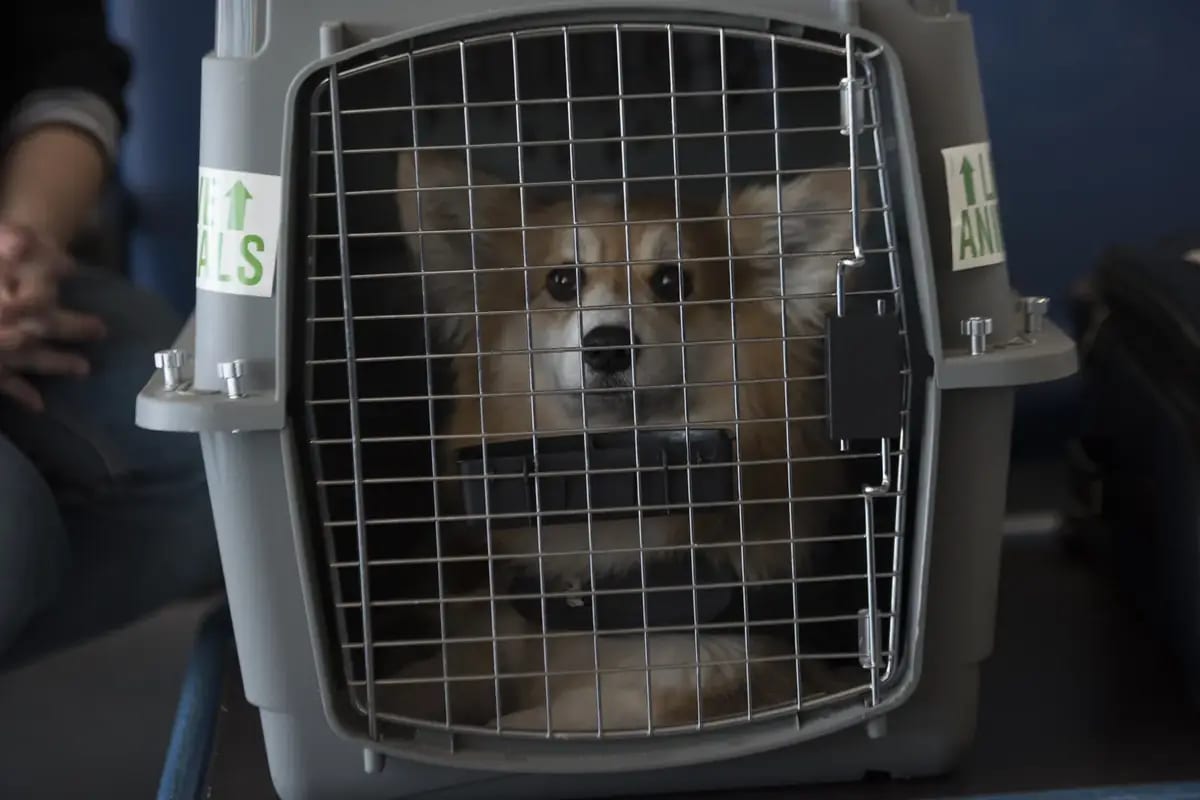
Bringing a dog or cat from the USA to Guatemala is straightforward but requires advance planning — typically 4-8 weeks of preparation for vaccinations, health certificates, and documentation. This page walks through the complete process, current requirements, costs, and common situations. The information here applies to dogs and cats; other pets (birds, exotic species) have different requirements.
The basic process
To import a pet from the USA to Guatemala, you’ll need:
- Rabies vaccination — at least 30 days old and not expired (1-year or 3-year vaccine)
- Health certificate — the bilateral US-Guatemala dog-and-cat export health certificate (APHIS’s Guatemala page links it; it is not the generic Form 7001), signed by a USDA-accredited vet and endorsed by USDA APHIS — or, per MAGA, a certificate signed and sealed by a practising veterinarian
- Spanish translation — MAGA requires foreign-language documents to be translated into Spanish
- Optional but recommended vaccinations — DHPP for dogs, FVRCP for cats
- Arrival inspection — SEPA/OIRSA inspects the animal at the airport, $14.00 per animal
Correction (24 September 2026): USDA’s fee to endorse the health certificate is $101 (no lab tests), and for Guatemala APHIS points to the bilateral dog-and-cat export certificate, which sets no 10-day window. This page previously gave a $40-$70 endorsement fee, the generic APHIS Form 7001 signed within 10 days of travel, a same-day walk-in endorsement option and a MAGA permit, none of which the APHIS or MAGA pages we read support. See our corrections policy.
Step-by-step timeline
Approximately 4-6 weeks before travel
Visit a USDA-accredited veterinarian.
The vet must be on the USDA’s accredited veterinarian list. Most established US vets are accredited; confirm before scheduling.
At this visit:
- Confirm rabies vaccination is current (administer if needed)
- Update other vaccinations (DHPP, FVRCP, kennel cough/Bordetella for dogs)
- Discuss any health concerns
- Get baseline health certificate started
If rabies vaccination is given fresh at this visit, you must wait at least 30 days before travel.
1-2 weeks before travel
Final vet visit and health certificate.
The USDA-accredited vet completes the Guatemala dog-and-cat export health certificate. Neither that certificate nor MAGA sets a validity window, so time this visit to your airline’s rule. This requires:
- Pet examination on day of certificate signing
- Verification of rabies and other vaccinations
- Identification (microchip recommended; tattoo also works)
- Statement of health
- Vet’s signature and accreditation number
Cost: set by your vet.
After the health certificate is signed
USDA APHIS endorsement.
The signed certificate is endorsed by USDA APHIS Veterinary Services. Two paths:
- VEHCS digital endorsement: the vet uploads the certificate to VEHCS, USDA endorses it electronically, and you print it.
- Paper mail-in: send the signed paper certificate to your USDA APHIS Endorsement Office and it is returned endorsed.
Cost: $101 endorsement fee for a certificate with no lab tests, the same on VEHCS or on paper (APHIS cost-to-endorse page, read 24 September 2026).
Airline coordination
While vet documents are being prepared:
- Confirm pet booking with airline (in-cabin or cargo)
- Provide airline with required documentation
- Ask whether the airline wants the USDA-endorsed certificate and which validity window it applies
- Crate requirements for cargo: IATA-compliant kennel, appropriate size
- Pay airline pet fees
Day of travel
Bring to airport:
- Original health certificate (USDA-endorsed), printed, with Spanish translation if needed
- Original rabies certificate
- Other vet records
- Pet’s microchip information
- Airline pet booking confirmation
- Airline-required carrier/crate
Arrival in Guatemala
At Guatemala City airport (La Aurora):
- Standard passenger immigration first
- Proceed to the MAGA / SEPA-OIRSA inspection point
- Present the health certificate and vaccination record (MAGA’s rules have you hand over copies)
- The animal is inspected — $14.00 per animal
- MAGA approves entry
Airline options
Each airline’s pet rules as read on its own pet page on 30 September 2026. Rules change; confirm before booking.
| Airline | In cabin | Larger pets (hold / cargo) | In-cabin fee |
|---|---|---|---|
| United Airlines | Cats and dogs; soft-sided carrier up to 11 x 18 x 11 in | No PetSafe; cargo only for certain active-duty military or State Department employees | $150 each way |
| Delta Air Lines | Dogs and cats; Delta recommends a soft-sided kennel of 18 x 11 x 11 in | Delta Cargo, until further notice only for active-duty US military or State Department Foreign Service staff with permanent change of station orders | $200 each way (international) |
| American Airlines | Cats and dogs; soft-sided carrier up to 18 x 11 x 11 in | Checked pets only for active-duty US military and State Department Foreign Service staff on official orders; other pets through American PetEmbark (cargo), fee quoted at booking | $150 per kennel |
| Avianca | Dogs and cats, pet + container up to 10 kg | Hold, pet + crate up to 70 kg, from USD 250 | From USD 170 between North America, Central America and the Caribbean |
| Copa Airlines | Dogs and cats, pet + carrier up to 10 kg | Pets over 10 kg go through Copa Mascotas (cargo) | USD 125 plus taxes, per flight |
The full rules, including hard-sided carrier sizes and temperature limits, are in our pet relocation guide.
In-cabin requirements
- The pet must fit comfortably in a carrier that fits under the seat in front of you; each airline publishes its own maximum (table above)
- The pet stays in the carrier for the whole flight (United, American and Delta all say so)
- Copa allows one cabin pet per passenger and American one carrier; United allows up to 2 pets per person on most flights if you buy the seat next to yours
Cargo requirements
- For pets in the hold, Delta requires a crate that meets Container Requirement #1 of the IATA Live Animals Regulations
- Health certificate and vaccinations, as for the cabin
- A separate booking for the pet: Delta Cargo, for example, books pets separately from your own reservation
- Temperature limits set by each airline: American will not carry a checked or cargo pet above 85°F (29.4°C) at any point on the itinerary; Delta Cargo’s limit is 80°F (27°C), and below 20°F (-7°C)
Snub-nosed breed restrictions
Delta’s pet-shipping page says brachycephalic (snub-nosed) dogs, cats and their mixes are not permitted on Delta or Delta Connection flights. Other airlines publish their own breed lists; if you have a bulldog, pug, French bulldog or Persian cat, read your airline’s list before you book.
Cost breakdown
| Item | Cost (USD) | Source |
|---|---|---|
| Vet exam, vaccinations and health certificate | Set by your vet | Your vet’s own price list |
| USDA APHIS endorsement | $101 | APHIS cost-to-endorse page (no lab tests), read 24 September 2026 |
| SEPA/OIRSA arrival inspection | $14 per animal | MAGA-VISAR pet-import sheet |
| Airline pet fee (in cabin) | $125 plus taxes per flight (Copa) to $200 each way (Delta) | Airlines’ pet pages, read 30 September 2026 |
| Airline pet fee (hold / cargo) | Avianca from $250; American PetEmbark quoted at booking | Airlines’ pet pages, read 30 September 2026 |
We removed the totals we used to print here: the vet, vaccine, kennel, microchip and relocation-service prices behind them had no source.
Common situations
Pet relocation services
Companies like Pet Relocation, Pets Across America, and others handle the entire process:
- Initial consultation and document review
- USDA-accredited vet coordination
- APHIS endorsement handling
- Airline booking and IATA kennel
- Optional ground transport on either end
- Door-to-door service
Cost: quoted per move; we have no sourced price range. Delta Cargo requires international customers to use a pet shipper approved by IPATA (the International Pet and Animal Transportation Association).
Bringing multiple pets
In the cabin, Copa and American allow one pet (carrier) per passenger; United allows up to 2 per person on most flights with a second seat. For more pets:
- Multiple passengers each carry one pet
- Pet relocation service for additional pets via cargo
- Combine some in-cabin (small) with cargo (larger)
Pet flying without owner
Possible via cargo, but more complex:
- Pet relocation service handles the process
- Some airlines require owner to drop off/pick up
- Documentation in pet’s name with owner contact info
Pet older or sick
Older pets or those with health conditions need extra consideration:
- Vet evaluation of fitness for air travel
- Some airlines refuse very old or sick pets
- Pet relocation services can use ground transport routes (Mexico land border)
After arrival in Guatemala
Initial settling
- Establish a relationship with a Guatemalan veterinarian
- Familiar food brands (most major US brands available, sometimes more expensive)
- Adapt to climate (dogs from cold areas may need adjustment time in highland Guatemala)
- Identify nearby pet emergency facilities
Veterinary care in Guatemala
Ask other pet owners in your area for a vet before you need one, and save an emergency number. For prices, see our veterinarian costs page.
Annual vaccinations
Maintain regular vaccinations in Guatemala:
- Rabies (annual)
- DHPP (3-year typical for dogs)
- Bordetella (annual for boarding/socialization)
Future US travel
If you’ll travel back to the USA with your pet:
- Same documentation process in reverse
- Guatemalan-accredited vet handles APHIS-equivalent
- US APHIS port of entry inspection
- Process similar but mirrored
What’s next
For pet owners considering the move:
- Pensionado Visa — to establish residency
- Best Neighborhoods for Retirement — pet-friendly considerations
- Real Estate Guides — properties suitable for pets
For specific situations or vet recommendations in Guatemala, email stu@livinginguatemala.com.
Correction (30 September 2026): the airline table, cost table and FAQ gave fee ranges and cargo options we had not sourced, and several were wrong: United ended its PetSafe program and flies pets in cargo only for certain active-duty military or State Department employees, and Delta Cargo ships pets only for active-duty US military or Foreign Service staff with permanent change of station orders; American’s cabin fee is $150; Delta’s international cabin fee is $200. Every airline row now comes from that airline’s pet page, read 30 September 2026. We removed the JetBlue and Spirit / Frontier rows, the vet, vaccine, kennel, microchip and relocation-service prices and the totals built on them, the 30-60 minute airport clearance time, and a list of Guatemalan vet hospitals and prices, none of which we could source. See our corrections policy.
Frequently Asked Questions
Can I bring my dog to Guatemala from the USA?
Yes. MAGA (Guatemala’s Ministry of Agriculture) asks for a health certificate — either the bilateral US-Guatemala dog-and-cat export health certificate or one signed and sealed by a practising veterinarian — plus a rabies vaccination given at least a month before travel, Spanish translations of foreign-language documents, and a $14.00-per-animal SEPA/OIRSA inspection on arrival. The USDA-endorsed APHIS route is the common way US families produce the certificate. Total process: 4-8 weeks of preparation.
What documents do I need to bring my pet to Guatemala?
(1) Rabies vaccination certificate: vaccine at least 30 days old and not expired (1-year or 3-year vaccine). (2) Health certificate: for Guatemala, APHIS points US vets to the bilateral dog-and-cat export health certificate, not the generic APHIS Form 7001; neither that certificate nor MAGA’s published requirements sets a validity window, so follow your airline’s rule. (3) Spanish translation of foreign-language documents. (4) Other vaccinations (DHPP for dogs, FVRCP for cats) recommended. On arrival, SEPA/OIRSA inspects the animal for $14.00.
How much does it cost to bring a dog to Guatemala?
Three fees are published: the USDA APHIS endorsement, $101 per certificate with no lab tests (Guatemala requires none); the SEPA/OIRSA arrival inspection, $14.00 per animal; and the airline’s in-cabin pet fee, which on the airlines’ own pages (read 30 September 2026) runs from USD 125 plus taxes per flight on Copa to $200 each way on Delta’s international flights. The vet visit is priced by your vet. A dog too big for the cabin is the expensive and difficult case: see the airline table below.
Can my dog fly in the cabin to Guatemala?
Yes, if it meets the airline’s in-cabin rules. Copa and Avianca cap dog plus carrier at 10 kg; United, American and Delta set carrier dimensions instead (see the table below). For a larger dog: United flies pets in cargo only for certain active-duty military or State Department employees, Delta Cargo only for active-duty US military or Foreign Service staff with permanent change of station orders, American takes other pets only through its American PetEmbark cargo service, Avianca carries pets in the hold up to 70 kg including the crate, and Copa refers pets over 10 kg to Copa Mascotas (cargo).
Are there breed restrictions for Guatemala?
Generally not. Guatemala does not have widespread breed-specific bans for entry. Some airlines have their own breed restrictions for cargo (snub-nosed breeds — bulldogs, pugs, Persians — are restricted on some carriers due to health risks). Confirm with your specific airline before booking.