US citizens do not need a tourist visa for Guatemala, according to the US State Department. This page covers entry requirements, the CA-4 region rules that affect stay length, extensions, exit fees, and practical tips for US travelers, each with its source.
The basic rule
- No visa: the State Department says a tourist visa is not required for US citizens; IGM lists the United States in Category A, exempt from visa (IGM visa classification, read 25 September 2026).
- Up to 90 days: the State Department says tourists can stay up to 90 days. Canada’s travel advice says the officer at your first CA-4 entry point decides the exact length.
- CA-4 region: Guatemala, El Salvador, Honduras and Nicaragua (Canada’s travel advice).
- Extension: Canada’s travel advice says you may request an extension equal to the days you were first authorised, and that Guatemala authorises a maximum of 180 days.
Entry requirements
To enter Guatemala from the USA:
Required documents
- US passport valid at the time of entry (State Department). Canada’s travel advice tells travellers to check their airline’s passport-validity rule, which may be stricter than the country’s entry rule.
- The electronic declaration form, completed before entering and before leaving; you get a QR code (State Department; Canada’s travel advice).
- Cash of US$10,000 or more: no currency limit on entry or exit, but you must declare the source of the money and its purpose (State Department).
The State Department, Canada’s travel advice and IGM pages cited on this page do not list a return ticket, proof of accommodation or proof of funds as an entry requirement for US citizens.
Passport expiring too soon, or a child still needs one? If you are in the United States, Fast Passport Center is a private company (not a government agency) that expedites U.S. passport applications: renewals, new passports, lost or stolen passports and child passports. You ship your documents or drop them off at one of its locations.
See Fast Passport Center's options →Affiliate link: we earn a commission if you buy through it. Disclosure
Keeping the declaration QR code
The Government of Canada’s travel advice, written for Canadian travelers and read 27 October 2026, says to keep a printed or electronic copy of the declaration QR code for presentation to authorities on arrival or departure.
What to expect at the airport
Arrival at Guatemala City airport (La Aurora):
- Go to immigration (Migración) and present your passport.
- Get an entry stamp in your passport: Canada’s travel advice says you must obtain one, and that without it you may be fined and delayed when departing.
- After picking up your luggage, show the declaration’s QR code to customs agents (State Department).
What to expect at land borders (Mexico, Belize, Honduras, El Salvador)
Canada’s travel advice says to make sure you receive an entry or exit stamp each time you cross a checkpoint, to avoid fines and problems with immigration authorities. For the Belize crossing, see our Melchor de Mencos border page.
The CA-4 region rule
Canada’s travel advice describes the Central America-4 Border Control Agreement (CA-4) this way: tourists may travel between El Salvador, Guatemala, Honduras and Nicaragua for up to 90 days without undergoing entry and exit formalities at border checkpoints, though you must still check in at immigration counters, and each CA-4 country interprets and enforces the agreement differently.
What this means in practice
The 90 days count across the four countries together:
- You arrive in Guatemala on Day 1
- You travel to Honduras for 2 weeks (Day 1-14)
- You return to Guatemala (Day 15)
- You’re now on Day 15 of your CA-4 90 days, not Day 1
You cannot reset the clock by crossing into another CA-4 country and returning. To start again you have to leave the CA-4 region (to Mexico, Belize or beyond). The IGM texts cited on this page (its visa classification and migration tariff) set no minimum time outside; Canada’s travel advice (read 2 October 2026) says that once you leave the CA-4 region you may attempt to return and restart the process as long as 72 hours have passed since your exit, and that the immigration officer could deny your re-entry. Our CA-4 border run guide covers the detail.
Corrected 2 October 2026: this section said you had to wait outside the CA-4 region for 3+ months, and separately that the clock pauses while you are in Mexico or Belize. Neither had a source; both are removed.
Extensions
If you need more than 90 days, you can extend at IGM (Instituto Guatemalteco de Migración) in Guatemala City.
How to extend
- Apply to IGM before your authorised stay expires (Canada’s travel advice: the request and fee must be made before the first authorised stay runs out)
- Pay the extension filing fee: US$25.00 (IGM tariff, Acuerdo IGM-029-2023 as reformed by IGM-039-2025, numeral 2.2, re-read 2 October 2026)
- Immigration decides the length; Canada’s travel advice says it can equal the days you were first authorised
Corrected 2 October 2026: this list gave the fee as ~Q150-Q400 / $20-$50 and an unsourced IGM address; the fee is IGM’s published US$25.00.
Total maximum stay: 180 days, per Canada’s travel advice. If you get an extension in another CA-4 country, it adds, Guatemala recognises only the first 180 days of the total.
What if you overstay?
Overstaying triggers a daily fine: the State Department says you must pay it in cash at the airport before you leave. The Código de Migración sets it precisely: “multa de quince Quetzales por día de exceso de permanencia” — Q15 per day — for staying past the authorised period without a pending extension request (Decreto 44-2016, Art. 194 numeral 2). The same article allows any fine to be paid in US dollars at the Banco de Guatemala reference rate on the day of payment. Separately, IGM may order departure “en un plazo no mayor de diez días” (Art. 195), a sanction only IGM may impose (Art. 192).
On future entry: the published re-entry prohibition attaches to an expulsion, not to the overstay itself. The Code delegates the entry-prohibition criteria to its reglamento (Art. 64), and the Reglamento General del Código de Migración fills that delegation: its Art. 23 lists nine criteria for prohibiting entry (two of them a prior expulsion, judicial or administrative), and its Art. 24 sets two years from the date of expulsion where the expulsion followed a suspension of stay or a breach of the Code and Reglamento, and five years from the date of expulsion where a Guatemalan court imposed expulsion as a pena accesoria (Acuerdo IGM-017-2023). An overstay on its own is fined under Art. 194 numeral 2; those clocks start only if an expulsion is imposed. IGM’s entry checklist also carries the condition “NO TENER RESTRICCIONES DE INGRESO”, and Art. 66 reserves “las disposiciones administrativas que se dispongan por el Instituto Guatemalteco de Migración”. The full picture, including the separate 12-month period attached to a refused visa rather than a border refusal, is in re-entry after deportation or refused entry. Extend before your stay expires.
If the problem is your passport rather than your dates, see my passport expires while I’m in Guatemala: IGM publishes a US$10 tariff line named “Reposicion de sello(s) de entrada en pasaporte vigente” and a US$15 line named “Traslado de visa a pasaporte” — without stating which circumstances either covers.
Exit fees
When leaving Guatemala:
| Exit method | Fee | Usually included? |
|---|---|---|
| International flight | US$30.00 in quetzales (INGUAT law, Decreto 1701, Art. 21 c) | Charged on the air ticket, per Prensa Libre (January 2020) |
| Land border | None — the same article says land departures are not subject to the tax, and IGM’s tariff has no exit line | n/a — see the note below |
| Sea | US$10.00 in quetzales (same article) | not stated |
Land border crossings: Guatemala charges no exit fee; the migration tariff, Acuerdo IGM-029-2023 as reformed by IGM-039-2025, Art. 3, numeral 4.2, has no exit-fee line. At Melchor de Mencos, two traveller sources separately report travellers being asked for a small unofficial payment. If you are asked, decline politely or ask for a receipt. Still carry small USD bills or GTQ: the country you are entering may charge — leaving Belize later costs BZ$40 (US$20): a BZ$30.00 departure fee, a BZ$2.50 border development fee and a BZ$7.50 P.A.C.T. fee, per the Border Management Agency of Belize (read 16 September 2026). Detail on our Melchor de Mencos border page.
After 180 days — what next
Once you’ve used your 90 days + 90-day extension (180 days total), you must:
- Change your migratory status (residency), or
- Leave the CA-4 region (Mexico, Belize, or further)
Canada’s travel advice says that after leaving the CA-4 region you may attempt to return and restart the process once 72 hours have passed since your exit, and that the immigration officer could deny re-entry; the IGM texts cited on this page set no minimum time outside. Before planning a run, read do you actually need a border run and what a run actually costs.
Practical tips for US travelers
Print or save your accommodation reservation
Keep your hotel reservation or host’s address at hand.
Have a return ticket ready
The State Department, Canada and IGM pages cited on this page do not list one as a requirement for US citizens; keep your onward or return booking at hand anyway.
Bring small USD bills
Useful for taxis, tips and places that don’t accept cards. Guatemala charges no land exit fee (see above).
Know the closest US embassy/consulate
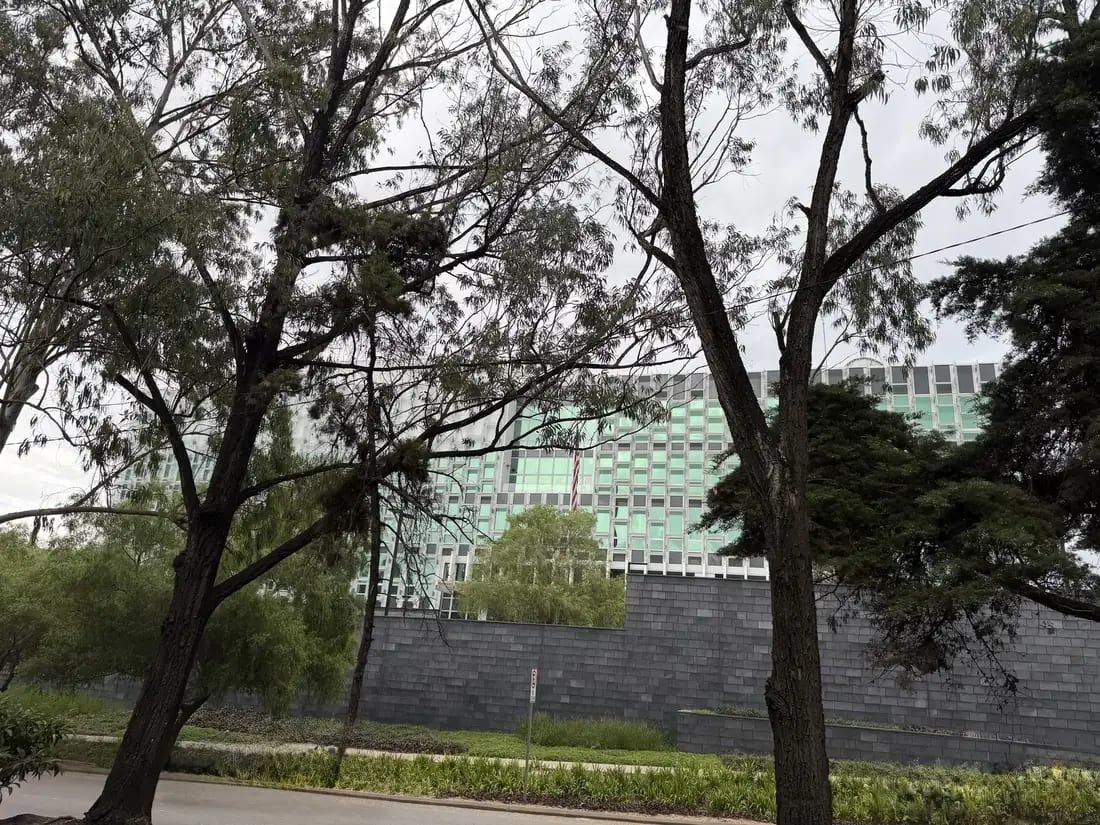
US Embassy Guatemala City: Boulevard Austriaco 11-51, Zone 16, Guatemala City. Phone: 2354 0000 from Guatemala, 011 502 2354 0000 from the USA (embassy services and visas pages, read 24 September 2026). An earlier version of this paragraph gave a Zone 14 address and a different number.
Learn basic Spanish phrases
Even survival Spanish helps.
Travel insurance
We recommend a policy with medical coverage; compare quotes for your trip length.
Faye sells single-trip plans to U.S. residents (not to residents of Puerto Rico, Guam, the U.S. Virgin Islands, the Northern Mariana Islands or American Samoa), and Guatemala is not on its list of excluded destinations. Its FAQ lists emergency medical cover of up to $250K and emergency medical evacuation of up to $500K, and its site lists trip cancellation, trip interruption, trip delay and baggage among what its plans cover. It must be bought before you leave home.
Get a Faye quote →Affiliate link: we earn a commission if you buy, at no extra cost to you. Coverage limits and prices are Faye's own figures as of September 24, 2026; this is not insurance advice. Disclosure
Vaccinations
The State Department’s Guatemala page says no vaccinations are required for entry. CDC’s Guatemala travel-health page (read 30 September 2026) says:
- Be up to date on routine vaccines, including MMR, before every trip
- Hepatitis A: recommended for unvaccinated travelers one year old or older
- Hepatitis B: recommended for unvaccinated travelers younger than 60
- Malaria: prescription prevention for certain areas, primarily the departments of Alta Verapaz, Baja Verapaz, Escuintla, Izabal and Petén; no transmission in Antigua, Guatemala City or at Lake Atitlán
- The page also covers typhoid and rabies
Yellow fever: CDC’s Yellow Book says Guatemala requires proof of vaccination only from travelers arriving from countries with yellow fever transmission risk (or with layovers over 12 hours in them). Ask your physician for personal recommendations.
Special situations
Bringing children
A US citizen, child or adult, must use a US passport to enter and leave the United States (22 CFR 53.1). The State Department advises bringing a copy of each child’s birth certificate or other proof of your relationship, and recommends a notarized letter of consent if a child is not travelling with both parents.
Bringing dogs/cats
Pet relocation has separate requirements. See our pet relocation page for the full process.
Long-term planning
If you plan to stay longer than a tourist stay allows, consider residency:
- Pensionado visa — IGM-016-2025 sets a minimum individual monthly income of US$1,250 for pensioners
- Investor residency — Acuerdo IGM-016-2025 (Art. 17) sets the requirements for temporary residency for investors
- Work visa — if you have Guatemalan employment
What’s next
For US travelers to Guatemala:
- ATM Cards That Work in Guatemala — money access
- Real Estate in Antigua — if you fall in love with it
- Best Neighborhoods for Retirement — if you’re scouting longer-term
- Internet Speed in Guatemala — for remote work during your visit
- US Visa Interview Wait in Guatemala City — the mirror image of this page, for Guatemalan friends and family travelling the other way
For specific situations (medical, business, family) email stu@livinginguatemala.com.
Sources
Government of Canada, Guatemala travel advice (read 27 October 2026)
US State Department, Guatemala travel advisory and country information (read 24 September 2026)
Government of Canada, travel advice for Guatemala (read 2 October 2026)
IGM, country classification for visas (read 25 September 2026)
IGM migration tariff, Acuerdo IGM-029-2023 with its reforms through IGM-039-2025
Código de Migración (Decreto 44-2016), Arts. 64, 66, 192, 194 and 195; Acuerdo IGM-016-2025 (residency)
CDC, Guatemala traveler page (read 30 September 2026) and CDC Yellow Book, Guatemala and Belize
US Embassy Guatemala, services (read 24 September 2026)
Border Management Agency of Belize, travel fees (read 16 September 2026)
22 CFR 53.1
Frequently Asked Questions
Do US citizens need a visa for Guatemala?
No. The US State Department’s Guatemala page (read 24 September 2026) says a tourist visa is not required for US citizens, that tourists can stay up to 90 days, and that your passport must be valid at the time of entry. IGM’s visa classification lists the United States in Category A, exempt from visa. Canada’s travel advice (written for Canadian travellers, read 2 October 2026) adds that 90 days are not automatically granted: the officer at your first entry point into the CA-4 region (Guatemala, El Salvador, Honduras, Nicaragua) decides the length. Check your airline’s passport-validity rule too, which Canada notes may be stricter than the country’s.
How long can I stay in Guatemala on a US passport?
Up to 90 days, per the US State Department. Canada’s travel advice describes the CA-4 agreement as letting tourists travel among Guatemala, El Salvador, Honduras and Nicaragua for up to 90 days, so moving between those four countries does not start a new 90 days. Before your authorised stay runs out, request an extension at IGM or leave the CA-4 region.
Can I extend my 90-day Guatemala stay?
Yes, once. Apply at IGM (Instituto Guatemalteco de Migración) before your authorised stay expires. IGM’s tariff charges US$25.00 to file a tourist-visa extension (prórroga) request (Acuerdo IGM-029-2023 as reformed, numeral 2.2, re-read 2 October 2026). Canada’s travel advice says the extension can equal the days you were first authorised and that Guatemala allows a maximum of 180 days; once that runs out you change your migratory status or leave the CA-4 region. It adds that after leaving the CA-4 region you may attempt to return and restart the process once 72 hours have passed, and that the officer could deny re-entry.
Are there exit fees when leaving Guatemala?
Yes by air and by sea, no by land. The INGUAT law (Decreto 1701, Art. 21 c, as reformed by Decreto 44-2000) levies the quetzal equivalent of US$30.00 per person leaving by air and US$10.00 by sea, and says people leaving by land are not subject to it; Prensa Libre reported in January 2020 that the air tax is charged on the ticket. By land, Guatemala charges no exit fee: the migration tariff, Acuerdo IGM-029-2023 as reformed by IGM-039-2025, Art. 3, numeral 4.2, has no exit-fee line. At Melchor de Mencos, the crossing into Belize, two traveller sources report officials asking for an unofficial payment anyway. Decline politely or ask for a receipt.
Do I need a Guatemala tourist card, and how much does it cost?
The entry document official travel advice describes is a stamp, not a card. Canada’s travel advice for Guatemala (read 2 October 2026) says no tourist visa is needed for stays of up to 90 days, that you must obtain an entry stamp in your passport when entering Guatemala, and that you must complete the electronic declaration form (the DVE) before arriving and before leaving; it mentions no tourist card. Two Guatemalan texts still carry the term, without telling a tourist to buy one: IGM’s migration tariff (Acuerdo IGM-029-2023 as reformed by IGM-039-2025, numeral 4.2.1) lists a Tarjeta de visitante at US$15.00 without saying who it applies to, and the FAOLEX copy of the INGUAT law (Decreto 1701, Art. 21 a, with reforms through Decreto 44-2000) still prints a US$5 tax per tarjeta de Turismo; neither text says a tourist pays it at entry, and the State Department and Canada pages cited here mention no tourist-card fee. The 90 days you are granted count across the CA-4 region (Guatemala, El Salvador, Honduras, Nicaragua), not per country.
Do I need a yellow fever vaccination for Guatemala?
Not for travel from the USA: the State Department’s Guatemala page says no vaccinations are required. CDC’s Yellow Book says yellow fever is not a risk in Guatemala, but that Guatemala requires proof of yellow fever vaccination from travellers arriving from countries with risk of yellow fever transmission, or with airport layovers or transits of more than 12 hours through such countries.
Can I show an electronic copy of the Guatemala declaration QR code?
Canada’s travel advice, written for Canadian travelers, says to keep a printed or electronic copy of the declaration QR code to present to authorities on arrival or departure (read 27 October 2026).