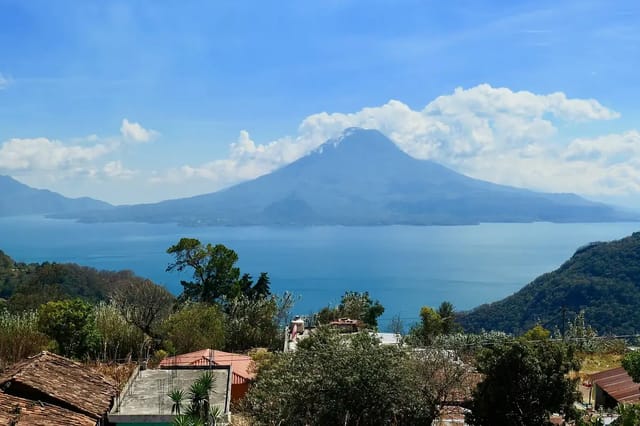

Guatemala does not have a metro system, passenger trains, or a network of well-maintained highways. What it does have is a chaotic, surprisingly effective patchwork of buses, boats, ride-hailing apps, shuttles, tuk-tuks, and domestic flights that will get you virtually anywhere in the country — if you know how the system works.
I grew up navigating this system. I have ridden chicken buses through highland switchbacks, taken overnight Pullman services to Flores, and grabbed Ubers across Guatemala City more times than I can count. This guide covers every transport option available in 2026, with real prices and honest safety advice.
TL;DR: Uber is the best option in Guatemala City (Q25-40 from the airport). Pullman buses connect cities for Q50-700. Chicken buses cover rural routes for Q3-50. TAG Airlines flies to Flores in 1 hour vs 9 by bus. Budget Q400-770/month ($50-100) for comfortable expat transport.
At a Glance: Transport Options and When to Use Them
| Transport | Best For | Cost Range | Safety | Comfort |
|---|---|---|---|---|
| Uber / InDriver | Guatemala City, Antigua | Q20–350 ($2.60–$45) | High | High |
| Pullman bus | Long-distance between cities | Q50–700 ($6.50–$91) | Good | Good |
| Tourist shuttle | Antigua-Atitlan, popular routes | Q60–600 ($7.80–$78) | Good | Good |
| Chicken bus | Short hops, rural areas | Q3–50 ($0.39–$6.50) | Low–Moderate | Low |
| Transmetro BRT | Guatemala City corridors | Q1 ($0.13) | Moderate | Moderate |
| TAG Airlines | Guatemala City to Flores | Q800–1,800 ($104–$233) | High | Good |
| Tuk-tuk | Small towns, short distances | Q5–25 ($0.65–$3.25) | Moderate | Low |
| Lake Atitlan lancha | Between lakeside towns | Q25–35 ($3.25–$4.55) | Moderate | Moderate |
| Car rental | Road trips, flexibility | Q350–800/day ($45–$104) | Your control | High |
Prices verified March 2026. See our exchange rates page for today’s USD/GTQ rate.
Head-to-Head: Uber vs Tuk-Tuk vs Chicken Bus vs Shuttle
This is the comparison most travelers actually need. Each mode has a clear sweet spot, and choosing wrong means overpaying or sitting on a bus for hours when a Q30 Uber would do the job.
Short Trips Within a City (Under 5 km)
| Factor | Uber | Tuk-Tuk | Chicken Bus | Shuttle |
|---|---|---|---|---|
| Cost | Q20–45 ($2.60–$5.85) | Q5–15 ($0.65–$1.95) | Q3–5 ($0.39–$0.65) | N/A |
| Speed | Fast (direct route) | Fast (weaves traffic) | Slow (many stops) | N/A |
| Comfort | AC, enclosed | Open-air, bumpy | Crowded benches | N/A |
| Safety | GPS tracked, high | No seatbelts, moderate | Varies, low–moderate | N/A |
| Availability | GC & Antigua only | Every small town | Everywhere | Not for city trips |
| Best when | You want safety & AC | In small towns | On a tight budget | — |
Medium Trips Between Nearby Cities (30-100 km)
| Factor | Uber | Tuk-Tuk | Chicken Bus | Shuttle |
|---|---|---|---|---|
| Cost | Q100–350 ($13–$45) | Not practical | Q10–25 ($1.30–$3.25) | Q80–150 ($10–$19) |
| Speed | 1–1.5 hrs | — | 1.5–3 hrs | 1.5–2.5 hrs |
| Comfort | Private car, AC | — | Three per bench | Minivan, AC |
| Safety | High | — | Low–Moderate | Good |
| Best when | Groups of 2-4 (split fare) | — | Solo budget travel | Solo or couple, want easy |
Long-Distance Between Regions (150+ km)
| Factor | Uber | Pullman Bus | Chicken Bus | Shuttle | TAG Flight |
|---|---|---|---|---|---|
| Cost | Q500–1,500+ | Q80–700 | Q30–50 | Q200–600 | Q800–1,800 |
| Speed | 3–5 hrs | 4–9 hrs | 5–12+ hrs | 4–9 hrs | 1 hr |
| Comfort | Private, tiring | Reclining seats, AC | Hard bench, crowded | Minivan, AC | Turboprop seat |
| Safety | Good | Good | Low | Good | High |
| Best when | Odd routes, groups | Any long route | Never for long trips | Tourist routes | GC to Flores only |
Bottom line: Uber for cities, chicken bus for cheap short hops, shuttles for tourist corridors, Pullman for long-distance on a budget, TAG for Flores/Tikal.
Route-by-Route Price Breakdown: Popular Trips
This is the section you will actually reference when planning. Every popular route, every transport option, side by side.
Guatemala City to Antigua (45 km, 1–1.5 hours)
The most-traveled route in the country. Four practical options:
| Option | Price | Time | Departs From | Frequency | Notes |
|---|---|---|---|---|---|
| Uber | App-quoted (~Q320 / $42) | 1 hr | Your location | On demand | Door to door, best for groups; no fixed fare |
| Rebuli Pullman | Q20–30 ($2.60–$3.90) | 1 hr | Zona 1 terminal | Every 15 min | Comfortable, cheap, reliable |
| Tourist shuttle | Q80–120 ($10–$16) | 1–1.5 hrs | Hotel pickup | Scheduled | Includes pickup/dropoff |
| Chicken bus | Q10 ($1.30) | 1.5 hrs | El Trebol (Zona 7/12) | Constant | Cheapest, least comfortable |
My recommendation: Rebuli bus for solo travelers (Q25 and comfortable). Uber for groups of 3-4 (split ~Q320 four ways = ~Q80 each, door-to-door). Shuttle if you want hotel pickup without hassle. Chicken bus only if you are truly on a backpacker budget and know where El Trebol is.
Guatemala City to Lake Atitlan (Panajachel, 150 km, 2.5–4 hours)
| Option | Price | Time | Via | Notes |
|---|---|---|---|---|
| Uber | Q500–800 ($65–$104) | 2.5–3 hrs | Direct highway | Expensive but door-to-door |
| Tourist shuttle from GC | Q150–250 ($19–$32) | 3–3.5 hrs | Direct | Book day before |
| Shuttle from Antigua | Q100–150 ($13–$19) | 2.5 hrs | Chimaltenango | Most common option |
| Chicken bus | Q25–35 ($3.25–$4.55) | 3.5–4 hrs | Los Encuentros transfer | 2 buses required |
My recommendation: Take a shuttle from Antigua. Most travelers are already in Antigua, and the Q100–150 shuttle is the sweet spot of cost, comfort, and convenience. From Guatemala City, the direct shuttle at Q150–250 saves you the Antigua detour.
Guatemala City to Flores/Tikal (500 km, 1 hour by air / 9 hours by bus)
| Option | Price | Time | Notes |
|---|---|---|---|
| TAG / Avianca flight | Fare not published | 1 hr | 7–8 departures a day, 05:45–21:30; book at tag.com.gt, 20kg limit |
| Linea Dorada luxury bus | No published fare (2026) | 9 hrs | Domain now serves a casino page; ask at a travel agency |
| Fuente del Norte standard | Q262.50–420 ($34–$55) | 9 hrs | Live engine quotes, 12 Sep 2026; AC, assigned seats, basic |
| Tourist shuttle | Q400–600 ($52–$78) | 9.5 hrs | From Antigua or GC |
| Chicken bus | Not practical | 12+ hrs | Multiple transfers, do not attempt |
My recommendation: Fly. The flight saves you 16+ hours of round-trip bus time — we could not verify a published fare on 12 September 2026, so price it with the airline. If flying is not in the budget, take the Fuente del Norte 9:00 PM overnight: its own booking engine quoted Q262.50 Clase A and Q315 Clase B on 12 September 2026, and it arrives in Santa Elena around dawn.
Guatemala City to Quetzaltenango/Xela (200 km, 4 hours)
| Option | Price | Time | Notes |
|---|---|---|---|
| Uber | Q600–900 ($78–$117) | 3.5–4 hrs | Expensive for the distance |
| ADN/Alamo Pullman | Q90–120 ($12–$16) | 4 hrs | Hourly departures, comfortable |
| Cristobal Colon | Q65 ($8.50) direct | 4 hrs | From 7a Avenida 19-44, Zona 1; Tue/Thu/Sat 8:00 AM (guatemala.com, 6 Mar 2026) |
| Chicken bus | Q35–50 ($4.55–$6.50) | 5+ hrs | Via Los Encuentros or coast |
| TAG Airlines | Q900–1,400 ($117–$181) | 30 min | Seasonal, check availability |
My recommendation: ADN or Alamo Pullman bus. At Q100 ($13) and 4 hours, it is comfortable and affordable. The TAG flight is great if it is running, but the schedule is unreliable.
Antigua to Monterrico Beach (100 km, 2.5 hours)
| Option | Price | Time | Notes |
|---|---|---|---|
| Tourist shuttle | Q100–180 ($13–$23) | 2.5 hrs | Popular weekend trip |
| Uber | Q300–500 ($39–$65) | 2 hrs | Direct, split with group |
| Chicken bus | Q20–30 ($2.60–$3.90) | 3+ hrs | Transfer at Escuintla |
Antigua to Semuc Champey (300 km, 8–9 hours)
| Option | Price | Time | Notes |
|---|---|---|---|
| Tourist shuttle | Q250–400 ($32–$52) | 8–9 hrs | Long ride, consider 2-day tour |
| Pullman to Coban + local bus | Q120–160 ($16–$21) total | 9–10 hrs | More adventurous |
| Private transfer | Q1,500–2,500 ($194–$324) | 7–8 hrs | Worth it for groups of 4+ |
Guatemala City to Coban (210 km, 4.5 hours)
| Option | Price | Time | Notes |
|---|---|---|---|
| Monja Blanca Pullman | Q80–110 ($10–$14) | 4.5 hrs | Every 30 min, reliable |
| Fuente del Norte | Not sold | — | No Coban station and no Coban in the operator’s booking list (12 Sep 2026); its history page names only a Santa Elena–Coban service |
| Chicken bus | Q30–45 ($3.90–$5.85) | 5.5+ hrs | Via Salama or direct |
Guatemala City to Rio Dulce (280 km, 5 hours)
| Option | Price | Time | Notes |
|---|---|---|---|
| Litegua Pullman | Q80–110 ($10–$14) | 5.5 hrs | 6 daily departures |
| Fuente del Norte | No published fare | 5 hrs | The Flores bus passes the bridge, but Rio Dulce is not a station in the operator’s booking engine (12 Sep 2026) — ask at the 17 Calle 8-46 counter |
| Chicken bus | Q30–40 ($3.90–$5.20) | 6+ hrs | Transfer at El Rancho |
Panajachel to Quetzaltenango (100 km, 2.5–3 hours)
| Option | Price | Time | Notes |
|---|---|---|---|
| Tourist shuttle | Q120–200 ($16–$26) | 3 hrs | Beautiful mountain route |
| Chicken bus | Q20–30 ($2.60–$3.90) | 3.5 hrs | Via Los Encuentros |
What Locals Actually Use
Tourist guides often present Guatemala’s transport system from a visitor’s perspective. But the 17 million people who live here move differently. Understanding how locals travel helps you find cheaper options and navigate like someone who belongs.
Guatemala City Commuters
The typical capitalino’s daily commute looks nothing like a tourist’s:
- Working class: Transmetro BRT (Q1 per ride, ~400,000 daily riders) + camionetas (Q1.50–Q3 for city routes). A factory worker in Zona 12 might take 2 buses each way, spending Q6–Q10/day ($0.78–$1.30) on transport.
- Middle class: Uber or private car. A professional living in Zona 15 and working in Zona 10 pays Q25–Q40 ($3.25–$5.20) each way by Uber, or spends Q1,500–Q2,500/month ($194–$324) on gas, parking, and car maintenance.
- Students: Transmetro and city camionetas. USAC students get special bus rates on some routes.
Key difference from tourist behavior: Locals rarely take taxis. Before Uber, middle-class Guatemalans used their own cars. Working-class commuters have always relied on buses. The concept of “flagging a taxi” is mostly a tourist thing, and locals consider it unsafe.
Small Town and Rural Guatemala
Outside the capital, the transport hierarchy is:
- Walking — most trips under 2 km are on foot
- Tuk-tuks — Q3–Q10 for any trip within town (locals pay less than tourists)
- Chicken buses — for trips between towns, to the nearest city, or to market day destinations
- Pickups (picops) — in very rural areas, locals ride in the back of pickup trucks along dirt roads, paying Q5–Q15 to the driver. This is unofficial but extremely common in departments like Huehuetenango, Quiche, and Alta Verapaz.
- Motorcycles — many families own one motorcycle for all transport needs
What locals spend on transport: A family in a rural highland town might spend Q200–Q400/month ($26–$52) total on transport. A Guatemala City household with one car spends Q2,000–Q4,000/month ($259–$518) including fuel, insurance, and maintenance.
What Locals Know That Tourists Do Not
- Chicken bus fares are loosely regulated. There is a set rate per kilometer that the government theoretically controls. If the ayudante charges you Q15 for a trip locals pay Q5 for, you are being overcharged. Ask a local passenger what they paid.
- Tuk-tuk prices double for obvious foreigners. If you speak Spanish, you will pay local rates. If not, negotiate firmly or ask your hotel what the fare should be.
- Transmetro is usable and very cheap but confusing for newcomers. It runs on dedicated lanes along 4 corridors in Guatemala City. Q1 flat fare. Locals use it heavily — 400,000+ riders daily.
- “Jalones” (hitchhiking rides) are common in rural areas. Locals flag down passing trucks and pickups and offer Q5–Q10 for a ride. This is a normal part of rural Guatemalan life but not recommended for tourists.
- Market day schedules affect bus frequency. On market days (varies by town), extra chicken buses run earlier and more frequently. On non-market days, some routes have very few departures.
- Uber drivers know shortcuts. Guatemala City traffic is terrible, and experienced Uber drivers use callejones (alleys) and back streets that Google Maps does not always suggest.
Uber and InDriver: The Easy Option
If you are in Guatemala City, Uber is your best friend. It is safe, reliable, cheap, and available 24/7. This is how most expats and middle-class Guatemalans get around the capital.
Uber in Guatemala
Uber has been operating in Guatemala City since 2017 and has a large driver pool. Coverage in Antigua is more limited but growing. For the complete guide, see our dedicated Uber in Guatemala page.
| Route | Fare (GTQ) | Fare (USD) | Time |
|---|---|---|---|
| Zona 10 to Zona 1 | Q30–50 | $3.90–$6.50 | 20–40 min |
| Zona 10 to La Aurora Airport | Q25–40 | $3.25–$5.20 | 15–25 min |
| Zona 10 to Zona 4 (Cuatro Grados) | Q20–35 | $2.60–$4.55 | 10–20 min |
| Zona 14 to Zona 10 | Q20–30 | $2.60–$3.90 | 10–15 min |
| Guatemala City to Antigua | Q200–350 | $25.90–$45.35 | 1–1.5 hrs |
| Guatemala City to Panajachel | Q500–800 | $64.77–$103.63 | 2.5–3 hrs |
Key tips:
- You can pay with cash or card. Many drivers prefer cash.
- Surge pricing kicks in during rain (which is every afternoon May through October) and rush hour. Expect 1.5–3x normal fares.
- Always confirm the driver’s name and plate number before getting in.
- Spanish is not required — the app handles communication — but it helps.
InDriver
InDriver (sometimes written inDrive) lets you propose your own fare and the driver accepts or counters. It is available in Guatemala City and Quetzaltenango. Fares can be cheaper than Uber during surge periods because there is no algorithm-driven pricing. The trade-off is a smaller driver pool, less reliability, and a worse safety reputation.
Getting from La Aurora Airport
The airport is in Zone 13 of Guatemala City, close to the upscale zones. Your options, ranked by recommendation:
- Uber (best option): Q25–40 ($3.25–$5.20) to Zona 10. Walk outside the arrivals hall, request on the app, and meet the driver at the designated pickup area.
- Airport taxi (fine but pricier): Official taxis at the booth inside arrivals charge Q80–120 ($10–$15) to Zona 10. Fixed rates, safe, but 2–3x the Uber price.
- Hotel pickup: Many hotels in Zona 10 and Antigua offer airport transfers for $25–60.
- Public bus: Technically possible but not recommended with luggage, especially at night.
Pullman Buses: The Backbone of Long-Distance Travel
Pullman buses are Guatemala’s equivalent of Greyhound, but cheaper and with more frequent departures. These are full-size coaches with assigned seating, air conditioning, and luggage compartments. They are the safest and most comfortable way to travel between cities by land.
Major Bus Companies and Routes
| Company | Route | Price (GTQ) | Price (USD) | Duration | Departures |
|---|---|---|---|---|---|
| Litegua | GC – Puerto Barrios | Q80–100 | $10–$13 | 5 hrs | Every 30 min |
| Litegua | GC – Rio Dulce | Q80–110 | $10–$14 | 5.5 hrs | 6 daily |
| Litegua | GC – Esquipulas | Q60–80 | $8–$10 | 4.5 hrs | Hourly |
| Fuente del Norte | GC – Flores (Peten) | Q262.50 Clase A / Q315 Clase B | $34 / $41 | 9 hrs | 6 on 20 Sep 2026 (5:45am, 12:00pm x2, 3:00pm, 9:00pm, 10:00pm) |
| Fuente del Norte | GC – Coban | Not sold | — | — | No Coban station; Coban is not in the operator’s booking list (12 Sep 2026) |
| Linea Dorada | GC – Flores (luxury) | Not published | — | 9 hrs | Not published |
| Fuente del Norte | GC – Melchor de Mencos (Belize) | Q283.50 Clase A / Q346.50 Clase B | $37 / $45 | 10.5 hrs | 2 daily: 17:30–18:00 and 20:00 (12 Sep 2026) |
| ADN / Alamo | GC – Quetzaltenango (Xela) | Q90–120 | $12–$16 | 4 hrs | Hourly |
| ADN / Alamo | GC – Huehuetenango | Q100–130 | $13–$17 | 5 hrs | 4–6 daily |
| Monja Blanca | GC – Coban | Q80–110 | $10–$14 | 4.5 hrs | Every 30 min |
| Monja Blanca | GC – Salama | Q50–70 | $6.50–$9 | 3 hrs | Hourly |
| Tica Bus | GC – Tapachula (Mexico border) | Q206 | $27 | 9.5 hrs (07:30–17:00) / 8.5 hrs (14:30–23:00) | 2 daily (07:30, 14:30) |
| Cristobal Colon | GC – Xela (direct) | Q65 | $8.50 | 4 hrs | Tue/Thu/Sat 8:00 AM |
| Rebuli | GC – Antigua | Q20–30 | $2.60–$3.90 | 1 hr | Every 15 min |
| Hedman Alas | GC – Copan (Honduras) | Fare not verified in 2026 | – | 5 hrs | 1–2 daily |
Transportes Galgos was removed from this table on 12 September 2026: every candidate domain fails DNS, its Facebook page is login-walled, and no fare or schedule for the company is published anywhere we could reach. The Cristobal Colon fare is guatemala.com’s 6 March 2026 figure for the direct service from 7a Avenida 19-44, Zona 1 — the operator itself publishes no fare table. The Tica Bus and Fuente del Norte figures are operator-published, read 12 September 2026. Linea Dorada cannot be priced: lineadorada.com.gt now returns an online-casino page.
Pullman Tips
- Buy tickets at the terminal or online when available. Litegua and Fuente del Norte have websites.
- Buses have strong AC. Bring a jacket or hoodie, even in the tropics. This is not a joke — the AC on a Linea Dorada is genuinely cold.
- Most terminals are in Zona 1 of Guatemala City. This area can be rough — take an Uber to and from the terminal.
- Overnight buses to Flores save you a hotel night. The Fuente del Norte service departs around 9–10pm and arrives at 6am. The Linea Dorada luxury option is worth the premium for a 9-hour ride — reclining seats, meals, and movies.
- Keep valuables in your carry-on, not in overhead compartments or the luggage hold.
- Holiday periods (Semana Santa, Christmas, long weekends) mean sold-out buses. Book in advance.
The Peten overnight: who you can actually price
If you are going to Flores/Tikal, Fuente del Norte is the operator whose price you can actually check: its own booking engine quoted Q262.50 Clase A and Q315 Clase B on 12 September 2026, and its Clase Oro coaches carry reclining seats, AC, an onboard bathroom and two certified drivers. Linea Dorada used to be the premium alternative on this run, but no 2026 fare, timetable or terminal address for it could be verified — lineadorada.com.gt now returns an online-casino page.
Tourist Shuttles: Convenient but Pricey
Tourist shuttles are shared minivans that run between popular destinations. They are more comfortable and safer than chicken buses, include hotel pickup, and are easy to book. The trade-off is that they cost 3–10x more than public transport.
Popular Shuttle Routes
| Route | Price (GTQ) | Price (USD) | Duration | Notes |
|---|---|---|---|---|
| Antigua – Panajachel (Lake Atitlan) | Q100–150 | $13–$19 | 2.5 hrs | Multiple daily, 7–8am departures |
| Antigua – Guatemala City | Q80–120 | $10–$16 | 1 hr | On demand |
| Antigua – Semuc Champey (via Lanquin) | Q250–400 | $32–$52 | 9 hrs | Very long, consider 2-day tour |
| GC – Flores/Tikal | Q400–600 | $52–$78 | 9.5 hrs | Fly instead if budget allows |
| Panajachel – Xela | Q120–200 | $16–$26 | 3 hrs | Beautiful mountain scenery |
| Antigua – Monterrico (beach) | Q100–180 | $13–$23 | 2.5 hrs | Popular weekend trip |
| Flores – Tikal | Q60–100 | $8–$13 | 1.25 hrs | 4:30am shuttle for sunrise |
| Panajachel – Chichicastenango | Q60–100 | $8–$13 | 1.5 hrs | Thursday and Sunday market days |
| Antigua – Guatemala City Airport | Q80–120 | $10–$16 | 1 hr | Book 24 hrs ahead |
How to Book Shuttles
- In Antigua: Walk into any tour agency on 5a Avenida. There are dozens. Compare prices — they vary.
- Online: GuateGo (guatego.com) and GetYourGuide aggregate shuttle options.
- Through your hotel: Most hostels and hotels can arrange shuttles. Expect a small markup.
- Book the day before. Same-day is usually fine outside of holidays, but why risk it?
Shuttle Booking Services
The two most reliable shuttle aggregators are:
- GuateGo: Online booking platform covering most popular routes. Prices are transparent and you can compare options.
- Adrenalina Tours: Based in Antigua. Reliable and well-established for shuttle and tour bookings.
Shuttle Tips That Save Money
- Share with other travelers. If you find 3–4 people going the same direction, a private shuttle often costs less per person than individual shuttle seats. Ask your hostel if other guests are heading the same way.
- Departure time matters. Early morning shuttles (6–7 AM) are often cheaper and less full. Midday departures on popular routes can sell out.
- Negotiate for round trips. Some operators offer 10–20% off if you book the return at the same time.
Chicken Buses (Camionetas): The Iconic Guatemala Experience
No guide to Guatemala transportation is complete without chicken buses. These are retired US school buses, shipped south, repainted in wild colors, modified with louder engines, and put into service covering every road in the country. Guatemalans call them “camionetas” or “extraurbanos.” For the full deep dive, see our chicken bus guide.
Chicken Bus Prices
| Trip Type | Price (GTQ) | Price (USD) | Example |
|---|---|---|---|
| Short (under 30 min) | Q3–10 | $0.39–$1.30 | Solola to Panajachel, within Antigua area |
| Medium (1–2 hours) | Q10–25 | $1.30–$3.25 | Antigua to Chimaltenango, Panajachel to Los Encuentros |
| Long (2–4 hours) | Q20–50 | $2.60–$6.50 | Panajachel to Quetzaltenango, Xela to Huehuetenango |
How Chicken Buses Work
- There is no schedule. Buses leave when they are full. More departures in the early morning (5–8am) and afternoon (2–5pm).
- You pay on the bus. The ayudante (helper) hangs off the back door, shouts the destination, loads luggage on the roof, and collects fares during the ride.
- There are no assigned seats. It is first come, first served. Three people per bench seat is standard. Four is common.
- To stop, yell “parada!” or knock on the ceiling. The bus will stop (mostly) wherever you need.
- Major hubs: CENMA (Zona 12, Guatemala City) serves most southern and western routes. Various terminals in Zona 1 serve northern routes. Terminal Minerva (Zona 3, Quetzaltenango) serves the western highlands.
Chicken Bus Safety
I will be honest: chicken buses are not the safest option.
- For short daytime trips between nearby towns, they are fine. Thousands of Guatemalans ride them daily without incident.
- For long distances, use Pullman buses instead. Chicken buses are overcrowded, the drivers are often reckless (they are paid by the trip, not the hour), and highway accidents happen.
- At night in Guatemala City, avoid them entirely. Robberies on city bus routes have been a persistent problem.
- Keep your bag on your lap or between your feet. Do not put it on the overhead rack.
- Sit near the front if possible. Less bumpy, easier to exit, and closer to the driver.
That said, for short hops during the day in tourist areas — say, getting from Panajachel to Solola, or between villages around Lake Atitlan — chicken buses are a perfectly viable and incredibly cheap option.
Transmetro BRT: Guatemala City’s Best-Kept Secret
Transmetro is Guatemala City’s bus rapid transit system — dedicated-lane buses that run on 4 corridors across the city. Most tourists never use it, but 400,000+ people ride it every day and it costs just Q1 ($0.13) per trip.
How Transmetro Works
- Fare: Q1 flat rate per trip, any distance along the corridor
- Payment: Prepaid card (buy at any station for Q10, includes Q5 balance)
- Hours: 5 AM to 10 PM, Monday through Saturday. Limited Sunday service.
- Frequency: Every 3–8 minutes during peak hours
Transmetro Corridors
| Line | Route | Key Stops |
|---|---|---|
| Eje Central | Zona 1 – CENTRA (Zona 12) | Central market, Trebol, CENMA |
| Corredor Central | Zona 1 – Zona 13 | Civic Center, Zona 9, Airport area |
| Eje Sur | CENTRA – Villa Nueva | Southern suburbs |
| TransUrbano | Various Zona 1 – Mixco | Western suburbs |
Is Transmetro Good for Tourists?
For most tourists, no — Uber is easier and safer. But if you are living in Guatemala City, Transmetro is genuinely useful for commuting along its corridors. The stations are enclosed, there is security, and the buses are modern. The main downsides are crowding during rush hour and the limited route coverage (it only goes where the dedicated lanes are).
For the complete guide, see our Transmetro page.
Domestic Flights: TAG Airlines
Guatemala’s only significant domestic airline is TAG Airlines, operating small turboprop aircraft (ATR 42/72 and Let 410) out of La Aurora International Airport in Guatemala City.
TAG Routes and Prices
| Route | Price (GTQ) | Price (USD) | Duration | Frequency |
|---|---|---|---|---|
| Guatemala City – Flores | Not published | — | 1 hr | 4–5 daily TAG, plus 3 daily Avianca |
| Guatemala City – Quetzaltenango | Q900–1,400 | $117–$181 | 30 min | Seasonal/limited |
| Guatemala City – Coban | Q800–1,200 | $104–$155 | 30 min | Limited schedule |
Why You Should Fly to Flores
The Guatemala City to Flores route is the only one I strongly recommend booking. The bus alternative is 9 hours on winding roads. The flight is 1 hour, and there are seven to eight departures a day between 05:45 and 21:30 across TAG and Avianca. We could not verify a published fare on 12 September 2026 — the airlines’ own sites blocked us — so price it with the airline; it is not cheap, but the value in saved time is enormous.
Booking tips:
- Book directly at tag.com.gt for the best prices.
- Small planes have a 20kg luggage limit. Pack accordingly.
- Flights can be cancelled due to weather (especially during rainy season). Always have a backup plan.
- The Guatemala City to Quetzaltenango route is not always available. Check the current schedule before planning around it.
Tuk-Tuks (Mototaxis)
Three-wheeled motorcycle taxis are the standard local transport in smaller cities and towns. They are everywhere in Panajachel, Flores, Coban, and most rural towns. They are not available in Guatemala City center (traffic makes them impractical).
Tuk-Tuk Prices by Town
| Town | Short Trip (Under 1 km) | Medium Trip (1-3 km) | Notes |
|---|---|---|---|
| Panajachel | Q5–10 ($0.65–$1.30) | Q10–20 ($1.30–$2.60) | Everywhere, negotiate |
| Flores/Santa Elena | Q5–10 ($0.65–$1.30) | Q10–15 ($1.30–$1.95) | Around the island and to Santa Elena |
| Coban | Q5–10 ($0.65–$1.30) | Q10–20 ($1.30–$2.60) | Standard town transport |
| Antigua outskirts | Q10–15 ($1.30–$1.95) | Q15–25 ($1.95–$3.25) | Not in the historic center itself |
| Small highland towns | Q3–5 ($0.39–$0.65) | Q5–10 ($0.65–$1.30) | Cheapest fares in the country |
Rules of Engagement
- Agree on the price before you get in. There are no meters. If you do not agree on a price, you will pay whatever the driver decides, and the “gringo tax” is real.
- Ask a local what the fair price is before you approach a tuk-tuk. Hotel reception, shopkeepers, or anyone nearby can tell you in seconds. This one tip will save you from overpaying.
- Short trips only. These are for getting around a town, not for highway travel.
- They are fun but not exactly safe. No seatbelts, no doors, and drivers weave through traffic. Keep your arms inside.
- Rain = misery. Tuk-tuks have a roof but open sides. In the rainy season afternoon downpours, you will get wet.
Lake Atitlan Boats (Lanchas)
Lake Atitlan’s lakeside towns are connected by small motorboats called lanchas. Some towns — like Jaibalito and Santa Cruz La Laguna — have no road access at all. Lanchas are not optional; they are the only way to get there.
Public Lancha Routes and Prices
| Route | Price per Person (GTQ) | Price (USD) | Duration |
|---|---|---|---|
| Panajachel – San Pedro La Laguna | Q25–35 | $3.25–$4.55 | 30 min |
| Panajachel – San Juan La Laguna | Q25–35 | $3.25–$4.55 | 35 min |
| Panajachel – San Marcos La Laguna | Q25–35 | $3.25–$4.55 | 25 min |
| Panajachel – Santiago Atitlan | Q25–35 | $3.25–$4.55 | 40 min |
| Panajachel – Santa Cruz La Laguna | Q25–35 | $3.25–$4.55 | 15 min |
| Panajachel – Jaibalito | Q25–35 | $3.25–$4.55 | 20 min |
| San Pedro – San Juan (short hop) | Q10–15 | $1.30–$1.95 | 5 min |
| San Pedro – San Marcos | Q15–25 | $1.95–$3.25 | 10 min |
| Private boat hire (full boat) | Q200–500 | $26–$65 | Your schedule |
Public lanchas run roughly every 20–30 minutes from 6am to 5pm from the main dock in Panajachel (Tzanjuyu). Private lanchas cost Q200–500 ($26–$65) per boat and can be negotiated at the dock.
Lancha Safety Tips
- Plan your return boat for 4:30pm. INGUAT records lancha service at the lake’s public docks ending between 16:30 and 17:00 daily, and rainy season (May-October) winds down about an hour earlier. Miss it and you are sleeping in whatever town you are in.
- Afternoon winds (Xocomil) make the lake choppy, especially after 1pm. Morning crossings are smoother and drier.
- Ask for a life jacket. They should be available but often are not stowed in visible places.
- Sit toward the back to stay drier on choppy days. The bow catches every wave.
- Bring a waterproof bag or dry bag for your phone and electronics. Spray is common even on calm days.
Car Rental and Driving
Renting a car gives you maximum flexibility, but driving in Guatemala requires some mental preparation.
Car Rental Costs
| Vehicle Type | Daily Rate (GTQ) | Daily Rate (USD) | Best For |
|---|---|---|---|
| Economy (Kia Picanto, Suzuki Swift) | Q350–500 | $45–$65 | City driving, couples |
| Compact SUV (Suzuki Vitara, Hyundai Creta) | Q500–700 | $65–$91 | Highway trips, light off-road |
| Full-size SUV (Toyota RAV4, Mitsubishi Outlander) | Q700–1,000 | $91–$130 | Mountain roads, groups |
| 4x4 pickup (Toyota Hilux) | Q800–1,200 | $104–$155 | Rural roads, off-road |
Major agencies (Budget, Hertz, Avis) operate at La Aurora Airport. Local agencies are cheaper but check reviews carefully.
Requirements:
- Valid driver’s license from your home country (international permit recommended but not always required)
- Credit card for the deposit (Q3,000–Q8,000 hold, depending on the vehicle)
- Insurance (mandatory — do not skip it)
- Minimum age 21–25 depending on the company
Driving Conditions
- Main highways (CA-1 through CA-14) are generally fine. Two to four lanes, paved, marked.
- Secondary roads deteriorate quickly. Potholes, unmarked speed bumps (tumulos), and unpaved sections are common.
- Mountain roads are steep, winding, and narrow. Expect slow trucks, blind curves, and occasional rockfall.
- Guatemala City traffic is legendarily bad. Rush hour (7–9am, 5–7pm) can turn a 10km drive into 90 minutes.
- Gas stations are common along main routes. Premium fuel costs around Q40–45 per gallon ($5.20–$5.85). Check our gas prices page for current rates.
- Drive during daylight. Road conditions, unmarked hazards, and security all favor daytime travel.
Should You Rent?
Rent a car if you want to explore off-the-beaten-path areas at your own pace — the road from Guatemala City to Rio Dulce, the Pacific coast loop, or the highland villages around Xela. For detailed road conditions, insurance, and driving tips, see our driving in Guatemala guide. For getting between major tourist destinations (Antigua, Atitlan, Flores/Tikal), shuttles and flights are usually easier and cheaper when you factor in gas, insurance, and the stress of navigating unknown roads.
Crossing into Neighboring Countries
Guatemala shares borders with Mexico, Belize, Honduras, and El Salvador. Here are the main crossing points:
| Border | Main Crossing | Getting There | Cost | Notes |
|---|---|---|---|---|
| Mexico | Tecun Uman / La Mesilla | Tica Bus to Tapachula (07:30 or 14:30 daily, crossing at El Carmen / Talisman) | $27 (~Q206) | Most common for visa runs |
| Belize | Melchor de Mencos | Fuente del Norte from GC (two daily: 17:30–18:00 and 20:00) | Q283.50 Clase A / Q346.50 Clase B | Direct, no change in Flores |
| Honduras | Agua Caliente / El Florido | Bus from Chiquimula (2–3 hrs) | Q60–100 | El Florido for Copan ruins |
| El Salvador | Valle Nuevo / Pedro de Alvarado | Bus from GC (3–4 hrs) | Q50–80 | CA-1 highway |
For CA-4 visa runs (resetting your 90-day stay), the Mexico border at either Tecun Uman or La Mesilla is the most popular option. Leave Guatemala, get stamped out, cross into Mexico, get stamped in, turn around, and cross back. Budget a full day.
The Cost Summary
Here is what you should budget for transportation per month, depending on your lifestyle:
| Lifestyle | Monthly Transport Budget | How | Daily Equivalent |
|---|---|---|---|
| Budget local | Q120–230 ($15–$30) | Chicken buses and walking | Q4–8 ($0.50–$1) |
| Student/backpacker | Q230–400 ($30–$50) | Mix of chicken bus and occasional shuttle | Q8–13 ($1–$1.70) |
| Comfortable expat | Q400–770 ($50–$100) | Uber in GC, shuttles between cities | Q13–25 ($1.70–$3.25) |
| Urban professional | Q800–1,500 ($104–$194) | Daily Uber commute in GC | Q27–50 ($3.50–$6.50) |
| Road tripper | Q1,550–3,100 ($200–$400) | Car rental for weekend trips | Q50–100 ($6.50–$13) |
| Frequent flier | Q3,100–5,000+ ($400–$650+) | Monthly TAG flights + Uber | Q100–170 ($13–$22) |
For most expats living in Guatemala City and making occasional trips to Antigua or Atitlan, budgeting Q400–770 per month ($50–$100) for transport is realistic and comfortable. See our cost of living breakdown for how transport fits into your overall monthly budget.
Tips for Every Transport Type
Uber Tips
- Add cash as a payment option. Many Guatemalan drivers cancel on card-only passengers because they prefer cash.
- Screenshot your destination. If the driver calls and you do not speak Spanish, showing the address on screen avoids confusion.
- Avoid surge by waiting 10–15 minutes. Rain surges in Guatemala City often drop within 15 minutes as more drivers go online.
- Rate 5 stars generously. Drivers with low ratings lose access. Reserve bad ratings for actual problems.
- Uber XL is rarely available in Guatemala. If you have a group of 5+, book two regular Ubers.
Chicken Bus Tips
- Travel before 9 AM for the most options and emptiest buses.
- Sit on the shady side. Buses without AC get extremely hot. In the morning, sit on the right (north-facing) side.
- Bring toilet paper. Rest stops are basic. If they exist at all.
- Know when to say no. If a bus looks dangerously overloaded or the driver seems impaired, wait for the next one. They come frequently.
Shuttle Tips
- Confirm pickup time twice. The day before AND the morning of. Shuttle no-shows happen.
- Arrive early. Shuttles leave exactly on time. They will not wait for latecomers.
- Bring snacks and water. Multi-hour shuttle rides rarely stop for food.
- Motion sickness warning. Mountain roads between Antigua and Atitlan are winding. Sit in front if you are prone to nausea.
Pullman Bus Tips
- Choose the right side of the bus for mountain views on the GC-Xela route.
- Bring earplugs for overnight buses. Even the luxury ones show movies at full volume.
- Do not drink too much water before an overnight ride. Bathroom breaks are infrequent.
- Keep your phone charged. USB ports are available on Linea Dorada but not all companies.
Tuk-Tuk Tips
- Negotiate the price first, always. Once you are moving, you have no leverage.
- Have exact change. Tuk-tuk drivers rarely carry change for large bills.
- Take a photo of the tuk-tuk number. Most have a registration number painted on the back. Useful if you leave something behind.
Practical Tips That Will Save You Headaches
- Download Google Maps offline. It shows bus routes in Guatemala City and works for navigation even without signal.
- Always carry small bills. Q10 and Q20 notes. Bus drivers and tuk-tuk drivers often do not have change for a Q100.
- Book holiday travel early. Semana Santa (Holy Week), Christmas, and long weekends mean sold-out buses and inflated shuttle prices.
- Learn these phrases: “Parada, por favor” (stop, please), “Cuanto cuesta?” (how much?), “A donde va?” (where does it go?), “Es directo?” (is it direct?).
- Uber from the airport, not a taxi. You will save Q40–80 on your very first ride.
- Night travel between cities is fine on Pullman buses but avoid chicken buses and walking in bus terminal areas after dark.
- The GC-Flores flight is worth every quetzal. Saving 8 hours each way is worth Q2,400–3,600 in your time.
- Waze is better than Google Maps for driving. Guatemalan drivers actively report traffic, accidents, and police checkpoints on Waze. Google Maps data is less current.
- Keep your phone charged. Your phone is your wallet (Uber), map, and translator. Bring a portable charger.
- Water and snacks are not sold on most buses. The exception is Linea Dorada, which includes a meal. Pack provisions for any bus trip over 2 hours.
Getting Around Specific Destinations
Guatemala City
- Uber for everything. Transmetro (city bus rapid transit) exists along certain corridors and costs Q1, but it is crowded and confusing for newcomers. Avoid regular city camionetas — safety concerns.
Antigua
- Walking covers most of the historic center (the entire grid is about 1 km x 1 km). Uber for trips outside town. Tuk-tuks for lazy days or trips to nearby villages. Shuttles to the airport or Panajachel.
Lake Atitlan
- Lanchas between lakeside towns. Tuk-tuks within towns. Chicken buses for Panajachel to Solola and surrounding areas. Shuttles to Antigua or Xela. See our Lake Atitlan lancha guide for detailed routes.
Flores/Tikal
- TAG Airlines from GC. Tuk-tuks in Flores/Santa Elena. Shuttle to Tikal for the ruins (Q60–100, departs 4:30 AM for sunrise tour). Fuente del Norte bus if flying is not in the budget (its own booking engine quoted Q262.50 Clase A on 12 September 2026); Cristobal Colon also sells Santa Elena from its Zona 1 terminal. No Linea Dorada fare could be verified in 2026.
Quetzaltenango (Xela)
- Local buses and tuk-tuks within the city. ADN/Alamo Pullman or Cristobal Colon from GC. InDriver available. Terminal Minerva for chicken buses to surrounding highland towns.
Coban and Alta Verapaz
- Monja Blanca bus from GC (4.5 hours). Fuente del Norte does not sell Coban — it publishes no Coban station and Coban is not in its booking list (12 September 2026). Tuk-tuks within Coban. Local buses to Lanquin and Semuc Champey (rough roads, 3 hours from Coban). Consider a tour package for Semuc Champey.
Rio Dulce and Izabal
- Litegua bus from GC (5.5 hours). Lanchas from Rio Dulce town to Livingston (Q150–200, 1.5 hours). No road access to Livingston — boats are the only way in.
Transport Apps to Download Before You Arrive
| App | What It Does | Essential? |
|---|---|---|
| Uber | Ride-hailing, pay by card or cash | Yes (for Guatemala City) |
| InDriver/inDrive | Ride-hailing with negotiable fares | Optional backup |
| Google Maps | Navigation, bus routes, offline maps | Yes |
| Waze | Real-time traffic, better than Google for driving | Yes (if driving) |
| GuateGo | Shuttle booking between cities | Useful for planning |
| Contact shuttle companies, hotels, drivers | Yes (Guatemala runs on WhatsApp) |
Looking for a specific route? The Guatemala transport hub indexes all 21 route guides — Antigua and Guatemala City departures, the Lake Atitlán lancha network, and the international crossings — each with its own current fares and schedules.
All prices current as of March 2026; quetzal/USD conversions are indicative. Prices fluctuate by season and demand. For real-time exchange rates, check the exchange rate tracker. For cost of living context, see the full Guatemala cost breakdown.
Frequently Asked Questions
Is Uber available in Guatemala?
Yes, Uber operates in Guatemala City (best coverage, 24/7, under 5 min wait), Antigua Guatemala (good coverage, 5-15 min wait), and has limited availability in Panajachel and Quetzaltenango. InDriver is also available in Guatemala City and Quetzaltenango with negotiable fares.
How do you get from Guatemala City to Antigua?
There are four options: Uber is app-quoted with no fixed fare (about Q320 / ~$42 one-way on a May 2026 fare check, 1 hour, most convenient). Tourist shuttles run Q80-120 ($10-16, 1-1.5 hours with hotel pickups). Rebuli Pullman buses cost Q20-30 ($2.60-3.90, 1 hour, every 15 minutes). Chicken buses from the Trebol terminal cost Q10 ($1.30, 1.5 hours). For safety and convenience, Uber or Rebuli are recommended.
Are chicken buses safe in Guatemala?
Chicken buses are fine for short daytime routes in rural areas and tourist corridors like Panajachel to Solola. Avoid them at night, on major highways, and in Guatemala City where robberies are a risk. For long distances, Pullman buses with assigned seating, professional drivers, and luggage compartments are significantly safer.
How much does a domestic flight cost in Guatemala?
No published GUA-Flores fare could be verified on 12 September 2026 — tag.com.gt and vuela.tagairlines.com both returned HTTP 403 to us and avianca.com returned no body, so check the airline directly. The schedule is sourced: seven to eight Guatemala City to Flores departures a day between 05:45 and 21:30, 50-60 minutes in the air, TAG (4-5 daily) plus Avianca (3 daily). Limited seasonal flights to Quetzaltenango and Coban are also available; those fares are from our earlier check, not operator-published.
How do you get around Lake Atitlan?
Motorboats called lanchas connect all lakeside towns. The fare is Q25 per person — the figure the boatmen’s own association publishes — though captains routinely quote visitors Q40-50, so agree the price before boarding. Boats run every 20-30 minutes from Panajachel. Some towns like Jaibalito and Santa Cruz La Laguna have no road access, so lanchas are the only option. Last boats leave around 5 PM.
Should I rent a car in Guatemala?
Rent a car for off-the-beaten-path exploration at Q350-800/day ($45-104). For travel between major destinations like Antigua, Atitlan, and Flores, shuttles and flights are usually easier and cheaper when you factor in gas, insurance, and driving stress. Guatemala City traffic is notoriously bad during rush hours.
What do locals actually use for transport in Guatemala?
In Guatemala City, middle-class locals use Uber and private cars. Working-class commuters rely on Transmetro BRT (Q1 per ride) and camionetas. Outside the capital, chicken buses are the backbone for daily commutes. In small towns, tuk-tuks are universal. Locals rarely use tourist shuttles, which cost 3-10x more than public transport.
How much should I budget for transport per month in Guatemala?
Budget locals spend Q120-230 ($15-30) monthly using chicken buses and walking. Comfortable expats using Uber and occasional shuttles spend Q400-770 ($50-100). Road trippers with car rentals spend Q1,550-3,100 ($200-400). Frequent fliers with monthly TAG flights spend Q3,100-5,000+ ($400-650+).
Is it safe to take a taxi from Guatemala City airport?
Official airport taxis at the booth inside arrivals are safe but cost Q80-120 ($10-15) to Zona 10. Uber is safer and cheaper at Q25-40 ($3.25-5.20) for the same trip. Never accept rides from unofficial taxi drivers inside the terminal. Walk outside to the designated rideshare area for Uber.
What is the best way to get from Antigua to Lake Atitlan?
Tourist shuttles cost Q100-150 ($13-19, 2.5 hours) with hotel pickup. Chicken buses require a transfer at Chimaltenango and then Los Encuentros, costing about Q25-35 total but taking 3-4 hours. Private Uber/transfer costs Q500-800 ($65-104). For most travelers, the shuttle is the best balance of cost and convenience.
![Antigua to San Pedro La Laguna: Direct Shuttle [2026]](/cdn-cgi/image/width=640,format=auto,quality=80/images/articles/og-default.webp)