Guatemala gets a bad rap for safety. The data tells a more nuanced story.
Every few weeks, someone posts in a Facebook group asking “Is Guatemala safe?” and the responses split into two predictable camps. One side screams that the country is a war zone. The other insists it is paradise and nothing bad ever happens. Both are wrong, and both do a disservice to anyone trying to make an informed decision about moving here.
I grew up in Guatemala. I have walked these streets my entire life. I have also had my phone snatched, avoided certain neighborhoods after dark, and watched the security situation genuinely improve over the past decade. This guide uses real homicide data, department-level safety scores, and neighborhood-specific advice to give you the most honest picture possible.
No sugarcoating. No fear-mongering. Just data and context.
TL;DR: Guatemala’s homicide rate has dropped from 30 to ~22 per 100K over the past decade. The western highlands and expat hubs like Antigua (8/10 safety) and Lake Atitlan (7/10) are genuinely safe; Zones 10, 14, and 16 in the capital are comparable to upscale Latin American neighborhoods. Avoid eastern departments and a handful of Guatemala City zones.
The National Picture: What the Numbers Actually Say
Guatemala’s national homicide rate sits at approximately 22 per 100,000 people as of the most recent available data (2024/2025). That number deserves context.
How Guatemala Compares
Crime data verified February 2026. See our exchange rates page for today’s USD/GTQ rate. Expats transferring funds should check our remittance comparison for the lowest fees.
| Country | Homicide Rate (per 100K) | Context |
|---|---|---|
| Guatemala | ~22 | Trending down from 30+ a decade ago |
| Honduras | ~36 | Historically the highest in the region |
| El Salvador | ~7.8 | Post-Bukele crackdown (was 50+ in 2015) |
| Mexico | ~25 | Varies wildly by state |
| Colombia | ~25 | Concentrated in specific regions |
| United States | ~6.5 | Concentrated in specific cities |
| Costa Rica | ~12 | Rising in recent years |
A few things jump out. First, Guatemala is not the most dangerous country in Central America – that distinction belongs to Honduras. Second, the trend line matters: Guatemala’s homicide rate has dropped significantly from over 30 per 100,000 a decade ago. Third, country-level statistics are almost meaningless for daily life because violence is not distributed evenly.
This last point is the most important one. Rating Guatemala’s safety as a single number makes about as much sense as rating the entire United States based on the crime stats from East St. Louis. Your actual safety depends enormously on where you are and what you are doing.
Who Is Actually at Risk?
The vast majority of violent crime in Guatemala is targeted, not random. It breaks down roughly like this:
- Gang-on-gang violence accounts for the largest share of homicides, concentrated in specific urban neighborhoods
- Domestic violence is the second major category
- Robbery-related violence (mostly when victims resist) comes next
- Tourist or expat-targeted violent crime is relatively rare
This does not mean you can walk anywhere at any hour and be fine. It means that if you live in a safe neighborhood in one of the lower-cost departments, do not flash valuables, and exercise basic street awareness, your actual risk profile is far lower than the national statistics suggest.
Petty crime – phone snatching, pickpocketing, bag theft – is the real everyday risk for foreigners. Violent crime against expats who are not involved in drugs or gang activity is uncommon, though it does happen.
Safety by Department: The Full Data Breakdown
Guatemala has 22 departments (think of them like states or provinces). Safety varies dramatically between them. Here is the complete breakdown using data from our interactive map, which scores each department on a 1-10 safety scale based on homicide rates, reported crime, and local conditions.
| Department | Safety Score | Homicide Rate | Expat Relevance | Key Notes |
|---|---|---|---|---|
| Quiche | 9/10 | Low | Moderate | Indigenous heartland, very safe, remote |
| Totonicapan | 9/10 | Low | Low | Safest department by reputation, indigenous governance |
| Alta Verapaz | 8/10 | Low | Moderate | Coban area, rural, ecotourism base |
| Baja Verapaz | 8/10 | Low | Low | Rural, safe, limited expat infrastructure |
| Huehuetenango | 8/10 | Low | Low | Highland, indigenous communities, generally safe |
| Solola | 7/10 | Low | High | Lake Atitlan – major expat hub |
| Quetzaltenango | 7/10 | Low | High | Second city, growing expat community |
| San Marcos | 7/10 | Low | Low | Border area but interior is safe |
| Suchitepequez | 7/10 | Low | Low | Pacific piedmont, agricultural |
| Sacatepequez | 6/10 | ~10 | High | Antigua – the most popular expat destination |
| Chimaltenango | 6/10 | ~11 | Moderate | Gateway to the highlands |
| El Progreso | 6/10 | Moderate | Low | Small, relatively quiet |
| Peten | 5/10 | Moderate | Moderate | Tikal, remote areas can be risky |
| Retalhuleu | 5/10 | Moderate | Low | Pacific coast, IRTRA theme parks |
| Guatemala | 4/10 | ~31 | High | Capital city, varies hugely by zone |
| Jutiapa | 4/10 | Moderate | Low | Border with El Salvador |
| Izabal | 3/10 | ~30 | Moderate | Caribbean coast, drug transit corridor |
| Jalapa | 3/10 | Moderate | Low | Eastern Guatemala |
| Chiquimula | 3/10 | Moderate | Low | Eastern border area |
| Santa Rosa | 3/10 | Moderate | Low | Southeast, limited tourism |
| Escuintla | 2/10 | ~45 | Low | One of the most dangerous departments |
| Zacapa | 2/10 | ~40 | Low | Eastern hot zone, narco-trafficking routes |
What the Map Tells Us
A clear geographic pattern emerges. The western highlands and indigenous regions are the safest parts of the country. Quiche, Totonicapan, Huehuetenango, and Alta Verapaz all score 8 or 9 out of 10. These communities have strong internal governance structures, tight social bonds, and relatively little gang presence.
The most dangerous areas cluster in the east and along trafficking corridors: Zacapa, Escuintla, Izabal, and parts of the Guatemala City metro. These are transit routes for narcotics moving from South America toward Mexico and the US border.
For most expats, three regions matter: Guatemala City, Antigua (Sacatepequez), and Lake Atitlan (Solola). The good news is that two of the three score well. The third – Guatemala City – demands more nuance, which is exactly what we will cover next.
Guatemala City: The Zone-by-Zone Guide
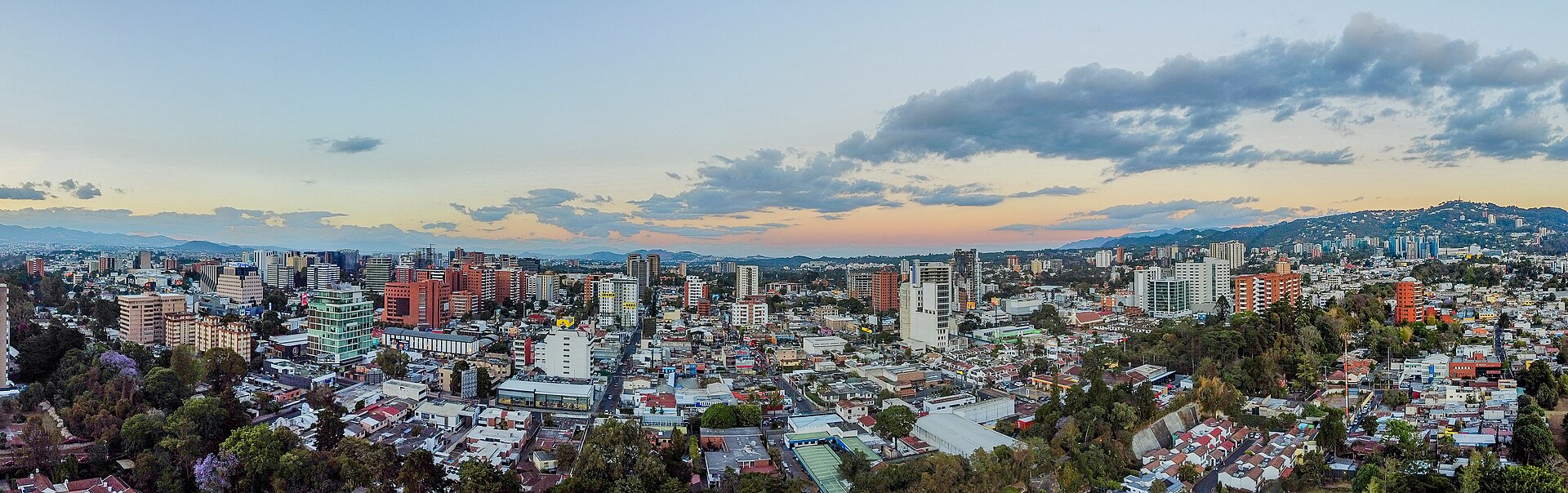
Guatemala City is the most misunderstood place in the country from a safety perspective. People hear “Guatemala City” and think danger. But the city has over 20 distinct zones, and the difference between them is staggering. Living in Zona 14 versus Zona 18 is like living in two completely different cities.
Here is the honest breakdown of every zone that matters for expats.
The Safe Zones (Where Expats Live)
Zona 14 – Las Americas | Safety: 9/10
The gold standard for residential safety in Guatemala City. Tree-lined boulevards, gated communities, embassy residences, private schools. Families walk their dogs in the evening. You will see joggers at 6am. This is where I would raise a family in the capital without hesitation.
- Cost: ~$1,100/month for a furnished 1-bedroom
- Vibe: Quiet residential, upper-class, diplomatic community
- Watch out for: It can feel isolated and “bubble-like”
Zona 15 – Vista Hermosa | Safety: 9/10
Similar profile to Zona 14 but slightly more affordable. Gated neighborhoods like Vista Hermosa I and II, Parramos, and Colonia El Maestro. Safe, quiet, and boring in the best possible way.
- Cost: ~$1,000/month for a furnished 1-bedroom
- Vibe: Suburban residential, families, quiet
- Watch out for: You need a car – walkability is limited
Zona 16 – Cayala | Safety: 9/10
The newest and arguably safest zone. Cayala is a planned mixed-use development with 24/7 security, walkable streets, restaurants, shops, and a town center that feels like it was transported from a European village. It is expensive and it is a bubble, but if safety is your top priority, this is the place.
- Cost: ~$1,300/month for a furnished 1-bedroom
- Vibe: Modern planned community, walkable within Cayala, premium everything
- Watch out for: Most expensive zone in the city, and you will rarely leave the bubble
Zona 10 – Zona Viva | Safety: 8/10
The nightlife and dining hub. International restaurants, rooftop bars, embassies, and the highest concentration of foreigners in the country. Police presence is heavy, especially on weekends. Most short-term expats start here.
- Cost: ~$950/month for a furnished 1-bedroom
- Vibe: Urban, cosmopolitan, loud on weekends
- Watch out for: Noisy on Thursday through Saturday nights, and some petty theft on the fringes
Zona 9 – Zona Financiera | Safety: 8/10
The business district. High-rise offices, banks, and hotels. Not much residential here, but it is safe during the day and reasonably safe at night. If you work in the capital, you will likely spend time here.
- Cost: ~$750/month
- Vibe: Corporate, daytime-focused, quiet at night
The Middle Ground
Zona 4 – Cuatro Grados Norte | Safety: 7/10
The creative and nightlife district. Art galleries, trendy bars, food markets, and a gentrifying vibe. It has improved dramatically in the last five years. Fine during the day; use Uber at night rather than walking, especially on side streets.
- Cost: ~$700/month
- Vibe: Hipster, artsy, food scene, nightlife
Zona 13 – Aurora | Safety: 7/10
Home to the international airport, the national zoo, and several museums. Not a typical residential area for expats, but safe during the day.
Zona 1 – Centro Historico | Safety: 6/10
The historic heart of Guatemala City. The National Palace, Metropolitan Cathedral, Mercado Central – all here. During the day it is busy, commercial, and full of life. The main commercial streets are fine. But side streets can be sketchy, and I would not walk here after dark. Petty theft (phone snatching, pickpocketing) is the main risk.
- Cost: ~$500/month (cheapest in the city)
- Vibe: Historic, commercial, bustling, gritty
- My honest take: Visit during the day. Do not live here unless you really know the city.
Zona 11 – Mariscal | Safety: 6/10
A mixed commercial-residential zone. Malls like Miraflores are here. Not particularly dangerous, but not particularly charming either. Middle-class Guatemalan families live here.
The Zones to Avoid
Zona 3 – El Gallito | Safety: 3/10
Known for gang activity. No reason for an expat to be here.
Zona 6 | Safety: 3/10
Working-class zone with higher crime rates. Dense, crowded, and lacks the infrastructure that safer zones have.
Zona 12 – USAC | Safety: 3/10
Home to the national university, but surrounding areas have significant crime issues.
Zona 18 – Atlantida | Safety: 2/10
The most dangerous zone in Guatemala City. It is the largest zone by population (around 200,000 people), and it has the highest concentration of gang activity. There is absolutely no reason for an expat to visit Zona 18. I grew up in this country and I avoid it.
Zona 21 – Nimajuyu | Safety: 3/10
Large housing projects, some unsafe areas. Not an expat destination.
The Bottom Line on Guatemala City
Would I walk alone at night in Zona 18? Absolutely not. Would I live in Zona 14 and raise a family? Without question. These are not contradictory statements – they reflect the reality that Guatemala City is not one place. It is twenty-plus very different neighborhoods stitched together.
If you stick to Zonas 9, 10, 14, 15, and 16, your day-to-day safety experience will be comparable to any mid-tier Latin American city. Better than Bogota or Mexico City in many ways.
Antigua (Sacatepequez): The Expat Haven
Department Safety Score: 6/10 | Antigua itself: ~8/10
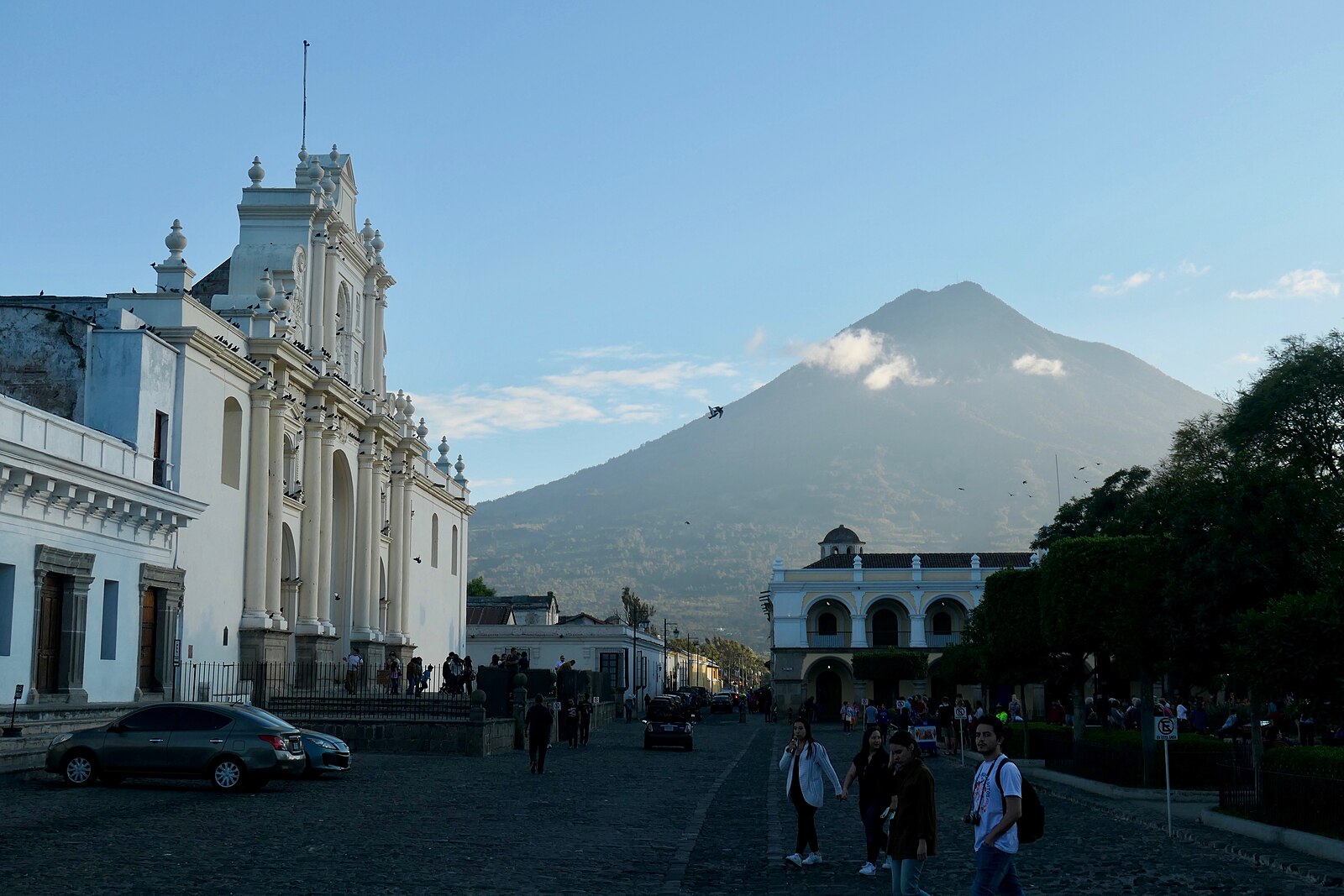
Antigua is the most popular expat destination in Guatemala, and for good reason. UNESCO World Heritage cobblestone streets, volcano views, a well-developed tourism infrastructure, and a very active tourist police (POLITUR) presence.
Antigua is one of the safest cities in Central America for tourists and expats. The main risks are:
- Petty theft: Phone snatching and pickpocketing in crowded market areas. Keep your phone in your pocket in the mercado.
- Bag theft on buses: If you take a chicken bus, keep your bag in your lap with the strap around your body.
- Nightlife-related incidents: Drunk tourists getting robbed after leaving bars late at night. Use Uber from bar to hotel.
- Volcano hikes: Occasional robberies on the trail to Pacaya or Acatenango, though this has improved with required guides. Always go with a licensed guide service.
The surrounding Sacatepequez municipalities are generally safe as well. Jocotenango, Ciudad Vieja, and San Antonio Aguas Calientes are all fine during the day. The overall department score of 6/10 reflects some rural areas outside Antigua, not Antigua itself.
My Honest Take on Antigua Safety
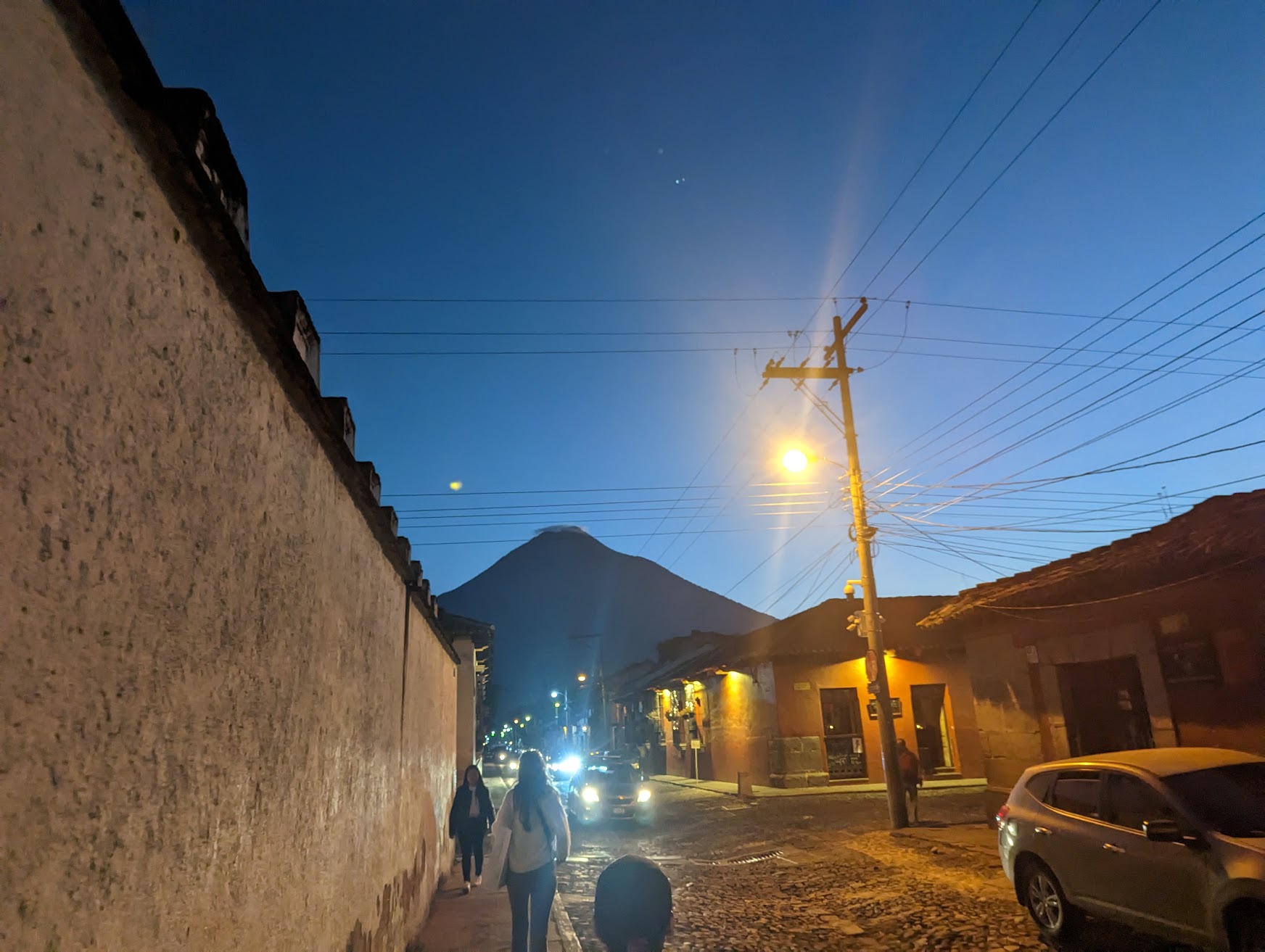
I would let my family walk through Antigua’s central streets at any hour. Late at night, I would stick to the main streets (5a Avenida, 4a Calle, the blocks around Parque Central). The side streets near the outskirts get dark and quiet. But compared to virtually any other city in the country, Antigua is remarkably safe.
The biggest danger in Antigua is honestly the cobblestones. Wear proper shoes.
Visiting during Semana Santa? Antigua draws over 300,000 visitors during Holy Week (March-April). Procession routes are well-policed and safe, but massive crowds attract pickpockets. Read our complete Semana Santa 2026 guide for safety tips, procession schedules, and what to expect.
Lake Atitlan (Solola): Generally Safe with Caveats
Department Safety Score: 7/10
Lake Atitlan is the second most popular expat area, particularly for the digital nomad and spiritual retreat crowd. The lakeside towns of Panajachel, San Pedro La Laguna, San Marcos La Laguna, and San Juan La Laguna each have their own character and safety profile.
By Town
- Panajachel (“Pana”): The most developed and touristy town. Main street (Calle Santander) is safe and busy. Side streets are fine during the day. At night, stick to lit areas.
- San Pedro La Laguna: Backpacker central. Generally safe but the party scene brings some petty crime. Most incidents involve drunk tourists being easy targets.
- San Marcos La Laguna: The yoga and meditation town. Very quiet, very safe. The walk between San Marcos and Tzununa along the lake path has had occasional incidents – do not walk it alone after dark.
- San Juan La Laguna: The artisan town. Extremely safe and welcoming. Indigenous governance keeps things calm.
- Santa Cruz La Laguna: Small, quiet, safe. Accessible mainly by boat.
Lake-Specific Safety Notes
- Boat safety: The lanchas (public boats) that cross the lake are generally safe, but can be overloaded. Avoid boats in rough weather (afternoons when the Xocomil wind kicks up).
- Isolated paths: The paths between lakeside towns are beautiful but isolated. Walk them during the day and ideally with company.
- Altitude and swimming: The lake is at 1,562 meters. The water is colder than you expect. Strong currents exist in certain areas. Drownings happen every year, mostly locals but occasionally tourists.
Other Areas Expats Should Know About
Quetzaltenango (Xela) – Safety: 7/10
Guatemala’s second city is gaining popularity among long-term expats, especially language students and those wanting a more “real Guatemala” experience. It is considerably safer than the capital. The main risks are limited to petty theft in the market area and some sketchy neighborhoods on the city outskirts. The central zones and residential neighborhoods like Zona 3 are safe.
Peten (Flores/Tikal) – Safety: 5/10
Peten is Guatemala’s largest department and one of its most remote. Flores, the tourist hub for Tikal, is safe – it is a small island connected to the mainland by a causeway with a heavy tourist police presence. The roads between Flores and Tikal are well-patrolled.
The lower department safety score reflects the remote areas of Peten, which have issues with illegal logging, land disputes, and narco-trafficking routes near the Mexican border. None of this affects the Flores-Tikal tourist corridor.
Izabal (Rio Dulce, Livingston) – Safety: 3/10
The Caribbean coast is the most complex safety picture in the country. Izabal sits on a major drug transit corridor, which elevates the overall crime rate. However, the tourist towns of Rio Dulce and Livingston are different from the department as a whole. Rio Dulce has a small sailing and boating community; Livingston has a unique Garifuna culture. Both are generally fine for tourists exercising normal caution. Do not travel the highway between Guatemala City and the coast at night.
The Eastern Departments (Zacapa, Chiquimula, Jalapa) – Safety: 2-3/10
Unless you have specific business in eastern Guatemala, most expats have no reason to spend time here. These departments have higher crime rates driven by narco-trafficking routes and proximity to the Honduras and El Salvador borders.
Practical Safety Tips That Actually Work
These are not generic travel tips copied from a guidebook. These are the actual habits that I and every Guatemalan I know practice daily.
On the Street
-
Keep your phone in your pocket. The single most common crime against foreigners is phone snatching. Do not walk down the street staring at Google Maps. Look up your route before you leave, or pull over to a storefront to check your phone.
-
Use Uber or InDriver. Never hail a random taxi. App-based rides are tracked, the driver is identified, and you have a record of the trip. Street taxis have been used for express kidnappings (rare, but why take the chance?).
-
Do not wear flashy jewelry or watches. A gold chain or an Apple Watch is a target on your wrist. Leave it at home or wear it inside establishments, not on the street.
-
Carry a “sacrifice wallet.” Keep a small amount of cash (Q100-200) in a cheap wallet. If someone threatens you, hand it over. Your real cards and cash stay hidden. Many locals do this.
-
Learn basic Spanish. Even broken Spanish changes how people perceive you. It signals that you are not a clueless tourist. It also lets you understand when someone is trying to warn you about something. Spanish schools across Guatemala offer immersion programs starting at $150/week. Having a local phone with a Tigo or Claro SIM is also essential – you need it for Uber and emergency calls.
At Home
-
Choose housing with security features. Gated entrance, security cameras, and ideally a guard or portero. This is standard middle-class housing in Guatemala – it is not “extra” precaution, it is the baseline. Do not pay more for what should already be included.
-
Get to know your neighbors. In Guatemala, neighbors watch out for each other. A quick “buenos dias” every morning builds the social fabric that actually keeps you safe. If your neighbors know you, they will notice if something seems wrong.
-
Do not answer the door to strangers. Especially delivery people you did not order from. Legitimate deliveries can be left at the gate.
Getting Around
-
Do not drive at night on rural highways. Highway robberies have decreased significantly, but driving rural roads after dark remains risky in some areas. Plan your intercity trips to arrive before sunset.
-
Use reputable shuttle services for long distances. Companies like Atitrans, GuateGo, and Adrenalina Tours run tourist shuttles between major destinations. They are more expensive than chicken buses but vastly safer and more comfortable. For Guatemala City to Antigua, Uber is also an option.
-
If confronted, comply. No possession is worth your safety. Hand over the phone, the wallet, whatever they want. Everything is replaceable. You are not. This is not cowardice – it is what every local, including police officers, will tell you to do.
-
Travel insurance is non-negotiable. We recommend SafetyWing Nomad Insurance – it’s designed for long-term travelers and remote workers, starts at $45/month, and you can sign up even if you’re already abroad.
- Protect yourself online too. For public WiFi security and accessing geo-restricted content, NordVPN is our top pick – fast servers, works in Guatemala, and frequently discounted.
The Golden Rule
In Guatemala, we do not live in fear. We live with awareness. There is a big difference. Fear paralyzes you. Awareness keeps you safe while you enjoy your life.
What Locals Actually Do: Safety Habits of Guatemalans
Most safety guides are written by tourists for tourists. This section is different. These are the real, everyday security habits that Guatemalan families practice — the ones we do not even think about because they are second nature. I grew up with these rules.
We time our errands. Most Guatemalans avoid being on the street between 7-8 PM and 5-6 AM in unfamiliar areas. Banking, shopping, and market runs happen during daylight. If we need to go out at night, we plan the route and let someone know. This is not paranoia — it is how we were raised.
We keep car windows up and doors locked at stoplights. Especially at night and in areas like Zona 1, the Periferico ring road, and the Calzada Roosevelt corridor. Phone snatching through open car windows is common at red lights. Many locals keep valuables in the glove box, not on the passenger seat.
We know our colonia’s rhythm. Every neighborhood has a pattern — the security guard’s shift change, which hours the street is busy, which corners get quiet after dark. When something feels off, we notice immediately. This social awareness is your best security system, and it comes from simply being present and paying attention to your surroundings.
We use WhatsApp groups for neighborhood security. Almost every residential area in Guatemala City has a WhatsApp group where neighbors share real-time alerts: suspicious vehicles, attempted break-ins, utility outages. When you move into a neighborhood, ask your landlord or neighbors if there is a group and join immediately. These groups have prevented more crimes than any security camera.
We carry cash strategically. Most locals keep Q100-200 ($13-26) in an easily accessible pocket as “hand-over money” and the rest hidden separately. Nobody carries more than Q500 on the street unless going to make a specific purchase. Large ATM withdrawals happen inside malls, never at standalone street machines.
We never stop for strangers on the highway. Sad but necessary. Fake breakdowns and “injured people” on rural roads have been used as robbery setups. If you see something concerning on a highway, call 110 (police) or 122 (bomberos) rather than stopping. This is especially true on the road to Esquipulas, the CA-9 to the Caribbean coast, and rural Peten roads.
We do not discuss money publicly. Guatemalans almost never talk about their salary, rent, or purchases in public. If you just withdrew Q5,000 from the bank, you do not mention it to the Uber driver. If you bought a new laptop, the box goes inside a bag before you leave the store. This is cultural, but it is also practical security.
We verify delivery and service people. Before opening the gate, we call the company to confirm they sent someone. Legitimate companies (Tigo, EEGSA, water delivery) have uniformed workers with ID badges. If someone shows up unannounced claiming to be from the electric company, we call EEGSA at 2277-7070 to verify before opening the door.
These habits might sound intense to someone from a low-crime city, but in practice they become automatic. Within a few months of living here, you will do most of these without thinking. The point is not to live in fear — it is to have smart defaults that let you go about your day without worrying.
Guatemala City Zones: Safety Quick-Reference
For quick planning, here is a condensed safety reference for the zones most visitors and expats encounter:
| Zone | Safety | Profile | Walk at Night? | Key Notes |
|---|---|---|---|---|
| Z10 (Zona Viva) | 8/10 | Nightlife, dining, embassies | Yes, main streets | Petty theft on fringes, noisy Thu-Sat |
| Z14 (Las Americas) | 9/10 | Residential, diplomatic | Yes | Safest residential zone, families walk evening |
| Z15 (Vista Hermosa) | 9/10 | Residential, quiet | Yes, within gated areas | Need a car for most errands |
| Z16 (Cayala) | 9/10 | Planned community | Yes, within Cayala | Most expensive, 24/7 private security |
| Z9 (Financiera) | 8/10 | Business district | Use caution after 9 PM | Corporate area, quiet at night |
| Z4 (Cuatro Grados) | 7/10 | Creative, nightlife | Uber recommended | Improving rapidly, gentrifying |
| Z13 (Aurora) | 7/10 | Airport, museums | Daytime only | Not residential for expats |
| Z1 (Centro Historico) | 6/10 | Historic, commercial | No | Active by day, avoid after dark |
| Z11 (Mariscal) | 6/10 | Mixed residential | Main streets only | Middle-class, malls nearby |
| Z12 (USAC) | 3/10 | University area | No | Surrounding areas are high-crime |
| Z6 | 3/10 | Working-class | No | Dense, limited infrastructure |
| Z3 (El Gallito) | 3/10 | Gang territory | No | No reason to visit |
| Z18 (Atlantida) | 2/10 | Highest crime | No | Most dangerous zone, 200K+ pop. |
| Z21 (Nimajuyu) | 3/10 | Housing projects | No | Not an expat destination |
The pattern: Everything west and south of the central corridor (Z9, Z10, Z13, Z14, Z15, Z16) is safe. The further north and east you go (Z6, Z12, Z17, Z18, Z21, Z25), the higher the risk. There are exceptions in both directions, but this general rule holds. See all 22 department profiles for safety scores outside the capital.
Women’s Safety Considerations
I want to be honest about this. Guatemala has significant issues with gender-based violence, and women – both local and foreign – face additional safety considerations.
The Reality
- Street harassment: Catcalling exists, especially in working-class neighborhoods and markets. It is less common in expat zones (Z10, Z14, Antigua) but not absent.
- Solo travel: Many women travel Guatemala solo and have wonderful experiences. The key is the same as everywhere: choose well-trafficked routes, stay in reputable accommodations, and trust your instincts.
- Nightlife: Do not accept drinks from strangers. Do not leave your drink unattended. Use Uber to get home. These rules apply globally, but they are especially important here.
- Rural areas: In indigenous communities, women are generally treated with respect. In remote areas, being with a local guide adds a layer of social safety.
Practical Advice for Women
- Antigua and Lake Atitlan are the most women-friendly destinations. Large, active communities of solo female expats and travelers.
- In Guatemala City, stick to Zonas 10, 14, 15, and 16. These zones have the infrastructure (well-lit streets, security cameras, police presence) that reduces risk.
- Join expat groups on Facebook (specifically women’s groups for Guatemala). These communities share real-time safety updates and recommendations.
- Consider carrying a personal alarm or whistle. Probably will never need it, but it can deter opportunistic crime.
Emergency Numbers and Resources
Save these in your phone. Right now.
| Service | Number | Notes |
|---|---|---|
| Police (PNC) | 110 | National Civil Police |
| Fire Department (Bomberos Voluntarios) | 122 or 123 | Also responds to medical emergencies |
| Ambulance (Cruz Roja) | 128 | Red Cross ambulance service |
| Tourist Police (POLITUR) | 1500 or 2421-2810 | English-speaking officers, Antigua and major tourist areas |
| US Embassy | 2326-4000 | For US citizens – emergencies only |
| Canadian Embassy | 2363-4348 | For Canadian citizens |
Other Resources
- INGUAT (Guatemalan Tourism Institute): 1-801-464-8281 – Can help with safety information and reporting tourist-targeted crime
- PROATUR (Tourist Assistance Program): Available through POLITUR, provides legal and administrative support to tourists who are victims of crime
- Hospital Privado (Private hospitals): Herrera Llerandi (Z10), Centro Medico (Z10), Hospital de la Familia (Antigua). If something happens, go to a private hospital – public hospitals are overwhelmed.
Frequently Asked Questions
Is Guatemala more dangerous than Mexico?
At the national level, Guatemala’s homicide rate (~22 per 100K) is slightly lower than Mexico’s (~25 per 100K). But national rates are misleading for both countries. The expat zones of Guatemala (Antigua, Lake Atitlan, Z10/Z14/Z16 in the capital) are comparable to or safer than popular Mexican expat destinations like San Miguel de Allende or Merida. Neither country is uniformly safe or uniformly dangerous. For a full side-by-side, see Guatemala vs Costa Rica vs Mexico.
Can I walk around at night?
It depends entirely on where. In Antigua’s main streets, Cayala, or the central blocks of Zona 10 – yes, with normal caution. In Zona 1 after dark, side streets in Panajachel, or anywhere in Zona 18 – no. When in doubt, take an Uber. The rides cost $2-5 within most cities.
Is Uber safe in Guatemala?
Yes. Uber is widely available in Guatemala City, Antigua, and Quetzaltenango. InDriver is another popular option. Both are significantly safer than street taxis because the driver is identified, the route is tracked, and you have a digital record. I use Uber daily.
Should I worry about kidnapping?
Express kidnappings (being held for a few hours while criminals drain your ATM card) do occur, but they are rare and have declined significantly. They almost always involve street taxis, which is why you should always use app-based rides. Traditional kidnapping for ransom targeting foreigners is extremely rare – it is mostly a risk for wealthy Guatemalan business families, and even that has declined.
Is it safe to use ATMs?
Use ATMs inside banks, malls, or gas stations – not standalone ATMs on the street. Be aware of your surroundings when withdrawing cash. Consider using a debit card with no foreign transaction fees and withdrawing larger amounts less frequently rather than small amounts daily. Many places in expat zones accept credit cards. For a full breakdown of ATM fees by bank and the best cards to use, see our banking guide.
Is the tap water safe to drink?
No. Drink bottled or filtered water everywhere in Guatemala. This is not a safety issue in the crime sense, but it is the most common health issue for newcomers. A 5-gallon garrafon of purified water costs about Q15-20 ($2) and is delivered to your door.
Are the roads safe for driving?
Road safety is a legitimate concern. Guatemala has aggressive drivers, poorly maintained roads in some areas, and limited highway lighting. The Pan-American Highway and main intercity routes are generally fine during daylight. Avoid driving at night outside of cities. If you are not confident driving in developing countries, use shuttles or hire a driver.
How has safety changed in recent years?
The trend is clearly positive. Homicide rates have dropped from over 30 per 100K to around 22 per 100K over the past decade. Tourist police presence has expanded. Antigua has added security cameras throughout the city. Uber and InDriver have largely eliminated the street taxi risk. The expat zones of Guatemala City (Z10, Z14, Z15, Z16) have seen significant private security investment. Guatemala is meaningfully safer today than it was five or ten years ago.
Property Crime: The Everyday Risk
Most safety guides focus on homicide rates, but the actual risk most foreigners face is property crime — theft, burglary, and robbery. These are harder to find statistics for because reporting rates are low (estimated at 20-30% of incidents get reported to PNC), but here is what the available data and local experience tell us.
Types of Property Crime
| Type | Frequency | Typical Target | Prevention |
|---|---|---|---|
| Phone snatching | Very common | Pedestrians looking at phone on street | Keep phone in pocket, use at storefronts |
| Pickpocketing | Common in markets/buses | Tourists with visible wallets/bags | Front pocket, money belt in crowds |
| Bag theft (motos) | Moderate | Pedestrians with shoulder bags | Carry bags on building side, not street side |
| Car break-ins | Moderate | Parked cars with visible items | Nothing visible, use guarded parking |
| Home burglary | Low in gated communities | Unguarded houses, ground floors | Portero, cameras, neighborhood WhatsApp group |
| Armed robbery | Uncommon for tourists | Usually targeted, not random | Comply immediately, carry sacrifice wallet |
Where Property Crime Concentrates
In Guatemala City: Zona 1 markets, Transmetro stations during rush hour, the Calzada Roosevelt corridor, and Zona 18. In Antigua: the mercado municipal and dark side streets after 10 PM. At Lake Atitlan: isolated paths between towns (especially the San Marcos to Tzununa trail after dark).
The pattern is consistent: daylight + populated areas = low risk. Most property crime against foreigners happens after dark, on quiet streets, to people visibly distracted or intoxicated.
LGBTQ+ Safety
Guatemala is a conservative, predominantly Catholic country. LGBTQ+ rights are limited — same-sex marriage and civil unions are not legally recognized.
In practice: Guatemala City’s Zona 4 (Cuatro Grados Norte) has the most visible LGBTQ+ scene, with bars and cultural events. Antigua’s international community is generally accepting. Lake Atitlan, particularly San Marcos, has a progressive expat community.
Risks: Public displays of affection between same-sex couples may attract unwanted attention outside of progressive areas. Verbal harassment is more likely than physical violence, but both exist. Trans individuals face the highest risk of targeted violence.
Practical advice: Major cities and tourist areas are safer than rural towns. LGBTQ+ travelers generally report positive experiences in Antigua and at Lake Atitlan. In Guatemala City, stay in Zonas 4, 10, or 14. Avoid discussing orientation in conservative rural communities — not because of immediate danger, but because social dynamics can be unwelcoming.
Safety Trend: Guatemala Is Getting Safer
The trend line is the most important part of the safety picture, and it is clearly positive.
| Year | National Homicide Rate (per 100K) | Context |
|---|---|---|
| 2009 | 46.5 | Peak violence period |
| 2012 | 34.0 | Initial decline begins |
| 2015 | 29.5 | Continued improvement |
| 2018 | 22.4 | Significant drop |
| 2021 | 16.2 | COVID lockdowns + real improvement |
| 2023 | 17.0 | Post-COVID stabilization |
| 2025 | ~22 | Current estimate (some data lag) |
Sources: INE (Instituto Nacional de Estadistica), UNODC Homicide Statistics, World Bank Development Indicators
The drop from 46.5 to the low-20s represents thousands fewer murders per year. The improvements are driven by better policing in key areas, expanded private security in commercial/residential zones, the rise of app-based transportation (eliminating the street taxi risk), and economic development in previously marginalized areas.
For expats in established areas like Antigua, Lake Atitlan, and Guatemala City’s safe zones, the day-to-day safety experience in 2026 is meaningfully better than it was even five years ago.
Explore Safety Scores on Our Interactive Map
We have built an interactive map with safety scores for all 22 departments, 32 Guatemala City zones, and over 100 municipalities. You can filter by safety, cost of living, internet speed, and elevation to find areas that match your priorities.
Every location includes specific highlights, things to watch out for, and real data – not vague generalities. It is the most detailed, data-driven safety tool for Guatemala that exists online.
Open the Interactive Map and select “Safety” from the color-by dropdown to see the full picture at a glance.
This guide was written by a Guatemalan native who has lived in and traveled across every department in the country. Safety data is based on official statistics, local reporting, and first-hand experience. Updated March 2026. If you have specific safety questions about a neighborhood or route not covered here, reach out – I am happy to give you an honest answer.
Keep Reading
- Guatemala Department – In-depth profile of the Guatemala department, covering all zones, population data, and local highlights.
- All 22 Departments Explored – Detailed profiles for every department, including safety scores, cost data, and local highlights.
- Neighborhoods for Remote Workers – Which Guatemala City zones and Antigua neighborhoods combine safety with fast internet.
- Cost of Living by City – Real budgets from $600 to $3,000/month. Safe areas tend to overlap with the most livable ones.
- Banking and ATM Guide – ATM safety tips, which banks work best for foreigners, and fee comparisons.
- Phone Plans Guide – You need a local SIM for Uber and emergency calls. Every Tigo and Claro plan compared.
- Interactive Safety Map – Filter by safety score across all 22 departments and 100+ municipalities to find the right area for you.