A comfortable life in Guatemala costs $1,200 a month. Rent runs $300–800 for a private apartment, a full lunch is $3, and fiber internet for remote work is $30/month. At Lake Atitlan you can live on $600; in Guatemala City’s upscale zones, $2,500 gets you a lifestyle that would cost $7,000+ in Austin or Miami. This guide covers real costs in 5 cities, updated March 2026, by a Guatemalan native who tracks prices monthly.
Quick Budget Summary: 3 Tiers at a Glance
Updated March 2026. All figures monthly, single person, in USD.
| Tier | Monthly Budget | What It Looks Like | Best Locations |
|---|---|---|---|
| Budget | $600–900 | Shared housing or basic room, cooking at home, public transit, limited eating out. How most young Guatemalans with steady jobs live. | Lake Atitlan, Xela, Coban, small towns |
| Comfortable | $1,200–1,800 | Private 1BR apartment, eating out 3-4x/week, Uber, good internet, gym. The sweet spot for most expats and remote workers. | Antigua, GC outer zones, Xela, Panajachel |
| Premium | $2,500–3,500 | Modern apartment in Z10/Z14/Cayala, dining at top restaurants, private healthcare, car or daily Uber. Would cost $6,000-8,000+ in a US city. | Guatemala City Z10/Z14/Z16, Antigua center |
These are not theoretical ranges. They are based on real spending tracked across five cities, cross-referenced with current food prices, exchange rates, and INE canasta basica data. Scroll down for detailed breakdowns by city and expense category.
You can live comfortably in Guatemala for $1,200 a month. At Lake Atitlan, you can do it for under $600. In Guatemala City’s upscale zones, you might spend $3,000 or more and still pay a fraction of what you would in Austin or Miami.
I know because I grew up here, lived in the United States, and came back. The difference is not subtle. A comida corriente (set lunch) costs Q25 — about $3.25. A doctor’s visit runs $20 to $78, not $200 to $500. Internet fast enough for video calls is $30 a month. These are not cherry-picked numbers. They are what people actually pay, every day, across the country.
But Guatemala is not one price. A furnished apartment in Zona 14 of Guatemala City costs $1,035 a month. The same money gets you a lakeside house in San Marcos La Laguna for half a year. Where you choose to live changes everything.
This guide breaks down the real cost of living across Guatemala’s most popular destinations, using data from INE (Guatemala’s national statistics institute), MAGA (agriculture ministry market prices), Numbeo, DIACO (consumer protection), and my own experience. Every number is sourced, updated March 2026, and tied to a specific place. Use our interactive budget calculator to build your own personalized estimate.
TL;DR: A comfortable single person spends $1,500–2,000/month in Antigua, $2,350–3,250 in Guatemala City’s upscale zones, or as little as $800/month at Lake Atitlan. Rent is the biggest variable – $100 lakeside vs $1,035 in Zona 14. Guatemala is 50–70% cheaper than comparable US cities.
Quick Overview: Monthly Budgets by City
Before we get into the details, here is the full picture. All figures are for a single person, in USD, at the current exchange rate of approximately 1 USD = 7.7 GTQ.
Prices verified February 2026. See our exchange rates page for today’s USD/GTQ rate.
| Area | Budget | Comfortable | Luxury |
|---|---|---|---|
| Guatemala City (Z10/Z14/Z15/Z16) | $1,200–1,550 | $2,350–3,250 | $3,650–5,200+ |
| Guatemala City (outer zones) | $800–1,000 | $1,400–1,800 | $2,500–3,000 |
| Antigua Guatemala | $800–1,200 | $1,500–2,000 | $2,500–3,500 |
| Lake Atitlan | $420–600 | $800–1,200 | $1,500–2,500 |
| Quetzaltenango (Xela) | $600–800 | $1,000–1,400 | $1,800–2,500 |
| Coban | $650–800 | $900–1,200 | $1,500–2,000 |
| Flores/Peten | $600–800 | $842–1,200 | $1,500–2,000 |
What do these tiers mean in practice?
- Budget means you are cooking most meals, renting a simple place (maybe shared), taking public transit, and being mindful about spending. It is not miserable — it is how most Guatemalans with decent jobs live.
- Comfortable means a nice one-bedroom apartment, eating out regularly, using Uber or owning a car, having good internet, and not thinking twice about a Q45 restaurant meal. This is the sweet spot for most expats.
- Luxury means a modern apartment in the best neighborhood, dining at upscale restaurants, a gym membership, private healthcare, and generally living at a level that would cost $5,000–8,000+ in a major US city.
Guatemala City: The Capital Spread
Guatemala City is really two different cost-of-living stories depending on which zona you live in.
Upscale Zones (Zona 10, 14, 15, 16)
These are the zones where most expats land. Zona 10 (Zona Viva) has the nightlife, international restaurants, and walkable streets. Zona 14 has embassies and gated residential towers. Zona 15 (Vista Hermosa) is quieter and residential. Zona 16 has newer developments near the universities.
Rent (1BR apartment): $750–1,035/month for a comfortable furnished place. Budget options start around $500 if you find an unfurnished studio or negotiate a longer lease. Luxury penthouses and two-bedrooms in Cayala or Zona 14 towers run $1,500–2,500.
| Expense | Budget | Comfortable | Luxury |
|---|---|---|---|
| Rent (1BR) | $500–650 | $750–1,035 | $1,200–2,500 |
| Groceries | $150–200 | $250–350 | $400–600 |
| Dining out | $80–120 | $200–350 | $400–700 |
| Transport | $30–50 | $100–200 | $250–400 |
| Utilities | $50–80 | $80–120 | $120–180 |
| Internet | $30 | $30–40 | $40–60 |
| Healthcare | $20–30 | $50–100 | $150–300 |
| Entertainment | $40–80 | $100–200 | $200–400 |
| Total | $1,200–1,550 | $2,350–3,250 | $3,650–5,200+ |
Zona 10 is the most expensive for dining. A meal at a mid-range restaurant runs Q80–150 ($10–19). But walk two blocks off the main strip and you find comedores serving comida corriente for Q25–35 ($3.25–4.55). Knowing where to eat is the single biggest variable in your food budget.
Outer Zones (Zona 1, 5, 7, 11, 12, 18, Mixco, Villa Nueva)
If you speak some Spanish and do not need to be in the “expat bubble,” the outer zones offer dramatically lower costs. Zona 11 and 12 are middle-class residential areas with malls, supermarkets, and good bus connections. Mixco and Villa Nueva are satellite cities that have grown into the metro area.
Rent (1BR apartment): $310–420/month for a basic but functional place. Some areas offer houses for $400–600 with more space than any Zona 10 apartment.
| Expense | Budget | Comfortable | Luxury |
|---|---|---|---|
| Rent (1BR) | $310–420 | $450–650 | $800–1,200 |
| Groceries | $120–150 | $180–250 | $300–400 |
| Dining out | $50–80 | $120–200 | $250–400 |
| Transport | $20–40 | $60–120 | $150–250 |
| Utilities | $40–60 | $60–90 | $80–120 |
| Internet | $30 | $30 | $30–50 |
| Healthcare | $15–25 | $40–80 | $100–200 |
| Entertainment | $30–50 | $60–120 | $100–200 |
| Total | $800–1,000 | $1,400–1,800 | $2,500–3,000 |
The tradeoff is real: less English spoken, fewer international restaurants, longer commutes if you work in the business district. But for remote workers who rarely leave their apartment, it is hard to argue with saving $500–800 a month.
Antigua Guatemala: The Expat Favorite
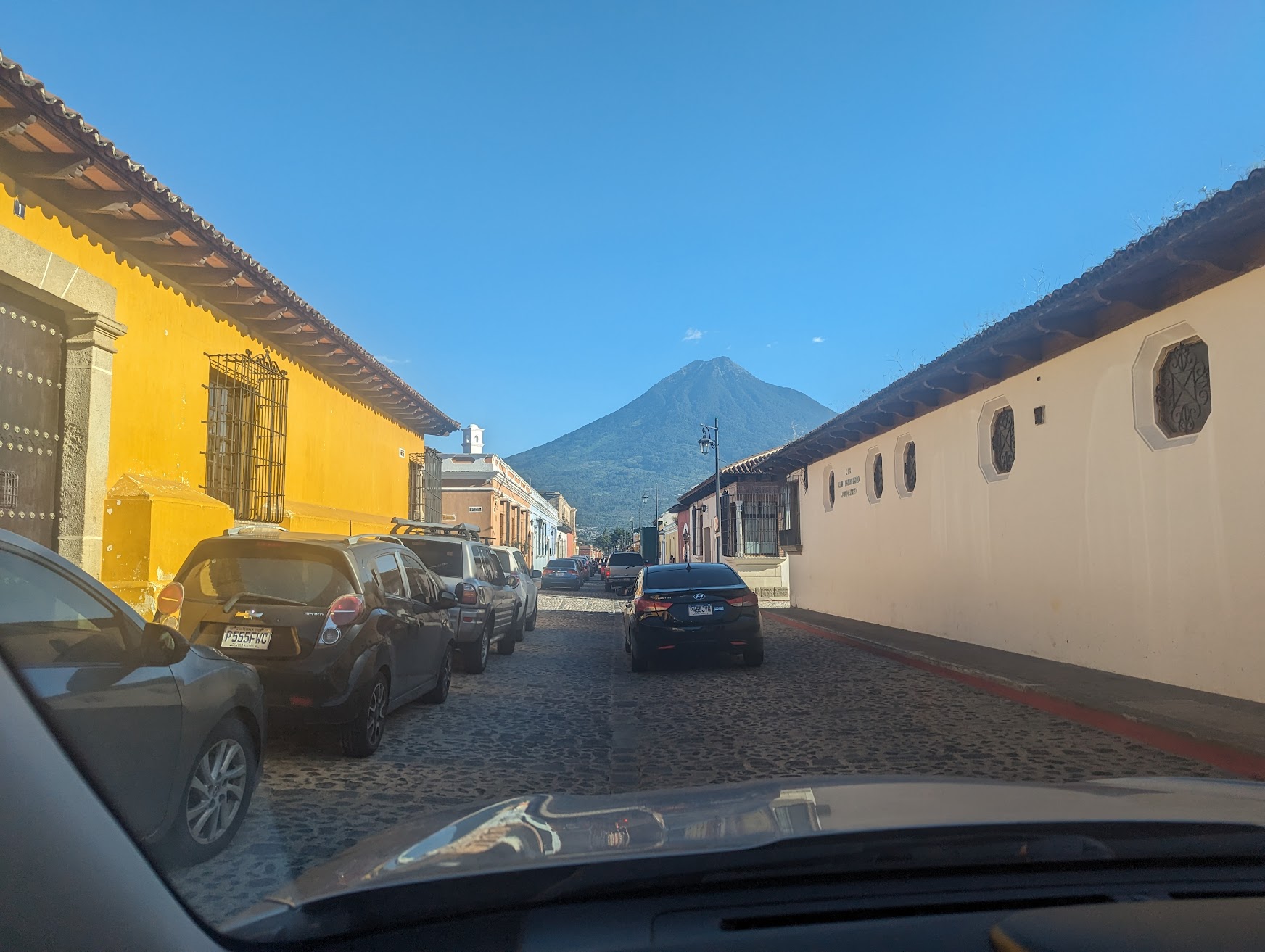
Antigua is where most people picture themselves when they think about living in Guatemala. Colonial architecture, volcanoes, cobblestone streets, excellent coffee, and a well-established expat community. It is also a small city — you can walk across it in 20 minutes.
Rent (1BR apartment): $500–700/month for a comfortable furnished place in the central area. Budget rooms or shared houses start at $250–400. Luxury colonial homes with courtyards run $1,000–1,800.
| Expense | Budget | Comfortable | Luxury |
|---|---|---|---|
| Rent (1BR) | $250–400 | $500–700 | $1,000–1,800 |
| Groceries | $120–180 | $200–300 | $350–500 |
| Dining out | $80–120 | $180–280 | $350–500 |
| Transport | $20–40 | $50–100 | $100–200 |
| Utilities | $40–60 | $60–90 | $80–130 |
| Internet | $30 | $30–40 | $40–60 |
| Healthcare | $20–30 | $40–80 | $100–200 |
| Entertainment | $40–70 | $80–150 | $150–300 |
| Total | $800–1,200 | $1,500–2,000 | $2,500–3,500 |
Antigua has a “gringo tax” on some things. Tourist restaurants charge Q80–150 per meal, but the mercado municipal sells plates for Q20–30. Rent near the central park costs more than a 10-minute walk away. Spanish schools, yoga classes, and coworking spaces are priced for foreigners but still cheap by US standards ($100–150/month for coworking, $150–200/week for intensive Spanish).
One thing Antigua does not have: great internet in all areas. Fiber from Tigo and Claro is available in the center, but coverage drops off quickly in the surrounding villages. If you work remotely, confirm internet speeds before signing a lease – our internet guide has speed expectations by neighborhood. You might also want to scout coworking spaces in Antigua as a reliable backup for work days.
Lake Atitlan: The Budget Paradise
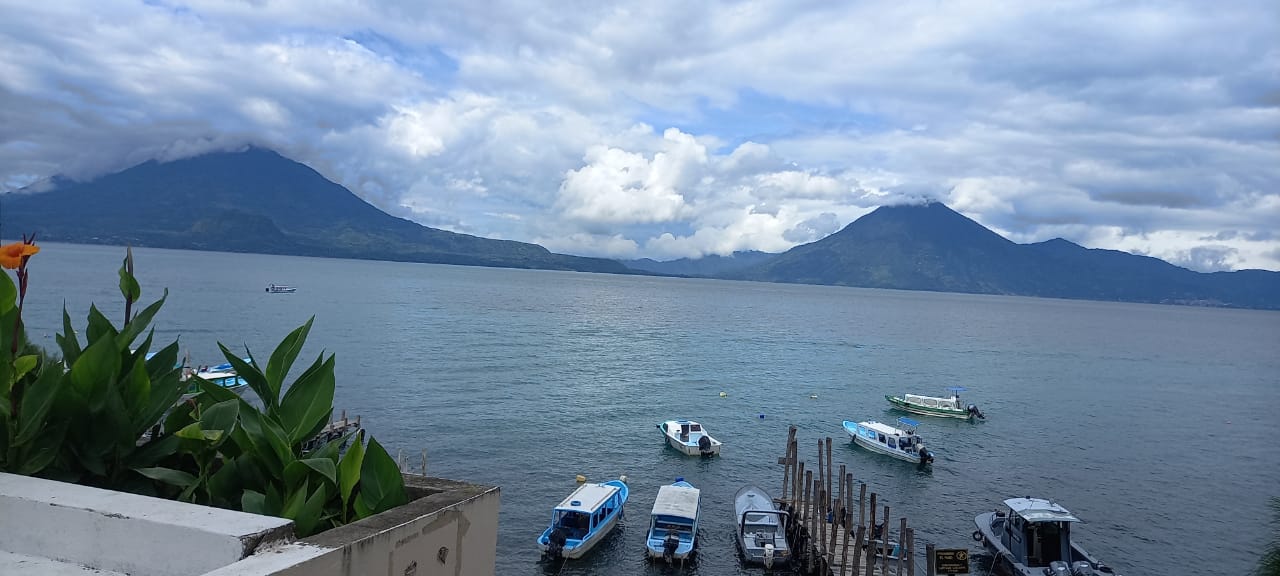
Lake Atitlan is the cheapest place in Guatemala where expats actually want to live. The lake towns — San Marcos La Laguna, San Pedro La Laguna, Panajachel, San Juan La Laguna, Santa Cruz — each have their own character, from backpacker-hippie to upscale-retreat.
Rent (1BR): $100–200/month budget, $300–500 comfortable. Yes, those numbers are real. A basic room in San Pedro or San Marcos runs Q770–1,540 ($100–200). A nice house with a lake view in Santa Cruz or Jaibalito goes for $400–600.
| Expense | Budget | Comfortable | Luxury |
|---|---|---|---|
| Rent (1BR) | $100–200 | $300–500 | $600–1,200 |
| Groceries | $80–120 | $150–220 | $250–400 |
| Dining out | $50–80 | $100–180 | $250–400 |
| Transport (lanchas) | $15–30 | $30–60 | $60–100 |
| Utilities | $20–40 | $40–70 | $60–100 |
| Internet | $30–45 | $30–50 | $45–70 |
| Healthcare | $15–25 | $30–60 | $80–150 |
| Entertainment | $20–40 | $50–100 | $100–200 |
| Total | $420–600 | $800–1,200 | $1,500–2,500 |
The catch at Lake Atitlan is infrastructure. Internet is the biggest issue. Fiber does not reach most lake towns. You are looking at Starlink ($45–66/month plus Q1,600 hardware) or mobile hotspots. Power outages happen. Hot water is not guaranteed in budget places. The nearest hospital is in Solola, about 30–45 minutes away.
Transport between towns is by lancha (small boat), typically Q15–25 per ride. There are no roads connecting most lakeside towns. This is charming for a month and potentially isolating for a year.
That said, for the right person — a remote worker with Starlink, comfortable with a simpler lifestyle, and drawn to natural beauty — Lake Atitlan at $800/month is one of the best deals in the Western Hemisphere. See our Lake Atitlan town-by-town guide for the full breakdown of each village.
Quetzaltenango (Xela): The Understated Option
Xela is Guatemala’s second-largest city and the most underrated expat destination. It has universities, hospitals, malls, a thriving market culture, and almost zero tourist markup. The weather is cooler (2,300m elevation), the pace is slower, and you will be one of very few foreigners — which means real immersion.
Rent (1BR): Around $400/month for a comfortable apartment. Budget rooms start at $150–250.
| Expense | Budget | Comfortable | Luxury |
|---|---|---|---|
| Rent (1BR) | $150–250 | $350–500 | $600–1,000 |
| Groceries | $100–150 | $180–250 | $300–400 |
| Dining out | $60–100 | $120–200 | $250–400 |
| Transport | $15–30 | $40–80 | $100–200 |
| Utilities | $35–55 | $55–85 | $80–120 |
| Internet | $30 | $30 | $30–50 |
| Healthcare | $15–25 | $35–70 | $80–150 |
| Entertainment | $30–50 | $60–120 | $100–200 |
| Total | $600–800 | $1,000–1,400 | $1,800–2,500 |
Xela’s advantages: real city infrastructure (hospitals, banks, supermarkets), excellent Spanish schools (EntreMundos, Celas Maya), cooler climate if you dislike heat, and some of the best street food in the country. The central market is enormous and prices are genuinely local — no tourist inflation.
The downsides: limited nightlife, fewer English speakers, colder nights (you will want a heater or extra blankets), and fewer direct international flights (most people connect through Guatemala City).
Coban and Flores: Off the Beaten Path
For the adventurous, Coban (Alta Verapaz) and Flores (Peten) offer even lower costs with trade-offs in convenience.
Coban sits in the cloud forest at 1,300m. It rains a lot (locals joke it has a 13-month rainy season). But it is green, cool, and affordable. It serves as a base for Semuc Champey, one of Guatemala’s most spectacular natural sites.
Flores is a tiny island town on Lake Peten Itza, the gateway to Tikal. It has a backpacker infrastructure and is extremely affordable, though remote. The nearest major city is 8+ hours away by bus.
| Expense | Coban (Comfortable) | Flores (Comfortable) |
|---|---|---|
| Rent (1BR) | $250–400 | $200–350 |
| Groceries | $150–200 | $150–200 |
| Dining out | $100–180 | $100–180 |
| Transport | $30–60 | $40–70 |
| Utilities | $40–70 | $40–70 |
| Internet | $30–40 | $30–45 |
| Healthcare | $30–60 | $30–60 |
| Entertainment | $40–80 | $40–80 |
| Total | $900–1,200 | $842–1,200 |
Internet is the limiting factor in both places. Claro and Tigo have cable service in the town centers, but speeds are inconsistent. Starlink is increasingly popular among the few expats in these areas.
Guatemala City vs Antigua vs Lake Atitlan: Side-by-Side
This is the comparison most people want. These are the three places where 90% of expats end up. Here is what the same lifestyle costs in each.
| Expense | Guatemala City (Z10/Z14) | Antigua | Lake Atitlan (Pana/San Marcos) |
|---|---|---|---|
| 1BR apartment (furnished) | $750–1,035 | $500–700 | $200–400 |
| Comida corriente (set lunch) | Q25–40 ($3.25–5.20) | Q25–35 ($3.25–4.55) | Q20–30 ($2.60–3.90) |
| Restaurant dinner for two | Q250–500 ($32–65) | Q200–400 ($26–52) | Q150–300 ($19–39) |
| Monthly groceries | $250–350 | $200–300 | $150–220 |
| Uber (5 km ride) | Q20–35 ($2.60–4.55) | Q15–25 ($1.95–3.25) | N/A (lanchas Q15–25) |
| Internet (fiber) | Q235/mo ($30) | Q235/mo ($30) | Starlink Q345–510 ($45–66) |
| Gym membership | Q250–500 ($32–65) | Q150–350 ($19–45) | Q100–200 ($13–26) |
| Domestic beer (bar) | Q20–35 ($2.60–4.55) | Q20–30 ($2.60–3.90) | Q15–25 ($1.95–3.25) |
| Haircut (men’s) | Q50–100 ($6.50–13) | Q40–80 ($5.20–10.40) | Q25–50 ($3.25–6.50) |
| Comfortable total | $2,350–3,250 | $1,500–2,000 | $800–1,200 |
The bottom line: Antigua costs about 60% of Guatemala City’s upscale zones. Lake Atitlan costs about 35%. The biggest driver is rent — it accounts for 35-45% of most budgets. After rent, the differences narrow. A plate of pepian costs roughly the same everywhere.
Which one is right for you?
- Guatemala City if you need: corporate jobs, international schools, modern healthcare, nightlife, malls, the airport nearby. Best for families and professionals.
- Antigua if you want: walkability, colonial charm, cafes, a well-established expat community, Spanish schools, and quick airport access (45 min). Best for retirees and remote workers who like a social scene.
- Lake Atitlan if you prioritize: natural beauty, low costs, spiritual community, off-grid living. Trade-offs are real — internet is limited, hospitals are 45 min away, and some towns are boat-access only. Best for digital nomads and long-term budget travelers.
For a deeper dive into how Guatemala stacks up against other popular expat countries, see Guatemala vs Costa Rica vs Mexico.
2026 Grocery Prices: What You Actually Pay
One of the most common questions is “how much do groceries cost?” Here are current market prices from March 2026, sourced from MAGA wholesale data. Supermarket prices (La Torre, Walmart) run 20-40% higher than these market prices. For the complete 40-item list updated monthly, see our food price tracker.
| Item | Market Price (GTQ) | Market Price (USD) | Supermarket (approx.) |
|---|---|---|---|
| Black beans (frijol negro) | Q8.50/lb | $1.11 | Q10–12/lb |
| White rice | Q5.25/lb | $0.69 | Q6–8/lb |
| Chicken (whole) | Q16.50/lb | $2.15 | Q20–24/lb |
| Beef | Q38.00/lb | $4.96 | Q42–50/lb |
| Eggs | Q18.00/dozen | $2.35 | Q22–25/dozen |
| Tomatoes | Q6.50/lb | $0.85 | Q8–10/lb |
| Avocado | Q5.00 each | $0.65 | Q7–10 each |
| Bananas | Q8.00/dozen | $1.04 | Q10–12/dozen |
| Ground coffee | Q35.00/lb | $4.57 | Q40–55/lb |
| Corn tortillas | Q7.00/lb | $0.91 | Q8–10/lb |
| Purified water (5 gal garrafon) | Q12.00 | $1.57 | Q15–20 |
| Cooking oil (1 liter) | Q18.00 | $2.35 | Q20–25 |
Weekly grocery budget by tier:
- Budget ($30–40/week): Rice, beans, eggs, tortillas, seasonal vegetables, coffee. Cooking every meal at home. This is roughly what a Guatemalan family earning minimum wage spends.
- Comfortable ($50–70/week): Add chicken 3x/week, cheese, fruit, bread, cooking oil, some imported items (pasta, canned goods). Cooking most meals with occasional eating out.
- Premium ($80–120/week): Regular meat and fish, imported cheese, wine, specialty items from PriceSmart or La Torre. Mix of cooking and restaurant meals.
The canasta basica (basic food basket) tracked by INE shows the minimum cost of adequate nutrition at Q924 per person per month (~$120). That covers 66 products across 14 food groups — bare-minimum nutrition, not comfortable eating. Most expats spend 2-3x this amount.
Understanding the Canasta Basica
To really understand Guatemalan costs, you need to know about the canasta basica — the government-tracked basic food basket that represents minimum nutritional needs.
As of January 2026 (INE data):
| Metric | Amount (GTQ) | Amount (USD) |
|---|---|---|
| Urban per capita (monthly) | Q924.35 | ~$120 |
| Rural per capita (monthly) | Q713.40 | ~$93 |
| Urban family of 4.16 (monthly) | Q3,845.30 | ~$501 |
| Minimum wage 2026 (monthly) | Q4,002.28 | ~$520 |
Read those numbers carefully. The minimum wage of Q4,002 per month barely covers the basic food basket for a family of four (Q3,845), leaving almost nothing for rent, transport, healthcare, or education. This is the economic reality for a significant portion of the population.
For expats, this context matters in two ways. First, it explains why local food is so affordable — the economy is calibrated to these income levels. Second, it is a reminder that your $1,200/month “budget” lifestyle is actually a very comfortable existence by Guatemalan standards. Tipping generously, paying fair prices, and supporting local businesses is not just nice — it is the right thing to do.
What Things Actually Cost: A Price List
Here are specific prices you will encounter daily, sourced from Numbeo, DIACO, and MAGA (agricultural ministry market reports from February 2026).
Food and Groceries
| Item | Price (GTQ) | Price (USD) |
|---|---|---|
| Comida corriente (set lunch) | Q20–35 | $2.60–4.55 |
| Restaurant meal (mid-range) | Q45 | $5.84 |
| Chicken breast (1 kg) | Q72.31 | $9.39 |
| Rice (1 kg) | Q15.84 | $2.06 |
| Eggs (dozen) | Q19.11 | $2.48 |
| Frijol negro (1 lb) | Q5.00 | $0.65 |
| Arroz (1 lb) | Q4.20 | $0.55 |
| Maiz blanco (1 lb) | Q2.50 | $0.32 |
| Pollo (1 lb, retail) | ~Q20 | ~$2.60 |
| Carne de res (1 lb, retail) | ~Q35 | ~$4.55 |
| Eggs (carton of 30) | Q30 | $3.90 |
Note the maiz blanco price variation: Q1.89/lb in Peten vs Q3.52/lb in Totonicapan. Rural areas near production zones are cheaper. Urban supermarket prices are 20–40% higher than market prices for the same items.
The Canasta Basica: Guatemala’s Official Food Basket
The INE (Instituto Nacional de Estadistica) publishes the Canasta Basica Alimentaria (CBA) — the minimum monthly food cost for basic nutrition. As of January 2026:
| Metric | Urban | Rural |
|---|---|---|
| CBA per person/month | Q924.35 (~$120 USD) | Q713.40 (~$93 USD) |
| CBA per family/month | Q3,845 (~$501 USD) | Q3,424 (~$446 USD) |
| Family size assumed | 4.16 members | 4.80 members |
The CBA covers 66 products across 14 food groups — the bare minimum for adequate nutrition. It does not include housing, transport, healthcare, or anything else.
How this compares to what expats actually spend: Most expats spend 2–3x the CBA on food. The CBA assumes cooking every meal at home with basic ingredients (rice, beans, corn, eggs). An expat eating out several times a week and buying imported items at supermarkets will easily spend Q2,000–3,000/month on food.
Regional price variation is real. The same basic ingredients cost significantly different amounts depending on where you live:
- Maiz: Q1.89/lb in Peten (near production) vs Q3.52/lb in Totonicapan (highland transport costs)
- This pattern holds for most staples — production areas are cheaper, remote highlands are most expensive
Minimum wage context: Guatemala’s 2026 minimum wage for non-agricultural workers is Q4,002/month. A family earning minimum wage can barely cover the CBA (food only) with Q157 left over. Covering the full Canasta Ampliada (food + housing + transport + health + education) would require 2.3x minimum wage. This is why Guatemala has significant poverty despite relatively low food prices by international standards.
See food prices by department on our interactive map — each location shows local market prices and cost breakdowns. We also track individual staple prices like black beans, eggs, and chicken with weekly updates from MAGA. For transport costs, see our complete transport guide. For internet pricing, check the ISP comparison guide. And for a side-by-side look at how salaries compare to these costs, see our Guatemala salary data.
Transport
| Item | Price (GTQ) | Price (USD) |
|---|---|---|
| Transmetro bus (GC) | Q2 | $0.26 |
| Regular city bus (GC) | Q1.50–2 | $0.19–0.26 |
| Uber per km | Q2.90 | $0.38 |
| Uber minimum fare | Q15–20 | $1.95–2.60 |
| Uber across GC (Z1 to Z10) | Q25–40 | $3.25–5.19 |
| Gasoline (per liter) | Q8.40 | $1.09 |
| Gasoline (per gallon) | ~Q31.80 | ~$4.05 |
| Chicken bus (intercity, per hour) | Q10–15 | $1.30–1.95 |
| Pullman bus (GC to Antigua) | Q40–80 | $5.19–10.39 |
Guatemala City’s Transmetro is genuinely one of the best deals anywhere — Q2 ($0.26) for a BRT-style bus with dedicated lanes. Uber works well in Guatemala City and Antigua, and fares are remarkably cheap compared to the US.
Internet and Phone
| Service | Price (GTQ) | Price (USD) |
|---|---|---|
| Tigo internet 150 Mbps (fiber) | ~Q235 | ~$30 |
| Claro internet 120 Mbps (fiber) | ~Q229 | ~$30 |
| Starlink (monthly) | Q345–510 | $45–66 |
| Starlink hardware (one-time) | Q1,600 | ~$208 |
| Tigo 10 GB mobile data | Q99 | $13 |
| Tigo prepaid (per day, 1GB) | Q10 | $1.30 |
Fiber internet is available in Guatemala City, parts of Antigua, and Xela’s center. Outside those areas, cable/DSL drops to 10–30 Mbps. For remote lake towns and rural areas, Starlink has been a game-changer. One universal tip: buy your own WiFi router. The ones Tigo and Claro provide are notoriously bad. For the full picture on mobile and home internet, see our ISP comparison with speed tests and phone plan breakdown.
Healthcare
| Service | Price (GTQ) | Price (USD) |
|---|---|---|
| Doctor visit (general) | Q150–600 | $20–78 |
| Specialist visit | Q300–800 | $39–104 |
| Dental cleaning | ~Q425 | ~$55 |
| Dental filling | Q300–600 | $39–78 |
| Blood work (basic panel) | Q200–500 | $26–65 |
| Private hospital ER visit | Q500–2,000 | $65–260 |
| Private health insurance (monthly) | Q500–1,500 | $65–195 |
Healthcare is where Guatemala’s cost advantage is most dramatic. A specialist visit that costs $300–500 in the US runs $39–104 here. Dental work is 70–80% cheaper. Private hospitals in Guatemala City (Hospital Herrera Llerandi, Centro Medico) have US-trained doctors and modern equipment.
Many expats skip insurance entirely and pay out of pocket, banking the savings. Others get local private insurance (Seguros El Roble, Seguros G&T) for Q500–1,500/month, which covers most private hospital care. SafetyWing offers nomad health insurance starting at $45/month that covers Guatemala – a popular option for remote workers who want a safety net without the complexity of local insurance.
How Guatemala Compares to US Cities
To put these numbers in perspective:
| Monthly Cost (Single, Comfortable) | Guatemala City (Z10) | Antigua | Austin, TX | Miami, FL | NYC |
|---|---|---|---|---|---|
| Rent (1BR) | $750–1,035 | $500–700 | $1,600–2,200 | $2,000–2,800 | $3,000–4,500 |
| Groceries | $250–350 | $200–300 | $400–550 | $450–600 | $500–700 |
| Dining out | $200–350 | $180–280 | $400–600 | $450–700 | $600–1,000 |
| Transport | $100–200 | $50–100 | $250–400 | $200–350 | $130–200 |
| Healthcare | $50–100 | $40–80 | $300–500 | $300–500 | $400–600 |
| Total | $2,350–3,250 | $1,500–2,000 | $3,500–5,000 | $4,000–5,500 | $5,500–8,000 |
The comfortable lifestyle in Antigua costs roughly what rent alone costs in Miami. A luxury lifestyle in Guatemala City’s best zones costs less than a comfortable one in Austin. These are not theoretical — they are the numbers people actually live on.
The biggest savings categories are rent (50–70% less), healthcare (70–80% less), and dining out (60–75% less). Groceries are cheaper but the gap is smaller, especially for imported goods. Electronics and cars actually cost more in Guatemala due to import taxes. For a more detailed comparison with other popular expat destinations, read Guatemala vs Costa Rica vs Mexico.
Money-Saving Tips from a Local
After living on both sides, here is what I tell every friend who asks about moving here.
Eat where Guatemalans eat. The comida corriente at a comedor is Q20–35 ($2.60–4.55) for soup, a main plate with rice and beans, tortillas, and a drink. The same quality of food at a tourist restaurant in Antigua is Q80–120. Learn to spot the comedores with the longest lines at noon — that is where the food is best and cheapest.
Shop at the mercado, not the supermarket. La Terminal in Guatemala City, Antigua’s mercado municipal, and Xela’s central market all sell produce at 30–50% less than Walmart or La Torre supermarkets. Yes, it requires more effort. Yes, it is worth it. Our grocery shopping guide compares prices across every store type.
Negotiate rent for longer stays. Landlords will often drop 10–20% for a 6-month or 12-month commitment. In tourist areas like Antigua and Lake Atitlan, monthly rates are significantly lower than weekly or nightly rates on Airbnb. Ask around locally — many of the best rentals are never listed online.
Use Transmetro and Uber, not taxis. Taxis in Guatemala City are unmetered and will overcharge foreigners. Uber is metered, tracked, and typically 30–50% cheaper. Transmetro is Q2 and covers most of the city’s main corridors.
Get a Tigo or Claro SIM immediately. Prepaid SIMs cost Q25–50 ($3–6) and give you data, calls, and the ability to use local apps. WhatsApp is universal here — businesses, landlords, and doctors all communicate through it. See our full phone plan comparison for every Tigo and Claro prepaid and postpaid option.
Cook beans and rice from scratch. A pound of frijol negro costs Q5 ($0.65). A pound of rice costs Q4.20 ($0.55). Together with eggs (Q1/egg), tortillas (Q1–3 for a stack), and whatever vegetables are cheap at the market, you can feed yourself well for under $3/day. This is not deprivation — this is how most Guatemalans eat, and the food is genuinely good.
Private healthcare is the smart play. Do not assume you need expensive international insurance. A local private insurance plan (Q500–1,500/month) covers most situations. For routine care, paying out of pocket is almost always cheaper. A dental cleaning for $55 does not need an insurance claim.
Avoid the “expat premium” neighborhoods. In Antigua, living three blocks from the central park instead of on it saves 30% on rent. In Guatemala City, Zona 11 or 12 instead of Zona 10 saves 40%. You are still in a good area — just not the one with the highest concentration of foreigners.
Frequently Asked Questions
Can I really live on $600/month in Guatemala?
Yes, but with caveats. At Lake Atitlan or in smaller towns like San Pedro, $420–600/month covers a basic room ($100–200), simple meals ($150–200), and minimal entertainment. You will be cooking most meals, skipping alcohol, and living simply. It is doable and many people do it for months or years, but it is not comfortable by Western standards. For most people, $800–1,200 is where you stop worrying about money.
Is Guatemala cheaper than Mexico or Colombia?
For the most part, yes. Guatemala City’s upscale zones are comparable to Mexico City’s Roma/Condesa or Medellin’s El Poblado. But Guatemala’s mid-tier and budget options are cheaper. Lake Atitlan is significantly cheaper than Tulum or Cartagena. Xela is cheaper than Oaxaca or Bogota. Where Guatemala loses: fewer coworking spaces, less developed expat infrastructure, and higher prices on imported goods.
What about taxes? Do expats pay Guatemalan taxes?
Guatemala taxes on territorial income only. If your income comes from outside Guatemala (remote work for a US company, freelancing for international clients), you generally do not owe Guatemalan income tax. However, tax law is nuanced and depends on your residency status and specific situation. Consult a local accountant (expect to pay Q500–1,500 / $65–195 for a consultation). Do not rely on Facebook group advice for tax decisions.
How much should I save before moving?
I recommend 3–6 months of your target budget, plus a $1,000–2,000 emergency fund. So if you plan to live on $1,500/month in Antigua, bring $6,500–11,000 to start comfortably. The first month is always more expensive: deposits (usually 1–2 months rent), SIM card, household items, getting settled. After that, costs stabilize.
Are prices rising? Is Guatemala getting more expensive?
Yes, slowly. The canasta basica has increased about 3–5% annually over the past few years. Rent in popular expat areas (Antigua, Panajachel) has risen faster — roughly 5–10% per year — driven by foreign demand. Guatemala City’s upscale zones track closer to regional inflation. The quetzal has been remarkably stable against the dollar (7.5–7.8 range for years), so currency risk is low compared to countries like Argentina or Turkey.
Can I use US dollars?
The official currency is the Guatemalan quetzal (GTQ). US dollars are not widely accepted for daily transactions, unlike in some other Central American countries. You will need quetzales for almost everything. ATMs dispense quetzales (Banrural and BAM have the best rates and lowest fees). Credit cards work at most restaurants and shops in tourist/expat areas but not at markets, comedores, or small businesses. Our banking guide covers which banks accept foreigners, ATM fees, and the best debit cards for daily use.
Sending money to Guatemala? Wise consistently offers the best USD-to-GTQ exchange rates. For a $200 transfer, you’ll pay about $3.69 in fees vs $8+ at Western Union. Check our real-time remittance comparison for today’s rates.
What is the biggest hidden cost most expats miss?
Flights home. Guatemala City (GUA) is the only international airport. Round-trip flights to the US run $300–600 depending on season and destination. If you fly home twice a year, that is $600–1,200 not captured in monthly budgets. Also: import duties on anything shipped to Guatemala are steep (15–30%), so bringing your belongings by freight gets expensive fast.
Is it safe to carry cash?
Guatemala is primarily a cash economy outside of upscale zones. Most people carry Q200–500 ($26–65) daily. Use common sense: do not flash large bills, use ATMs inside malls or banks (not street-facing ones), and keep larger amounts in a bank account. For neighborhood-level safety advice, see our safety guide by department. Digital payments (Visa/Mastercard, BAM Movil, Tigo Money) are growing but not universal. In markets and comedores, cash is the only option.
Couples and Families: How Budgets Scale
The tables above are for a single person. Here is how costs change when you add a partner or children.
Couples (Two Adults, No Children)
Rent does not double — a couple shares one apartment. Food and transport increase by roughly 50-60%, not 100%.
| Location | Single (Comfortable) | Couple (Comfortable) | Savings vs 2x Single |
|---|---|---|---|
| Guatemala City (Z10/Z14) | $2,350–3,250 | $3,200–4,400 | ~30% savings |
| Antigua | $1,500–2,000 | $2,100–2,800 | ~30% savings |
| Lake Atitlan | $800–1,200 | $1,100–1,700 | ~30% savings |
| Xela | $1,000–1,400 | $1,400–1,900 | ~30% savings |
The biggest shared savings: rent (shared 100%), internet (shared 100%), utilities (shared 80%), and entertainment (shared 50-70%).
Families (Two Adults + One to Two Children)
Children add significant costs that single/couple budgets do not capture.
| Expense | Monthly Cost (GTQ) | Monthly Cost (USD) | Notes |
|---|---|---|---|
| Private school (bilingual) | Q2,500–6,000 | $326–783 | Antigua and GC have the best options |
| Public school | Free | Free | Quality varies dramatically by zone |
| Childcare / nanny | Q2,000–3,500 | $261–457 | Full-time live-out; live-in Q1,500–2,500 |
| Pediatrician visit | Q200–500 | $26–65 | Private clinics in Z10/Z14 |
| Diapers (monthly) | Q350–500 | $46–65 | Huggies/Pampers at La Torre or Walmart |
| Formula (monthly) | Q400–700 | $52–91 | If needed; local brands cheaper |
| Family groceries (2+2) | Q4,000–6,000 | $522–783 | 2.5x single-person budget |
Family budget estimate (Antigua, comfortable): $3,000–4,500/month including private school. In Guatemala City upscale zones: $4,500–6,500/month. At Lake Atitlan with homeschooling: $2,000–3,000/month.
Supermarket Price Comparison: Where to Shop
We track prices daily at four major chains. This table updates automatically — you are seeing today’s real prices.
Loading live prices...
Shopping strategy: MaxiDespensa is consistently 15-25% cheaper than La Torre for staples. La Torre wins on imported products, specialty items, and produce quality. Walmart and Paiz (same company) sit in the middle. The mercado municipal beats all of them on fresh produce by 30-50%.
Our food price tracker compares all 21 items across all four stores, updated daily.
Utility Costs: Electricity, Water, and Gas
Utility costs are low but vary by region because different electricity providers serve different areas.
Electricity Providers by Region
| Provider | Coverage | Rate (Q/kWh) | Customer Service |
|---|---|---|---|
| EEGSA | Guatemala City, Sacatepequez, Escuintla | Q1.42–1.51 | 2277-7070 |
| DEOCSA (Energuate) | Western Guatemala (Xela, Huehuetenango, Solola) | Q1.55–1.68 | 1-800-835-2424 |
| DEORSA (Energuate) | Eastern Guatemala (Izabal, Peten, Zacapa) | Q1.55–1.68 | 1-800-835-2424 |
EEGSA charges a social rate (Q1.42/kWh) for usage under 300 kWh/month and a non-social rate (Q1.51/kWh) above that threshold, plus a Q12 fixed monthly charge.
Typical Monthly Utility Bills
| Utility | Budget | Comfortable | Luxury |
|---|---|---|---|
| Electricity | Q200–350 ($26–46) | Q400–600 ($52–78) | Q600–1,200 ($78–157) |
| Water (municipal) | Q50–100 ($7–13) | Q80–150 ($10–20) | Q100–200 ($13–26) |
| Cooking gas (tank refill) | Q125–150 ($16–20) | Q125–150 ($16–20) | Q125–150 ($16–20) |
| Internet (fiber) | Q235 ($31) | Q235–350 ($31–46) | Q350–500 ($46–65) |
| Total utilities | Q610–835 ($80–109) | Q840–1,250 ($110–163) | Q1,175–2,050 ($153–268) |
AC drives electricity costs. Guatemala City and the highlands rarely need air conditioning (elevation keeps temperatures comfortable). But the Pacific coast (Escuintla, Monterrico) and lowlands (Peten, Izabal) can push electricity bills to Q1,000+/month if you run AC. Budget accordingly if you choose a hot-climate location.
All utility bills can be paid through banking apps (BI, BAM, BAC) — see our banking guide for setup instructions.
Seasonal Price Variation
Guatemala’s costs are not flat throughout the year. Two factors drive seasonal swings:
Rainy season (May–October): Vegetable and fruit prices drop 10-20% as local harvests peak. However, some items (tomatoes, peppers) spike during heavy rain due to crop damage. Electricity bills may drop slightly (less need for fans/AC in highland areas due to cooler temperatures).
Dry season (November–April): Produce prices rise as supply tightens. Tourist-area rent in Antigua and Lake Atitlan peaks December through March when snowbirds arrive. Semana Santa (March/April) causes temporary price spikes on everything from hotel rooms to bus tickets.
Annual rent inflation: Expect 3-5% annual increases in non-tourist areas and 5-10% in expat hotspots (Antigua center, Panajachel, Zona 10). Lock in a 12-month lease to avoid mid-year increases.
Explore the Data on Our Map
Every city and region mentioned in this guide is mapped with real data on our interactive map. Filter by cost of living, safety score, internet quality, and elevation to find the area that matches your budget and lifestyle. Click any department or municipality to see detailed breakdowns, local highlights, and practical warnings.
The cost of living in Guatemala is not just low — it is strategically low. You can choose where on the spectrum you want to land, from a $500/month lakeside existence to a $3,000/month urban lifestyle that rivals anything in the US. The key is understanding the real numbers, city by city, before you make the move. Ready to start planning? Read our complete guide to moving to Guatemala or check Guatemala vs Costa Rica vs Mexico to see how it compares.
Keep Reading
- Exchange Rates: Live USD/GTQ – Today’s Banguat reference rate. Every price in this guide depends on the exchange rate. Spanish speakers: tipo de cambio.
- Food Price Tracker – 40+ items tracked monthly with market vs supermarket prices, direct from MAGA data.
- Remittance Rate Comparison – Sending money to Guatemala? Compare Wise, Xoom, Western Union fees and rates in real time.
- Building a House in Guatemala – Land and construction costs from $52K to $133K, with real contractor data.
- Guatemala Salary Data – How local salaries compare to the cost of living, and what the minimum wage actually covers.
- Utility Costs Explained – Electricity, water, and gas bills at three budget tiers with real bill examples.
- Budget Calculator Tool – Build your own personalized monthly budget estimate for any Guatemalan city.