The best places to live in Guatemala are Antigua Guatemala for colonial charm and walkability, Lake Atitlan for nature and affordability, and Guatemala City Zona 10 for urban convenience and fast internet. Monthly costs range from $600 in highland towns like San Pedro La Laguna to $3,500 in the planned community of Cayala. This ranking is based on cost of living, safety, internet speed, and quality of life — scored by a Guatemalan native who has lived in or spent significant time in every city on this list.
Guatemala is not one place. A cobblestone street in Antigua feels nothing like the glass towers of Zona 14 or the volcanic shores of Lake Atitlan. Where you choose to live changes everything — your budget, your social life, your daily rhythm. The difference between a $500/month life in Coban and a $3,000/month life in Cayala is not just money. It is two completely different countries within the same borders.
This guide ranks the 10 best places to live in Guatemala for expats, digital nomads, retirees, and anyone considering a move. Every cost figure is verified against our cost of living data, safety scores come from INE homicide statistics, and internet speeds reflect real-world ISP availability — not marketing claims.
Top 10 Places to Live in Guatemala: Quick Comparison
Updated March 2026. Costs are monthly for a single person in USD at the current exchange rate.
| Rank | City | Monthly Cost | Safety | Internet | Best For |
|---|---|---|---|---|---|
| 1 | Antigua Guatemala | $1,200–1,700 | 7/10 | 50+ Mbps | Expats, Spanish learners, walkability |
| 2 | Panajachel (Lake Atitlan) | $800–1,200 | 7/10 | 30–50 Mbps | Digital nomads, nature lovers |
| 3 | San Pedro La Laguna | $600–900 | 7/10 | 20–40 Mbps | Budget travelers, backpackers |
| 4 | Guatemala City Zona 10 | $1,500–2,500 | 6/10 | 100+ Mbps | Professionals, urban life, nightlife |
| 5 | Guatemala City Zona 14 | $1,800–3,000 | 7/10 | 100+ Mbps | Luxury living, families |
| 6 | Cayala (Zona 16) | $2,000–3,500 | 9/10 | 100+ Mbps | Premium lifestyle, families, safety |
| 7 | Quetzaltenango (Xela) | $700–1,100 | 6/10 | 30–50 Mbps | Authentic Guatemala, students |
| 8 | Coban | $500–800 | 7/10 | 20–40 Mbps | Nature, adventure, coffee culture |
| 9 | Flores | $600–900 | 7/10 | 20–30 Mbps | Tikal access, lakeside living |
| 10 | Livingston | $500–700 | 5/10 | 10–20 Mbps | Caribbean culture, off-grid living |
How to read this table: Safety scores are based on departmental homicide rates inverted to a 1–10 scale (10 = safest). Internet speeds reflect the best available residential connection, not average speeds. Monthly costs include rent, food, utilities, internet, and basic entertainment for a single person. See our full cost breakdown and internet guide for details.
1. Antigua Guatemala — The Obvious First Choice
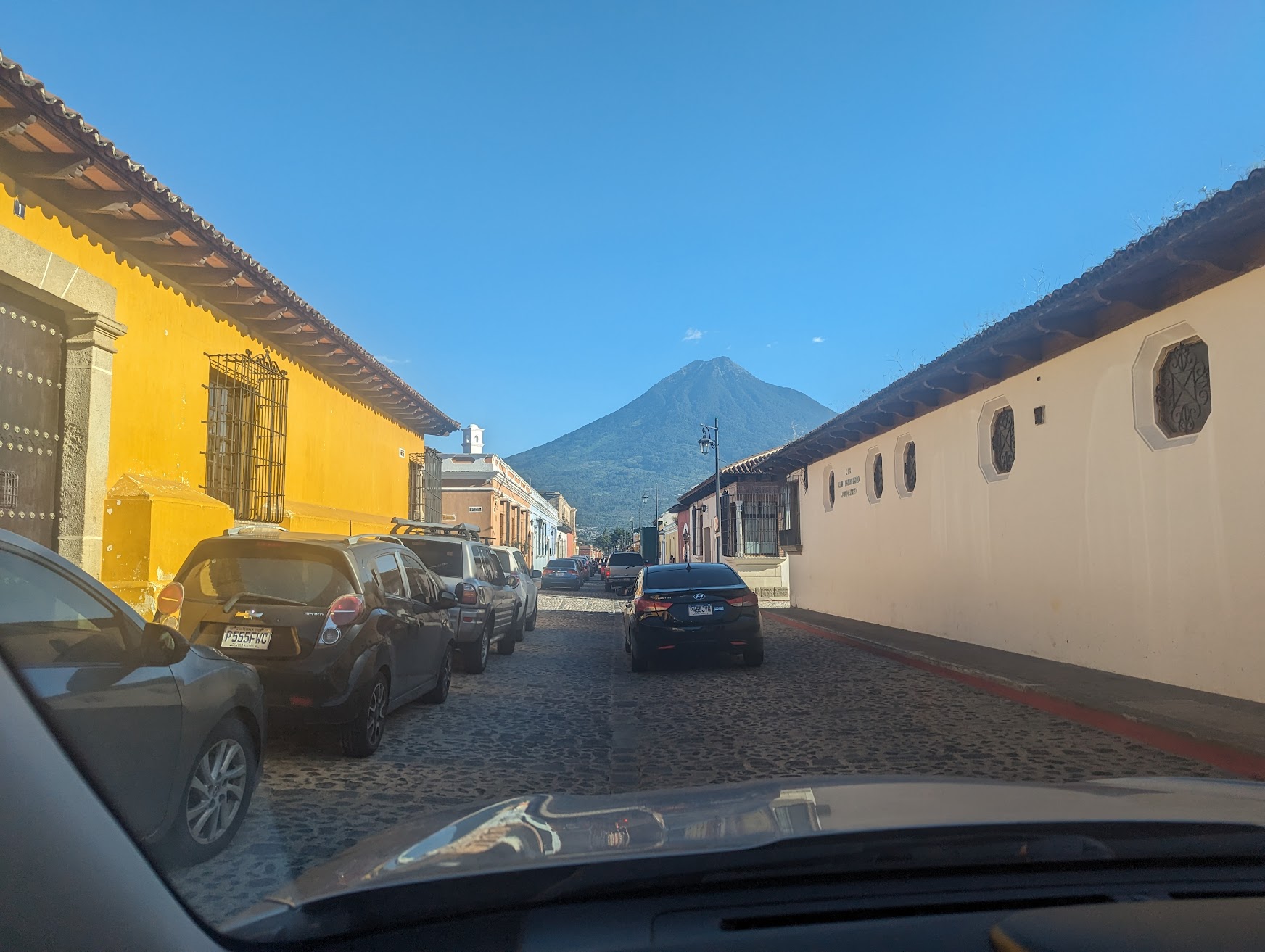
Antigua is the default answer for a reason. A UNESCO World Heritage city ringed by three volcanoes, with cobblestone streets, colonial architecture that has survived 500 years of earthquakes, and the largest expat community in Central America. If you are moving to Guatemala and have no idea where to start, you start here.
What makes it special
Antigua is the only city in Guatemala where you can walk everywhere. The central grid is roughly 12 blocks by 12 blocks. Your morning coffee shop, the market, your Spanish school, the gym, and the best restaurants in the country are all within a 15-minute walk. That walkability, combined with a near-perfect climate (spring weather year-round at 1,530 meters elevation), is why Antigua attracts more foreigners than anywhere else in Guatemala.
The city runs on a dual economy. Guatemalans live alongside a rotating cast of expats, Spanish students, remote workers, and tourists. This means you get both a Q25 ($3.25) comida corriente and a $15 farm-to-table dinner within two blocks of each other. You get both the municipal market selling avocados for Q5 and the specialty shop selling imported cheese for Q80. The choice is always yours.
Cost breakdown
Rent is the biggest variable. A basic furnished room runs $200–350/month. A private 1-bedroom apartment in the center costs $500–800. A restored colonial house with a courtyard goes for $1,200–2,000+. Groceries at the central market (Mercado de Antigua) are cheap — a week of produce costs $15–20. Eating out ranges from $3 for a comida corriente to $15–25 at the upscale restaurants on 5a Avenida. Internet through Claro or Tigo fiber runs $30/month for 50 Mbps, enough for video calls and streaming. Monthly total for a comfortable life: $1,200–1,700.
Who it is best for
Expats looking for community. Spanish students (Antigua has 30+ language schools). Remote workers who value walkability over raw internet speed. Retirees who want access to good healthcare (Hospital Privado Hermano Pedro and several clinics) without the chaos of the capital. Couples who want to explore Guatemala with Antigua as a base — the airport is 45 minutes away, Lake Atitlan is 2.5 hours, and the Pacific coast is 90 minutes.
Tradeoffs: Tourist crowds from November through April. Rent has climbed 5–10% per year in the center. Some streets flood during rainy season (May–October). Nightlife is limited compared to Guatemala City.
Full Antigua guide | Spanish schools | Cost of living details
2. Panajachel (Lake Atitlan) — The Digital Nomad Hub
Panajachel — “Pana” to everyone who lives there — is the gateway town to Lake Atitlan, a volcanic crater lake that Aldous Huxley called “the most beautiful lake in the world.” Pana is the most developed town on the lake, with ATMs, pharmacies, a decent grocery store, and the best internet of any lakeside community.
What makes it special
Lake Atitlan is not a place you visit. It is a place that rearranges your priorities. You wake up to three volcanoes reflected in water so clear you can see the bottom from a boat. The air smells like pine and wood smoke. The pace of life drops to a level that makes Antigua feel hectic by comparison. Pana sits on the north shore and serves as the commercial hub for all 12 lakeside towns. It has the infrastructure that other lake towns lack — a Banrural ATM that actually works, a Despensa Familiar for groceries, clinics, and multiple pharmacies.
The town itself is a single main street (Calle Santander) lined with shops, restaurants, and travel agencies, running downhill from the Pan-American Highway to the lake shore. The expat community is smaller and more established than Antigua’s — people here came for a week and stayed for a decade. The Kaqchikel and Tz’utujil Maya communities around the lake maintain living traditions that you will not find anywhere else in Guatemala.
Cost breakdown
Rent is dramatically cheaper than Antigua. A furnished room in Pana runs $150–250/month. A 1-bedroom apartment with a lake view costs $350–600. Eating at local comedores is $2–3 per meal. The Saturday market is one of the cheapest in the highlands for fresh produce. Internet is the main weakness — Tigo and Claro offer 30–50 Mbps in Pana proper, but speeds drop in outlying areas. A comfortable monthly budget runs $800–1,200.
Who it is best for
Digital nomads who prioritize environment over infrastructure. Writers, artists, and creatives. Yoga practitioners and wellness seekers (the lake has a thriving wellness scene). Long-term travelers who want a base for exploring the highlands. People who can work asynchronously and do not need 100 Mbps for constant video calls.
Tradeoffs: Getting anywhere requires a boat or a winding mountain road. The nearest hospital is in Solola (30 minutes uphill). Rainy season (June–October) means afternoon downpours. Calle Santander gets crowded with day-trippers from cruise ships and Antigua tours. Banking options are limited.
Lake Atitlan towns guide | Weather data | Internet speeds
3. San Pedro La Laguna — Budget Living on the Lake
San Pedro sits on the southwestern shore of Lake Atitlan, directly below Volcan San Pedro (3,020m). It is the backpacker capital of Guatemala and the cheapest place on the lake with reliable infrastructure. Where Panajachel is the commercial hub, San Pedro is the alternative hub — more hostels than hotels, more volunteer projects than travel agencies, more fire shows than fine dining.
What makes it special
San Pedro runs on its own rules. The town banned single-use plastics in 2016, years before most countries thought about it. Street art covers nearly every wall. The nightlife — centered on a handful of bars near the dock — is the liveliest on the lake. But San Pedro is also deeply Tz’utujil Maya. The morning market is run by indigenous women selling produce from hillside farms. The Catholic church shares space with Maya ceremonies. The town never chose between backpacker outpost and traditional village — it just became both.
The cost of living in San Pedro is as low as it gets in Guatemala without sacrificing basic comfort. You will not find luxury here, but you will find $100/month rooms, $2 meals, and a community of travelers and long-term residents who are living proof that money is not the point.
Cost breakdown
A private room in a guesthouse costs $100–200/month. A small apartment runs $200–350. Meals at local comedores are $2–3. San Pedro’s market is cheaper than Pana’s. Internet is slower at 20–40 Mbps — good enough for remote work if you are not on video calls all day. A Tuk-tuk across town costs Q5 ($0.65). Monthly total: $600–900.
Who it is best for
Budget travelers and backpackers on long-term trips. People in their 20s and 30s building an online business. Volunteers (San Pedro has numerous NGOs). Anyone who values community over comfort. Spanish and Tz’utujil language students (several schools operate here).
Tradeoffs: San Pedro is loud at night, especially weekends. Internet is inconsistent. Medical facilities are basic — anything serious means a boat to Pana and then a car to Solola or Guatemala City. The town’s popularity means it can feel more like a backpacker bubble than authentic Guatemala. Rainy season makes the steep streets slippery.
San Pedro La Laguna guide | Lake Atitlan towns | Budget living tips
4. Guatemala City Zona 10 — Urban Convenience at Full Speed
Zona 10, known as “Zona Viva,” is Guatemala City’s cosmopolitan core — the zone where embassy staff eat dinner, where multinational offices fill glass towers, and where the nightlife runs until 3 AM on weekends. If you need fast internet, international food, and a city that actually feels like a city, Zona 10 is the answer.
What makes it special
Zona 10 is the only place in Guatemala that feels like a modern Latin American capital. The zone contains the best restaurants in the country (Flor de Lis, Kacao, Saul Bistro), the main nightlife strip (4a Avenida and surrounding streets), two major museums (Popol Vuh and Ixchel), international hotels (Marriott, Hyatt, Intercontinental), and the main business district. More importantly, it has the infrastructure expats take for granted — 100+ Mbps fiber internet, Uber that actually works, food delivery via Hugo App, and 24/7 pharmacies.
The zone is walkable by Guatemala City standards, though not by Antigua standards. You can walk from your apartment to restaurants, bars, and shops along the main avenues. But you will still Uber to the supermarket, the mall, and anywhere outside the zone. Guatemala City is a car city, and Zona 10 is the one exception where you can get by without one.
Cost breakdown
Furnished 1-bedroom apartments run $750–1,035/month. Unfurnished is cheaper at $500–700. Eating out is expensive by Guatemalan standards — a meal at a mid-range restaurant costs $13–26. But the same zone has pupuserias and taco stands where lunch is $3–5. Groceries at Paiz or La Torre supermarkets cost about the same as anywhere in the city. Internet is the best in the country — Claro and Tigo offer symmetric fiber up to 300 Mbps for $40–65/month. Monthly total: $1,500–2,500.
Who it is best for
Professionals working for international organizations or embassies. Entrepreneurs who need to take meetings in person. People who want nightlife, restaurants, and cultural events. Digital nomads who need the fastest possible internet. Anyone who has lived in other Latin American capitals (Mexico City, Bogota, Lima) and wants the same urban lifestyle at a lower cost.
Tradeoffs: Traffic is brutal during rush hours (7–9 AM, 5–8 PM). The surrounding zones (3, 7, 12) have higher crime. Air pollution is noticeable. No colonial charm — the architecture is 1970s concrete and modern glass. Noise from bars and clubs on weekends if you live near 4a Avenida.
Zona 10 neighborhood guide | Flights to Guatemala | Safety data
5. Guatemala City Zona 14 — Quiet Luxury for Families
Zona 14, also called “Las Americas,” is the residential counterpart to Zona 10’s commercial energy. Wide tree-lined boulevards, gated residential towers, embassies behind high walls, and the kind of quiet that makes you forget you are in a city of 3 million. This is where Guatemala’s upper-middle class and wealthy families live.
What makes it special
Zona 14 offers the best of both worlds — urban infrastructure with residential peace. Avenida Las Americas and Avenida La Reforma are the two main boulevards, flanked by restaurants, clinics, and boutiques. The zone has some of the best private hospitals in Central America (Hospital Universitario Esperanza, Centro Medico), international schools, and immediate access to the main highway south to Antigua and the Pacific coast.
Unlike Zona 10, which is oriented around nightlife and commerce, Zona 14 is oriented around living. The apartments are larger. The streets are quieter. The parks are maintained. Families walk dogs in the evening. It is the Guatemala City that Guatemalans who can afford it actually choose for daily life, not just Friday night.
Cost breakdown
Zona 14 is the most expensive residential area in Guatemala outside of Cayala. Furnished 1-bedroom apartments start at $900 and go to $1,500. 2-bedroom units for families run $1,200–2,000. The dining scene is slightly less dense than Zona 10 but includes excellent options (Tre Fratelli, San Martin, and numerous cafes along Reforma). Groceries, utilities, and internet are comparable to Zona 10. Monthly total: $1,800–3,000.
Who it is best for
Families with children attending international schools (the American School, Colegio Interamericano, and several others are nearby). Executives on corporate assignments. Retirees who want access to excellent healthcare and a safe, quiet environment. Couples who want space and calm but still want to be in the city. People who need the airport to be 25 minutes away, not 90 minutes.
Tradeoffs: Less walkable than Zona 10 — you need a car or Uber for most errands. Nightlife requires going to Zona 10 (a 10-minute Uber). The neighborhood can feel sterile compared to the character of Antigua or the energy of Zona 10. Rent is high and rising.
Zona 14 neighborhood guide | Cost of living | Weather
6. Cayala (Zona 16) — Guatemala’s Safest Neighborhood
Cayala is not a traditional Guatemalan city. It is a master-planned, mixed-use development in Zona 16 of Guatemala City that opened in 2012 and has since become the most talked-about neighborhood in Central America. Think of it as a self-contained European-style town dropped into the hills of Guatemala City, with cobblestone streets, a central plaza, restaurants, shops, offices, and residential towers — all behind controlled access with 24/7 security.
What makes it special
Safety. That is the first word everyone uses, and it is warranted. Cayala scores 9/10 — the highest of any location in this ranking. The development has its own private security force, CCTV covering every street, and controlled vehicle access. For families, retirees, or anyone whose top priority is not worrying about safety, Cayala solves that problem more completely than anywhere else in Guatemala.
Beyond safety, Cayala offers a curated lifestyle. The central plaza hosts weekend events, live music, and seasonal markets. The restaurants range from casual to upscale (Saul E15, Mercado de Cayala food hall). There is a cinema, a gym, a WeWork-style coworking space, a supermarket, banks, pharmacies, and boutique shops. The residential towers have modern apartments with mountain views, pools, and rooftop terraces. It is, in every way, designed for comfort.
Cost breakdown
This comfort comes at Guatemala’s highest price tag. A 1-bedroom apartment in Cayala starts at $1,200/month furnished and goes up to $2,500 for newer towers with amenities. 2-bedroom family units run $2,000–3,500. Dining in Cayala is expensive by any Guatemalan standard — dinner for two at a sit-down restaurant runs $40–70. Groceries at the Cayala Paiz are priced the same as other city supermarkets. Internet is 100+ Mbps fiber. Monthly total: $2,000–3,500.
Who it is best for
Families who want the safest possible environment. Remote workers who value modern infrastructure and do not mind paying for it. People relocating from US or European cities who want a lifestyle that feels familiar. Retirees who want to walk to restaurants and shops without worrying about anything. Anyone for whom safety is the non-negotiable priority.
Tradeoffs: Cayala can feel insulated from “real Guatemala.” You can live there for months without speaking Spanish beyond ordering coffee. The commute to Zona 10 or the airport takes 30–45 minutes in traffic. The uniformity of the architecture (everything is beige stucco and cobblestone) can feel repetitive. Rent is 2–3x what you would pay elsewhere in Guatemala City. Some find the controlled-access model uncomfortable philosophically, even if it works practically.
Cayala neighborhood guide | Safety overview | Visa guide
7. Quetzaltenango (Xela) — The Authentic Alternative
Xela (pronounced SHAY-la) is Guatemala’s second city, sitting at 2,333 meters in a highland valley surrounded by volcanoes. If Antigua is the Guatemala that tourists see, Xela is the Guatemala that Guatemalans actually live in. No cobblestone tourist center, no curated restaurant scene, no international crowd — just a working highland city with strong K’iche’ Maya roots, excellent Spanish schools, and a cost of living that makes Antigua look expensive.
What makes it special
Xela is where you go when you want to learn Guatemala, not just live in it. The city is 95% Guatemalan. The market (La Democracia) is massive, chaotic, and sells everything at local prices. The Spanish schools (Celas Maya, ICA, Pop Wuj) are considered the best in the country because there is no English fallback — you learn Spanish because you have to. The surrounding highlands offer some of Guatemala’s best hiking, including the Tajumulco ascent (4,220m, the highest point in Central America) and the Fuentes Georginas hot springs.
The city itself is compact and walkable, centered on the Parque Centro America and the surrounding commercial streets. Architecture is a mix of neoclassical (the Teatro Municipal, the Pasaje Enriquez) and practical concrete. The weather is cold by Guatemalan standards — mornings in December dip to 2-5°C — and this keeps the tourist crowds away. What remains is a city with genuine character, strong community ties, and a rhythm that has not been altered by tourism.
Cost breakdown
Xela is cheap. Rent for a furnished room starts at $100–150/month. A 1-bedroom apartment runs $250–400. The market and street food scene is one of the most affordable in the country — a plate of pepian con arroz is Q15 ($2). A full comida corriente (soup, main course, drink, tortillas) is Q20–25 ($2.60–3.25). Internet through Tigo or Claro provides 30–50 Mbps for $25–30/month. Monthly total: $700–1,100.
Who it is best for
Serious Spanish students. People who want to experience Guatemala beyond the expat bubble. Budget-conscious remote workers who do not need blazing internet. Hikers and outdoor enthusiasts. Volunteers (Pop Wuj Spanish school runs medical and education programs). Anyone who values authenticity over convenience.
Tradeoffs: Cold weather, especially November through February. The city can feel gray and overcast for weeks during the rainy season. Nightlife is limited. International food options are scarce. The airport (no commercial flights) means you are 4 hours from Guatemala City by bus. Medical facilities are adequate but not comparable to the capital.
Quetzaltenango guide | Hiking & volcanoes | Hot springs
8. Coban — Coffee, Caves, and Cloud Forest
Coban is the capital of Alta Verapaz, a department of cloud forests, limestone caves, and coffee plantations in Guatemala’s central highlands. The town sits at 1,320 meters in a valley that gets rain nearly 300 days a year, earning it the local nickname “the city of eternal drizzle.” That rain feeds some of the most dramatic landscapes in Central America — Semuc Champey’s turquoise pools, the Lanquin caves, and the Biotopo del Quetzal cloud forest reserve.
What makes it special
Coban is Guatemala’s coffee capital. The surrounding hills produce some of the finest arabica coffee in the world, and the town’s identity revolves around it. The annual Feria Nacional de la Orquidea (Orchid Festival) in December draws visitors from across the country. The Q’eqchi’ Maya culture is deeply woven into daily life — the market in Coban is one of the most authentically indigenous in Guatemala, with vendors who speak Q’eqchi’ as a first language and Spanish as a second.
For nature lovers, Coban is unmatched as a base. Semuc Champey is 2.5 hours south (rough road, worth every bump). The Grutas de Lanquin are 2 hours away. The cloud forests surrounding the town are habitat for the resplendent quetzal — Guatemala’s national bird and one of the most sought-after sightings in Central American birding.
Cost breakdown
Coban is one of the cheapest cities in Guatemala with real infrastructure. Rent for a furnished room starts at $80–120/month. A 1-bedroom apartment costs $200–350. The local market prices are among the lowest in the country. A plate of kak’ik (Q’eqchi’ turkey soup, the regional specialty) costs Q20–30 ($2.60–3.90). Internet is slower at 20–40 Mbps through Tigo, but sufficient for standard remote work. Monthly total: $500–800.
Who it is best for
Nature lovers and adventure travelers. Birdwatchers (the Biotopo del Quetzal and surrounding forests are world-class). Coffee enthusiasts who want to visit farms and understand the production process. Budget travelers who want to be based somewhere with real amenities (banks, hospital, supermarket) while exploring one of Guatemala’s most dramatic regions. People who genuinely do not mind rain.
Tradeoffs: It rains. A lot. From May through February, expect daily rain — sometimes all day. The road from Guatemala City is 4–5 hours through mountains (beautiful but tiring). Internet is slower than the capital. The expat community is nearly nonexistent — you will need functional Spanish. Nightlife is minimal. The constant overcast can affect mood over time.
Coban guide | Coffee tours | Birdwatching
9. Flores — Gateway to the Maya World
Flores is a tiny island town connected by a causeway to the mainland town of Santa Elena, on the shores of Lake Peten Itza in Guatemala’s northern lowlands. It exists primarily because of Tikal — the most important Maya archaeological site in the world, located 64 km northeast. But Flores has its own quiet charm: pastel-colored buildings on a circular island, waterfront restaurants, and sunsets over a lake that feels like it belongs in a different country than the highlands.
What makes it special
Flores is Guatemala’s window to the Peten — the vast, sparsely populated northern jungle that contains thousands of Maya ruins, most still unexcavated. Tikal is the headline attraction, but the region also includes Yaxha (overlooking a jungle lake), El Mirador (reachable only by a 5-day trek), and Uaxactun. For anyone with an interest in archaeology, Flores is a base you could spend months exploring from.
The town itself is small enough to walk across in 10 minutes. The island has maybe 30 restaurants, a handful of hotels, a few small shops, and not much else. But that is the appeal. Life on the island is slow, warm (Peten averages 30–35°C year-round), and oriented around the lake. The mainland town of Santa Elena has supermarkets, banks, a hospital, and the international airport (FRS) with daily flights to Guatemala City.
Cost breakdown
Flores is affordable but not as cheap as you might expect, given its remoteness. Tourism inflates prices slightly. A furnished room on the island runs $150–250/month. An apartment in Santa Elena is cheaper at $200–350. Meals at waterfront restaurants cost $5–10 — more than highland comedores but still reasonable. The mainland market in Santa Elena has standard prices. Internet is the main limitation at 20–30 Mbps. Monthly total: $600–900.
Who it is best for
Archaeology enthusiasts and history buffs. Travelers who want to explore the Peten’s Maya sites over weeks or months. People who do not need fast internet or urban amenities. Birdwatchers (Peten’s jungle is one of the richest birding regions in Central America). Anyone who wants a warm, lakeside lifestyle at a fraction of Caribbean prices. Retirees who prioritize peace and natural beauty over nightlife and shopping.
Tradeoffs: Isolated. The nearest major city (Guatemala City) is an 8–10 hour drive or a 1-hour flight. Internet is slow by modern standards. The heat is relentless — Peten is Guatemala’s hottest region. Medical facilities in Santa Elena are basic. The expat community is tiny. Supplies that are routine in the capital (certain medications, electronics, imported goods) require planning or ordering.
Flores guide | Archaeological sites | Flights
10. Livingston — A Different Guatemala Entirely
Livingston is the most unusual town in Guatemala. Accessible only by boat (there is no road connection), it sits at the mouth of the Rio Dulce on the Caribbean coast. The town is the cultural capital of Guatemala’s Garifuna community — descendants of West African and indigenous Carib people — and it feels more like Belize or Honduras than the rest of Guatemala. The food, the music, the language, and the daily rhythm are unlike anything else in the country.
What makes it special
Livingston gives you something no other place on this list can: the Caribbean side of Guatemala. The Garifuna culture is expressed through tapado (a coconut-based seafood stew that is the town’s signature dish), punta music played on drums and turtle shells, and a relaxed Afro-Caribbean approach to time that makes even Lake Atitlan seem rushed. The town sits at the edge of the Rio Dulce canyon, a dramatic limestone gorge with hot springs cascading down the walls and thick jungle on both sides. Playa Blanca, a white-sand beach, is a 20-minute boat ride away.
The isolation is the point. No road means no through-traffic. No chain restaurants. No Uber. No rush. You take a lancha (boat) from Rio Dulce town or Puerto Barrios, arrive at the dock, and immediately feel the pace shift. English, Q’eqchi’ Maya, Spanish, and Garifuna are all spoken on the same street.
Cost breakdown
Livingston is the cheapest place on this list. Rent for a basic room starts at $80–120/month. A small house or apartment runs $150–300. Meals are cheap — a plate of tapado costs Q30–40 ($3.90–5.20), and simpler meals are Q15–20. Seafood (fresh fish, shrimp, conch) is cheaper here than anywhere else in Guatemala. Internet is the main challenge at 10–20 Mbps, primarily through mobile hotspots or basic Tigo connections. Monthly total: $500–700.
Who it is best for
People who want to experience Guatemala’s Afro-Caribbean culture. Writers, artists, and creatives who thrive in isolation. Budget travelers on extended stays. Anyone who values cultural uniqueness over convenience. People who do not need reliable internet for daily work — this is a place for asynchronous work or offline projects.
Tradeoffs: No road access — everything arrives by boat, which makes supplies more expensive and logistics more complicated. Internet is the weakest on this list. Medical facilities are very basic (the nearest hospital is in Puerto Barrios, a 30-minute boat ride). The humidity is intense year-round. The beach is not right in town — you need a boat to reach good swimming spots. Safety is the lowest-scored on this list at 5/10, reflecting Izabal department’s higher crime rates, though violent crime against foreigners in Livingston itself is uncommon.
Livingston guide | Shipping to Guatemala | Safety overview
How to Choose: A Decision Framework
Picking the right city depends on what you are optimizing for. Here is how to narrow it down based on your top priority.
If your top priority is budget
Go to San Pedro La Laguna or Coban. Both let you live on $600–800/month without feeling like you are scraping by. San Pedro gives you a social scene and lake views. Coban gives you nature and coffee culture. If you want the absolute cheapest option with Caribbean culture, try Livingston at $500–700/month.
If your top priority is safety
Cayala is the clear winner at 9/10. It is the only location in Guatemala with near-zero street crime. If Cayala’s prices ($2,000–3,500/month) are too high, Zona 14 (7/10) or Antigua (7/10) are the next safest options with significantly lower costs. Check our safety data page for departmental crime statistics updated monthly.
If your top priority is internet speed
Any of the three Guatemala City zones — Zona 10, Zona 14, or Cayala — offer 100+ Mbps symmetric fiber. Antigua gets 50+ Mbps. Everything else on this list is 50 Mbps or below. If you are on Zoom calls 8 hours a day, stay in the capital or Antigua. See our internet guide for ISP-by-ISP comparisons and our phone plans page for mobile data options.
If your top priority is culture and authenticity
Xela is the answer. No tourist bubble, strong indigenous culture, real Guatemalan daily life. Coban is the runner-up with deep Q’eqchi’ Maya roots. Livingston is in a category of its own — Garifuna culture that exists nowhere else in Guatemala.
If your top priority is nature
Panajachel (Lake Atitlan) for volcanic lake beauty. Coban for cloud forests, caves, and the quetzal. Flores for jungle and Maya ruins. All three put you within reach of some of Central America’s most dramatic landscapes.
If you have no idea what you want
Start in Antigua for 1–3 months. It has the largest expat community, the best balance of cost and convenience, and it is centrally located for exploring the rest of the country. After three months, you will know whether you want more city (Guatemala City), more nature (Lake Atitlan, Coban), more adventure (Flores, Livingston), or more authenticity (Xela).
Practical Next Steps
Ready to start planning? Here are the resources you need:
- Cost of Living Calculator — Build a personalized monthly budget for any city
- Visa and Residency Guide — Tourist visa rules, extensions, and residency options
- Flight Tracker — Find the cheapest flights to Guatemala City (GUA)
- Exchange Rates — Today’s USD/GTQ rate for budgeting
- Remittance Comparison — Send money to Guatemala (Wise, Remitly, Western Union)
- Internet Guide — ISP options, speeds, and prices by city
- Safety Data — Crime statistics by department, updated monthly
- Weather — Temperature and rainfall data for planning your move
- Phone Plans — Tigo vs Claro SIM card comparison
- Transportation Guide — How to get between cities
This guide is updated quarterly. Last update: March 2026. All cost figures verified against INE data, real rental listings, and ISP published prices. Safety scores based on 2024-2025 INE homicide statistics. Have a question not covered here? Contact us.
![Best Places for Remote Workers in Guatemala [2026 Ranked]](/images/photos/guatemala-city-skyline-zona10.jpg)