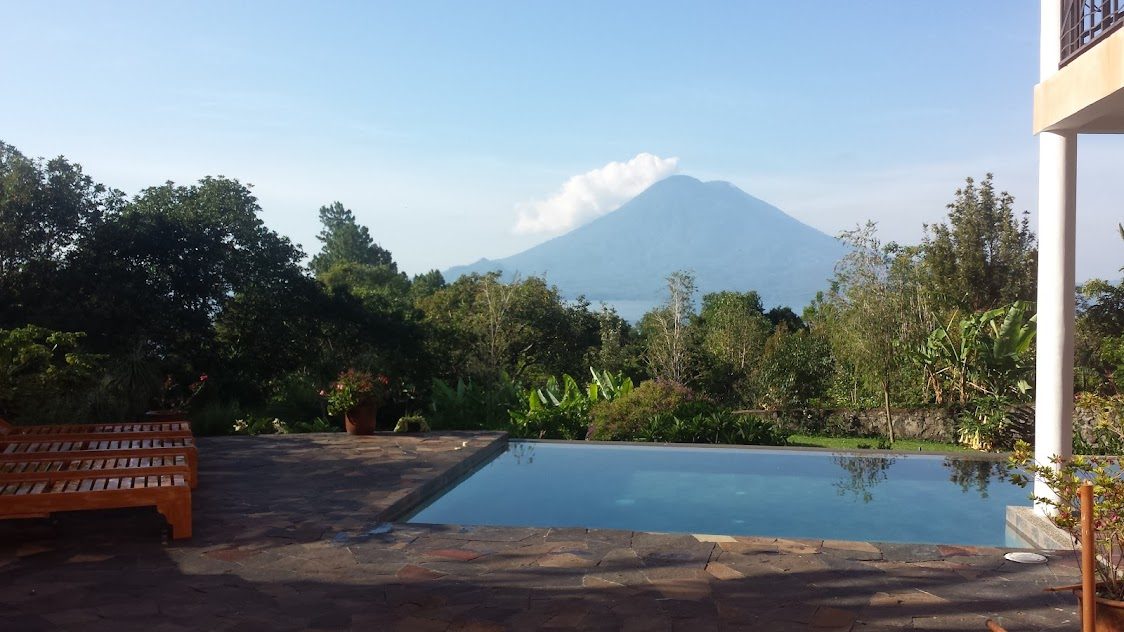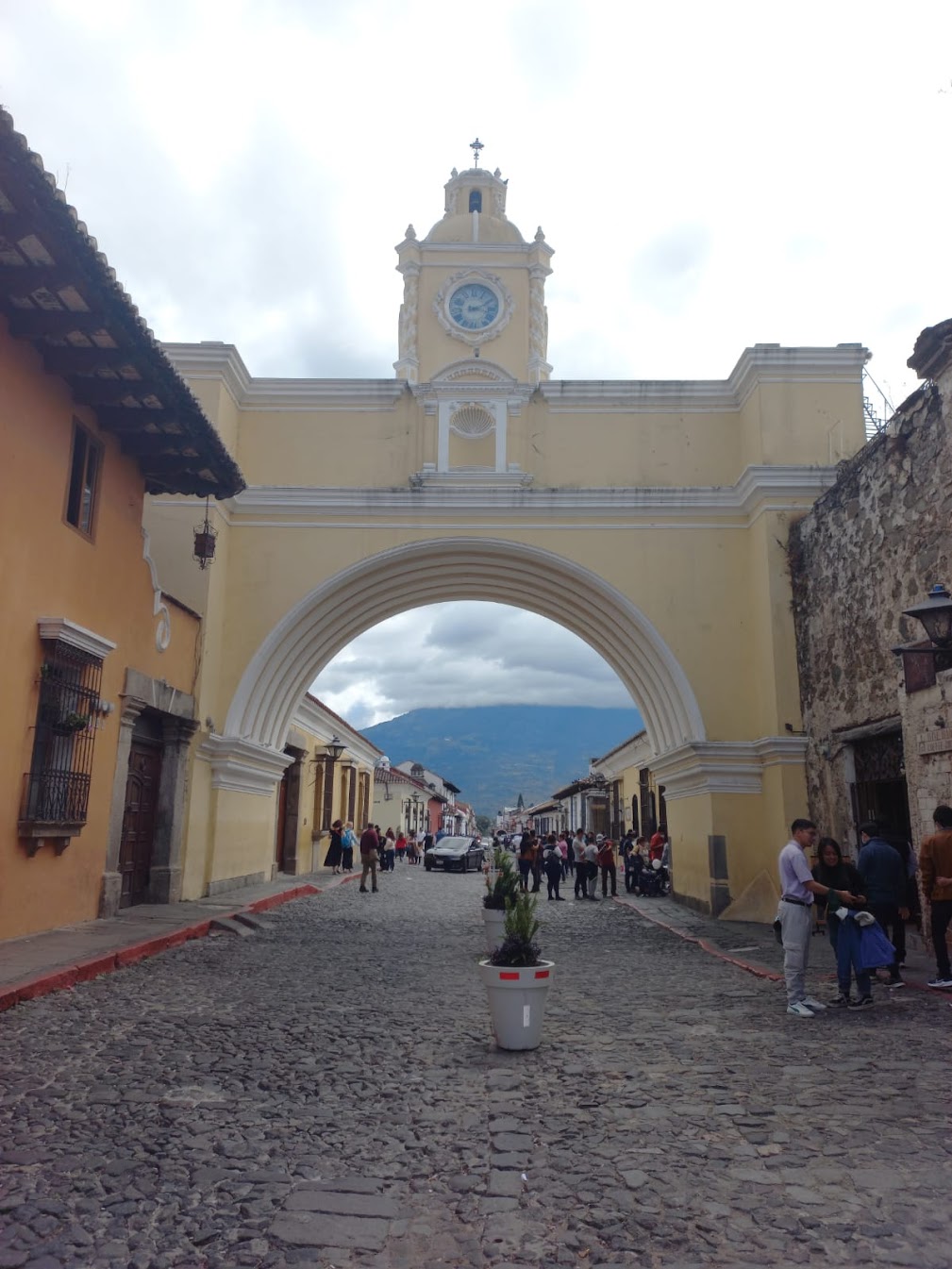
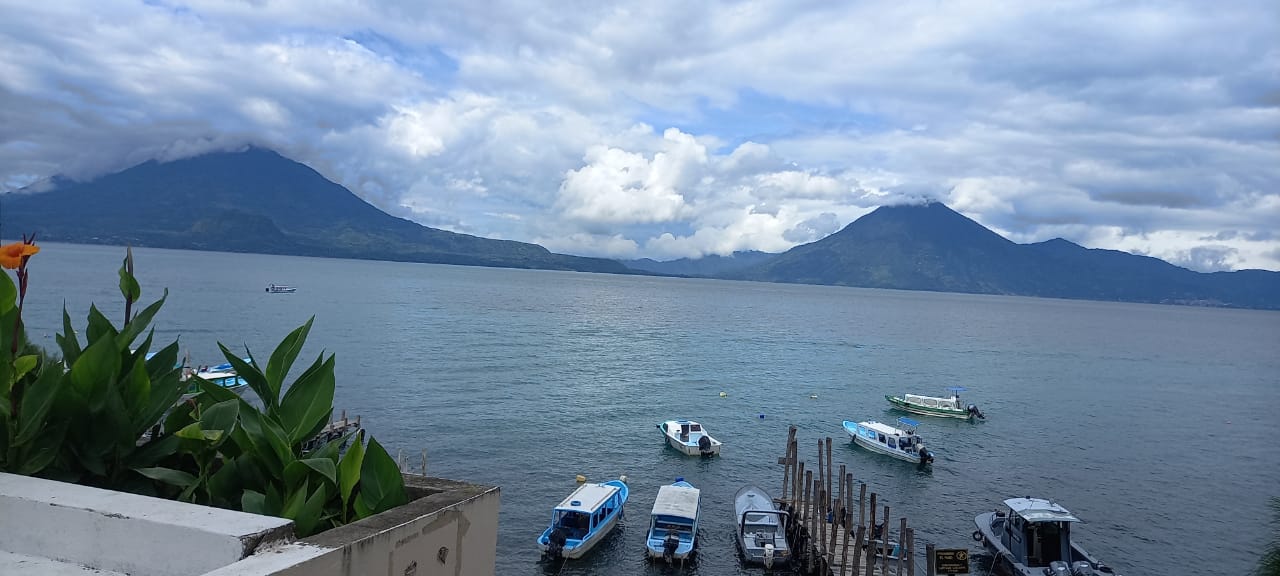
Aldous Huxley called Lake Atitlan “the most beautiful lake in the world.” That was in 1934, and it is still the line that sells every travel article about this place. What Huxley did not mention — because it was not relevant in 1934 — is that you can now live here for $400-800 a month, get decent internet in most towns, and build a life that looks nothing like the one you left behind.
I have spent weeks at a time around the lake over the years. The first time was as a kid on a family trip to Panajachel. The most recent was working remotely from San Pedro La Laguna with a fiber connection that held up through video calls. Lake Atitlan is not one place — it is a collection of very different towns connected by boat, and each one attracts a different kind of person.
This guide covers the real differences between the lake towns, what things actually cost, and the trade-offs you need to understand before packing your bags.
Why Lake Atitlan?
The basic facts: Atitlan is a volcanic caldera lake at 1,562 meters (5,125 feet) elevation, surrounded by three volcanoes (Toliman, Atitlan, and San Pedro). It is 18 km across at its widest point. Twelve Maya Tz’utujil and Kaqchikel towns ring the shore, each with its own culture, traje (traditional clothing), and personality.
For the practical reasons people move here:
- The lowest cost of living in the Guatemalan highlands. You can rent a room for $100/month and eat for $3/day. Even “comfortable” living runs $600-1,200 — less than almost anywhere in Latin America.
- The scenery is genuinely world-class. Three volcanoes rising from a blue lake, terraced hillsides, and sunsets that stop conversation. This is not hyperbole.
- Active wellness and creative community. San Marcos has become a global center for yoga, meditation, breathwork, and plant medicine. San Pedro attracts backpackers, digital nomads, and Spanish students. San Juan has a thriving art scene.
- Maya culture is alive. Santiago Atitlan, San Juan, and the smaller villages maintain traditional dress, language, and customs. This is not a museum — it is daily life.
- Climate. Warm days (22-26C / 72-79F), cool nights (12-16C / 54-61F), and less rain than the Pacific coast. The “eternal spring” claim is close to accurate.
The trade-offs are important too:
- Internet is improving but still unreliable in some towns. Fiber has reached Panajachel and parts of San Pedro, but smaller villages rely on wireless or Starlink.
- Getting around means boats. There are no roads connecting most lakeside towns. Lanchas (small motorboats) are the primary transport — Q25-50 per trip.
- Healthcare is basic. The nearest hospital is in Solola (30 minutes from Panajachel). Serious medical issues require Guatemala City (3-4 hours).
- Rainy season brings landslides and rough lake conditions. September-October can be challenging.
The Towns: Where to Live
This is the most important decision you will make at Atitlan. Each town has a radically different vibe, cost structure, and community. They are connected by lancha but separated by culture.
San Pedro La Laguna — The Backpacker-Nomad Town
Cost: $ | Internet: Improving | Vibe: Young, social, budget
San Pedro is where most foreigners start. It has the cheapest accommodation, the most active nightlife, and a well-established backpacker infrastructure. In the last few years, it has also attracted a growing digital nomad community drawn by the low costs and improving internet.
Who lives here: Backpackers, budget travelers, young remote workers, Spanish students, party-oriented visitors. Average age skews 20s-30s.
Cost of living: A private room runs Q400-800/month ($52-104). A simple apartment is Q1,000-2,500/month ($130-326). Meals at local comedores cost Q15-25 ($2-3.25). A full month on a budget: $300-500.
Internet: Tigo and Claro have cable connections in the town center, delivering 20-50 Mbps to residences. Cafes and hostels offer wifi, though quality varies. Starlink has become popular among longer-term residents. For detailed ISP info, see our internet guide.
Spanish schools: San Pedro has 5+ schools offering one-on-one instruction at Q40-60/hour ($5-8), significantly cheaper than Antigua. See our Spanish school guide.
San Marcos La Laguna — The Wellness Capital
Cost: $$ | Internet: Moderate | Vibe: Spiritual, quiet, healing
San Marcos is Atitlan’s wellness hub. Yoga retreats, cacao ceremonies, breathwork sessions, sound healing, and plant medicine are the industry here. The town itself is small — maybe 15 minutes to walk end to end — with lush gardens, volcanic stone paths, and a pace of life that feels deliberately slow.
Who lives here: Yoga practitioners, meditation retreaters, healers, artists, remote workers who prioritize calm, longer-term spiritual seekers.
Cost of living: Higher than San Pedro because the wellness market inflates prices. A room runs Q800-1,500/month ($104-196). A cottage or apartment: Q2,000-4,000/month ($261-522). Organic cafes charge Q40-80 for meals ($5-10). Monthly budget: $500-1,000.
Internet: More limited than San Pedro. Cable connections exist but speeds average 10-30 Mbps. Many residents use Starlink. Cafe wifi is hit-or-miss. This is not the town for daily video calls without a dedicated connection.
What to know: San Marcos can feel like a bubble. The wellness community is tight-knit and welcoming, but it is a specific culture. If “cacao ceremony” and “conscious dance” are not your vocabulary, you may feel out of place. That said, the natural beauty is stunning and the quiet is restorative.
Panajachel (Pana) — The Tourist Hub
Cost: $$ | Internet: Best at the lake | Vibe: Commercial, accessible, mixed
Panajachel is the largest town on the lake and the main access point (it is the only town reachable by paved road from the highway). Calle Santander is the commercial spine — tourist shops, restaurants, ATMs, pharmacies, and the main boat dock.
Who lives here: Guatemalan families, long-term expats (especially retirees), tourists passing through, business owners.
Cost of living: Mid-range. Apartments run Q1,500-3,500/month ($196-457). Houses outside the center: Q2,000-5,000/month ($261-652). Restaurant meals: Q30-80 ($4-10). Monthly budget: $600-1,200.
Internet: The best at the lake. Tigo fiber has reached parts of Panajachel, offering 50-150 Mbps. Cable is widely available. This is the most reliable town for remote work at Atitlan.
What to know: Panajachel is the most “normal” lakeside town. It has banks (Banrural, BAM, Banco Industrial), supermarkets, a pharmacy, and actual infrastructure. It lacks the charm of smaller villages but compensates with convenience. The lancha dock connects you to every other town in 15-45 minutes.
San Juan La Laguna — The Art Village
Cost: $ | Internet: Basic | Vibe: Artsy, authentic, quiet
San Juan is a 10-minute lancha ride from San Pedro, but it feels like a different world. This Tz’utujil Maya town is known for its natural dye textiles, murals, and cooperatives. The streets are painted, the galleries are run by local artists, and tourism is community-managed rather than backpacker-driven.
Who lives here: Artists, writers, people who want a quieter version of San Pedro without the party scene, culturally-minded long-termers.
Cost of living: Similar to San Pedro — cheap. Rooms Q400-800/month ($52-104). Apartments Q1,000-2,000/month ($130-261). Local food Q15-25 per meal. Monthly budget: $350-600.
Internet: Basic cable (10-20 Mbps) and mobile data. Not ideal for heavy remote work, but sufficient for email and light browsing. Starlink is increasingly common.
Santiago Atitlan — The Traditional Heart
Cost: $ | Internet: Basic | Vibe: Traditional, Maya, authentic
Santiago is the largest indigenous town on the lake and the cultural center of the Tz’utujil people. Traditional traje is worn daily. The market is for locals, not tourists. The church contains Maximon, the folk saint who smokes cigars and drinks rum.
Who lives here: Almost entirely Guatemalan. Very few long-term foreigners. NGO workers, anthropologists, and a handful of adventurous expats.
Cost of living: The cheapest on the lake. Rooms Q300-600/month ($39-78). Local meals Q10-20 ($1.30-2.60). Monthly budget: $250-450.
Internet: Limited. Mobile data (3G/4G) is the primary option. Some cable connections exist. Not a remote work base unless you bring Starlink.
What to know: Santiago is not a tourist town trying to accommodate foreigners. It is a Maya town that happens to have some tourists. If you want genuine cultural immersion and speak reasonable Spanish, it is extraordinary. If you need English menus and fast wifi, look elsewhere.
Pro Tip: Before committing to any lake town, spend at least one week there. Take a lancha around the entire lake — the boats connect all towns for Q25-50 per trip. What appeals to you on a 3-day visit may feel different after 3 weeks. San Pedro’s nightlife gets old fast if you are over 30. San Marcos’s quiet can feel isolating if you are social. Panajachel’s commercial strip is uninspiring if you came for natural beauty.
Cost of Living Comparison
All figures in USD/month for a single person. Exchange rate: ~Q7.66/USD. For more detailed data, visit our cost of living page.
| Expense | San Pedro | San Marcos | Panajachel | San Juan | Santiago |
|---|---|---|---|---|---|
| Rent (1BR) | $130–326 | $261–522 | $196–457 | $130–261 | $78–157 |
| Groceries | $60–100 | $80–130 | $80–120 | $60–100 | $50–80 |
| Eating out | $40–80 | $80–150 | $60–120 | $40–70 | $25–50 |
| Transport (lanchas) | $15–30 | $15–30 | $10–20 | $15–25 | $10–20 |
| Utilities | $15–30 | $20–40 | $25–50 | $15–30 | $10–25 |
| Internet | $20–30 | $30–66 | $30–40 | $20–30 | $13–30 |
| Total | $280–596 | $486–938 | $401–807 | $280–516 | $186–362 |
Getting to Lake Atitlan
From Guatemala City
- Shuttle: Q120–200 ($15–26) from Antigua or Guatemala City. Runs daily, takes 3–3.5 hours to Panajachel. Bookable through agencies in Antigua or online.
- Chicken bus: Q30–40 ($4–5) to Solola, then a local bus down to Panajachel. Cheaper, slower, more adventurous. Allow 4+ hours.
- Private car: Drive to Panajachel via RN-1 to Solola, then the winding descent. 2.5–3 hours from GC. The last 30 minutes of switchbacks are steep. Parking in Pana is limited.
Getting Around the Lake
- Lanchas (motorboats): The lake’s public transit. Main route from Panajachel to San Pedro (Q25, 25 min) with stops at San Juan, San Marcos, Jaibalito, and Santa Cruz. Boats leave when full, roughly every 30 minutes from 6 AM to 6 PM. After 6 PM, hire a private lancha (Q150–300).
- Tuk-tuks: Q5–15 within any town.
- Pick-up trucks: Serve as collective taxis on the road between Santiago and San Pedro. Q5–10.
- Walking: Some towns are connected by lakeside trails. San Pedro to San Juan: 30 min walk. San Marcos to Tzununa: 45 min.
For full transportation options, see our transportation guide.
Internet at the Lake
This is the biggest practical concern for remote workers considering Atitlan. Here is the honest assessment:
| Town | Best Available | Typical Speed | Remote Work? |
|---|---|---|---|
| Panajachel | Tigo Fiber | 50–150 Mbps | Yes, reliable |
| San Pedro | Tigo/Claro Cable | 20–50 Mbps | Yes, with patience |
| San Marcos | Cable + Starlink | 10–30 Mbps | Possible, not ideal |
| San Juan | Cable + Mobile | 10–20 Mbps | Light work only |
| Santiago | Mobile data | 5–15 Mbps | No (unless Starlink) |
The Starlink factor: At Q345–510/month ($45–66) with hardware costing Q1,600 ($209), Starlink has changed the equation for remote workers at the lake. It works in every town, delivers 30–100 Mbps, and does not depend on local infrastructure. If remote work is your livelihood, budget for Starlink as backup regardless of which town you choose.
For the full ISP breakdown, see our internet guide.
Pro Tip: If you are a serious remote worker, stay in Panajachel for the internet and take lanchas to the other towns on weekends. You get the best of both worlds — reliable fiber for work and lakeside beauty for leisure. Several nomads I know keep a Pana apartment and spend weekends in San Marcos or San Pedro.
Activities and Things to Do
Atitlan is an activity hub. For the full searchable database, explore on the map.
On the water:
- Kayaking across the lake (rentals Q50–100/hour in San Pedro and Pana)
- Stand-up paddleboarding (Q80–150/hour)
- Swimming (the water is clean but cold, around 18–20C / 64–68F)
Hiking:
- Indian Nose (Nariz del Indio): Sunrise hike above San Pedro. 1.5 hours up, spectacular views. Q25 entrance.
- Volcan San Pedro: Full-day hike, 5–6 hours round trip. Q50–100 with required guide.
- Rostro Maya: Ridge hike between San Juan and San Pedro. Free, well-marked.
Cultural:
- Visit Maximon in Santiago Atitlan (Q20 donation)
- Tour San Juan cooperatives (natural dye textiles, coffee)
- Market days: Santiago (Tuesday, Friday), Solola (Tuesday, Friday), Panajachel (Sunday)
- Cacao ceremonies and cooking classes (San Marcos, San Juan)
Wellness (San Marcos):
- Yoga classes: Q40–80 per class ($5–10)
- Temascal (Maya sweat lodge): Q100–200 ($13–26)
- Massage: Q150–300 ($20–39)
In-depth activity guides:
- Lake Atitlan Towns Comparison – town-by-town breakdown with monthly costs, internet, and vibe comparison for all 9 lakeside communities
- Best Hikes at Lake Atitlan – detailed trail info for Indian Nose, San Pedro Volcano, Kaqasiiwaan mirador, and lakeside trails with costs and difficulty ratings
- Adventure Sports – paragliding over the lake ($85-120), kayaking, and more
- Spanish Schools – San Pedro community schools from $100/week
Weather and Climate
The lake sits at 1,562m elevation in a volcanic basin, creating a microclimate that stays comfortable year-round.
| Month | High (C/F) | Low (C/F) | Rain Days | Lake Conditions |
|---|---|---|---|---|
| Jan | 22/72 | 12/54 | 1 | Calm |
| Feb | 24/75 | 12/54 | 1 | Calm |
| Mar | 25/77 | 13/55 | 2 | Calm |
| Apr | 26/79 | 14/57 | 5 | Calm |
| May | 25/77 | 14/57 | 12 | Occasional chop |
| Jun | 24/75 | 14/57 | 18 | Afternoon wind (Xocomil) |
| Jul | 23/73 | 14/57 | 16 | Xocomil winds |
| Aug | 23/73 | 14/57 | 16 | Xocomil winds |
| Sep | 23/73 | 14/57 | 20 | Rough; afternoon crossings risky |
| Oct | 22/72 | 14/57 | 15 | Improving |
| Nov | 22/72 | 13/55 | 4 | Calm |
| Dec | 22/72 | 12/54 | 1 | Calm, cool nights |
The Xocomil: A unique lake wind that starts mid-morning and builds through the afternoon, June through October. It can make boat crossings rough by 2 PM. Name comes from Kaqchikel: “the wind that carries away sin.” Plan morning lanchas during rainy season.
For real-time data, visit our weather page.
Safety
Lake Atitlan is generally safe for foreigners. The main risks are:
- Petty theft: Keep valuables secure, especially in San Pedro’s party scene. Lock your room.
- Lake safety: The Xocomil wind makes afternoon crossings rough. Choose reputable lancha companies with life jackets. Avoid crossing after 4 PM in rainy season.
- Hiking safety: Always hire local guides for volcano hikes. Trail robberies have occurred on unguided trails, particularly the path between San Pedro and Santa Cruz.
- Altitude and water: The lake is at 1,562m. Dehydration happens faster. The water is not safe to drink untreated — buy purified water or use a filter.
Solola department has moderate crime statistics compared to the rest of Guatemala. The tourist towns are significantly safer than the department averages suggest. For detailed data, see our safety guide.
Who Lake Atitlan Is For (and Who It Is Not For)
Atitlan is ideal for:
- Budget travelers and digital nomads seeking the lowest costs in a beautiful setting
- Wellness-oriented people (yoga, meditation, plant medicine, retreat life)
- Spanish students wanting immersion without the Antigua tourist markup
- Artists, writers, and anyone who does creative work and needs inspiration
- Retirees who want a peaceful, affordable, and scenic home base
Atitlan may not be for you if:
- You need reliable high-speed internet for demanding remote work (fiber only in Pana)
- You want nightlife, shopping malls, or big-city amenities
- You need proximity to an international airport (3+ hours to Guatemala City)
- You have mobility issues (boats, hills, and unpaved paths are the norm)
- You need access to advanced healthcare (nearest hospital is in Solola, 30 min from Pana)
Frequently Asked Questions
How much does it cost to live at Lake Atitlan?
It depends on the town. San Pedro La Laguna is the cheapest for foreigners at $280-600/month. Panajachel runs $400-800/month with the best infrastructure. San Marcos costs $500-950/month due to the wellness market premium. Santiago Atitlan is cheapest overall at $186-360/month, but has minimal foreign infrastructure. See our cost of living page for city comparisons.
Which Lake Atitlan town is best for digital nomads?
Panajachel has the best internet (fiber available, 50-150 Mbps) and the most practical infrastructure — banks, pharmacies, supermarkets. San Pedro is cheaper and more social, with improving internet (20-50 Mbps cable). If internet reliability is critical for your work, start in Panajachel. For more detail, read our digital nomad guide.
Is Lake Atitlan safe?
Yes, for the most part. The tourist towns are safe during the day and reasonably safe at night. Use common sense: lock your room, do not walk trails alone after dark, use reputable lancha services, and avoid flashing valuables in crowded areas. The lake itself poses risks during Xocomil winds — avoid afternoon boat crossings in rainy season.
How do I get to Lake Atitlan from Guatemala City?
Shuttle services run daily from Guatemala City and Antigua to Panajachel for Q120-200 ($15-26), taking 3-3.5 hours. From Panajachel, take a lancha (motorboat, Q25, 25 minutes) to reach other lakeside towns. You can also drive to Panajachel in 2.5-3 hours and park near the dock. See our transportation guide.
Can I open a bank account at Lake Atitlan?
Panajachel has branches of Banrural, BAM, and Banco Industrial with ATMs. Opening a Guatemalan bank account requires residency or a specific visa type. Most expats use international banks, Wise for transfers, and carry cash. There are no banks in San Pedro, San Marcos, or San Juan — plan accordingly. See our banking guide and remittance comparison for the best way to move money.