
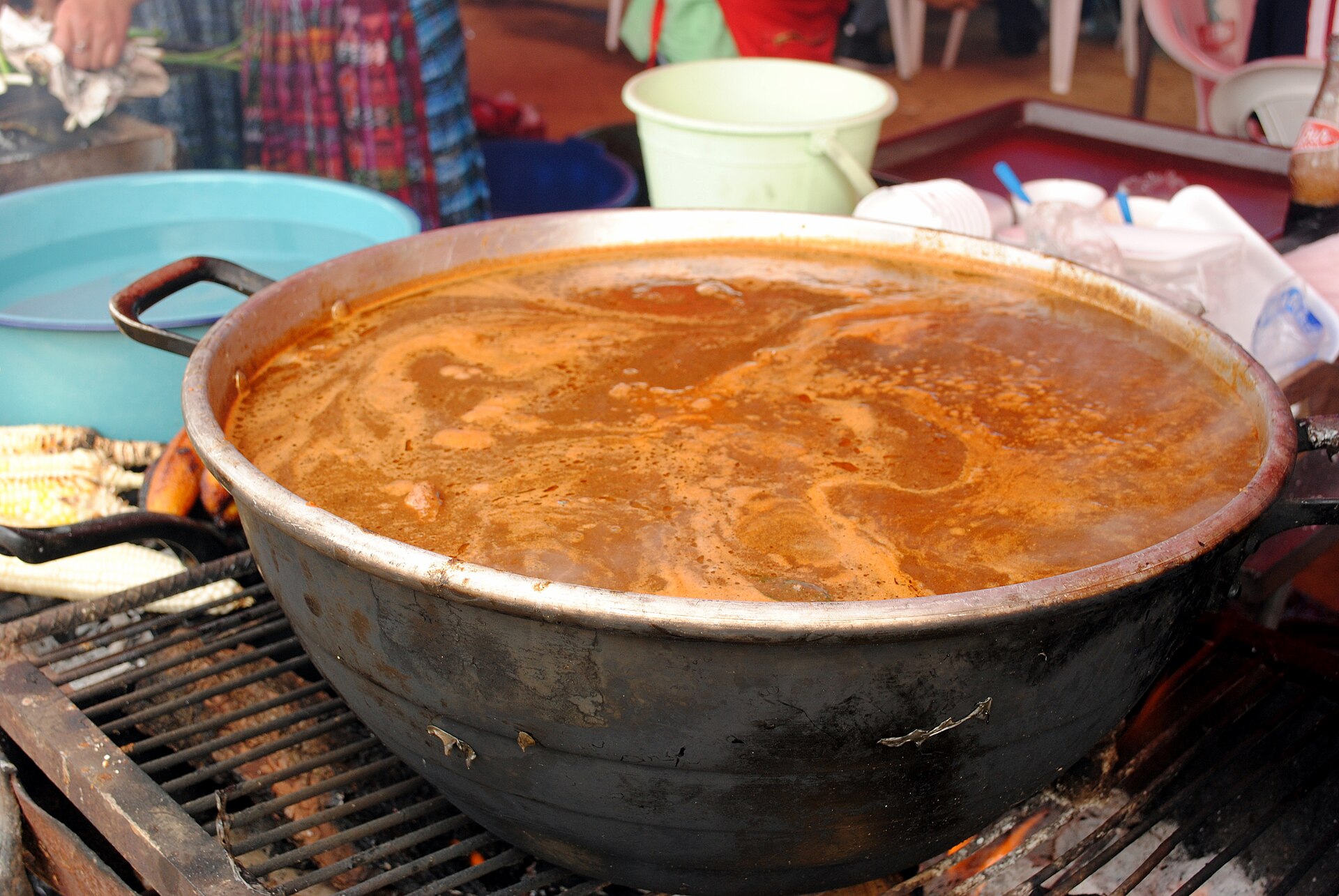
Tapado is the dish that reminds you Guatemala has a Caribbean coast. While most Guatemalan cuisine revolves around corn, chiles, and seeds, tapado is coconut milk, seafood, and plantains – the cooking of the Garifuna people who have lived along Guatemala’s Caribbean shore for over two centuries.
In Livingston, the small town accessible only by boat at the mouth of the Rio Dulce, tapado is the dish. Every waterfront restaurant serves it. The soup arrives in an enormous bowl – rich coconut broth swimming with whole fish, shrimp, crab, green and ripe plantain, yuca, and fresh herbs. It is a meal, a celebration, and a cultural statement all in one bowl.
The name tapado means “covered.” According to Garifuna tradition, the dish was cooked in a single pot that was kept covered throughout the cooking process – the cook did not lift the lid, trusting the coconut milk and heat to do their work. Everything went into the pot raw and came out as a harmonious, fragrant stew.
The Garifuna people arrived on Guatemala’s coast in the early 1800s, bringing with them cooking traditions from West Africa, the Caribbean islands, and the indigenous Arawak people. Tapado is the culmination of that journey – African technique, Caribbean ingredients, prepared in Central America.
Ingredients
Seafood
- 1 lb (450g) firm white fish fillets (snapper, grouper, or sea bass), cut into large pieces
- 1/2 lb (225g) large shrimp, shell-on
- 4 blue crabs, cleaned and halved (or 1/2 lb crab legs)
Starchy Vegetables
- 2 green plantains, peeled and cut into thick rounds
- 2 ripe plantains, peeled and cut into thick rounds
- 1 lb (450g) yuca (cassava), peeled and cut into chunks
For the Broth
- 2 cans (800ml) full-fat coconut milk
- 4 cups fish stock or water
- 2 large ripe tomatoes, chopped
- 1 large white onion, chopped
- 4 cloves garlic, minced
- 1 green bell pepper, chopped
- 1 habanero pepper, whole (optional – for authentic heat)
- 1 bunch fresh cilantro, chopped
- 2 tablespoons coconut oil or vegetable oil
- Juice of 2 limes
- Salt to taste
Step-by-Step Instructions
Step 1: Build the aromatic base. In a large, deep pot, heat coconut oil over medium heat. Add the chopped onion, garlic, and bell pepper. Saute until softened and fragrant, about 5 minutes. Add the chopped tomatoes and cook for 3-4 minutes until they break down and release their juices.
Step 2: Add the coconut broth. Pour in the fish stock and coconut milk. Stir well to combine. The broth should be creamy and fragrant. Bring to a gentle simmer.
Step 3: Cook the starches first. Add the yuca and green plantain rounds to the pot. These need the most cooking time. Simmer for 20 minutes until the yuca begins to soften.
Step 4: Add ripe plantains and heat. Add the ripe plantain rounds and the whole habanero pepper (do not cut or pierce it – it infuses gentle heat without making the soup fiery). Simmer for 15 more minutes until the yuca is fork-tender and the plantains are soft.
Step 5: Add the seafood. Add the crabs first – they take the longest. Cook for 5 minutes. Then add the fish pieces, distributing them gently through the soup. Cook for 3 minutes. Finally, add the shrimp. Cook for 3-4 more minutes until the shrimp are pink and curled and the fish is opaque and flaky.
Step 6: Finish and serve. Remove the habanero pepper. Squeeze in the lime juice. Add the chopped cilantro. Stir gently – you do not want to break up the fish. Season with salt. Serve immediately in deep bowls, making sure each serving gets a mix of seafood, plantains, yuca, and plenty of coconut broth.
Como Lo Hacemos en Guatemala (Local Tips)
Use the freshest seafood you can find. In Livingston, the fish comes from that morning’s catch. The fresher the seafood, the sweeter and cleaner the broth. If you are near a coast, buy from the fishmonger, not the freezer section.
Both green and ripe plantains are essential. The green plantain holds its shape and adds starch that thickens the broth. The ripe plantain adds sweetness. Together they create the perfect balance. Do not skip either one.
Full-fat coconut milk only. Light coconut milk makes a thin, disappointing tapado. You need the richness of full-fat coconut milk – it is the backbone of the dish.
The habanero is optional but traditional. Garifuna cooking uses habanero for a clean, fruity heat. Keep it whole so it infuses gently. If you bite into a piece of habanero, you will know it. Remove it before serving.
Find Ingredients in the US
| Ingredient | Where to Find | Substitute |
|---|---|---|
| Green plantains | Latin markets, most supermarkets | No substitute |
| Yuca (cassava) | Latin markets, frozen section | Potato (different but works) |
| Blue crabs | Seafood counter, fish markets | Dungeness crab or crab legs |
| Full-fat coconut milk | Any supermarket (canned) | Do not use light coconut milk |
| Habanero | Any supermarket produce section | Scotch bonnet pepper |
| Coconut oil | Any supermarket | Vegetable oil |
Approximate Nutrition (per serving)
| Nutrient | Amount |
|---|---|
| Calories | ~480 |
| Protein | 38g |
| Fat | 22g |
| Carbohydrates | 36g |
| Fiber | 4g |
More Guatemalan recipes: Caldo de Mariscos (Seafood Soup) | Ceviche Guatemalteco | Caldo de Res (Beef Soup)
Related: Guatemala Food Guide | Izabal Department | Food Prices