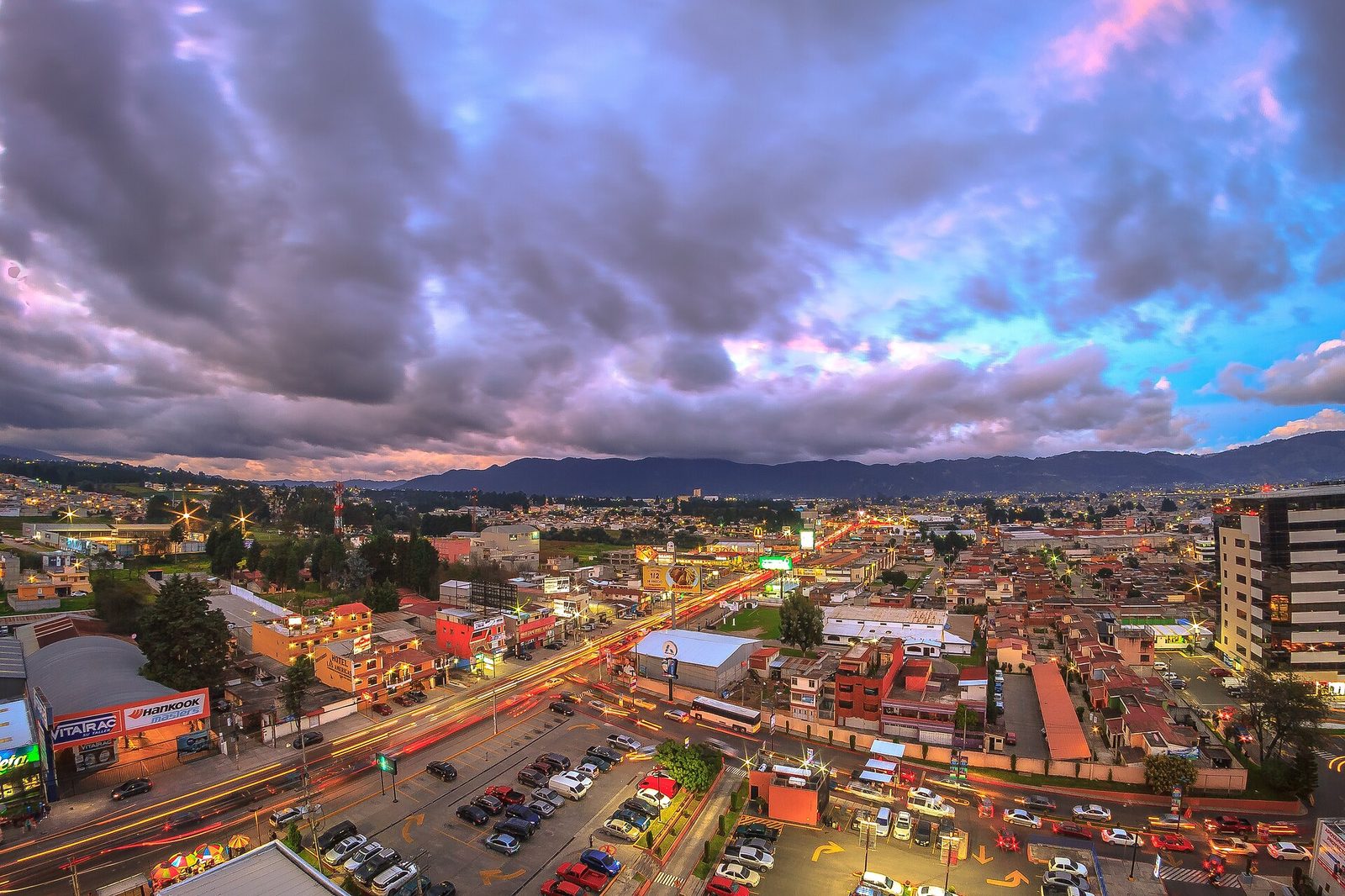
Quetzaltenango — universally called Xela (SHAY-la) by anyone who actually lives here — is Guatemala’s second city and the highland capital that most foreigners overlook in favor of Antigua. That is a mistake if you care about cost of living, authentic culture, serious Spanish immersion, or being somewhere that does not revolve around tourists.
I have family connections to Xela and have spent time here across many trips. The city sits at 2,333 meters (7,654 feet) in the Quetzaltenango Valley, surrounded by volcanoes, coffee farms, and K’iche’ Maya communities that have been here for centuries. It is cold in the mornings, busy during the day, and quiet at night. It has none of Antigua’s charm but also none of Antigua’s pretension. It is a real working Guatemalan city that happens to welcome foreigners who come for the language schools and the hiking.
This guide covers why Xela deserves serious consideration, what it costs, and how life actually works here.
Why Xela?
Xela does not sell itself the way Antigua does. There are no Instagram-ready volcanoes framing every street corner, no UNESCO status, no boutique hotels in restored colonial mansions. What Xela has is this:
- 30% cheaper than Antigua. Rent, food, entertainment — everything costs less because Xela’s economy is not inflated by tourism. A furnished apartment runs $200-400/month. A comida corriente costs Q15-20 ($2-2.60). See the full comparison on our cost of living page.
- The best Spanish schools in Guatemala. Controversial claim, but language professionals widely agree. Xela schools focus more on grammar and immersion and less on social activities than Antigua. The student pool is more serious, the homestay families speak less English, and you are forced to practice everywhere because English simply does not work here.
- Authentic highland culture. K’iche’ is spoken alongside Spanish in the markets. Women wear traditional traje daily. The indigenous market in Xela and surrounding towns (San Francisco El Alto, Zunil, Almolonga) is for locals, not tourists. You see real Guatemala here.
- Volcano and hot springs access. Tajumulco (4,220m, the highest point in Central America), Santa Maria, Cerro Quemado, Chicabal (crater lake), and Fuentes Georginas hot springs are all within an hour. If you hike, Xela is paradise.
- CST timezone, functioning city. Banks, hospitals, malls, supermarkets, universities — Xela has real infrastructure. It is not a village. It is the economic hub of western Guatemala with 300,000+ people.
The trade-offs:
- Cold. At 2,333 meters, mornings are genuinely cold (5-10C / 41-50F in December-February). Buildings rarely have heating. You will need warm layers and a good blanket.
- Gray and rainy. Xela gets more cloud cover and rain than Antigua. The rainy season (May-October) brings daily afternoon downpours.
- Limited nightlife. There are bars and a few clubs, but this is not a party town. If nightlife matters to you, Guatemala City or Antigua are better.
- Internet is decent, not great. Cable and some fiber in the center, but not as fast or reliable as Guatemala City. Workable for remote work, not ideal for heavy uploads.
- Less English spoken. This is a pro if you want immersion and a con if you are a total beginner with no Spanish.
Cost of Living
Xela is the cheapest highland city in Guatemala for foreign residents. The absence of a tourist economy keeps prices honest. For the best rates on sending money to Guatemala, compare providers before you arrive. All figures in USD at the current exchange rate of approximately Q7.66 per dollar.
Monthly Budget Breakdown (Single Person)
| Expense | Budget | Comfortable | Luxury |
|---|---|---|---|
| Rent (1BR furnished) | $150–250 | $300–500 | $600–900 |
| Groceries | $70–100 | $120–180 | $200–300 |
| Eating out | $30–60 | $80–150 | $200–350 |
| Transport | $10–20 | $30–60 | $80–150 |
| Utilities (electric, water, gas) | $20–35 | $40–70 | $70–120 |
| Internet | $25–30 | $30–40 | $40–66 |
| Phone plan | $10–13 | $13–20 | $20–30 |
| Healthcare | $10–20 | $30–60 | $80–150 |
| Entertainment | $15–30 | $40–80 | $100–200 |
| Monthly Total | $340–558 | $683–1,160 | $1,390–2,265 |
Xela vs Antigua vs Guatemala City
| Expense | Xela | Antigua | Guatemala City (Z10) |
|---|---|---|---|
| 1BR Rent | $200–400 | $400–800 | $650–1,035 |
| Comida corriente | $2–2.60 | $3.25–4.55 | $3.25–4.55 |
| Beer at bar | $1.30–2.60 | $2.60–4.55 | $3.25–5.20 |
| Gym membership | $13–26 | $26–52 | $39–65 |
| Uber (typical trip) | $1.30–3.25 | $2–5 | $2–6.50 |
Xela runs consistently 25-35% cheaper than Antigua across most categories, and 40-50% cheaper than Guatemala City’s upscale zones.
Pro Tip: The best food value in Xela is the market. The Mercado La Democracia in Zona 3 has comida corriente for Q12-18 ($1.55-2.35) — a full plate of rice, beans, meat, salad, tortillas, and a drink. This is where locals eat lunch. Bring your own container if you want to take food home, and go between 11 AM and 1 PM for the freshest options.
Neighborhoods
Xela is laid out in a zone system similar to Guatemala City, though smaller. The relevant zones for foreigners are:
Zona 1 — The Historic Center
The heart of Xela with the main plaza (Parque Centroamerica), the cathedral, the municipal theater, banks, and most Spanish schools. Architecture is a mix of neoclassical and practical Guatemalan construction — not as photogenic as Antigua but with real character. Most language students live here.
Rent: Q1,200-2,500/month ($157-326) for a furnished room or small apartment.
Best for: Spanish students, walkers, people who want to be in the center of the action.
Zona 3 — The Market District
Home to La Democracia market and the Minerva Bus Terminal. More working-class, louder, and cheaper. Good if you want to be near public transport and market food.
Rent: Q800-1,800/month ($104-235).
Best for: Budget living, people who use buses frequently.
Zonas 5 and 7 — Residential
Quieter residential areas with houses, small gardens, and less commercial activity. More space for less money than Zona 1, but less walkable for errands.
Rent: Q1,000-2,500/month ($130-326) for houses with multiple rooms.
Best for: Families, longer-term residents who want quiet, people with vehicles.
Zona 9 — Modern Commercial
The newer commercial area with shopping centers, Walmart, PriceSmart, and chain restaurants. Less character but more convenience. Further from the historic center but accessible by bus or Uber.
Rent: Q1,500-3,000/month ($196-391) for modern apartments.
Best for: People who want modern amenities and do not need colonial atmosphere.
Spanish Schools
This is Xela’s strongest card. The city has produced more fluent Spanish speakers among foreigners than arguably anywhere else in Latin America, school for school. The immersion is real because Xela is not a tourist town — once you leave the school, you need Spanish for everything.
Top Schools
| School | Price (20hrs/week) | Style | Best For |
|---|---|---|---|
| Celas Maya | Q500-700 ($65-91) | Structured, grammar-focused | Serious learners |
| ICA (Instituto de Espanol) | Q500-650 ($65-85) | Community-oriented, social activities | Balanced experience |
| Proyecto Linguistico Quetzalteco | Q450-600 ($59-78) | Non-profit, indigenous-run | Cultural immersion, budget |
| Pop Wuj | Q500-700 ($65-91) | Social justice focus, volunteer projects | Activists, socially-minded |
| Minerva Spanish School | Q400-550 ($52-72) | Small, personalized | Beginners, individualized attention |
| INEPAS | Q450-600 ($59-78) | Medical/professional Spanish available | Healthcare workers, professionals |
Homestay
Most schools arrange homestay with local families: Q400-600/week ($52-78) including three meals a day and a private room. This is where the real immersion happens — dinner conversation in Spanish with a Guatemalan family is worth more than any classroom hour.
Xela homestay vs Antigua homestay: Xela families generally speak less English (better for immersion) and charge 20-30% less. The trade-off: less tourist infrastructure if you need help navigating in English.
For the complete school comparison including Antigua and Atitlan options, see our Spanish school guide.
Pro Tip: Do not pick a school solely on price. Visit 2-3 in person, take a trial lesson, and ask about teacher turnover. The best schools keep their teachers long-term and pay them well. High turnover usually means low teacher pay, which means less experienced instruction. Celas Maya and Pop Wuj are known for treating their staff well, and it shows in the quality.
Activities
Xela is the adventure capital of western Guatemala. The volcanic landscape and highland setting offer world-class hiking, hot springs, and cultural experiences.
Volcano Hikes
| Volcano | Elevation | Duration | Difficulty | Cost |
|---|---|---|---|---|
| Tajumulco | 4,220m (highest in CA) | 2 days / 1 night | Hard | Q200-400 with guide |
| Santa Maria | 3,772m | 6-8 hours round trip | Moderate-Hard | Q100-200 with guide |
| Santiaguito (active) | 2,500m viewpoint | 4-5 hours | Moderate | Q100-150 with guide |
| Cerro Quemado | 3,197m | 4-5 hours | Moderate | Q50-100 |
| Chicabal (crater lake) | 2,712m | 3 hours | Easy-Moderate | Q50 entrance |
Tajumulco is the big one — the highest point in Central America. The standard route is an overnight trek with camping at the summit. Freezing at night (below 0C at the top), but the sunrise above the clouds is transcendent.
Santa Maria overlooks Xela and the active Santiaguito vent. On a clear morning, you can watch Santiaguito erupt small ash plumes from the Santa Maria summit.
Hot Springs
| Hot Spring | Distance from Xela | Cost | Notes |
|---|---|---|---|
| Fuentes Georginas | 30 min (14 km) | Q60 ($7.80) | Most famous, volcanic sulfur pools, forest setting |
| Los Vahos (steam baths) | 15 min | Q10 ($1.30) | Natural steam from volcanic vents |
| Aguas Amargas | 25 min | Q30 ($3.90) | Less known, quieter, mineral springs |
| Zunil hot springs | 25 min | Q30 ($3.90) | Community-managed, near Zunil village |
Fuentes Georginas is the crown jewel — natural hot pools surrounded by cloud forest at 2,500m elevation. Go early morning on a weekday for the best experience. Weekend afternoons get crowded.
Markets
- San Francisco El Alto (Friday): The largest open-air market in Central America. Animals, textiles, electronics, food, clothing — everything. Go early (7-8 AM). It is loud, chaotic, and incredible.
- Almolonga (Tuesday, Saturday): Vegetable capital of Guatemala. The produce is absurdly fresh and cheap.
- Zunil: Small indigenous town with textile cooperatives and hot springs nearby.
For the full activities database, explore on the map.
Getting to Xela
From Guatemala City
- Direct bus: Linea Dorada, Transportes Alamo, or Los Halcones. Duration: 4 hours. Cost: Q60-120 ($8-16). Buses depart frequently from Terminal Minerva and various stations.
- Shuttle: Available from Antigua agencies for Q200-350 ($26-46). Less frequent than buses.
- Driving: 200 km via RN-1 / CA-1 (Pan-American Highway). 3.5-4 hours. The road is paved and in good condition. Winding mountain sections after Los Encuentros.
From Antigua
- Shuttle: Q200-350 ($26-46), 3.5-4 hours. Several daily departures.
- Chicken bus: Q30-40 ($4-5) with transfers in Chimaltenango. Slower and more complicated.
From Lake Atitlan
- Shuttle: Q100-200 ($13-26), 2.5-3 hours from Panajachel via Los Encuentros.
- Chicken bus: Q25-35 ($3.25-4.55) with a transfer at Los Encuentros.
From Mexico (Tapachula / San Marcos)
- The La Mesilla border crossing connects to western Guatemala. Buses from the border to Xela: 3-4 hours, Q40-60 ($5-8).
For full route details, see our transportation guide.
Weather and Climate
Xela is the coolest major city in Guatemala. At 2,333 meters, it is significantly cooler than Antigua (1,530m) or Guatemala City (1,500m). The climate is the biggest adjustment for people coming from warmer places.
| Month | High (C/F) | Low (C/F) | Rain Days | Notes |
|---|---|---|---|---|
| Jan | 18/64 | 5/41 | 1 | Cold mornings, clear days |
| Feb | 19/66 | 6/43 | 1 | Warming slightly |
| Mar | 21/70 | 7/45 | 2 | Driest month |
| Apr | 22/72 | 8/46 | 4 | Warm for Xela |
| May | 21/70 | 10/50 | 14 | Rainy season starts |
| Jun | 20/68 | 10/50 | 20 | Heavy rain, green valleys |
| Jul | 19/66 | 9/48 | 18 | Cool and wet |
| Aug | 19/66 | 9/48 | 18 | Similar to July |
| Sep | 19/66 | 10/50 | 22 | Wettest month |
| Oct | 19/66 | 9/48 | 16 | Rain tapering |
| Nov | 18/64 | 7/45 | 4 | Dry season returns |
| Dec | 17/63 | 5/41 | 1 | Coldest month |
What it feels like: January and December mornings can hit 3-5C (37-41F) — cold enough that you see your breath. Afternoons warm to 17-22C (63-72F), which is pleasant but never hot. Buildings have no heating (this is Guatemala, after all), so a good jacket, wool blanket, and hot coffee are essential gear November through February.
Compared to Antigua: About 4-6C cooler on average, especially at night. More cloud cover and more rain during the wet season. The trade-off: no dust, green hillsides year-round, and dramatically fewer mosquitoes.
For real-time weather data, visit our weather page.
Digital Nomad Scene
Xela’s remote work scene is small but growing. It does not have Antigua’s established coworking infrastructure, but the combination of ultralow costs and improving internet makes it viable.
Internet
- Tigo Cable: 50-100 Mbps available in Zona 1 and commercial areas. Q180-235/month ($23-30).
- Claro Cable: 30-80 Mbps, similar coverage. Q150-229/month ($20-30).
- Fiber: Limited. Tigo has started fiber installation in some Zona 1 and Zona 9 areas, but coverage is patchy compared to Guatemala City.
- Starlink: Works anywhere. Q345-510/month ($45-66). The reliable backup option.
- Cafe wifi: 10-25 Mbps at most cafes. Sufficient for email and browsing, risky for video calls.
Verdict: Xela’s internet is good enough for most remote work — email, Slack, document collaboration, and occasional video calls. If your job requires daily multi-hour video conferences or large file uploads, test the connection at your specific address before committing. Guatemala City or Antigua have more reliable fiber options. See our internet guide for the full comparison.
Coworking and Work Spots
- Café La Luna — Popular with laptop workers, good wifi, central location.
- Café Baviera — Quiet, good coffee, reasonable wifi.
- Xelaju Community Library — Free wifi, reading room atmosphere.
- No dedicated coworking space as of early 2026 — this is a gap in the market.
Monthly Budget for Digital Nomads
| Expense | Comfortable Nomad |
|---|---|
| Rent (furnished room/apartment) | $250–400 |
| Food (mix of cooking and eating out) | $150–250 |
| Internet (home + phone data) | $35–50 |
| Transport | $20–40 |
| Utilities | $30–50 |
| Entertainment / Activities | $40–80 |
| Total | $525–870 |
That is roughly $600-800/month for a comfortable remote work life in a genuine Guatemalan city. Compare that to $1,200-1,800 in Antigua or $2,000-3,000 in Guatemala City’s upscale zones.
For more on the digital nomad scene across Guatemala, read our digital nomad guide and best places for remote workers.
Pro Tip: If you are a remote worker considering Xela, do a 1-month trial first. Rent a furnished room with internet included (many Spanish school arrangements offer this), bring your Starlink as backup, and test whether the internet, climate, and lifestyle work for your situation. The cost of a trial month is so low ($500-800 all-in) that there is no reason to commit long-term without trying it.
Safety
Xela is moderately safe by Guatemalan standards. The Quetzaltenango department’s homicide rate is below the national average, and the city center is generally safe during the day.
- Zona 1 center: Safe during daytime. Be cautious after 9 PM on quiet streets.
- Market areas (Z3): Petty theft (pickpockets, phone snatching) in crowded markets. Keep valuables secure.
- Residential zones: Generally safe. Normal urban precautions.
- Surrounding countryside: Safe for hiking during daylight. Always use local guides for volcano treks.
Specific risks:
- Altitude sickness: At 2,333m, some people feel effects (headache, fatigue) for the first day or two, especially if coming from sea level. Stay hydrated, take it easy the first day.
- Cold exposure: Hypothermia is a real risk on volcano overnight treks, especially Tajumulco. Bring proper cold-weather gear.
- Bus terminal (Minerva): The main bus terminal area in Zona 3 can be sketchy. Arrive during daylight and take an Uber/taxi directly from the terminal.
For detailed crime data, see our safety guide.
Healthcare
Xela has adequate healthcare for a city of its size, though it does not match Guatemala City’s specialist depth.
- Hospital Privado de Quetzaltenango: The main private hospital. General medicine, surgery, emergency. Q150-400 ($19.50-52) for a consultation.
- Hospital Regional de Occidente: Public hospital. Free but crowded and resource-limited. Use for emergencies when private is not available.
- Clinics: Multiple private clinics along the main avenues. Dental, general medicine, lab work.
- Pharmacy: Farmacias Galeno and Batres are well-stocked and open late.
Specialists: For cardiology, oncology, advanced diagnostics, or surgery — go to Guatemala City. The capital is 4 hours by bus or private car. For urgent cases, a private ambulance transfer takes 3 hours.
Who Xela Is For (and Who It Is Not For)
Xela is ideal for:
- Serious Spanish students who want immersion without the tourist distraction
- Budget-conscious expats and nomads who want the absolute lowest costs in a functioning city
- Hikers and outdoor enthusiasts (volcanoes, hot springs, highland trails)
- People who want authentic Guatemala — indigenous markets, K’iche’ culture, real Guatemalan life
- Anyone tired of the expat bubble in Antigua or Lake Atitlan
Xela may not be for you if:
- You dislike cold weather (mornings drop to 5C / 41F in winter)
- You need fast, reliable fiber internet for demanding remote work
- You want nightlife, fine dining, or international restaurants
- You do not speak any Spanish (the English-language infrastructure is minimal)
- You want colonial-town beauty (Antigua is objectively more photogenic)
- You need an international airport nearby (the closest is Guatemala City, 4 hours away)
Frequently Asked Questions
How much does it cost to live in Xela?
Xela is 25-35% cheaper than Antigua. A comfortable single person spends $680-1,160 per month including rent, food, internet, and entertainment. Budget living runs $340-560. Even “luxury” by Xela standards costs $1,390-2,265. See our cost of living page for detailed city comparisons.
Is Quetzaltenango (Xela) safe?
Moderately safe. The city center is fine during the day and generally safe at night in well-traveled areas. Petty theft in markets and bus terminals is the main risk. Violent crime rates are below the national average. Use normal urban precautions. See our safety guide for department-level data.
Why is it called Xela?
Xela (SHAY-la) is short for Xelaju, the K’iche’ Maya name for the city, meaning “under the ten hills.” The official name Quetzaltenango comes from Nahuatl and means “place of the quetzal.” Locals use Xela exclusively. Tourists who say “Quetzaltenango” in full are immediately identified as newcomers.
Is Xela good for learning Spanish?
Many language professionals consider Xela the best place in Guatemala for serious Spanish study. Schools are grammar-focused and less socially oriented than Antigua’s. Homestay families speak less English, forcing more immersion. And the city itself operates almost entirely in Spanish, unlike Antigua’s tourist center where English is common. Schools start at Q400-700/week ($52-91) for 20 hours of one-on-one instruction. See our Spanish school guide.
How do I get from Antigua to Xela?
Shuttle services run daily for Q200-350 ($26-46), taking 3.5-4 hours via the Pan-American Highway. Direct buses are cheaper (Q60-120 from Guatemala City, add a transfer from Antigua). Driving takes 3.5-4 hours. The road is paved and scenic, winding through the highlands. See our transportation guide.