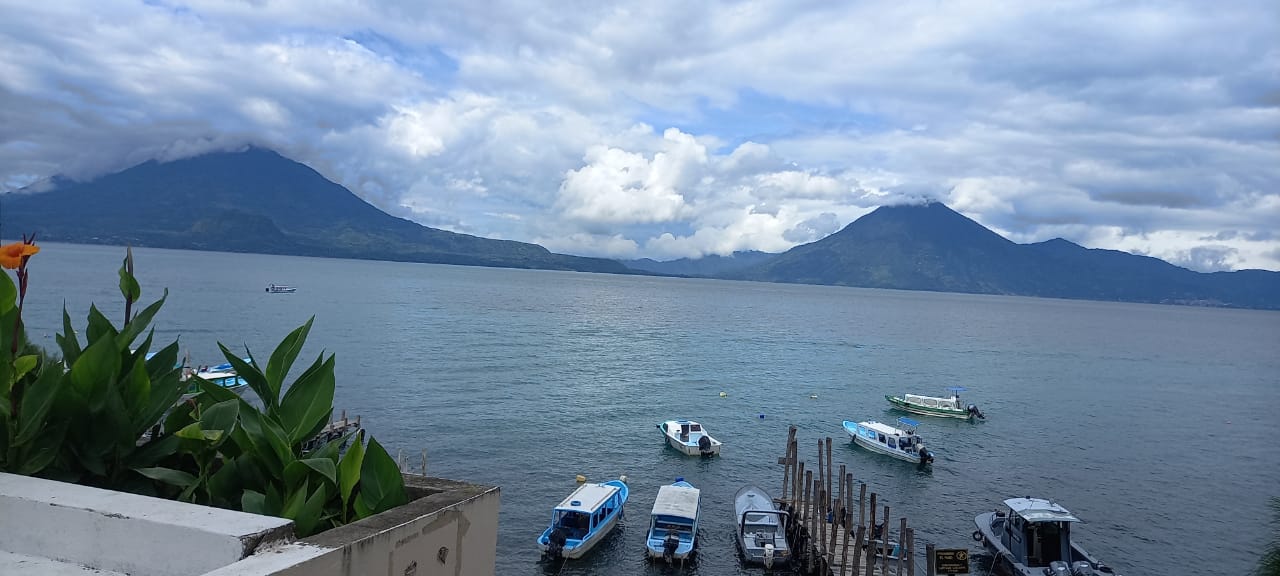
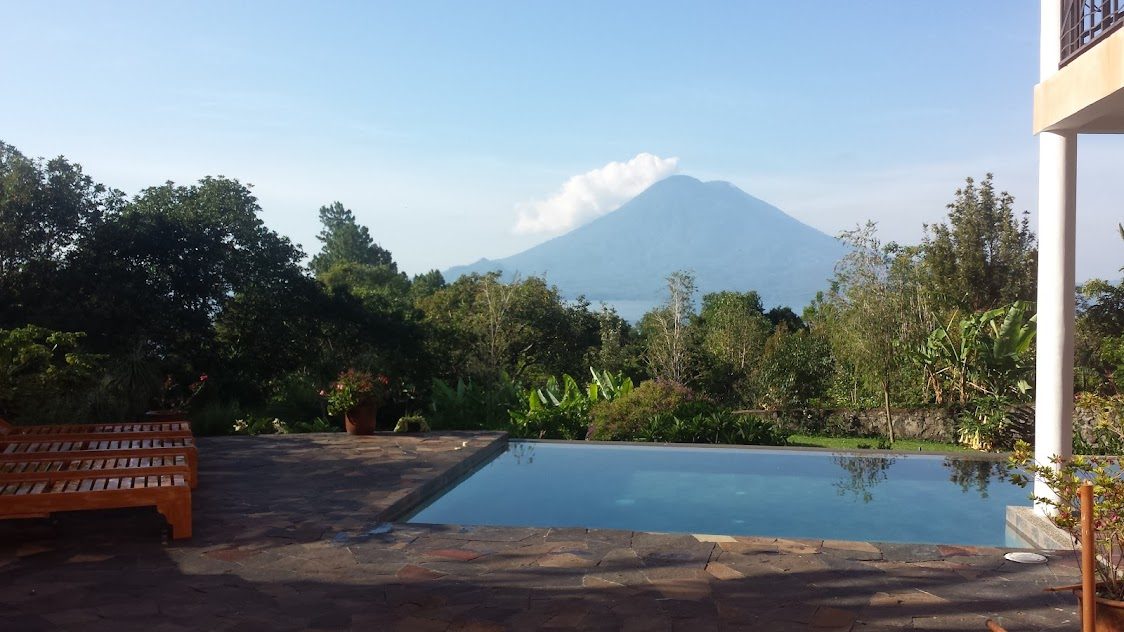
Aldous Huxley called Lake Atitlan the most beautiful lake in the world. I grew up hearing that quote from every tourist brochure in the country. Having visited dozens of lakes across the Americas, I think Huxley was right – but beauty is only part of the story.
What makes Atitlan special is that each town around its shores has developed a completely different personality. San Pedro is the backpacker party town. San Marcos is the yoga retreat. Santiago Atitlan is the deep indigenous cultural center. Panajachel is the gateway with ATMs and grocery stores. Choosing the right town matters as much as choosing to visit the lake at all.
This guide compares every town around Lake Atitlan with real costs, internet quality, and honest assessments of who each place is right for.
TL;DR: 9 towns circle Lake Atitlan, each with a different vibe. San Pedro is cheapest for nomads ($600–900/mo), Panajachel has the best infrastructure, and San Marcos is the wellness hub. Boats connect all towns for Q25–35 ($3–5) but stop at 5–6 PM.
Master Comparison Table
Prices verified February 2026. See our exchange rates page for today’s USD/GTQ rate.
| Town | Vibe | Monthly Cost (USD) | Internet (Mbps) | Best For | Population |
|---|---|---|---|---|---|
| Panajachel | Gateway, infrastructure | $800-1,200 | 15-50 | First-timers, families, convenience | ~15,000 |
| San Pedro | Backpacker, nomad hub | $600-900 | 15-30 | Budget travelers, party, digital nomads | ~12,000 |
| San Marcos | Yoga, wellness, quiet | $700-1,100 | 10-20 | Spiritual seekers, retreat-goers | ~3,000 |
| San Juan | Artisan, cooperative | $600-900 | 5-15 | Cultural immersion, textiles, art | ~10,000 |
| Santa Cruz | Remote, peaceful | $500-800 | 5-10 | Hikers, nature lovers, solitude | ~5,000 |
| Santiago | Indigenous cultural center | $500-800 | 5-15 | Cultural depth, Maximon, authenticity | ~45,000 |
| San Antonio Palopo | Ceramics, close to Pana | $500-700 | 5-10 | Day trips, ceramics shopping | ~11,000 |
| Santa Catarina Palopo | Colorful murals, tiny | $500-700 | 5-10 | Photography, quick visits | ~4,000 |
| Jaibalito | Tiny, boat-only | $400-600 | 3-8 | Ultra-budget, total disconnect | ~1,500 |
Exchange rate: Q7.7 = $1 USD. Costs assume comfortable solo living (private room, eating mix of local and restaurant food).
Panajachel: The Gateway Town
Everyone arrives in Panajachel first, and about half decide to stay. “Pana” (as everyone calls it) is the most developed town on the lake, with ATMs from Banrural and BI, pharmacies, a public market, and the main boat dock connecting to all other towns.
Why Stay Here
Panajachel has the best infrastructure around the lake. Calle Santander is the main tourist street with restaurants, tour agencies, and shops. Beyond the tourist strip, the town has a genuine Guatemalan core with a lively market, street food stalls, and local life happening independently of the tourist economy.
Costs
| Category | Budget | Comfortable | Notes |
|---|---|---|---|
| Rent (private room) | Q2,300/mo ($300) | Q4,600/mo ($600) | Studios near the lake start at Q3,000 |
| Meals (local) | Q25-40 ($3-5) | Q50-80 ($6-10) | Market comedores are cheapest |
| Meals (tourist) | Q60-100 ($8-13) | Q100-200 ($13-26) | Calle Santander prices |
| Internet | 15-50 Mbps | Tigo fiber in some areas | Cafes have 10-20 Mbps |
| Boat to San Pedro | Q25 ($3.25) | Q25-35 one way | Every 20-30 min |
Internet
Panajachel has the best internet on the lake. Tigo has fiber connections in some areas (up to 50 Mbps), and several cafes and coworking spots offer reliable 15-25 Mbps. If you need to make video calls for work, Pana is your safest bet.
Drawbacks
- Tourist-heavy on Calle Santander – vendors can be persistent
- Prices are higher than other lakeside towns
- The beach area is not great for swimming (better in San Marcos or Santa Cruz)
Explore Solola department on the map to see infrastructure ratings for all lake towns.
San Pedro La Laguna: The Backpacker Capital
San Pedro is where the budget travelers, digital nomads, and party-seekers end up. It has the most hostels, the cheapest food, the most bars, and a vibrant social scene. It is also the most accessible town after Panajachel, with frequent boat service.
Why Stay Here
If you want community on a budget, San Pedro delivers. Hostel dorm beds start at Q50/night ($6.50). Private rooms from Q150 ($20). There are Spanish schools, yoga studios, and a handful of coworking spaces. The nightlife is the most active around the lake – bar crawls happen most weekends.
The town is also home to a significant Tz’utujil Maya community. The local market is authentic and affordable, and the town has its own identity beyond the tourist economy.
Costs
| Category | Budget | Comfortable | Notes |
|---|---|---|---|
| Rent (dorm bed) | Q50-80/night ($6-10) | – | Hostels everywhere |
| Rent (private room) | Q150/night ($20) | Q2,300-3,850/mo ($300-500) | Monthly rates much cheaper |
| Meals (local) | Q20-35 ($3-5) | Q40-60 ($5-8) | Some of the cheapest around the lake |
| Spanish school | Q500-800/wk ($65-104) | Q1,000-1,500/wk ($130-195) | 1-on-1 classes, 4hr/day |
Drawbacks
- Can feel like a backpacker bubble, disconnected from local life
- Noise from bars on weekends
- Some travelers overstay and the vibe can get a bit hedonistic
- Steepest dock-to-town walk of any lake town
San Marcos La Laguna: The Spiritual Center
San Marcos is where people go to find themselves. Yoga retreats, cacao ceremonies, ecstatic dance, sound healing – if it involves a meditation cushion or a singing bowl, San Marcos has it. The town has become a magnet for the wellness community.
Why Stay Here
The natural setting is stunning. San Marcos has some of the best swimming spots on the lake, accessed via rocky trails through lush vegetation. The pace of life is slow and intentional. Many residents are on some form of personal growth journey, which creates a very specific atmosphere.
The food scene is excellent if you eat plant-based. Multiple restaurants serve organic, vegetarian, and vegan food that is genuinely good, not just serviceable. For more on Guatemalan dining, see the food guide.
Costs
| Category | Budget | Comfortable | Notes |
|---|---|---|---|
| Rent (shared room) | Q1,500/mo ($195) | Q3,000-5,000/mo ($390-650) | Lakefront places are expensive |
| Meals (veggie restaurants) | Q40-60 ($5-8) | Q70-120 ($9-16) | Higher than San Pedro |
| Yoga class | Q50-80 ($6-10) | Per session | Drop-in rates |
| Retreat (week) | Q1,500-5,000 ($195-650) | Varies widely | Includes meals + accommodation |
Drawbacks
- Limited infrastructure – no ATMs (nearest in Panajachel)
- Internet is spotty (10-20 Mbps at best)
- The spiritual scene is not for everyone
- Some locals have complicated feelings about the wellness tourism economy
San Juan La Laguna: The Artisan Village
San Juan is the artistic and cooperative heart of the lake. The town is famous for its textile cooperatives where Tz’utujil women weave traditional huipiles using natural dyes. Murals cover buildings throughout town, and the whole place feels curated without being touristy.
Why Stay Here
San Juan offers the most authentic cultural experience that is still accessible to foreign visitors. The textile cooperatives give demonstrations and sell directly. A walking tour of the murals and cooperatives takes 2-3 hours and costs Q25-50 with a local guide.
The food is good and affordable. The pace is calm. If you want to learn about Maya culture without the backpacker circus of San Pedro (which is a 15-minute walk away), San Juan is ideal.
Costs
| Category | Budget | Comfortable | Notes |
|---|---|---|---|
| Rent (private room) | Q1,500-2,300/mo ($195-300) | Q3,000-4,000/mo ($390-520) | Fewer options than Pana |
| Meals (local) | Q20-35 ($3-5) | Q40-70 ($5-9) | Cooperative restaurants |
| Textile tour | Q25-50 ($3-6) | With local guide | Supports cooperatives directly |
Santa Cruz La Laguna: The Hidden Gem
Santa Cruz is where you go when the other lake towns feel too busy. Accessible only by boat (no road), the town sits on a steep hillside above the lake. There are a handful of guesthouses, one or two restaurants, and an excellent hiking trail along the lakeshore.
The hiking trail from Santa Cruz to Jaibalito is one of the best walks around the lake – 2-3 hours through tropical vegetation with swimming spots along the way. See our Lake Atitlan Hikes guide for details.
Costs
| Category | Budget | Comfortable |
|---|---|---|
| Rent (basic room) | Q1,200-1,800/mo ($156-234) | Q2,500-3,500/mo ($325-455) |
| Meals | Q25-40 ($3-5) | Q50-80 ($6-10) |
Best for: Hikers, nature lovers, writers looking for solitude, anyone who wants to be “at the lake” without being “in a town.”
Santiago Atitlan: The Cultural Capital
Santiago is the largest town on the lake with around 45,000 people, almost entirely Tz’utujil Maya. It is a working town, not a tourist town. The market is massive and genuine. The church of Santiago Apostol contains a syncretic blend of Catholic and Maya religious traditions.
Santiago is also home to Maximon (also known as Rilaj Maam), a Maya deity figure housed in a different family’s home each year. Visiting Maximon involves a small offering (Q10-20) and is one of the most culturally unique experiences in Guatemala.
Why Visit
This is where you go to understand that Lake Atitlan is not just a pretty backdrop for yoga retreats. Santiago is a living, complex indigenous community with deep traditions. The Friday market is enormous. The textile tradition here uses a distinctive purple and red palette.
Costs
| Category | Cost | Notes |
|---|---|---|
| Boat from Pana | Q25-35 ($3-5) | Direct boats, 30 min |
| Market lunch | Q15-25 ($2-3) | Cheapest on the lake |
| Maximon visit | Q10-20 ($1-3) | Offering/donation |
| Guided town tour | Q50-100 ($6-13) | Ask at the dock |
San Antonio & Santa Catarina Palopo
These two small towns on the eastern shore near Panajachel are famous for their ceramics and textiles respectively. Santa Catarina Palopo underwent a massive mural project and is now one of the most photographed villages in Guatemala – every building painted in vibrant patterns.
Both towns are accessible by tuk-tuk from Panajachel (Q15-20, 10-15 minutes). They make excellent half-day trips but have limited accommodation.
Jaibalito: Off the Grid
Jaibalito is the smallest inhabited village on the lake. Boat-access only, no cars, no ATMs, very few restaurants. A handful of guesthouses cater to travelers who want absolute quiet. Monthly rent for a basic room can be as low as Q1,500-2,000 ($195-260).
Internet is minimal (3-8 Mbps on a good day). If you need to be connected, this is not the place. If you need to disconnect, it is perfect.
Boat Routes and Prices
| Route | Frequency | Price (per person) | Duration |
|---|---|---|---|
| Panajachel - San Pedro | Every 20-30 min | Q25-35 ($3-5) | 30 min |
| Panajachel - San Marcos | Every 30 min | Q25-35 ($3-5) | 20 min |
| Panajachel - Santiago | Frequent | Q25-35 ($3-5) | 30 min |
| Panajachel - Santa Cruz | On demand | Q25 ($3.25) | 15 min |
| San Pedro - San Marcos | Every 30 min | Q15-20 ($2-3) | 10 min |
| San Pedro - Santiago | Several daily | Q25 ($3.25) | 20 min |
| Private lancha (any route) | On demand | Q200-400 ($26-52) | Varies |
Important: Boats stop running around 5-6 PM. After that, you are either paying for a private lancha (expensive) or you are stuck. Plan accordingly.
Xocomil Warning
The Xocomil is a strong afternoon wind that kicks up around 1-3 PM most days, creating dangerous waves on the lake. Boats still run but it can be a rough, wet ride. Morning boats are calmer and drier.
Which Town Is Right for You?
Choose Panajachel if: You want ATMs, pharmacies, grocery stores, reliable internet, and easy access to everywhere else. You value convenience and do not mind higher prices.
Choose San Pedro if: You are on a budget, want to meet other travelers, enjoy nightlife, or want cheap Spanish classes. You do not mind noise and a backpacker atmosphere.
Choose San Marcos if: You are into yoga, wellness, plant-based food, and spiritual community. You value quiet and natural beauty over infrastructure.
Choose San Juan if: You want authentic cultural immersion, support cooperative tourism, and appreciate art and textiles. You prefer calm to chaotic.
Choose Santa Cruz/Jaibalito if: You want maximum solitude, great hiking, and do not need much infrastructure. You are comfortable being remote.
Choose Santiago if: You want to experience living Tz’utujil Maya culture in a genuine working town, not a tourist village.
How to Get to Lake Atitlan
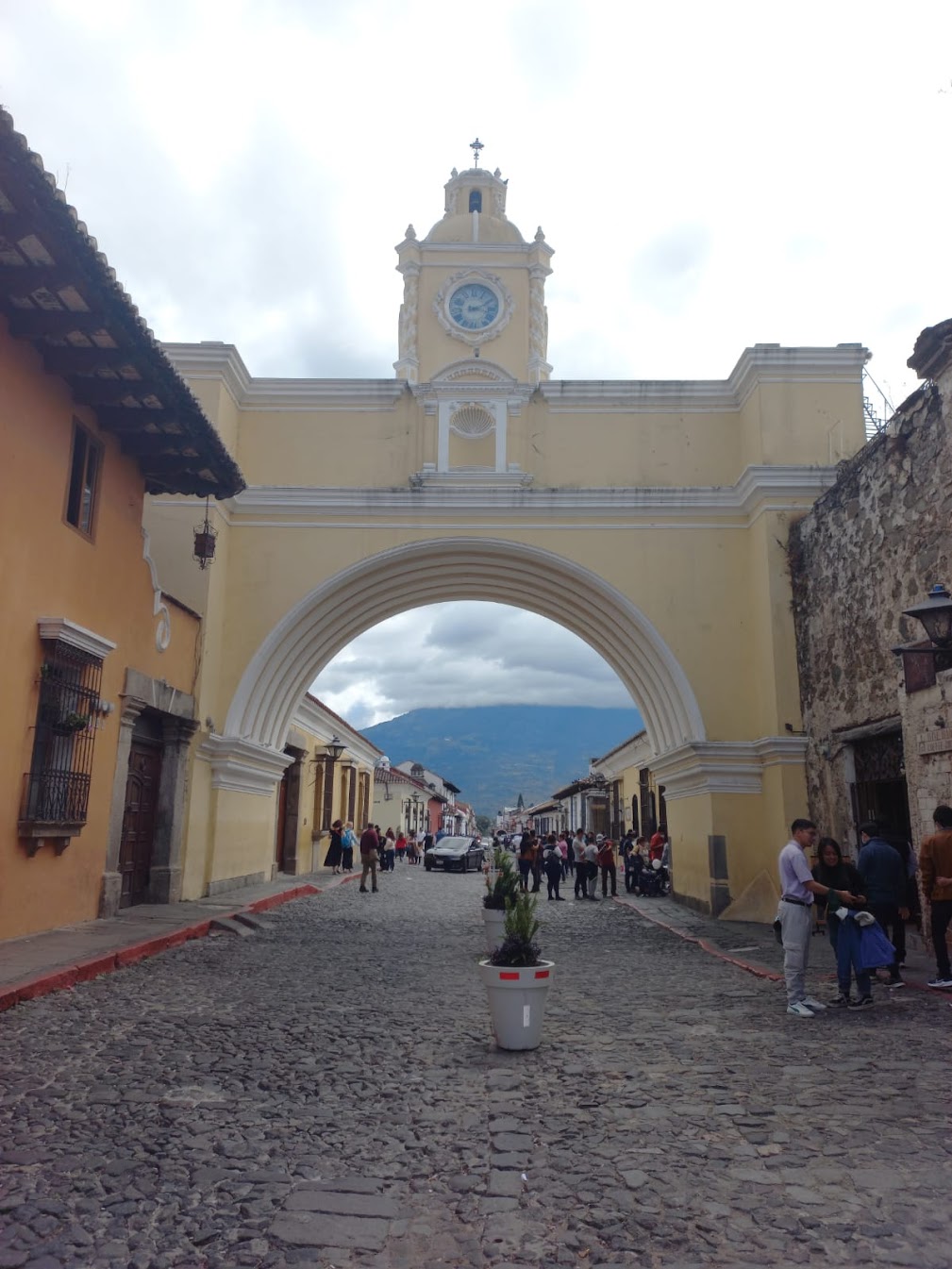
From Antigua: Shuttle Q100-150 ($13-20), 2.5-3 hours to Panajachel. Multiple departures daily. Chicken bus via Chimaltenango is Q25-35 but takes 3.5+ hours with transfers. See the transportation guide for shuttle booking details.
From Guatemala City: Direct shuttle Q150-200 ($20-26), 3-3.5 hours. Chicken bus from CENMA terminal Q30-40, 3.5-4 hours.
From Quetzaltenango: Shuttle Q80-120 ($10-16), 2.5 hours. Chicken bus Q25-30.
Related Guides
- Best Hikes at Lake Atitlan – trails, volcanoes, and viewpoints around the lake
- Is Guatemala Safe? – safety scores for the Solola department
- Cost of Living in Guatemala – how lake living compares to other regions
- Internet & ISP Guide – connectivity details for remote workers